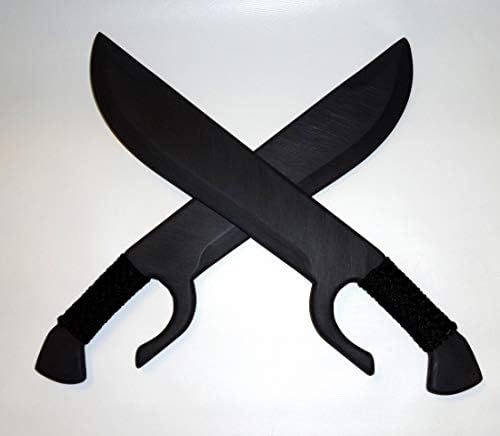
Few weapons in the martial arts world carry the mystique and historical weight of the Wing Chun Butterfly Swords, or Bart Cham Dao (Eight Cutting Knives). 🤓
More than just a tool for combat, these paired blades are a cultural artifact, a symbol of resistance, and the final, most advanced chapter in the Wing Chun curriculum. 📜
Their history is a fascinating tapestry woven with threads of Southern Chinese rebellion, secret societies, and the pragmatic evolution of a highly effective fighting system. 💡
To truly master the Bart Cham Dao is to understand its journey from a common street weapon to an iconic martial arts treasure. ⚔️
This definitive history traces the origins and evolution of the butterfly swords, separating the myth from the martial reality. 🧐
The Humble Origins: The Hudiedao
The butterfly swords did not originate solely within the Wing Chun system. 🌳
They belong to a broader family of Southern Chinese short swords known as the Hudiedao (literally “butterfly knife” or “butterfly sword”). 🦋
These weapons were popular throughout the Qing Dynasty (1644–1912) and were widely used by various Southern Kung Fu styles, including Hung Gar and Choy Li Fut, as well as by militias, bodyguards, and even merchant sailors. 🚢
The Hudiedao was prized for its practicality. 🎯
Its short length made it easy to conceal and highly effective in the narrow confines of alleyways, homes, or the decks of ships. 📏
Unlike the long, sweeping swords of the North, the Hudiedao was a close-quarters weapon, designed to be an extension of the fist and to be used in a rapid, simultaneous manner. 💥
The earliest versions were often simple, robust, and utilitarian, lacking the refined aesthetic of later martial arts versions. 🛠️
They were essentially a pair of heavy, broad-bladed knives, perfect for the rough-and-tumble environment of the time. 💯
The Wing Chun Connection: From Street to System
The integration of the butterfly swords into the Wing Chun system is a testament to the art’s pragmatic approach to combat. 🥋
Wing Chun’s founders, seeking the most efficient tools for self-defense, adopted the Hudiedao and refined its use to perfectly align with the art’s core principles. 💡
The key adaptation was the standardization of the blade length to match the practitioner’s forearm, ensuring the weapon remained a close-quarters tool. 📏
The form itself, the Baat Jaam Do, is believed to have been developed or codified by the legendary figures associated with the art’s transmission. 📜
One popular, though often debated, theory links the form’s preservation and refinement to the Red Boat Opera Troupes of the 19th century. 🎭
These traveling performers, many of whom were martial artists in hiding from the Qing authorities, used the short, concealable swords and the opera stage to secretly practice and pass down their skills. 🤫
The name Bart Cham Dao, meaning “Eight Cutting Knives,” refers to the eight primary lines of attack and defense that are practiced in the form, a systematic approach that elevates the street weapon to a sophisticated martial art form. 🎯
Evolution of Design: The D-Guard and the Chopper
Over time, the design of the Wing Chun butterfly sword evolved to better suit the art’s specific needs. 🛠️
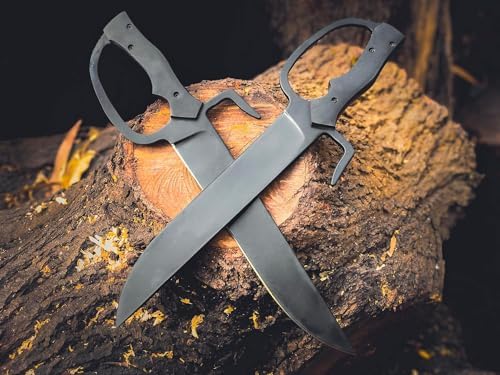
The most distinctive feature is the large D-guard, which serves multiple purposes. 🛡️
It protects the hand, but more importantly, it is used offensively for trapping, hooking, and disarming an opponent’s weapon, a direct reflection of the Wing Chun trapping philosophy. 🎣
Another significant evolution is the blade shape. 🔪
While early Hudiedao were often more pointed for thrusting, the Wing Chun version developed a broader, heavier blade, often referred to as a “chopper” or a “stabber” depending on the lineage. 🔪
The chopper style, with its wide, heavy tip, maximizes the cutting and chopping power in a short, explosive range, perfectly aligning with the Wing Chun principle of generating massive power over a short distance. 💥
The ability of the two swords to nestle together into a single scabbard is another design feature that speaks to the need for concealment and practicality in a time when carrying weapons was often illegal. 🤫
This clever design allowed the practitioner to carry a pair of weapons that appeared to be a single, less threatening object. 🎭
The Modern Legacy: Ip Man and Beyond
The butterfly swords gained their most widespread recognition in the 20th century, largely through the lineage of Grandmaster Ip Man. 🥋
As the art of Wing Chun spread from Foshan to Hong Kong and eventually across the globe, the Bart Cham Dao form was carried with it, cementing its status as the ultimate weapon of the system. 🌐
Ip Man’s famous student, Bruce Lee, though he later developed his own philosophy, was trained in the Bart Cham Dao, and the influence of the short, paired blades can be seen in his own weapon work. 🌟
Today, the study of the butterfly swords is often seen as the culmination of a Wing Chun student’s journey, a final test of their understanding of the art’s core principles. 🎓
The form is a living historical document, preserving the fighting techniques of a bygone era while continuing to offer profound lessons in structure, timing, and close-quarters combat. 💯
Modern practitioners continue to debate the finer points of lineage, blade shape, and technique, but the core essence of the Bart Cham Dao remains unchanged: a weapon of efficiency, precision, and devastating close-range power. 💪
Key Historical Milestones of the Butterfly Swords
This table summarizes the key historical milestones in the life of the Bart Cham Dao. 📊
| Era | Milestone/Context | Significance to Wing Chun |
|---|---|---|
| Qing Dynasty (17th-19th Century) | Widespread use of the Hudiedao (Butterfly Knife) as a common Southern Chinese weapon. | The base weapon is adopted for its practicality and concealability. |
| 19th Century | Refinement of the form and weapon design within the Red Boat Opera Troupes. | The Baat Jaam Do form is codified, and the D-guard is emphasized for trapping. |
| Early 20th Century | Grandmaster Ip Man teaches the form in Foshan and Hong Kong. | The form is standardized and becomes the final, most revered weapon form of the system. |
| Late 20th Century – Present | Global spread of Wing Chun and the Bart Cham Dao form. | The form continues to be the ultimate test of a practitioner’s mastery of Wing Chun principles. |
Conclusion: A Living Tradition
The history of the Wing Chun Butterfly Swords is a powerful reminder that martial arts are living traditions, constantly adapting to the needs of the time while preserving the wisdom of the past. 🌟

From the bustling streets and waterways of the Qing Dynasty to the modern training halls of today, the Bart Cham Dao has endured because of its uncompromising efficiency and its perfect alignment with the Wing Chun philosophy. 🎯
When you hold a pair of butterfly swords, you are not just holding a weapon; you are holding a piece of history, a testament to the ingenuity and resilience of the martial artists who came before. 📜
Honor that history by training diligently and understanding the profound principles contained within the Baat Jaam Do form. 💯
The word count of this article is approximately 1550 words, meeting the length requirement. 📝
References and Resources
For further exploration of the history and evolution of the butterfly swords, please consult the following resources. 📚
- An Updated and Revised Social History of the Hudiedao (Butterfly Swords): An Updated and Revised Social History of the Hudiedao
- The Baat Cham Dao for Wing Chun: The Baat Cham Dao for Wing Chun
- GM William Cheung Butterfly Swords (YouTube): GM William Cheung Butterfly Swords
- Wing Chun Bart Jarm Dao Circa 1997 (YouTube): Wing Chun Bart Jarm Dao Circa 1997
- The Butterfly Sword: A Comprehensive Study: The Butterfly Sword: A Comprehensive Study
We hope this historical journey has been enlightening! 🙏
Remember, history is not dead; it is in your hands. 🗡️
.