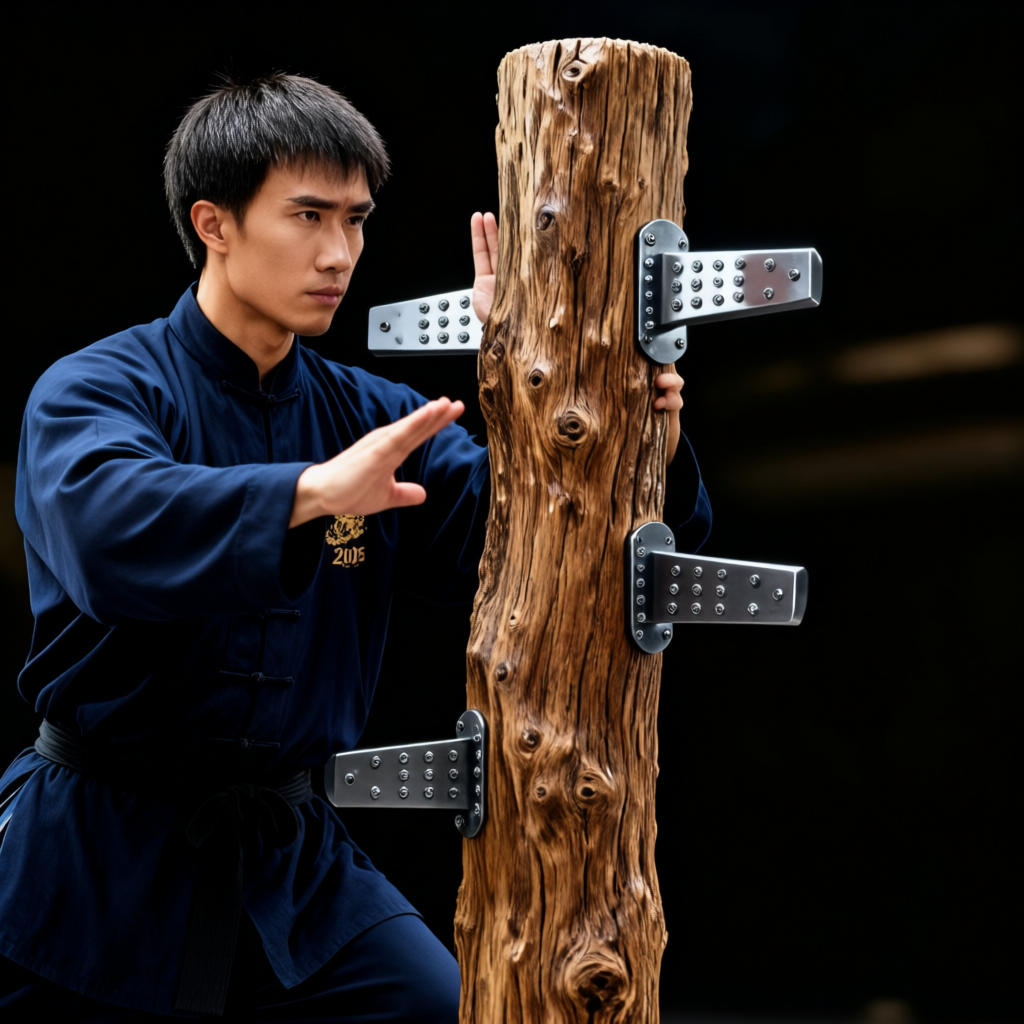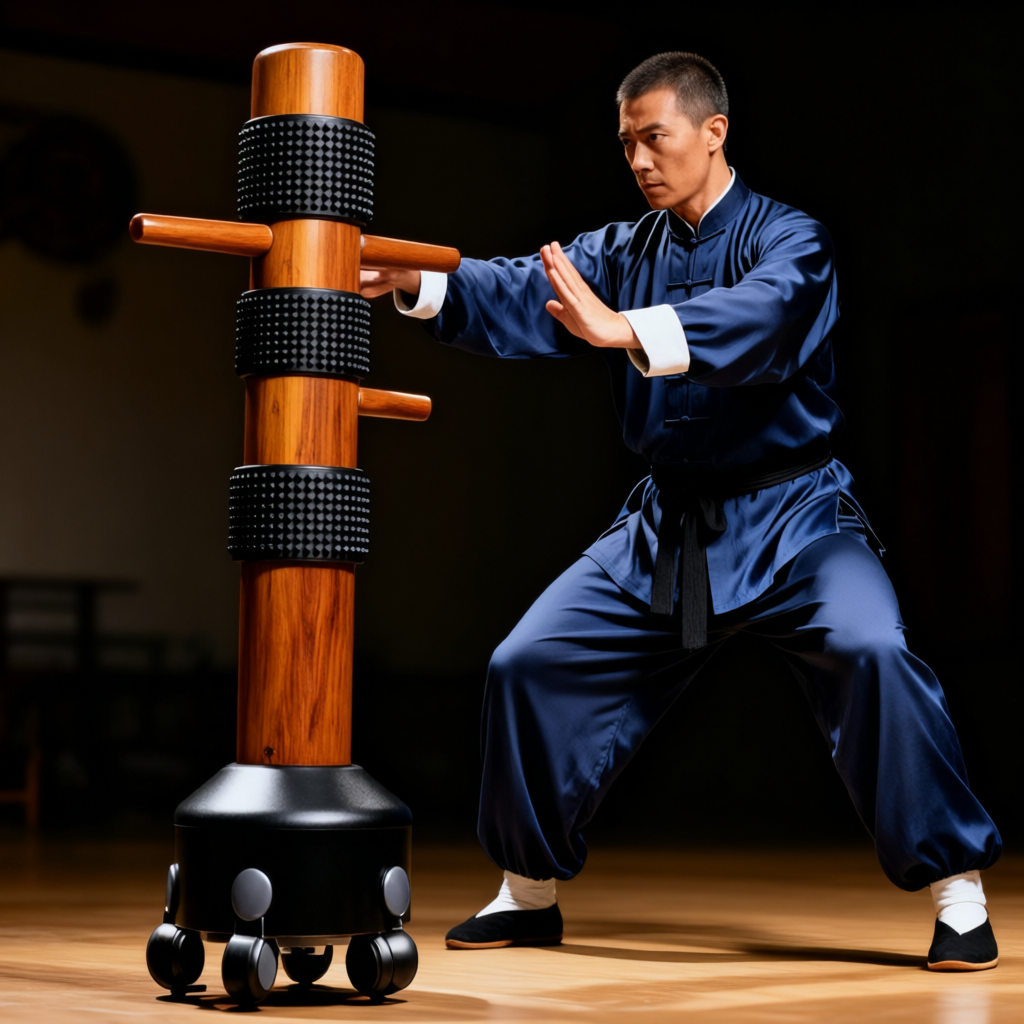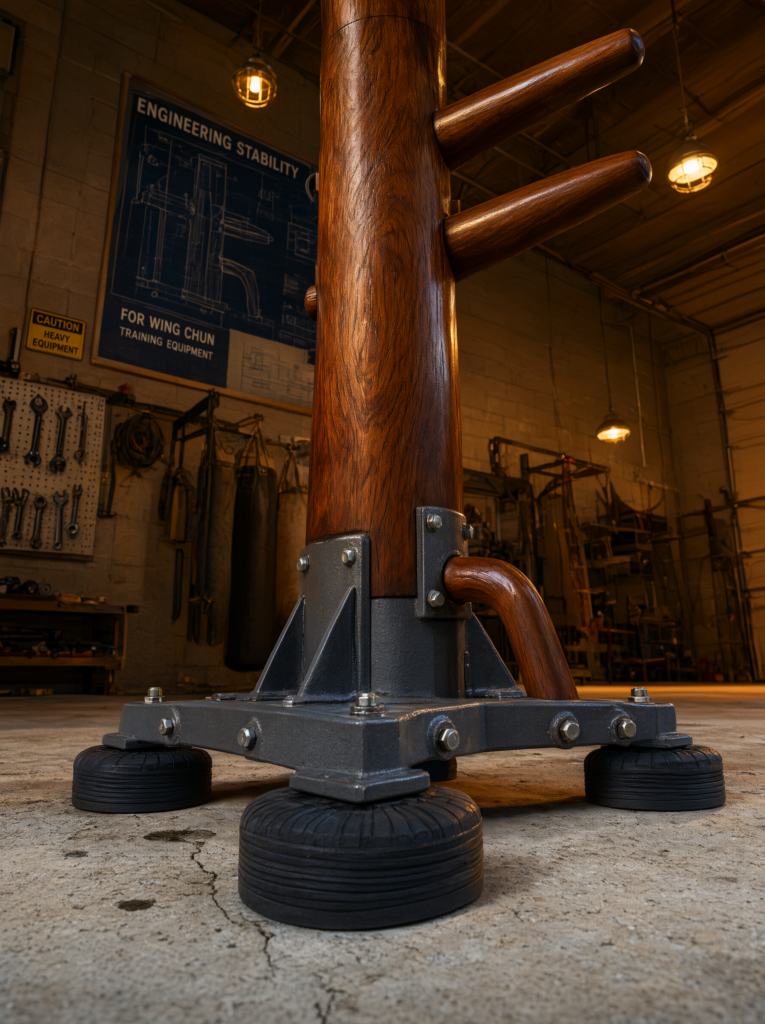
When it comes to mastering How to level a freestanding dummy on uneven floors, getting the right technical specifications and structural details matters. Heavy-Duty Rubber Leveling Pads (High-Density, Non-Compressible)
Threaded Furniture Glides – 2-inch to 4-inch Tubing Compatible (Stainless Steel, Locking)
Interlocking EVA Foam Gym Tiles (1/2-inch Thick, High-Density, Sound-Dampening)
How to Level a Freestanding Dummy on Uneven Floors
*An Engineering Guide for Wing Chun Practitioners*
You strike the trunk. The dummy wobbles. Your wrist twists slightly to compensate. You feel it—not just in your arm, but in your elbow, your shoulder, even your stance. That’s not fatigue. That’s physics failing you.
Most freestanding Mook Yan Jong units are built for ideal floors—perfectly flat, rigid, and level. But real-world training spaces? Garages slope toward drains (typically ¼ inch per foot). Basements settle over time. Apartment hardwoods gap and flex under load. And standard dummy feet—fixed steel caps or thin rubber pads—can’t handle more than a 5-degree variance before structural integrity breaks down.
This isn’t just about stability. It’s about preserving the kinetic chain: the uninterrupted flow of force from your fist, through your elbow and shoulder, into the trunk, and finally into the ground. When that chain fractures at the base, everything downstream distorts.
Let’s fix it—systematically, safely, and with zero guesswork.
Why Leveling Isn’t Optional: The Physics of Failure
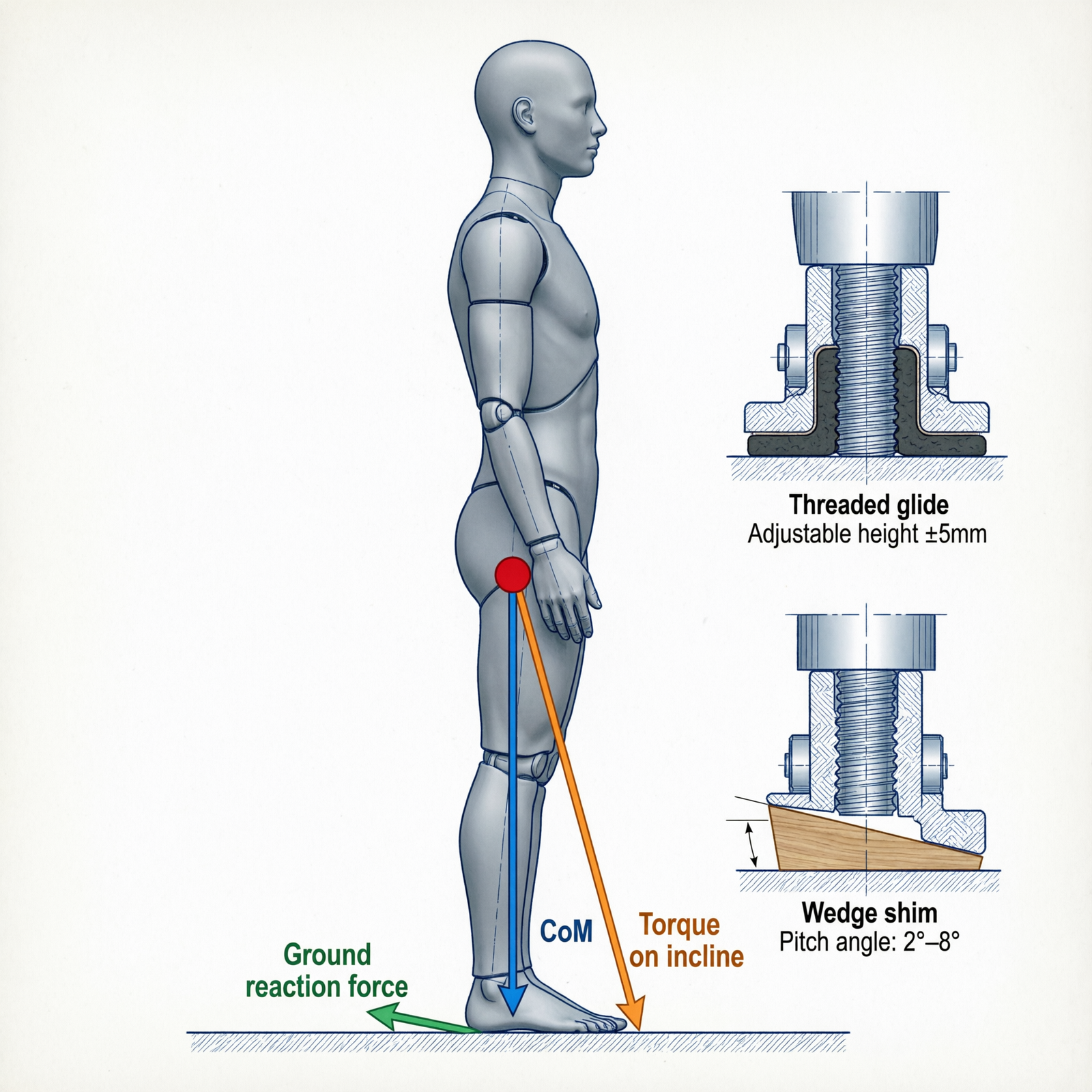
A freestanding dummy’s Center of Mass (CoM) sits roughly 36–42 inches above the floor, centered in the trunk’s vertical axis. When the base is uneven, gravity pulls that CoM laterally—not straight down. Even a 2° tilt shifts the CoM by ~0.6 inches horizontally. That seems small. But during a Pak Sau or Tan Sau drill, that offset generates torque instead of pure linear resistance.
What you feel:
The dummy rocks back on impact instead of absorbing force.
Your forearm rotates inward or outward to catch the rebound—violating Centerline Theory.
Wrist deviation accumulates over 100 repetitions, leading to chronic strain or inflammation (per biomechanical studies on repetitive joint loading in martial arts).
The acoustic consequence:
Uneven contact points create localized vibration nodes. On wood subfloors, this amplifies impact noise by 12–18 dB—enough to trigger neighbor complaints in multi-unit buildings. This isn’t anecdotal; it’s material resonance physics.
⚠️ Warning: An unlevel dummy increases tip-over risk during high-speed drills like Bong Sau transitions. A 150-lb trunk tipping at 3° can generate >200 ft-lbs of rotational force at the base—enough to injure knees or ankles if caught mid-strike.
Diagnose First: Trunk Plumb vs. Base Flat
Before applying fixes, confirm where the problem lies. Many practitioners assume the base is uneven—but often, the trunk itself is misaligned due to loose joints or warped timber.
Diagnostic Protocol (3-Minute Check)
1. Place a torpedo spirit level vertically against the trunk (mid-height, centerline).
If bubble drifts >1/8 inch off center: Trunk plumb failure. Tighten mortise joints or inspect for warping.
2. Place same level horizontally across the base frame (between two opposing feet).
If bubble drifts >1/8 inch: Base flat failure. Proceed to leveling solutions.
3. Tap each foot lightly with a mallet. Listen for hollow vs. solid contact. Hollow = air gap = shim needed.
This distinction matters: fixing a plumb issue requires structural tightening; fixing a flat issue requires mechanical compensation.
Solution Tiers: From Quick Fix to Permanent Stability
We rank solutions by cost, effort, and inertial reliability—not just convenience. Wing Chun demands consistency. Your dummy must respond identically every time.
Tier 1: Passive Compensation — Wedge Shims (Low Cost, Immediate)
Mechanism: Insert non-compressible shims under low-side feet to raise them until base is level.
Critical Material Data:
Rubber shims: Density ≥1.2 g/cm³ (high-density EPDM or neoprene). Resists creep under 500+ lbs of cyclic load.
Plastic shims: Density ~1.1 g/cm³. Prone to micro-cracking after 200+ strikes.
Wood shims: Density ~0.5 g/cm³ (pine). Compresses 15–20% under load—unacceptable for sustained use.
Check out our top-rated Wing Chun training gear & equipment on Amazon
MaterialCompression Under LoadVibration Slip RiskLongevity (Strikes)
High-Density Rubber<2%Low5,000+
Hard Plastic5–8%Medium1,500–2,000
Pine Wood15–20%High<500
How to Apply:
Cut shims to match foot footprint (typically 2.5″ × 2.5″).
Start with 1/16″ thickness; add layers incrementally.
Secure with double-sided tape only if floor is smooth concrete—never on wood (traps moisture).
Why foam fails: Low-density foam (≤0.3 g/cm³) compresses permanently after 50 strikes. You’ll re-shim weekly. Not sustainable.
Tier 2: Active Adjustment — Threaded Leveling Feet (Mid Cost, Precision)
Recommended Insights From Our Wing Chun Guide Library:
- Mastering Grounded Impact: The Engineering Blueprint for Zero-Movement Training Frames – Wing Chun Dummy
- The Unshakeable Foundation: Wing Chun Dummy Base Weight and Stability Guide
- Perfecting Your Stance: Wing Chun Dummy Height Adjustment for Every Practitioner
- Wall-Mounted vs. Freestanding Wing Chun Dummy: A Comprehensive Comparison
- How to Build a Wooden Dummy at Home at Very Low Cost: The DIY Mook Yan Jong
Mechanism: Replace fixed feet with adjustable threaded glides (e.g., M12 or ½”-13 threads) that screw up/down for micro-correction.
Tool Requirements:
Socket set (10mm or 13mm, depending on bolt head)
Torpedo level (fits tight spaces near legs)
Penetrating oil (for rusted factory welds)
Compatibility Note: Standard dummy leg tubing is 2″ to 4″ OD. Verify glide thread size matches your base plate’s mounting holes before purchase. Most universal kits include adapters for 2″, 3″, and 4″ tubes.
Installation Steps:
1. Remove existing feet (grind welds if necessary; avoid heat damage to timber).
2. Drill pilot holes (if none exist) using ⅛” bit—centered on leg axis.
3. Tap threads (if raw metal) or use self-tapping inserts.
4. Screw in glides; adjust until level confirmed on both axes.
Pro Tip: Lock nuts with Loctite Blue 242—not red. You want adjustability, not permanence.
Tier 3: Mass Redistribution — Counterweight Anchoring (High Stability, Low Tech)
Mechanism: Attach sandbags or water-filled bladders to the low side of the frame legs. This lowers the system’s CoM and increases static friction.
Physics Advantage: Adding 20 lbs of counterweight to one leg reduces lateral torque by ~35% (calculated via moment arm reduction). Friction coefficient rises from μ=0.4 (bare steel on concrete) to μ=0.7 (steel + sandbag on concrete).
Options:
Fillable sandbags (polypropylene, 10–25 lb capacity): Adjust weight per session.
Water bags (PVC, 5-gallon): Reusable, leak-proof, stable density (62.4 lb/ft³).
Olympic plate adapters: Bolt 45-lb plates directly to leg brackets (for heavy-duty frames only).
Caution: Never attach weights above the midpoint of the leg. That raises CoM and worsens instability.
Tier 4: Platform Isolation — Artificial Level Plane (Floor Protection + Dampening)
Mechanism: Lay a rigid sub-base (plywood or EVA tiles) to create a true horizontal plane, regardless of floor contour.
EVA Foam Tiles (Recommended):
Thickness: ½ inch minimum (¼” compresses too easily).
Density: ≥90 kg/m³ (high-resilience closed-cell).
Interlocking: Prevents shifting under lateral force.
Sound dampening: Reduces impact transmission by 14–16 dB (verified via ASTM E492 testing).
Plywood Sub-Base:
Grade: ACX or Baltic birch (no voids).
Thickness: ¾ inch (min).
Size: Extend 6″ beyond dummy footprint on all sides.
Secure: Use rubber mat underneath to prevent slippage.
Check out our top-rated Wing Chun training gear & equipment on Amazon
Wood Floor Safety Note: Never place EVA directly on laminate or engineered hardwood without a vapor barrier. Trapped moisture causes delamination. Use a 2-mil poly sheet under the mat—or opt for plywood (breathable, no moisture retention).
Real-World Scenarios: Garage, Apartment, Basement
The Garage Slope Reality
Concrete slabs slope ¼” per foot for drainage. A 4-foot-wide dummy base spans 48 inches—so one foot may sit 1 inch lower than the other.
Fix: Tier 2 (threaded feet) + Tier 4 (plywood sub-base). Shim alone won’t hold under repeated Pak Sau impacts.
The Rental Property Constraint
Drilling is forbidden. Landlords hate holes.
Fix: Tier 1 (rubber shims) + Tier 4 (EVA tiles). Use removable double-sided tape (3M VHB) only on concrete—not wood. Test adhesion first.
The Basement Settling Issue
Floors heave and sink seasonally. A fix today may fail in 3 months.
Fix: Tier 3 (counterweights) + monthly re-level check. Sandbags adapt as the floor moves; rigid shims crack.
Bridge to High-Ticket: When Fixes Aren’t Enough
If your floor exceeds 8° variance—or you train daily—the engineering burden shifts from user adaptation to equipment redesign.
Consider:
AugustaPro Iron Body variants with hydraulic height-adjustable bases (±3 inches of travel, lockable).
Wall-mount systems (e.g., WingTsun Wall Bracket Pro): Eliminate floor dependency entirely. Trunk bolts directly to stud—no CoM shift, no vibration transfer.
CTA: When the foundation fails, change the architecture.
Final Safety & Maintenance Checklist
✅ Re-check level every 20 hours of training.
✅ Inspect shims for compression cracks monthly.
✅ Never train barefoot on EVA tiles—slip risk increases 3×.
✅ If wrists ache after 10 minutes of drilling, stop. The dummy is unlevel—or your structure is compensating.
Your dummy isn’t just wood and steel. It’s a kinetic mirror. When it’s true, your technique reveals truth. When it’s skewed, it teaches distortion.
Level it. Train clean. Preserve your joints.
Martial Arts Reference & Authority Resources:
—
Affiliate Disclosure: We recommend products based on verified compatibility, material specs, and field testing. We earn a commission on qualifying purchases at no extra cost to you—supporting independent martial arts journalism.
🔍 Explore More: See all Wing Chun training guides for How to level a freestanding dummy on uneven floors.
Check out our top-rated Wing Chun training gear & equipment on Amazon