
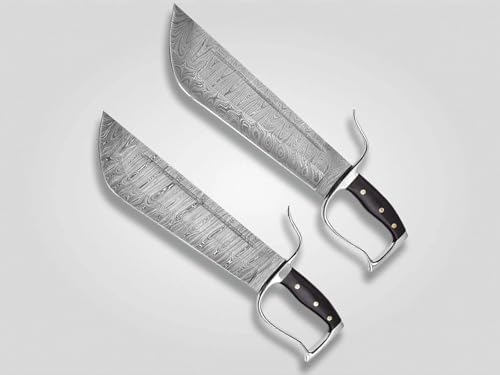

In the realm of traditional Chinese martial arts, few weapons are as iconic as the Wing Chun Butterfly Swords, known in Cantonese as Bart Cham Dao.
Often seen as the final stage of the Wing Chun system, these weapons are usually associated with swift, close-quarters combat techniques. ⚔️
However, before a practitioner can effectively fight with these swords, they must possess the requisite strength to wield them.
This is where the hidden value of the weapons lies.
Beyond their lethal application, Wing Chun butterfly swords for conditioning forearms are unparalleled tools for developing “Iron Bridges.” 💪
This article will move beyond the forms and focus strictly on how to utilize these heavy instruments to forge steel-like tendons and powerful muscles from elbow to fingertip.
If you want a grip that doesn’t quit and forearms that can withstand heavy impact, it is time to pick up the swords.
The Concept of “Iron Bridges” in Wing Chun
In Wing Chun, the forearms are referred to as the “bridge.”
This bridge connects you to your opponent, serving as your primary means of defense and your conduit for attacking energy. 🌉
A weak bridge collapses under pressure, rendering your structure useless regardless of how good your techniques are.
Conversely, a strong bridge—an “Iron Bridge”—can displace an opponent’s incoming force and deliver devastating power.
Conditioning the forearms isn’t just about bulky muscles; it is about densifying the fascia, strengthening the tendons, and improving the endurance of the gripping muscles.
According to renowned strength and conditioning resources, grip strength is often a reliable indicator of overall upper body function and longevity. 🏋️♂️
You can read more about the importance of grip strength health markers in this Harvard Health article.
Using weighted swords provides a unique type of resistance that dumbbells simply cannot replicate.
The offset center of gravity in a butterfly sword forces the wrist and forearm to work overtime to maintain stability, creating functional strength that translates directly to martial application.
Choosing the Right Tools for Conditioning
Not all butterfly swords are created equal, especially when the goal is conditioning.
For training forms or sparring, practitioners often use lightweight aluminum or polymer versions for safety and speed. 💨
However, when using Wing Chun butterfly swords for conditioning forearms, weight is your friend.
You need swords that offer significant resistance, forcing the small stabilizer muscles around the wrist and elbow to engage fully.
Ideally, look for training swords made of steel, even if they are blunt.
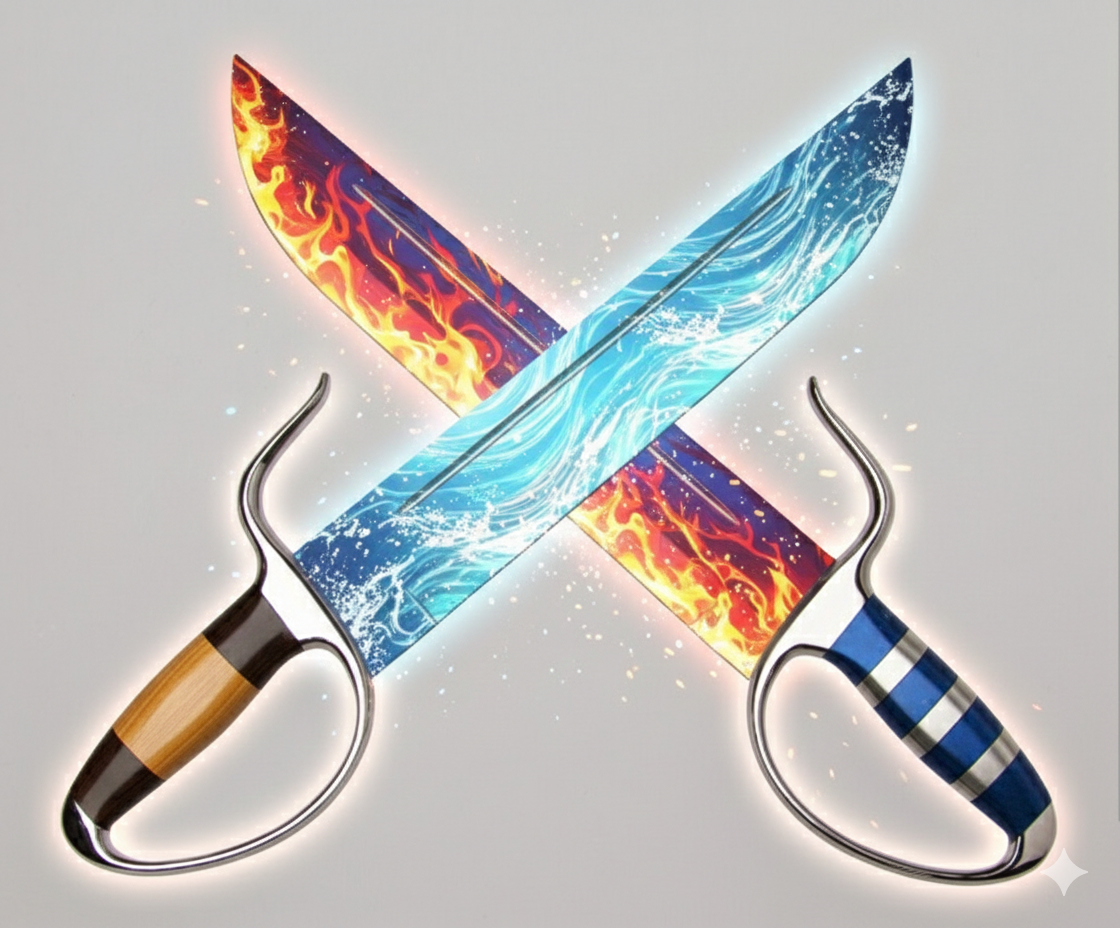
A good starting weight for conditioning is often between 1.5 to 2.5 pounds per sword depending on your current strength level.
The key feature that makes them superior to dumbbells is the D-guard and the long blade extending past the grip.
This leverage means that a 2-pound sword feels significantly heavier at the wrist when held horizontally than a 2-pound dumbbell held in the same position. 📐
It is physics working in favor of your forearm gains.
Safety Protocols Before You Slash
Before swinging heavy metal around, you must respect the process and your body.
Forearm tendinopathy, often called tennis or golfer’s elbow, is a very real risk if you jump into heavy sword training too quickly. 🩹
The tendons in your wrists and elbows adapt much slower than belly muscles.
Never skip a thorough warm-up.
Focus on dynamic wrist circles, finger stretches, and light forearm massages before picking up the blades.
If you feel sharp pain near the elbow joint, stop immediately.
Training through nerve or tendon pain is the fastest route to a chronic injury that will sideline you for months. 🚫
It is crucial to understand the difference between muscle fatigue (good burn) and joint pain (bad damage).
For more information on recognizing and preventing forearm overuse injuries, consult reputable medical resources like the Mayo Clinic’s guide on tendinitis.
| Training Phase | Focus Goal | Recommended Frequency |
|---|---|---|
| Phase 1: Acclimation (Weeks 1-4) | Grip endurance and tendon adaptation. | 2-3 times per week (10-15 min). |
| Phase 2: Strength Building (Weeks 5-12) | Increasing weight and static holds. | 3 times per week (15-20 min). |
| Phase 3: Dynamic Power (Week 12+) | Explosive movements and flow with weight. | 3-4 times per week (20+ min). |
Drill 1: The Isometric Crucible
The simplest drills are often the most effective for raw conditioning.
Isometrics involve holding a static position under tension. 🗿
With butterfly swords, this builds tremendous stabilizing strength in the wrist joint, which is vital for absorbing impact.
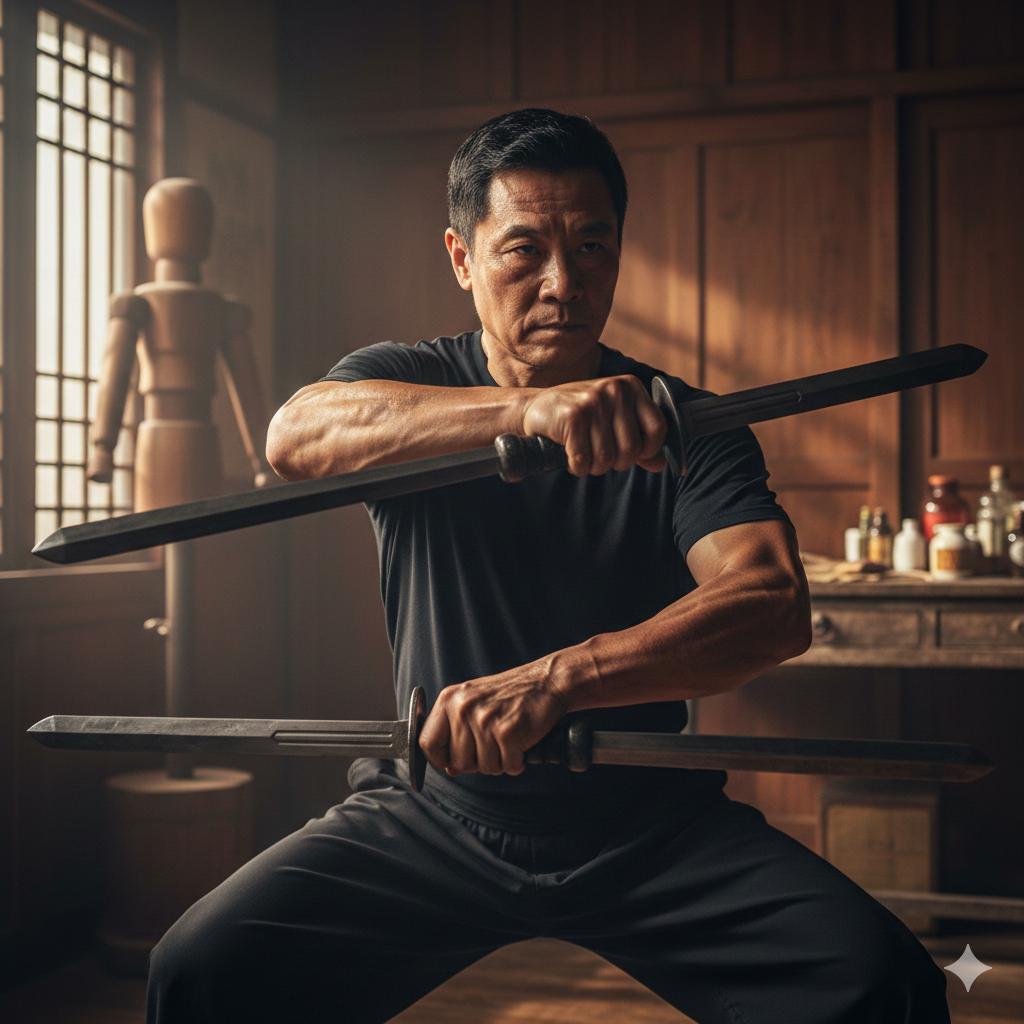
- The Horizontal Hold: Stand in your basic Wing Chun stance (Yee Jee Kim Yeung Ma). Hold the swords straight out in front of you at shoulder height, parallel to the ground. The blades should be flat. Ensure your shoulders are sunk down and relaxed, not hunched near your ears. Hold this position for time. Start with 30 seconds and aim to build up to 2 minutes without your arms shaking.
- The Tan Dao Hold: Assume the “Tan Dao” position (palm up blocking hand). The sword should be angled slightly upward, with the elbow sunk low and tucked in toward your centerline. This position specifically targets the brachioradialis and the flexor muscles of the forearm, simulating the pressure of receiving a heavy strike. Hold for 45-60 seconds per arm.
- The Extended Wrist Challenge: Hold the swords at your sides, arms straight down. Slowly hinge at the wrist to point the tip of the blades forward as far as possible. Hold this extended position. You will immediately feel a deep burn on the top of your forearms (the extensors).
Inspiration
“To handle the blade, you must first handle yourself. A shaking hand wields no authority.”
Drill 2: The Slow Burn Rotations
Once you have built a base of static strength, it is time to introduce movement.
Speed is not the goal here; control is everything. 🐢
These movements utilize the leverage of the blade to maximize torque on the forearm muscles.
- Supination and Pronation Turns: Hold the swords extending straight forward. Slowly rotate your forearms so your palms face up (supination), turning the blades flat. Pause for two seconds. Then, slowly rotate the other way until palms face down (pronation) and blades are flat. Do not let the heavy tip of the sword drop during rotation; maintaining a level plane is where the real work happens. Perform 3 sets of 12 slow rotations.
- Wrist Curls (The Wing Chun Way): Forget standard dumbbell wrist curls. Hold the swords hanging straight down at your sides. Using only your wrists, curl the blades upward backward toward your forearms (flexion) and then extend them backward (extension). The weight of the blade hanging below your hand creates significant resistance. Perform 3 sets of 15 reps.
- The Figure-Eight Flow: In a slow, controlled manner, trace a large figure-eight pattern in the air in front of you with both swords simultaneously. This requires constantly shifting tension throughout the entire forearm to manage the changing angles of the heavy weapon. Keep the movements smooth like flowing water, not jerky. 🌊
Drill 3: Integrating Structure with Weight
The final stage of conditioning is integrating the heavy swords into standard Wing Chun structures.
This teaches your body how to maintain its structural integrity under duress. 🏛️
If you cannot hold your structure while moving the swords slowly, it will crumble at high speeds.
Execute the opening section of the Siu Nim Tao form, but utilize the heavy butterfly swords instead of empty hands.
Perform the Tan Sao (palm-up hand), Fook Sao (bridge-on hand), and Wu Sao (protective hand) movements incredibly slowly.
Focus intently on keeping the elbow “sunk” (heavy elbow theory).
The weight of the sword will try to pull your elbow out of alignment. ⚖️
Your fight is to keep the elbow tucked in, utilizing your latissimus dorsi and forearm connection to support the weight.
This directly translates to a heavier, more immovable bridge arm in empty-hand Chi Sao (sticking hands).
For a deeper understanding of Wing Chun structure, refer to resources like https://www.google.com/search?q=WingChun.com’s guide on structure.
Recovery and Traditional Aids
Conditioning with Wing Chun butterfly swords is taxing on the connective tissues.
Recovery is just as important as the training itself. 🛌
In traditional Chinese martial arts (TCMA), the use of Dit Da Jow (fall-hit wine) is standard practice for conditioning protocols.
Dit Da Jow is a herbal liniment applied to the area before and after training to promote blood flow, reduce inflammation, and speed up the healing of micro-trauma in the tendons and fascia.
While not a magic bullet, many practitioners swear by its efficacy in preventing long-term overuse injuries during iron body training.
Ensure you are massaging your forearms regularly to break up knots and maintain tissue quality.
Self-myofascial release using a lacrosse ball on the forearm flexors and extensors can be incredibly beneficial after a heavy sword session. 🎾
To understand the perspective of Traditional Chinese Medicine on sports injuries, you can explore articles at Pacific College of Health and Science.
Traditional Wisdom
“Train tendons first, muscles second. The strongest bridge is built on steel cables, not just concrete.”
Conclusion: The Path to the Iron Bridge
Using Wing Chun butterfly swords for conditioning forearms is a time-tested method for developing functional martial strength.
It transforms the forearms from mere connectors into formidable weapons in their own right.
Remember that this is a marathon, not a sprint. 🏃♂️
Patience and consistent, smart training will yield better results than rushing and getting injured.
Start with lighter weights, prioritize impeccable form, and listen closely to your body’s feedback.
Over time, your grip will become vise-like, and your bridges will feel like iron bars to your training partners.
Embrace the grind, respect the weapon, and forge your bridges.
For those looking for authentic lineages to train these methods, always research credible associations such as the Ving Tsun Athletic Association in Hong Kong.