The Wing Chun chain punch, or Lian Wan Kuen, is arguably the most iconic technique in the entire system. 🤓
It is a relentless, rapid-fire barrage of vertical punches aimed at an opponent’s centerline, designed to overwhelm and incapacitate. 💥
Achieving true lightning speed and devastating power in this technique requires dedicated, structured training. 📌
For Wing Chun practitioners, there is no better tool for this purpose than the **Mook Yan Jong**, the legendary Wooden Dummy. 🌳
This article will guide you through the essential dummy drills that will transform your chain punching from a simple flurry into an unstoppable force. 💪
We will focus on the principles of structure, footwork, and continuous force generation that the dummy is uniquely suited to teach. 💡
The Mook Yan Jong: Your Silent Training Partner
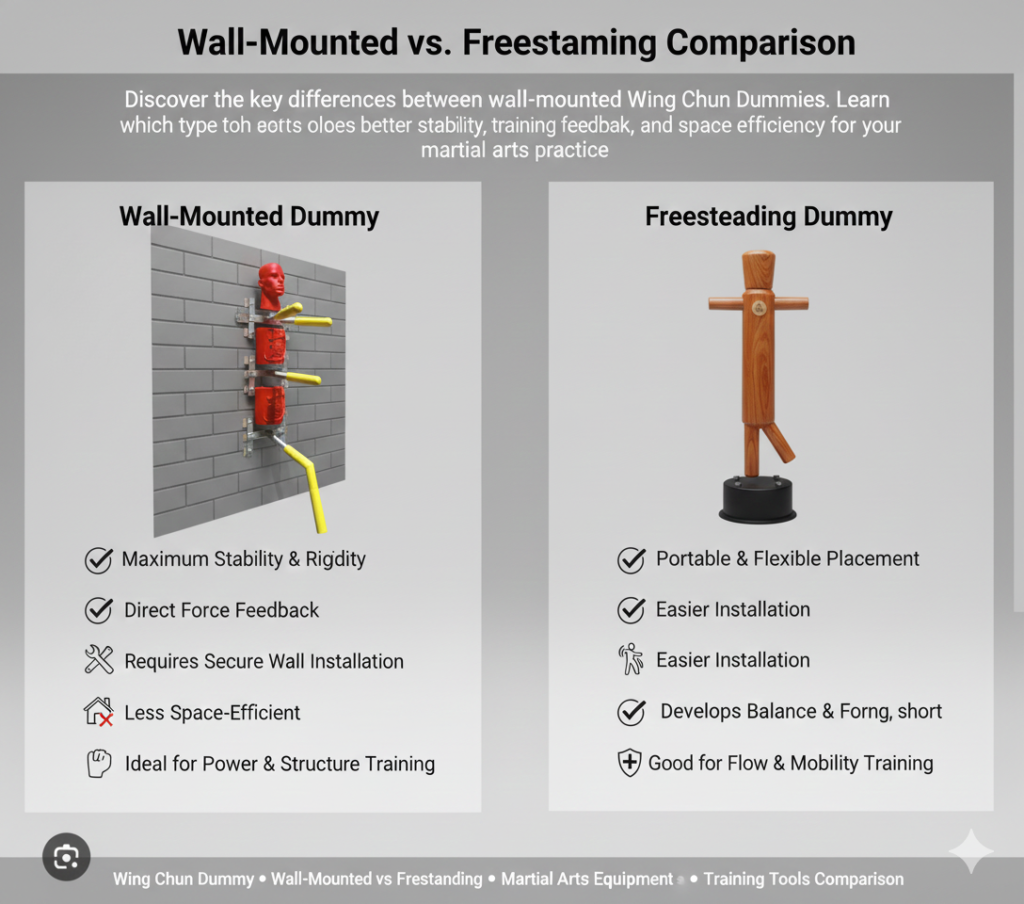
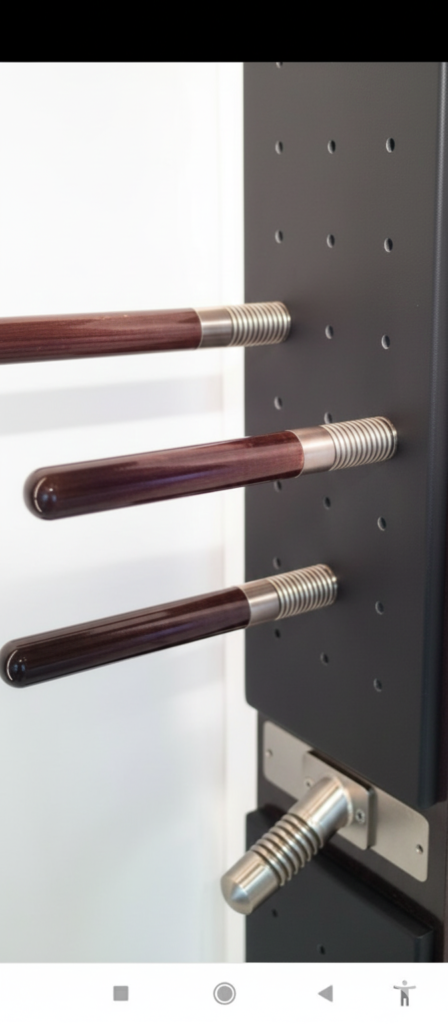
The Wooden Dummy is a sophisticated training device, far more than just a wooden post with arms. 🥋
It is a representation of a human opponent, with its arms and leg positioned to simulate the angles and gates of a person’s structure. The history of the Mu ren zhuang (Mook Yan Jong) is deeply rooted in Southern Chinese martial arts. [1]
Its primary purpose is to develop proper structure, angle, and position, which are the foundations of speed and power in Wing Chun. 🧱
The dummy forces you to maintain a strong, stable stance and to deliver force along the centerline without being deflected. 🎯
The Mook Yan Jong form itself comprises 116 techniques, integrating movements from all three empty-hand forms: Siu Nim Tau, Chum Kiu, and Biu Gee. [2]
By training on the dummy, you learn to absorb the shock of your own strikes, which builds the necessary conditioning for continuous, high-speed punching. ⚡
As a solo training device, the dummy helps practitioners develop hand-to-hand fighting skills without needing a partner, making it an invaluable tool for consistent practice. [3]
The design, famously refined by Grandmaster Ip Man, ensures that every strike and block is executed with precise geometry. The story of Ip Man’s Wooden Dummy is a fascinating chapter in martial arts history. [4]
Core Benefits of Dummy Training for Chain Punching
| Benefit | Impact on Chain Punch |
|---|---|
| Structural Integrity | Ensures your punches are backed by your entire body mass, not just arm strength. |
| Centerline Control | Develops the muscle memory to keep all strikes focused on the opponent’s most vulnerable line. |
| Footwork and Angling | Trains you to step and shift while maintaining continuous attack, crucial for speed. |
| Contact Reflexes | The dummy’s arms provide immediate feedback, teaching you to adapt and continue the attack instantly. |
The Science of the Chain Punch: Speed Through Structure
The speed of the chain punch is not achieved through frantic muscle contraction, but through efficiency and relaxation. 🧘
The vertical fist is key, as it allows for a more direct, shorter path to the target, minimizing travel time. 📏
This alignment also ensures that the wrist and forearm are structurally supported by the bones, allowing for maximum force transfer upon impact. 🦴
The principle of simultaneous attack and defense is inherent in the chain punch, as the returning hand acts as a guard, ready to deflect or control. 🛡️
When executed correctly, the chain punch is a continuous wave of force, where the retraction of one punch fuels the launch of the next. 🌊
This is where the dummy becomes indispensable, as it provides a solid, unmoving target to test and refine this continuous motion. 🎯
The goal is to achieve “invisible speed,” where the punches are so quick and structurally sound that the opponent cannot perceive or react to the individual strikes. This concept is central to the Wing Chun punching philosophy. [5]
The Essential Drill: The 3-2-3 Chain Punch Sequence
To specifically train for chain punching speed and fluidity on the Mook Yan Jong, we utilize a drill that incorporates footwork and variable angles: the **3-2-3 Sequence**. 🔄
This drill is designed to simulate the dynamic, close-range fighting that Wing Chun excels at. 🥊
Step 1: Three-Position Footwork
The drill begins with mastering the three positions relative to the dummy’s trunk. 👣
Start in the central, square-on position, with your stance directly facing the dummy. 🧍
The next two positions are 45-degree angles to the left and right of the dummy, achieved through a quick, controlled side-step or *Jing Ma* (shifting stance). 📐
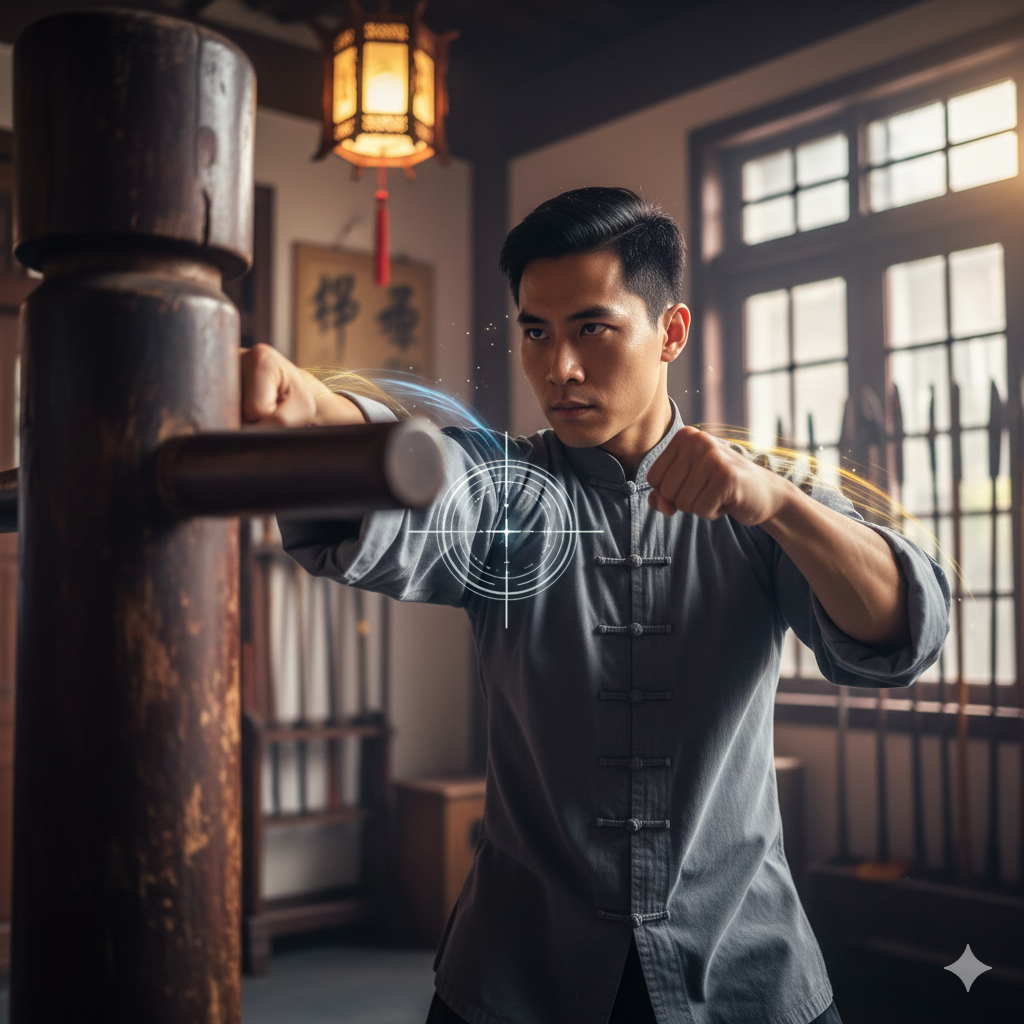
The dummy’s leg serves as a crucial reference point; your footwork must allow you to maintain a strong, balanced structure while moving around this obstacle. 🚧
This movement is vital because in a real fight, you must constantly seek the superior angle to maintain your centerline attack. ➡️
Step 2: Hip Rotation and Power Generation
The power for your chain punch must come from your hips and legs, not your shoulders. 🦵
As you punch, ensure your hips remain facing the dummy’s trunk, using a slight, sharp rotation to drive the force forward. 🌀
The dummy’s solid nature provides immediate feedback: if your structure is weak or your power is misaligned, the impact will feel jarring and ineffective. 🤕
Focus on the feeling of your entire body weight being channeled through the punch, even at high speed. 🚄
This is the secret to turning speed into true, penetrating power. A relaxed body can move faster and hit harder than a tense one, as tension is the enemy of speed and structure. 🕊️
Step 3: Variable Angle Punching
The chain punch is often taught as a single, vertical line, but the dummy allows you to train two critical variations: the Diagonal and the Vertical Punch. ⚔️
The Diagonal Punch involves the elbow moving slightly inward, “contracting” the space and closing down the opponent’s defensive options. 🤏
The **Vertical Punch** is the classic centerline strike, with the elbow moving straight forward, “expanding” the attack. ⬆️
Alternating between these two angles during the chain punch sequence prevents predictability and enhances your ability to find openings. 🔓
The 3-2-3 Sequence Breakdown
The drill combines the footwork and punching angles into a continuous flow. 🌊
The entire sequence should be performed with minimal pause, focusing on the seamless transition between positions and punches. ⏱️
- Start on the Left 45-Degree Angle: Execute **three** rapid chain punches, alternating between diagonal and vertical angles.
- Shift to the Center Position: Execute **two** rapid chain punches, focusing purely on the vertical centerline strike.
- Shift to the Right 45-Degree Angle: Execute **three** rapid chain punches, again alternating the angles.
- Repeat: Immediately flow back to the center and then to the starting position, maintaining the continuous rhythm.
This drill forces you to generate speed while moving, which is a far more realistic training scenario than stationary punching. 🏃
This video demonstrates the core concept of using the dummy for continuous punching technique. 🎥
Refining Your Technique: Common Pitfalls and Advanced Tips
Speed is a byproduct of perfect technique, not a goal in itself. 💯
If you focus on relaxation and structure, the speed will naturally follow. 🌟
Advanced Training Tips
To further enhance your chain punching speed and power, consider these advanced tips: 🚀
- The “Pop” and “Snap”: Focus on the moment of impact. The punch should “pop” off the dummy, with a quick, sharp retraction, rather than pushing into the wood. This is crucial for speed.
- Breathing: Exhale sharply with each strike, using the diaphragm to create a powerful, rhythmic cadence. Never hold your breath.
- The “Myth” of the Chain Punch: Understand that the chain punch is a tool for a specific situation—usually when you have already gained the advantage and compromised your opponent’s structure. It is not a universal attack, and relying on it blindly is a common mistake that advanced training must correct. 🛑
- Visualization: As you train, visualize the dummy’s arms as an opponent’s guard, and your punches as finding the gaps and overwhelming the defense.
This video provides further insight into generating speed and power on the wooden dummy. 💡
Remember, the dummy is designed to expose your weaknesses. 🔎
If your structure collapses or your rhythm breaks, the dummy will not yield, forcing you to correct your form. 🛠️
This immediate, unforgiving feedback loop is what makes the Mook Yan Jong the ultimate tool for perfecting your chain punch. 🥇
The goal is to be able to deliver a continuous, high-speed attack while maintaining the perfect Wing Chun structure, ready to adapt to any counter-movement. 🔄
The chain punch is not just about hitting fast; it is about hitting with **unbroken, structurally sound force**. 🔗
Keep practicing the 3-2-3 sequence, and you will soon find your chain punching speed and power reaching new, explosive levels. 💥
Finally, it is important to understand the practical application and common misconceptions surrounding the chain punch. A true master understands when to use the chain punch and when to transition to other techniques. 🧠
Dedication to the Mook Yan Jong is dedication to the core principles of Wing Chun. 🥋
Train hard, train smart, and let the dummy be your guide to mastery. 🙏
References
[2] Wing Chun Dummy Form – Kwok Wing Chun
[3] What is the Wooden Dummy For? – Dragon Institute
[4] The Story of Ip Man’s Wooden Dummy – Kung Fu Tea
[5] What is the Wing Chun Punch? (+ How to Chain Punch) – Dragon Institute