Wing Chun is a concept-based martial art, famously streamlined for maximum efficiency in real-world combat.
It is not about brute force or flashy movements, but about structural integrity and simultaneous attack and defense.
The art was historically developed by a Buddhist nun, Ng Mui, and later popularized by Grandmaster Ip Man and his most famous student, Bruce Lee.
For a beginner, the journey starts with understanding the core principles and the three empty-hand forms.
These forms are the living textbooks of the system, containing all the necessary techniques and concepts.
The Foundational Principle: Centerline Theory
The most crucial concept in Wing Chun is the Centerline Theory.
Imagine a vertical line running down the center of your body, from the top of your head to the ground.
This line is considered the most vulnerable and the most direct path to your opponent.
Wing Chun techniques are designed to protect your own centerline while simultaneously attacking your opponent’s.
All movements are directed towards or away from this central axis.
This focus on the centerline allows for a minimalist and direct approach to fighting.
The Three Empty-Hand Forms: The Wing Chun Curriculum
The entire Wing Chun system is contained within three primary forms.
They must be learned sequentially, as each form builds upon the principles of the last.
Form 1: Siu Lim Tao (Little Idea Form)
Siu Lim Tao is the most important form, focusing entirely on the development of proper structure and power generation.
It is performed slowly and deliberately, often in a static stance.
The form teaches the basic hand techniques, such as Tan Sao (Dispersing Hand), Bong Sao (Wing Arm), and Fook Sao (Bridging Hand).
The primary goal is to establish the correct elbow energy and a relaxed, rooted stance.
It is the foundation of all subsequent Wing Chun training.
Form 2: Chum Kiu (Seeking Bridge Form)
Chum Kiu introduces movement, footwork, and bridging the gap with the opponent.
It teaches how to coordinate the body mass with the hand techniques.
The form includes turning, stepping, and simultaneous attack and defense movements.
It is where the concept of “chasing the centerline” becomes practical.
The focus shifts from static structure to dynamic, moving structure.
Form 3: Biu Jee (Thrusting Fingers Form)
Biu Jee is considered the emergency form, used when the structure has been compromised.
It contains techniques for recovering the centerline and striking at extreme close range.
The movements are sharp, aggressive, and often involve finger strikes.
It is typically taught only to advanced students who have mastered the first two forms.
The Sensitivity Drill: Chi Sao (Sticky Hands)
Chi Sao is the unique training method of Wing Chun, designed to develop tactile sensitivity and reflexes.
It is a two-person drill where practitioners maintain contact with each other’s forearms.
The goal is to feel the opponent’s force, direction, and intention, and respond instinctively.
Chi Sao is not sparring; it is a way to train the body to react without conscious thought.
It teaches the principles of “sticking” to the opponent and “following” their movement.
This drill is essential for translating the forms into practical, spontaneous application.
For a beginner’s perspective on where to start, check out the Beginner’s Wing Chun Guide.
Wing Chun vs. Other Martial Arts: A Structural Comparison
Wing Chun’s unique structure sets it apart from many other combat sports.
The focus on the vertical punch and the use of the elbow as a pivot point are distinctive features.
The following table summarizes key differences in approach.
| Feature | Wing Chun | Traditional Boxing |
|---|---|---|
| Stance | Slightly squared, forward-facing, rooted | Bladed, side-on, mobile |
| Punch Type | Vertical fist, chain punching | Horizontal fist, hooks, uppercuts |
| Defense | Simultaneous block and attack | Parrying, slipping, bobbing, weaving |
| Focus | Centerline, close-range trapping | Range, footwork, head movement |
Understanding these differences helps a beginner appreciate the unique genius of the Wing Chun system.
You can read more about the basic techniques on 6 Dragons Kung Fu.
Starting Your Training Journey
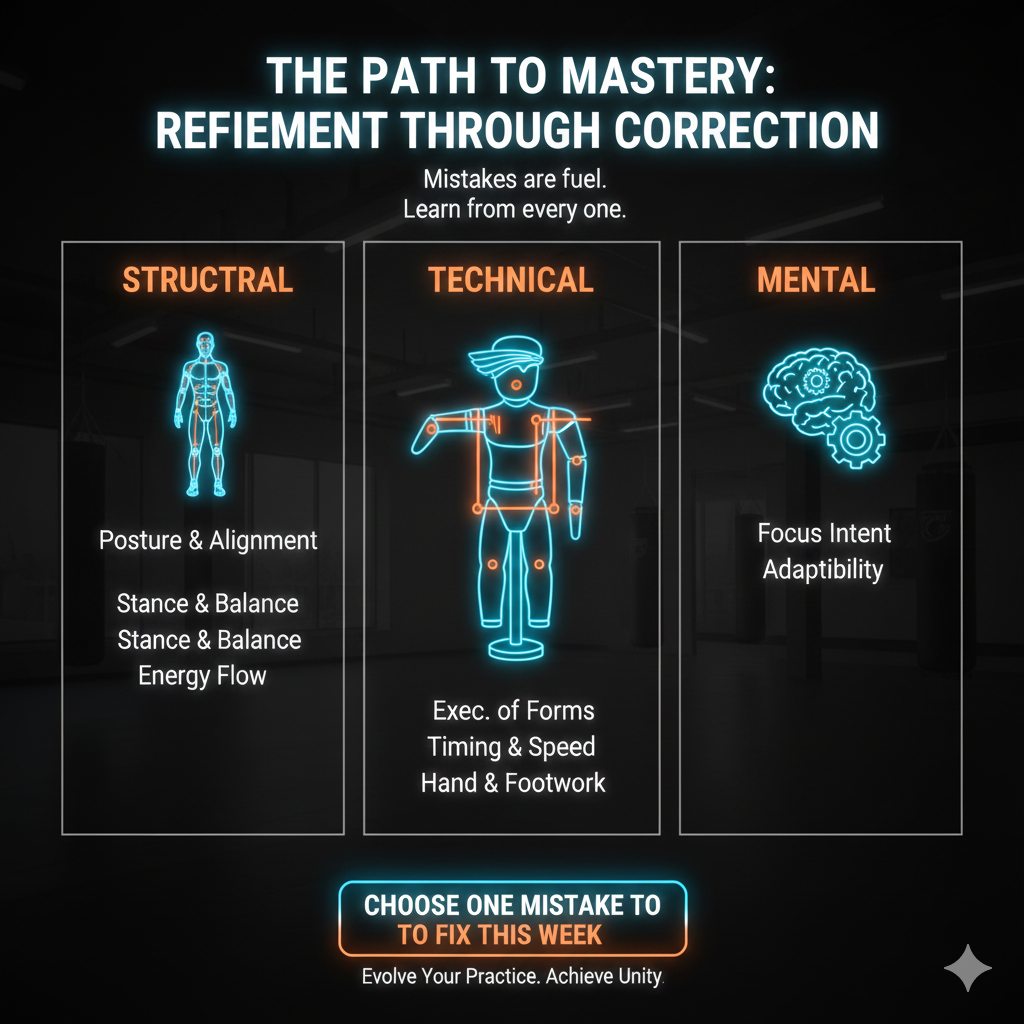
The best way to begin is to find a qualified instructor who can correct your structure.
The forms are meant to be practiced daily, with an emphasis on quality over speed.
Remember the core philosophy: simplicity and directness.
Wing Chun is a lifelong study, but the rewards in self-defense and personal development are immense.