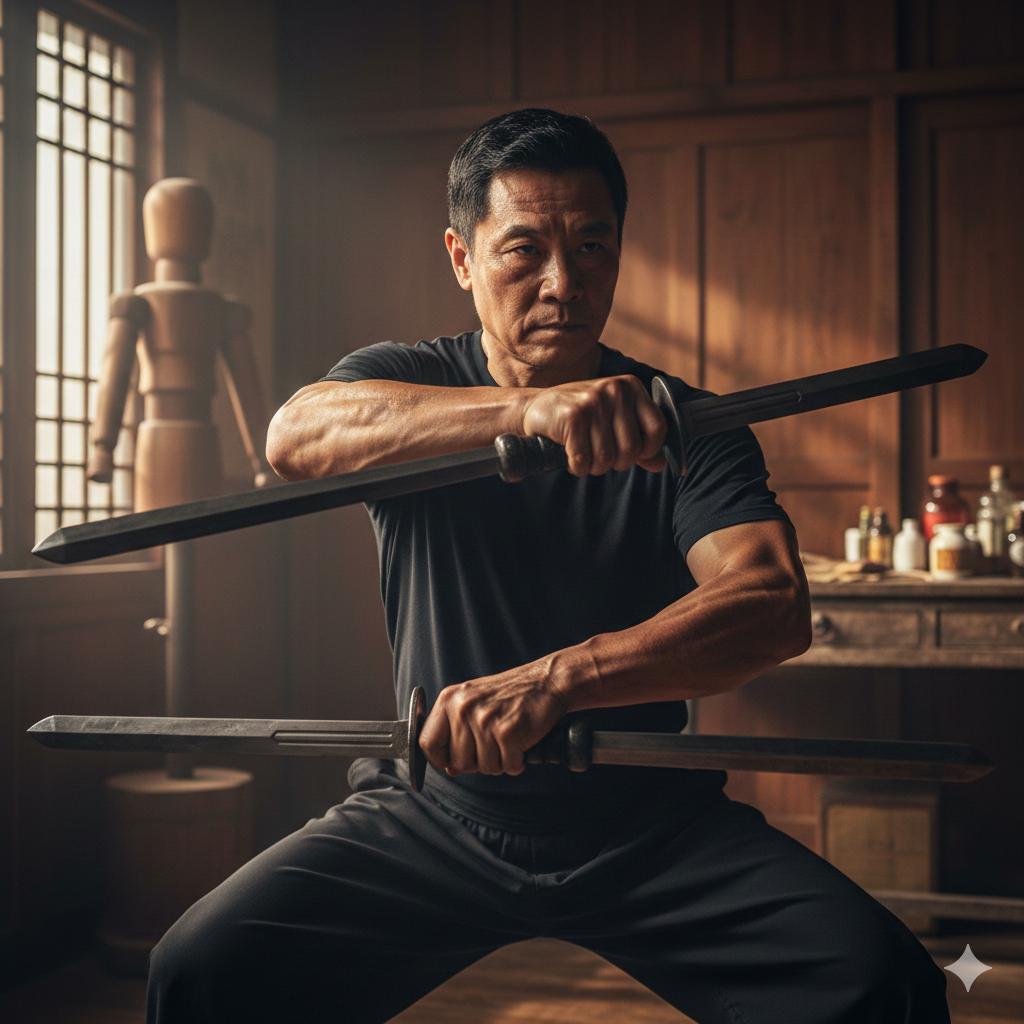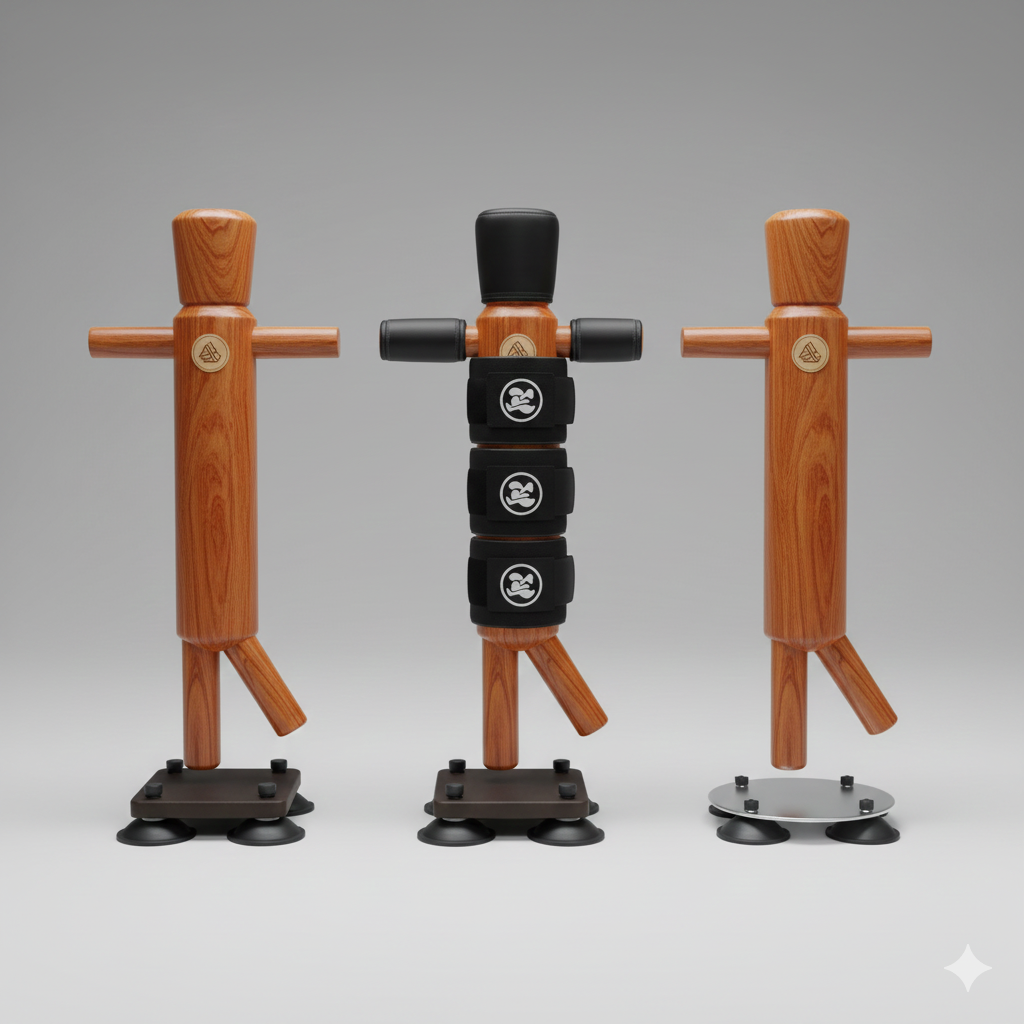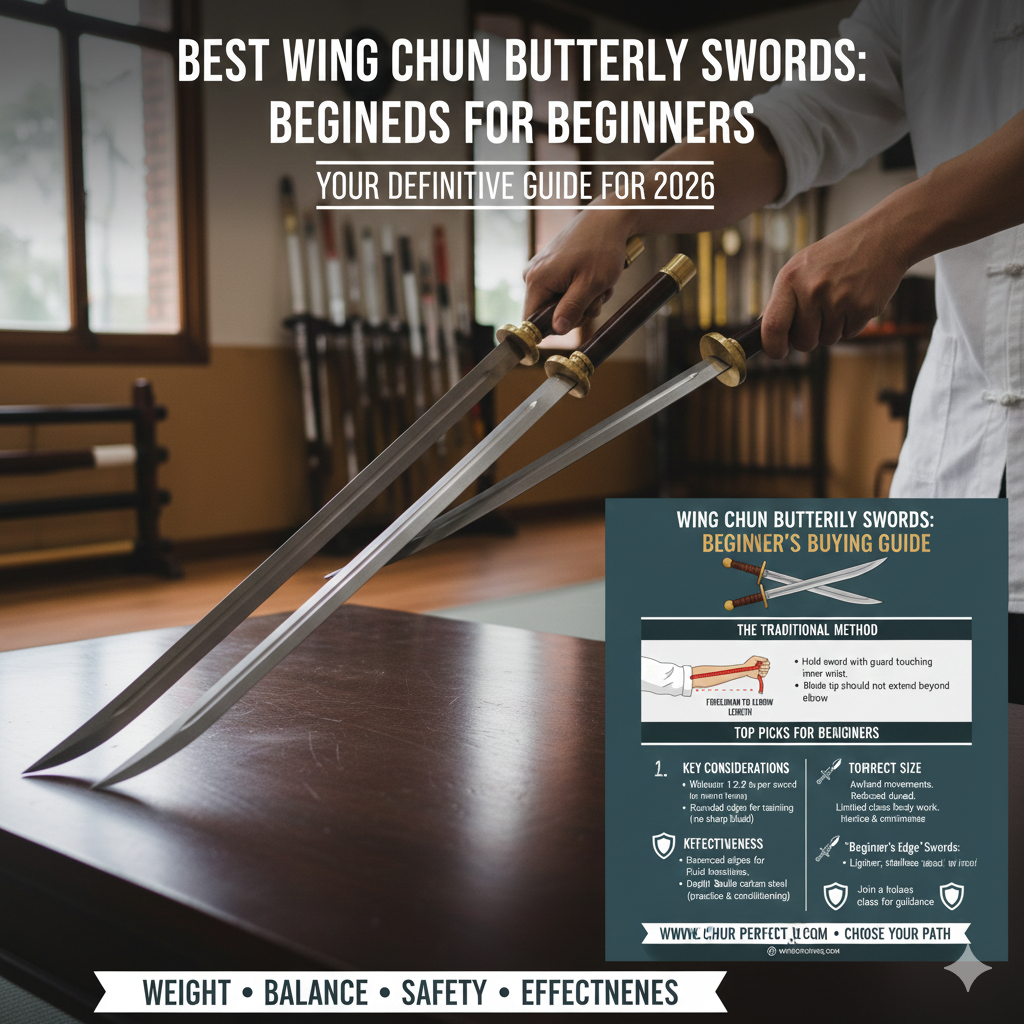
The Bart Cham Dao (Eight Cutting Swords), commonly known as Wing Chun Butterfly Swords, represent the highest level of weapon training in the Wing Chun system. 🤓
These short, broad blades are an extension of the practitioner’s hands, embodying the principles of centerline control, simultaneous attack and defense, and close-quarters combat. 💡
For a beginner embarking on this advanced stage of training, the choice of the first pair of swords is critical, as it will profoundly influence the development of proper technique and structural integrity. 📌
This comprehensive guide will navigate the key criteria for selecting the best beginner butterfly swords in 2026, focusing on the essential factors of weight, balance, and safety. ⚔️
Understanding the Bart Cham Dao: Design and Purpose
Before selecting a pair of swords, a beginner must first understand the unique design philosophy of the Bart Cham Dao. 🧐
Unlike long, graceful swords, the butterfly swords are often described as **”butcher’s knives”**—short, robust, and designed for devastating close-range application. 🔪
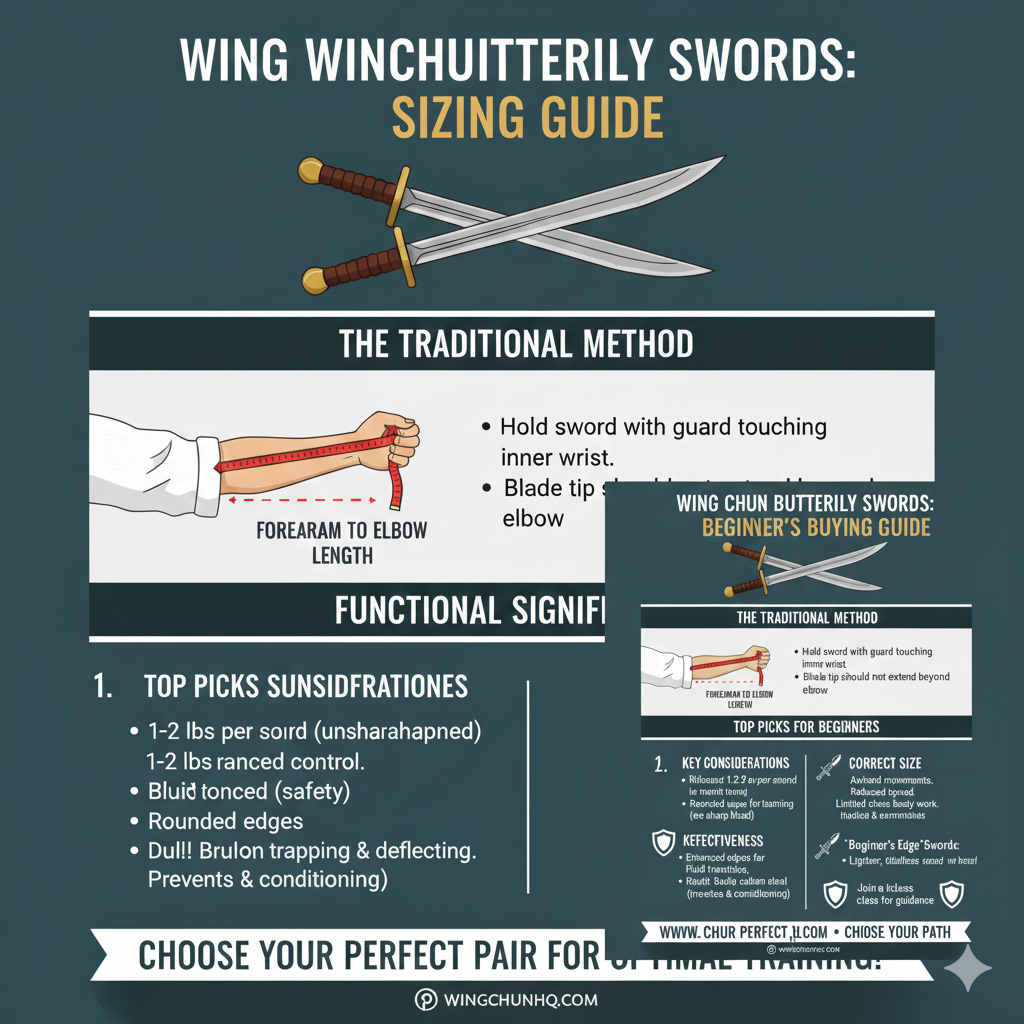
The length of the blade is traditionally measured to extend from the tip of the practitioner’s longest finger to the elbow, ensuring that the blade can protect the forearm when held in a reverse grip. [1]
The **D-guard** or **cross-guard** is another critical feature, designed not only to protect the hand but also to trap and control an opponent’s weapon or limb. 🛡️
The swords are meant to be used as a pair, allowing for the simultaneous execution of techniques, mirroring the two-hand coordination developed in the empty-hand forms. 🤝
The Critical Factor: Weight and Balance
For a beginner, the weight and balance of the swords are the most important technical considerations. ⚖️
A common mistake is to choose swords that are too heavy, which leads to **premature fatigue** and the development of **poor, muscle-driven technique**. 📉
The ideal weight for a beginner’s sword is generally between **1.5 to 2.0 pounds (680g to 900g)** per sword. [2]
This weight range is heavy enough to provide realistic feedback and develop wrist strength, but light enough to allow for the rapid, flowing movements required by the form. 🔄
The **point of balance** is equally vital; unlike a longer sword where the balance point is often one-third up the blade, butterfly swords are typically **blade-heavy**. ➡️
This blade-heavy balance is intentional, as it aids in the momentum of the cutting and chopping motions, making the sword feel like a natural extension of the forearm. A beginner should look for a sword that feels “alive” and easy to maneuver, not a dead weight. 🌟
Top Recommendations for Beginner Butterfly Swords in 2026
The 2026 market offers several excellent options for beginners, prioritizing safety, durability, and correct balance over the high-end materials of master-level swords. 🏆
The best beginner swords are those that are **dull (unsharpened)** and made from durable, yet affordable, materials. 🛠️
1. The Standardized Training Set (The Reliable Choice)
Many reputable martial arts suppliers offer a standardized training set specifically designed for Wing Chun schools. 🏫
These swords are typically made from **high-carbon steel** (for durability) but are **completely dull** for safe partner drills and solo practice. 🛡️
They usually feature a **welded construction** for strength and a simple, ergonomic handle that is easy to grip and transition between forward and reverse holds. 🔄
The key benefit of this choice is the **consistent weight and balance** that adheres closely to the traditional specifications, ensuring the beginner develops the correct muscle memory. 🧠
2. The Aluminum or Stainless Steel Lightweight Option (The Safety Choice)
For the absolute beginner or those prioritizing safety in a small training space, a lightweight set made from aluminum or stainless steel is a viable option. 💡
These swords are often lighter than the ideal range, which can be a drawback for developing power, but they are **significantly safer** for learning the complex hand transitions and footwork. 👶
They are also more **budget-friendly**, allowing a beginner to invest in a pair without a significant financial commitment. 💰
However, the beginner must be aware that they will need to upgrade to a heavier, more balanced set once they have mastered the basic movements. ⬆️
3. The Cold Steel Training Swords (The Durable Choice)
Cold Steel offers a popular, durable, and often slightly heavier option that is widely available. 🛒
While some purists argue their balance is not perfectly traditional, their **robust construction** and **heavy-duty guards** make them excellent for beginners who may be rough on their equipment. 💪
They are a good choice for developing **raw strength and conditioning**, but the beginner should be mindful of not letting the weight compromise the speed and flow of their technique. 🐢
Key Selection Criteria for Beginner Bart Cham Dao
To summarize the selection process, a beginner should use the following checklist to evaluate any potential purchase. 📋
Prioritizing these factors will ensure the swords aid in the development of correct Wing Chun principles. 🔑
| Criterion | Beginner’s Ideal Specification | Training Rationale |
|---|---|---|
| Blade Edge | Dull (Unsharpened) | Essential for safe solo practice and partner drills, minimizing risk of injury. |
| Weight (Per Sword) | 1.5 to 2.0 lbs (680g to 900g) | Develops wrist strength without compromising the speed and flow of the form. |
| Blade Length | Forearm length (from longest finger to elbow) | Ensures the sword can protect the forearm when held in a reverse grip. |
| Guard Type | Traditional D-Guard or Cross-Guard | Allows for proper trapping and controlling techniques, a core function of the weapon. |
| Construction | Welded or solid-piece construction | Ensures durability and safety during vigorous training. |
Training with Your First Pair of Butterfly Swords
Acquiring the right swords is only the first step; the true mastery comes from dedicated, consistent practice. 🥋
The initial focus for a beginner should be on **slow, deliberate movements** to internalize the form and the feeling of the weapon as an extension of the body. 🧘
The Bart Cham Dao form is designed to reinforce the principles of the empty-hand forms, so the beginner should look for the familiar hand movements translated into the sword techniques. 🔄
Here are some key training points for the beginner: 📝
- Wrist Conditioning: Practice simple wrist rotations and figure-eight drills to build the necessary strength and flexibility to handle the swords with speed and precision.
- Grip Transition: Focus on the smooth, rapid transition between the forward (cutting) grip and the reverse (blocking/trapping) grip, which is a hallmark of the Bart Cham Dao form.
- Footwork Integration: The swords are useless without proper footwork. Practice the form with a strong emphasis on the **Juen Ma** (Turning Stance) and **Biu Ma** (Darting Step) to ensure the swords and body move as one unit.
- Centerline Protection: Use the D-guard to practice deflecting incoming attacks and protecting the centerline, understanding that the guard is a tool for control, not just defense.
- Partner Drills: Once comfortable with the solo form, engage in slow, controlled partner drills with another dull set of swords to develop the **contact reflex** and **distance management** necessary for application.
The goal is not to swing the swords with brute force, but to use the weight and momentum of the blades to generate effortless power. The swords should feel like they are cutting through the air on their own. 💨
The Future of Butterfly Swords in 2026
As martial arts gear continues to evolve, the butterfly sword market in 2026 is seeing a trend toward **modular and customizable training sets**. 🛠️
Some manufacturers are offering swords with **interchangeable weights** that can be added to the handle or blade, allowing a beginner to start light and gradually increase the weight as their strength improves. ⬆️
Another trend is the use of **advanced polymers and composite materials** for training swords, which offer the correct weight and balance while being virtually indestructible and extremely safe for partner work. 🛡️
While the traditional steel sword remains the gold standard for advanced practitioners, these new options provide excellent, safe, and effective entry points for the beginner. 👶
The most important advice for any beginner is to **consult with their Sifu or instructor** before making a purchase. 🗣️
The instructor’s lineage and specific training requirements will often dictate the precise length, weight, and balance that is considered ideal for their school. 🏫
Further Resources for Bart Cham Dao Mastery
To fully appreciate the depth of the Bart Cham Dao, further study into the form and its applications is essential. 📚
The following resources offer deeper insights into the swords and their role in the Wing Chun system. 🌐
External Links:
- Everything Wing Chun offers a wide selection and detailed specifications for various butterfly swords.
- Shop Wing Chun provides a guide on proper sword balance, a critical factor for effective training.
- Kung Fu Direct features practice swords that are ideal for beginners, emphasizing safety and precision.
- Wushuguan provides specifications for high-quality training equipment, including weight recommendations.
- A forum discussion on various butterfly sword options, offering practitioner insights into different brands.
Video Resources:
A class focused on Wing Chun Butterfly Sword defense, demonstrating the close-quarters application of the blades. 🛡️
Top Wing Chun Wooden Dummy Techniques, which often integrate the principles of the Bart Cham Dao form. 🥋
A review of various Wing Chun dummies, which are often used in conjunction with the butterfly swords for structural training. 🌳
The journey into the Bart Cham Dao is a rewarding one, marking a significant milestone in any Wing Chun practitioner’s development. 🏆
By choosing the right beginner swords—those that prioritize **safety, correct weight, and balance**—you lay the foundation for true mastery. Choose wisely, and your swords will serve you for years to come. 🌟
Happy training! 🤓
[1] The traditional length of the butterfly sword is measured from the tip of the longest finger to the elbow, ensuring the blade protects the forearm.
[2] The ideal weight range of 1.5 to 2.0 lbs per sword is a consensus among many Wing Chun schools for developing proper technique without excessive strain.
[3] The blade-heavy balance is a deliberate design choice, aiding in the momentum of the cutting and chopping motions of the Bart Cham Dao form.
[4] The D-guard is essential for both hand protection and for executing trapping and controlling techniques against an opponent’s weapon or limb.
[5] The Bart Cham Dao form is the final, most advanced form in the Wing Chun system, integrating all the principles of the empty-hand forms.