The Bart Cham Dao (Eight Cutting Swords) are the ultimate expression of Wing Chun’s close-quarters combat philosophy, a pair of weapons as beautiful as they are devastating. 🤓
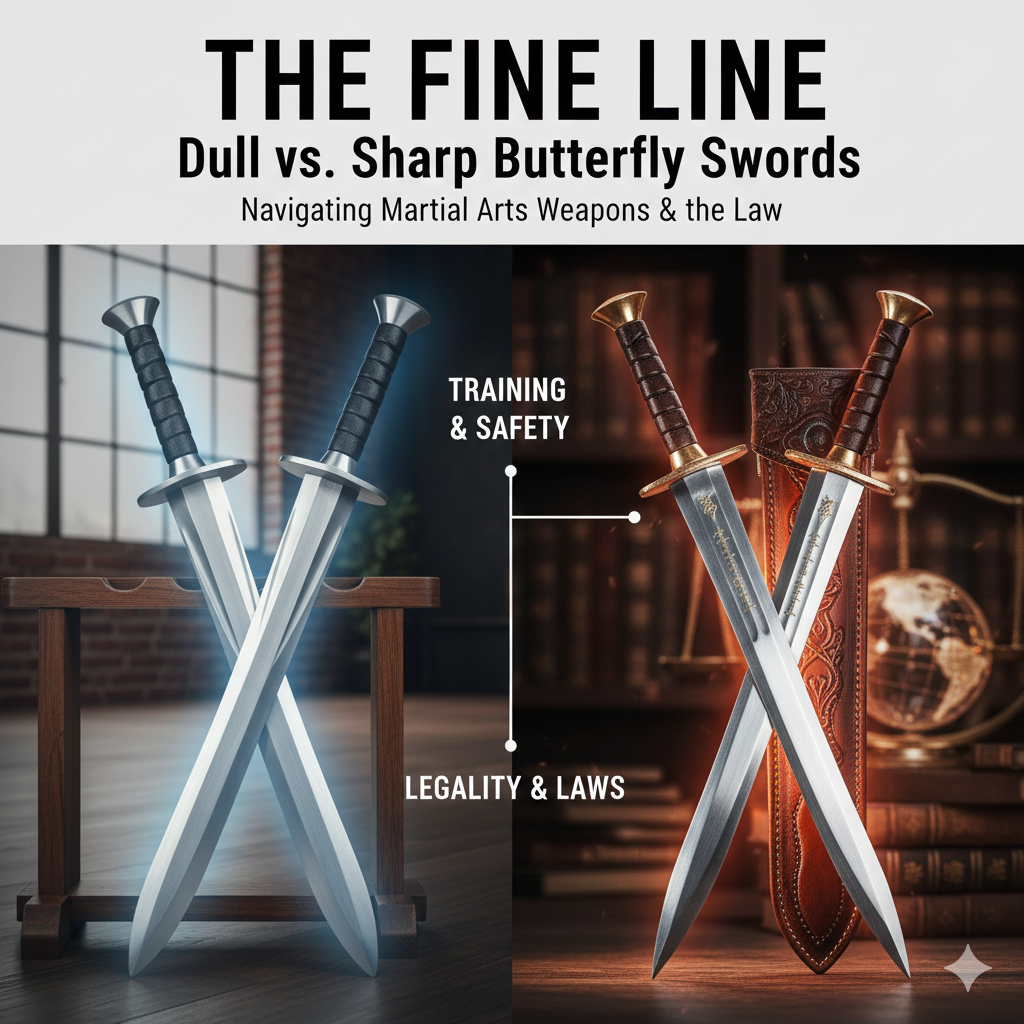
However, for the modern martial artist, the journey to mastery is complicated by a critical distinction: the difference between a dull training sword and a sharp, live blade, particularly concerning safety and legality. 💡
The laws governing the possession, transport, and training use of these weapons are complex, often varying dramatically from one jurisdiction to the next. 📌
This comprehensive guide will dissect the legal and safety implications of training with both dull and sharp butterfly swords, providing a critical framework for practitioners to train responsibly and lawfully. ⚔️
The Legal Ambiguity of the Butterfly Sword
The legal status of the butterfly sword is often intertwined with the laws governing balisongs (butterfly knives), which are frequently classified as prohibited weapons due to their rapid, one-handed opening mechanism. 🤯
While the Wing Chun Bart Cham Dao is a different weapon—typically a fixed blade or a pair of short swords—its name and appearance can lead to legal confusion and misclassification by law enforcement. 🚨
The core legal issue often revolves around the intent and the functionality of the blade. ⚖️
A sharp butterfly sword, regardless of its martial arts context, is almost universally considered a weapon, subject to strict laws regarding concealed carry, transport, and ownership. 🚫
The dull training sword, however, occupies a gray area, where its legal status depends heavily on whether the law defines a prohibited weapon by its form or its function. ❓
The UK and International Bans: Form Over Function
In many jurisdictions, such as the United Kingdom, the law often focuses on the form of the weapon, making it illegal to import, sell, or possess items that are clearly designed as prohibited weapons, even if they are dull. 🇬🇧
For example, the UK’s strict knife laws often prohibit the importation of butterfly knives, and this prohibition can extend to trainers, as the law views the design as the defining factor, not the sharpness of the edge. [1]
This means that a dull, metal butterfly sword trainer can be seized by customs or law enforcement simply because it is a recognizable variant of a prohibited weapon. 👮
Countries like Denmark and Belgium also have total bans or extremely strict laws on butterfly knives, which can inadvertently affect the legality of Bart Cham Dao trainers. 🌍
The US and the Nuance of “Live Blade”
In the United States, knife laws are often determined at the state and local level, creating a patchwork of regulations. 🇺🇸
The legality of a butterfly sword often hinges on whether it is classified as a “switchblade” or a “gravity knife”, which are prohibited in many states. 🔪
For training purposes, the critical distinction is between a dull trainer and a “live blade” that has been intentionally dulled. ⚠️
Some legal interpretations hold that if a blade was originally sharp, or if it can be easily sharpened, it is still legally considered a weapon, regardless of its current dull state. [2]
This is why many martial arts schools prefer polymer or aluminum trainers that are clearly incapable of being sharpened to a functional edge, removing all legal ambiguity. When in doubt, the safest legal choice is a non-metal, non-sharpenable trainer. 🛡️
Safety First: The Training Imperative
Beyond legality, the safety of the practitioner and their training partners is the paramount concern. 🚨
The Bart Cham Dao form involves rapid, close-quarters movements, including trapping, parrying, and striking, often with the blades passing dangerously close to the body. 💥
Training with a sharp blade, even in solo practice, carries an unacceptable risk of severe injury. 🩸
The use of dull training swords is essential for all but the most advanced, supervised applications. 🥋
The Role of the Dull Trainer
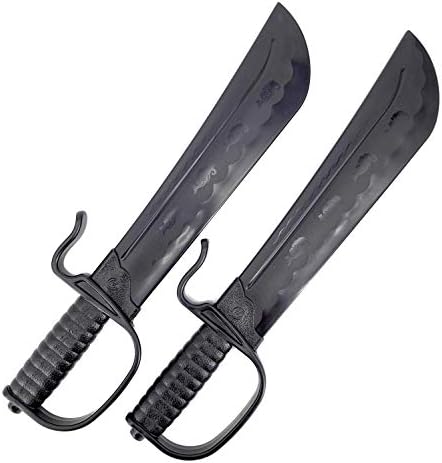
A high-quality dull trainer is designed to replicate the weight, balance, and feel of a live blade without the cutting edge. ⚖️
This allows the beginner to focus on developing the correct muscle memory, wrist strength, and structural integrity without the fear of injury. 🧠
The dull edge still provides tactile feedback; a strike that is too hard or too sloppy will still sting, reinforcing the need for precision and control. 🖐️
For partner drills, dull swords are the only safe option, allowing practitioners to engage in realistic, high-speed sparring to develop contact reflex and distance management. 🤝
When is a Sharp Blade Appropriate?
Sharp butterfly swords are generally reserved for demonstration, advanced cutting practice against targets, or as a ceremonial piece. 🏆
They are not a tool for daily training. ❌
Only a master-level practitioner, under strict supervision and in a controlled environment, should ever handle a sharp blade for application practice. ⚠️
The transition to a sharp blade is a test of the practitioner’s control and discipline, proving that they can execute the form with perfect precision without relying on the dull edge for safety. 🧘
Legal and Safety Comparison Table
The following table summarizes the key differences in legal and safety considerations for dull and sharp butterfly swords. 📋
| Feature | Dull Training Sword | Sharp Live Blade |
|---|---|---|
| Legal Status | Ambiguous (Depends on local law’s definition of “weapon” by form or function). | Generally classified as a prohibited weapon; strict carry and transport laws apply. |
| Safety for Solo Training | High (Minimal risk of severe injury). | Extremely Low (High risk of severe injury). |
| Safety for Partner Training | Acceptable (With protective gear and control). | Unacceptable (Prohibited). |
| Recommended Material | Polymer, Aluminum, or Metal with clearly rounded edges. | High-carbon steel (Reserved for advanced, supervised use). |
| Primary Training Focus | Form, flow, structure, and contact reflex. | Cutting application and final discipline of control. |
The Practitioner’s Responsibility and Due Diligence
The responsibility for safe and legal training rests entirely with the practitioner. 🔑
Before purchasing or transporting any butterfly sword, whether dull or sharp, you must perform due diligence on your local, state, and national laws. 🌐
Never assume that a dull trainer is legal simply because it is a training tool; the law may not make that distinction. 🚨
If you are traveling, be acutely aware that laws change at borders, and a legal item in one country may be a prohibited weapon in another. ✈️
The best practice is to consult with your Sifu and, if necessary, seek legal advice regarding the specific laws in your area. 🗣️
For the vast majority of training, a high-quality, dull, non-sharpenable trainer is the only sensible and responsible choice. It allows for the full development of the Bart Cham Dao form without the risk of legal or physical harm. 🛡️
Further Resources for Legal and Safety Information
The following resources provide general information on knife laws and safety, but remember that they are not a substitute for local legal counsel. 📚
External Links:
- The UK Government’s official guide on buying and carrying knives, which highlights the strict laws on prohibited weapons.
- A guide to butterfly knife legality in the US, illustrating the complexity of state-by-state laws.
- Legal Q&A discussing the ambiguity of dull trainers and the need for local legal consultation.
- Information on the international shipping and import restrictions for butterfly knives, a common issue for practitioners.
- Black Belt Wiki emphasizes the need for supervised training to prevent injuries with martial arts weapons.
Video Resources:
A legal discussion on why dulling a live blade may not change its legal status as a prohibited weapon. ⚖️
Safety considerations for training with Bart Cham Dao, emphasizing the need for proper equipment and caution. 🛡️
A demonstration of the close-quarters application of the swords, highlighting the inherent danger of training with sharp blades. 💥
The Bart Cham Dao is a weapon of discipline, and that discipline must extend to respecting the law and prioritizing safety. 🏆
Train with a dull blade, and you will achieve the same mastery without the risk. Safety and legality are the true foundations of responsible martial arts practice. 🌟
Happy training! 🤓
[1] The UK’s strict knife laws often prohibit the importation of butterfly knives, and this prohibition can extend to trainers, as the law views the design as the defining factor.
[2] In the US, the legal status of a dulled blade can be ambiguous, with some jurisdictions classifying it as a weapon if it was originally sharp or can be easily sharpened.
[3] Balisongs (butterfly knives) are often classified as prohibited weapons due to their rapid, one-handed opening mechanism, which can lead to misclassification of the Bart Cham Dao.
[4] The use of dull trainers is essential for partner drills, allowing practitioners to engage in realistic, high-speed sparring to develop contact reflex and distance management safely.
[5] Sharp butterfly swords are generally reserved for demonstration, advanced cutting practice against targets, or as a ceremonial piece, not for daily training.