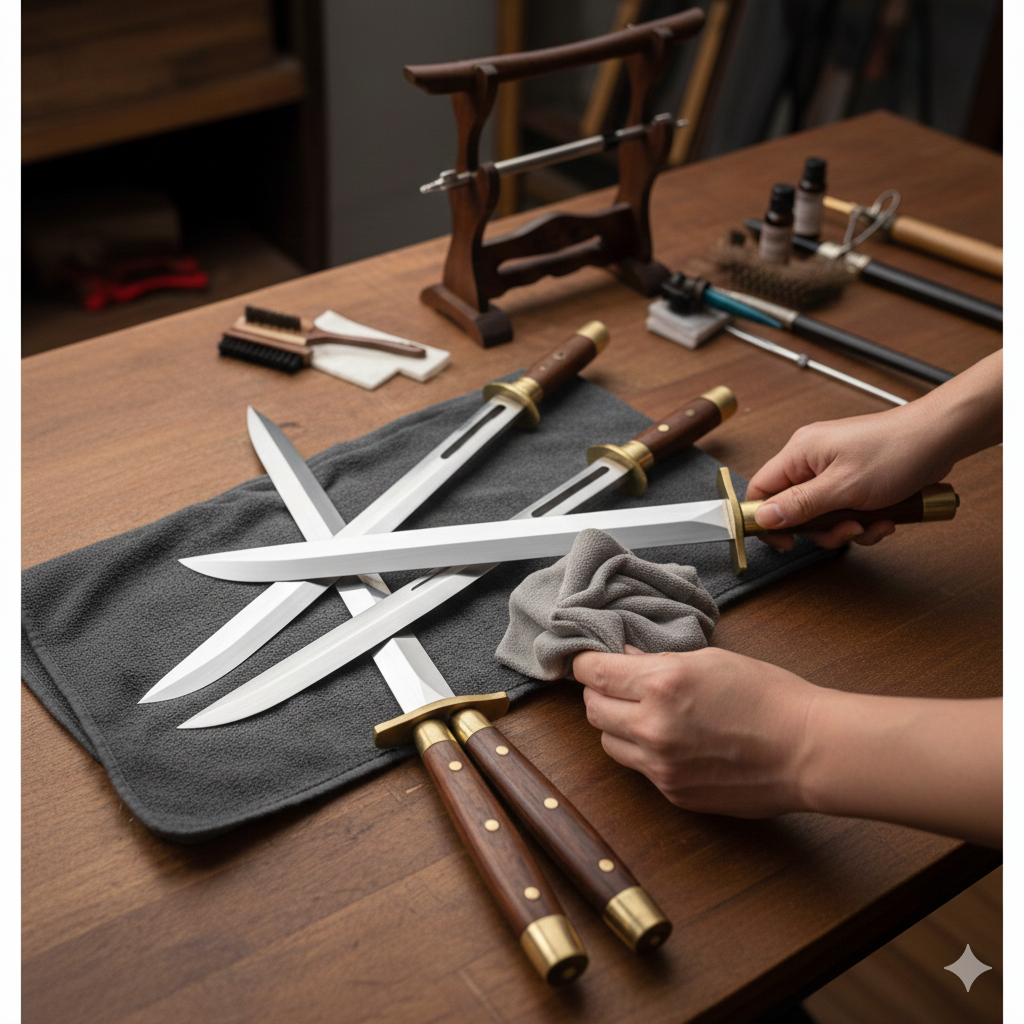
The Bart Cham Dao are more than just training tools; they are a legacy, often passed down through generations of Wing Chun practitioners. 🤓
To honor this legacy and ensure the swords remain functional and beautiful, proper **maintenance** is not merely a chore—it is an essential part of the training discipline. 💡
The greatest enemy of the steel blade is **rust**, a relentless process of oxidation that can quickly degrade the metal, compromise the balance, and ruin the aesthetic of the swords. 📌
This comprehensive guide will provide a detailed, step-by-step protocol for cleaning, oiling, and storing your butterfly swords, ensuring they remain in peak condition for decades to come. ⚔️
Understanding the Enemy: Why Swords Rust
Rust is the result of a chemical reaction between **iron, oxygen, and water** (or moisture). 🧪
Most traditional Bart Cham Dao are made from **high-carbon steel**, which is prized for its edge retention and durability but is highly susceptible to corrosion. ⚠️
Even the slightest amount of moisture, such as the **salt and acidity from fingerprints** or high humidity in the air, can initiate the rusting process almost immediately. 🖐️
The goal of maintenance is to create a **physical barrier** between the blade’s surface and the surrounding environment, effectively starving the iron of oxygen and moisture. 🛡️
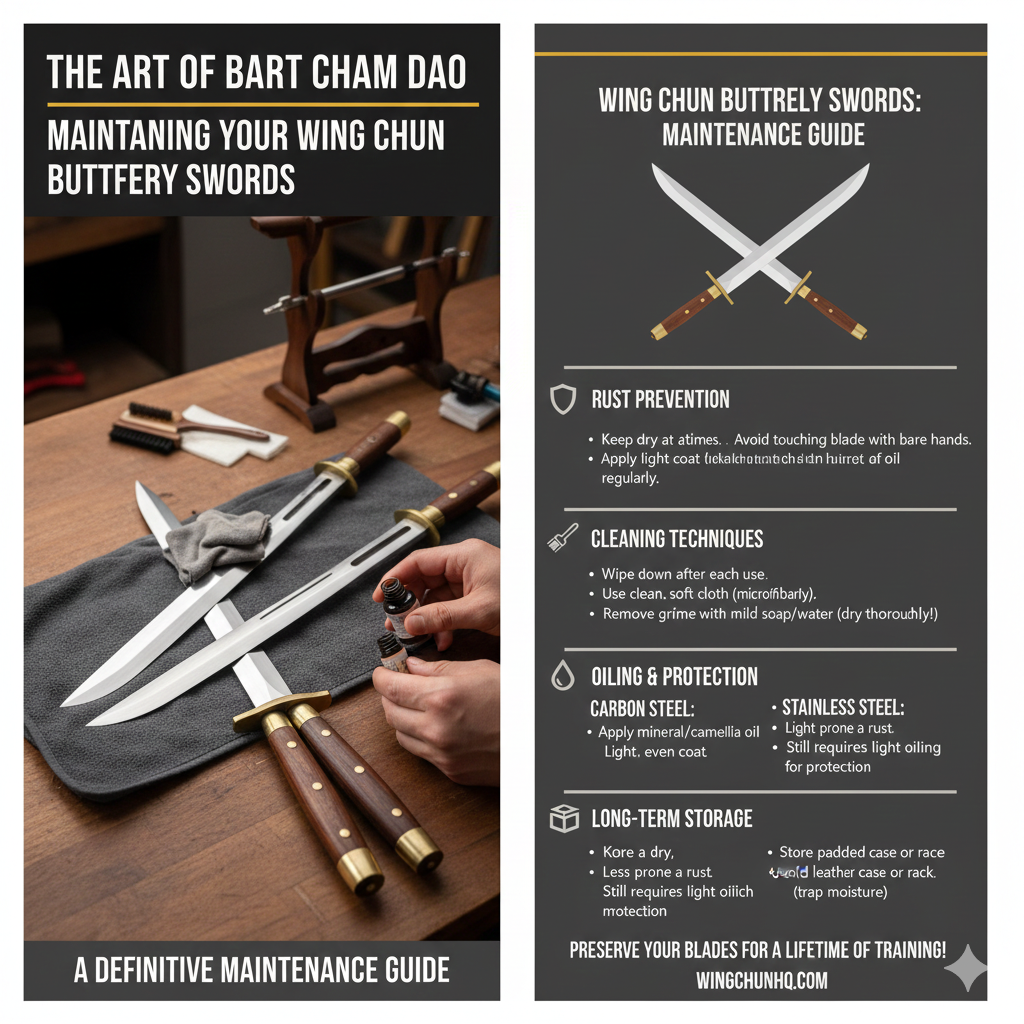
Carbon Steel vs. Stainless Steel: A Maintenance Divide
The maintenance routine for your swords will depend heavily on the type of steel used. 📋
**Carbon Steel:** Requires the most rigorous maintenance. It must be cleaned and oiled after every use, and often requires re-oiling during long-term storage. Its benefit is superior performance and a traditional feel. 🏆
**Stainless Steel:** Contains chromium, which forms a passive layer of protection against rust, making it much more forgiving. While it still requires oiling, the frequency is significantly reduced. Its drawback is often a softer edge and a less traditional feel. ⚙️
For traditionalists, the extra effort of maintaining carbon steel is a small price to pay for the superior training experience. The maintenance ritual itself becomes a form of meditation and discipline. 🧘
The Essential Maintenance Protocol
A consistent, simple maintenance routine is the best defense against rust. 🔑
This protocol should be performed **immediately after every training session** where the swords have been handled. ⏱️
Step 1: Cleaning and Drying (The Removal of Contaminants)
The first step is to remove all contaminants, primarily sweat and fingerprints, from the blade. 🧼
Use a **clean, soft, lint-free cloth** (such as microfiber or a cotton flannel) to wipe down the entire blade, guard, and handle. 🧽
For stubborn residue or heavy fingerprints, a small amount of **rubbing alcohol** or a specialized blade cleaner can be used, but ensure it is completely evaporated afterward. 💨
The most critical part of this step is ensuring the blade is **completely dry** before proceeding to oiling. Any trapped moisture will be sealed in by the oil, accelerating the rusting process. ☀️
Step 2: Oiling (The Protective Barrier)
The second step is to apply a thin, even layer of protective oil. 💧
The best oils for sword maintenance are those that are **non-gumming, acid-free, and have a high resistance to oxidation**. 🧪
Traditional and highly recommended options include: 📝
- **Camellia Oil (Tsubaki Oil):** The traditional choice for Japanese swords, it is food-safe, non-toxic, and forms an excellent protective coating.
- **Light Mineral Oil:** A widely available, cost-effective, and food-safe option that works well for long-term storage.
- **Gun Oil (e.g., Ballistol):** Excellent for corrosion resistance, but ensure it is a light, non-acidic formula.
Apply a **single drop** of oil to a clean cloth and wipe it along the entire length of the blade, ensuring a thin, uniform film. **Do not over-oil**; a thick layer will attract dust and can become sticky over time. 🤏
Step 3: Handle and Guard Care
The handle and guard also require attention, as they are often made of materials like brass, wood, or leather. 🪵
**Brass Guards:** Can be polished with a brass cleaner, but be careful not to get the cleaner on the steel blade. A light coat of mineral oil can also prevent tarnishing. ✨
**Wooden Handles:** Should be wiped clean and can be treated with a small amount of **linseed oil** or **wood wax** to prevent drying and cracking. 🌳
**Leather Handles/Sheaths:** Should be treated with a leather conditioner, but **never store the blade in a leather sheath long-term**, as leather traps moisture and can cause rapid rust. ❌
Long-Term Storage and Rust Prevention
If the swords will not be used for an extended period, a few extra steps are necessary to ensure their preservation. 🛡️
The Storage Environment
The ideal storage environment is **cool, dry, and stable**. 🌡️
Avoid storing swords in basements, attics, or garages where temperature and humidity fluctuate wildly, as this is a prime cause of rust. 🏠
Consider placing a **desiccant pack** (silica gel) in the storage container to absorb excess moisture from the air. 💧
The Storage Container
The choice of storage container is crucial. 📦
**Avoid plastic bags or airtight containers** for long-term storage, as they can trap moisture and create a microclimate that encourages rust. 🚫
The best option is a **breathable cloth bag** (such as cotton flannel or silk) or a specialized wooden storage box. 🎁
If you must use a sheath, ensure it is a **non-tarnishing, hybrid sheath** designed for long-term storage, or simply store the swords outside of their sheaths. Never store a carbon steel blade in a leather sheath for more than a few days. ❌
Troubleshooting: Dealing with Existing Rust
If you discover rust on your swords, do not panic; minor surface rust can often be removed without permanent damage. 🛠️
Surface Rust (Red Rust)
For light, reddish-brown surface rust, apply a small amount of **oil** to the affected area. 💧
Use a **soft cloth, a piece of cork, or a specialized rust eraser** to gently rub the rust away. 🧽
**Do not use steel wool or sandpaper**, as this will scratch the blade’s finish and make it more susceptible to future rust. 🚫
Pitting (Black Rust)
If the rust has progressed to **pitting** (small, dark, crater-like spots), the metal has been permanently damaged. 🌑
At this stage, the best course of action is to **stabilize the rust** by cleaning and oiling the area thoroughly to prevent further corrosion. 🛡️
For deep pitting, consult a **professional sword restorer**; attempting to grind out the pits yourself can ruin the blade’s balance and temper. 🧑🔧
Maintenance Checklist and Oil Comparison
The following table provides a quick reference for your maintenance routine and a comparison of common blade oils. 📋
| Maintenance Task | Frequency | Oil Type | Pros and Cons |
|---|---|---|---|
| Clean and Oil Blade | After Every Use (Carbon Steel) / Monthly (Stainless Steel) | Camellia Oil | Traditional, food-safe, excellent protection. Can be expensive. |
| Handle and Guard Wipe Down | Weekly | Mineral Oil | Cost-effective, widely available, good for general use. Less traditional. |
| Long-Term Storage Prep | Every 6 Months (or before extended storage) | Ballistol/Gun Oil | Superior rust resistance. Not food-safe; strong odor. |
Further Resources for Sword Maintenance
For those seeking to deepen their knowledge of blade care, these resources offer valuable insights into traditional and modern maintenance techniques. 📚
External Links:
- Everything Wing Chun’s guide on combating rust, emphasizing prevention through proper blade finish.
- Chinese Sword Store’s advice on general sword and knife maintenance, including the importance of air drying.
- Information on Tsubaki (Camellia) Oil, the traditional choice for carbon steel blade maintenance.
- A forum discussion on long-term storage of swords, offering practical advice from experienced collectors.
- Battle Merchant’s guide on sword care, including the warning against using plastic bags for storage.
Video Resources:
A general guide on how to maintain blades, recommending mineral oil for long-term protection. 💧
A review of butterfly knives, which often includes a discussion on the materials and their maintenance requirements. ⚙️
Safety considerations for training, which are directly linked to the proper maintenance and condition of the swords. 🛡️
By dedicating a few minutes after each training session to the care of your Bart Cham Dao, you ensure that these magnificent weapons will be ready to serve you for a lifetime of practice. 🏆
The discipline of maintenance is the final lesson of the swords. Keep them clean, keep them oiled, and they will keep their edge. 🌟
Happy training! 🤓
[1] Rust is the result of a chemical reaction between iron, oxygen, and water, with the salt and acidity from fingerprints being a common catalyst.
[2] Carbon steel is highly susceptible to corrosion and requires cleaning and oiling after every use, while stainless steel is more rust-resistant.
[3] Camellia oil and light mineral oil are the most recommended non-gumming, acid-free oils for sword maintenance.
[4] Swords should never be stored long-term in leather sheaths or airtight plastic bags, as these materials trap moisture and accelerate rust.
[5] The maintenance ritual is an essential part of the training discipline, reinforcing the practitioner’s commitment to the art.