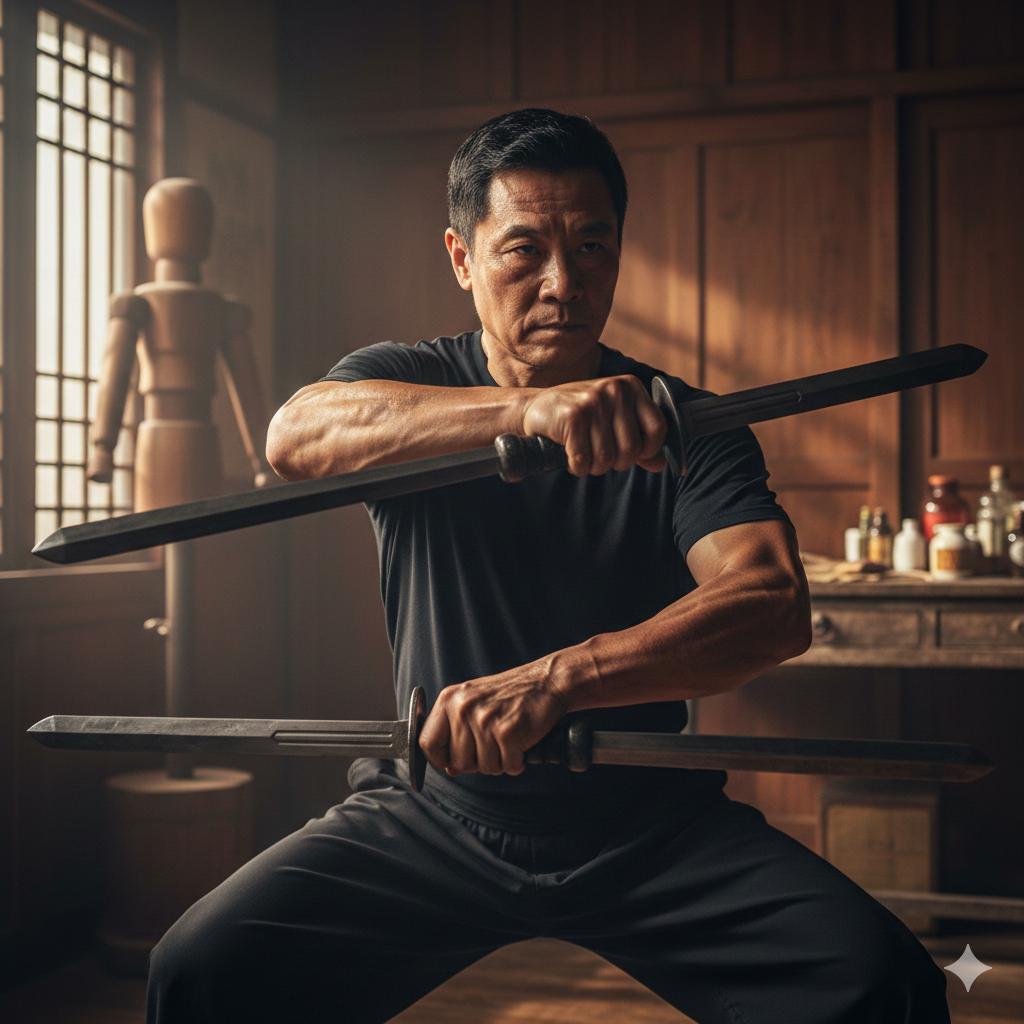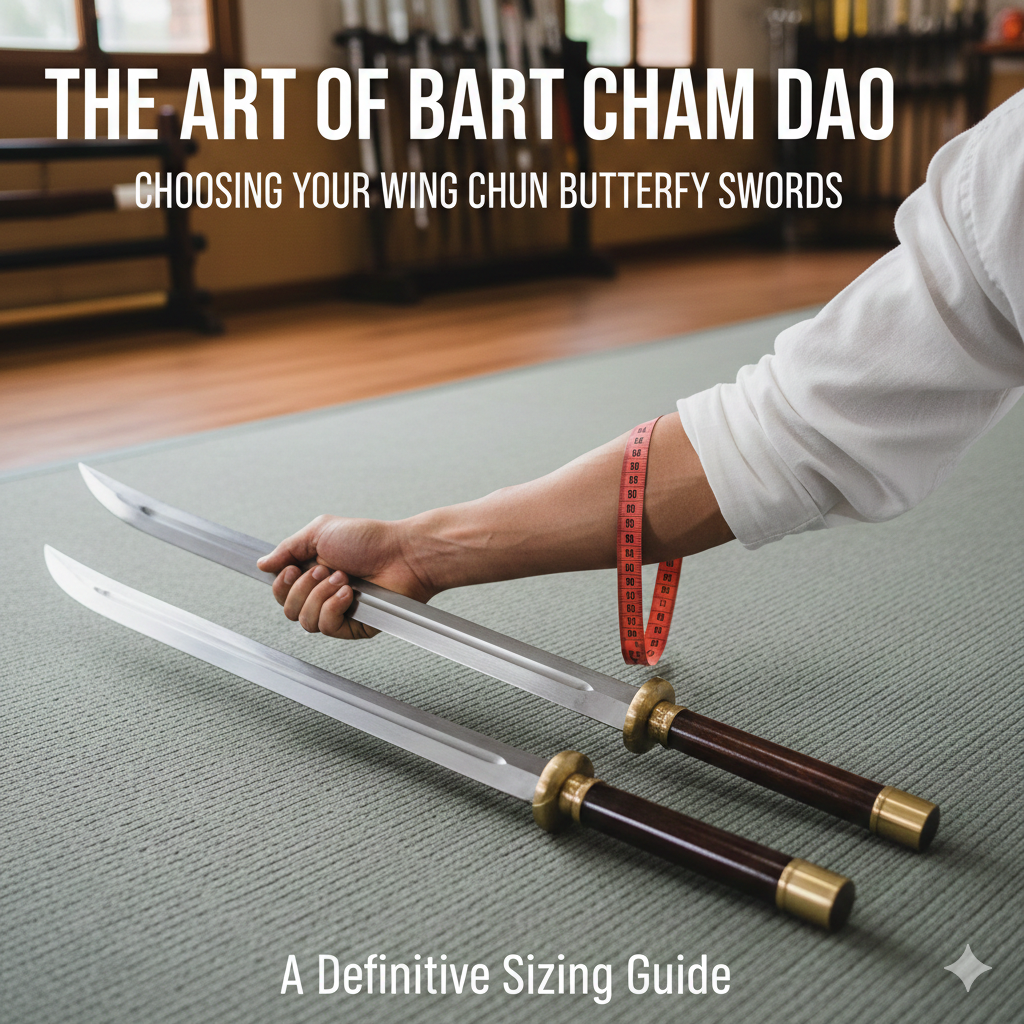
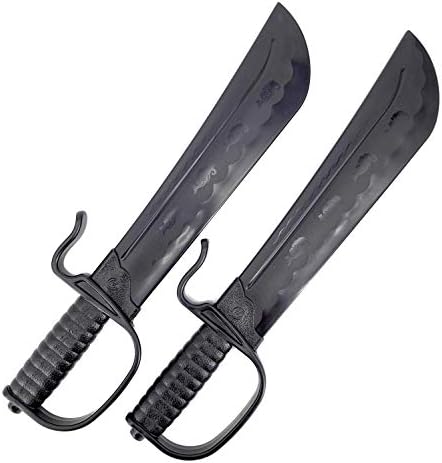

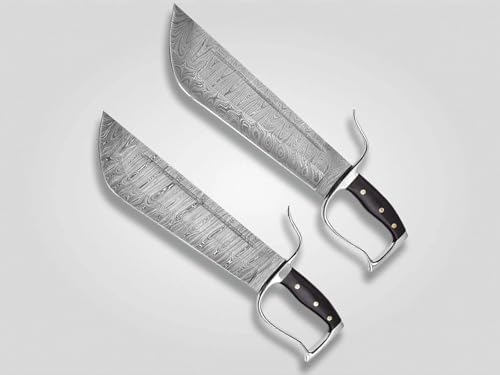
The Bart Cham Dao (Eight Cutting Swords) are not merely weapons; they are a direct extension of the Wing Chun practitioner’s body, designed to integrate seamlessly with the empty-hand forms. 🤓
For this seamless integration to occur, the swords must be the **correct size**, a factor that is arguably more critical than the material or the sharpness of the blade. 💡
An improperly sized sword can lead to flawed technique, compromised structure, and a failure to realize the full potential of the Bart Cham Dao form. 📌
This comprehensive guide will delve into the traditional and modern methods for sizing Wing Chun butterfly swords, explaining the functional significance of the correct length and providing a step-by-step process for finding your perfect fit. ⚔️
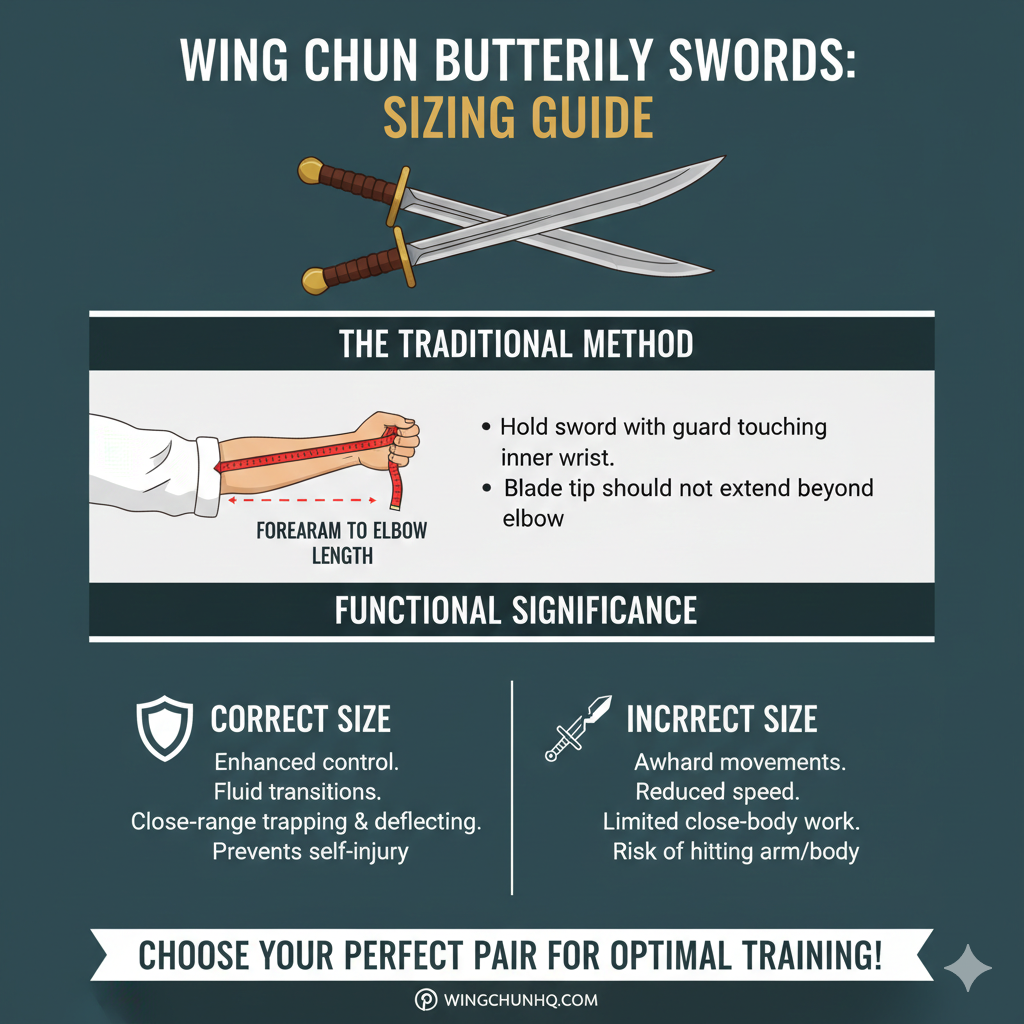
The Traditional Sizing Principle: Forearm as the Ruler
The traditional method for sizing the Bart Cham Dao is rooted in the principle of functional protection and concealment. 🧐
The ideal blade length is determined by the practitioner’s own anatomy, specifically the length of their forearm. 📏
The most widely accepted traditional measurement is the distance from the **tip of the longest finger (when the fist is clenched) to the inside of the elbow joint**. [1]
This measurement ensures that when the sword is held in the **reverse grip** (blade pointing down, guard protecting the hand), the blade extends the full length of the forearm, effectively protecting the entire limb. 🛡️
The blade should not extend significantly past the elbow, as this would hinder the rapid, close-quarters movements and make the sword difficult to conceal or maneuver in tight spaces. ❌
The Functional Significance of Correct Length
The precise length of the butterfly sword is not arbitrary; it serves three critical functional purposes in Wing Chun combat. 🔑
First, it ensures **optimal leverage** for the chopping and parrying techniques, allowing the practitioner to use the sword’s momentum without overextending their arm. 🔄
Second, the correct length allows the sword to act as a **shield** when held in the reverse grip, covering the entire forearm and deflecting incoming attacks, mirroring the **Bong Sau** (Wing Arm) principle. ✋
Third, the short length is a testament to the **close-range nature** of Wing Chun; the swords are designed to be used in the same fighting distance as the empty-hand techniques, reinforcing the system’s core principles. The sword is a tool for extension, not for reaching. ➡️
Step-by-Step Sizing Guide
To accurately determine the ideal blade length for your Bart Cham Dao, follow these steps precisely. 📋
It is best to have a partner assist you to ensure the most accurate measurement. 🤝
Step 1: The Clenched Fist and Forearm Alignment
Stand with your arm relaxed at your side, and make a **tight fist**. ✊
The measurement begins at the point where the blade would emerge from the guard, which is typically aligned with the **knuckles of your clenched fist**. 🦴
Ensure your forearm is straight and not bent at the wrist, maintaining the natural alignment of your Wing Chun structure. 🧘
Step 2: Measuring to the Elbow Joint
Using a flexible measuring tape, measure the distance from the **knuckles of your clenched fist** to the **crease on the inside of your elbow joint**. 📐
This measurement represents the ideal **blade length** (the length of the steel portion of the sword). 📏
For most adults, this measurement will fall between **11 and 14 inches (28 to 35 cm)**. 🔢
Step 3: Accounting for the Guard and Handle
The total length of the sword (blade plus handle) will be longer than your blade length measurement. ⬆️
When ordering, you must ensure the **blade length** matches your measurement, as the handle and guard length will vary between manufacturers. 🛠️
The guard should be wide enough to protect the hand but not so wide that it impedes the rapid transition between grips. Always confirm the manufacturer’s definition of “blade length” before purchasing. 🛒
Lineage Variations and Modern Interpretations
While the forearm-to-elbow rule is the most common, it is important to acknowledge that **lineage variations** exist within the Wing Chun system. 🌳
Some schools may measure from the **wrist to the elbow**, resulting in a slightly shorter blade, while others may prefer a blade that extends slightly **past the elbow** for a more aggressive reach. [2]
The key is to **consult with your Sifu or instructor** to understand the specific sizing requirements of your lineage. 🗣️
Modern interpretations also include the use of **oversized swords** for conditioning drills, which are intentionally heavier and longer than the practitioner’s ideal size. 🏋️
These conditioning swords are used to build strength and endurance, but they should **never** be used for the final form practice, as they will compromise the structural integrity of the movements. ❌
The Impact of Incorrect Sizing
Training with an incorrectly sized sword can have several detrimental effects on a practitioner’s technique. 📉
A **sword that is too long** will force the practitioner to pull their elbow back or break their wrist to avoid hitting themselves, leading to a **compromised centerline and a loss of forward energy**. 🐢
A **sword that is too short** will fail to provide the necessary protection for the forearm, forcing the practitioner to rely on muscular tension rather than the sword’s structure for defense. 🛡️
The correct size ensures that the sword’s center of balance and the practitioner’s center of gravity work in harmony, allowing for the effortless generation of power. The sword should feel like a natural extension of the bone, not a separate object. 🦴
Sizing Comparison Table: Traditional vs. Common Modern Sizes
The following table compares the traditional sizing method with the common blade lengths found in the modern market. 📋
| Sizing Method | Measurement Point | Typical Blade Length (Inches) | Functional Rationale |
|---|---|---|---|
| Traditional Wing Chun | Clenched Fist Knuckles to Inside Elbow Crease | 11″ – 14″ | Full forearm protection in reverse grip; optimal close-range leverage. |
| Common Modern Standard | Fixed Blade Length (Manufacturer’s Spec) | 15″ – 17″ | Often a “one-size-fits-most” approach; may be too long for many practitioners. |
| Conditioning/Hung Gar Style | Past the Elbow (Extended Length) | 18″ + | Increased reach and weight for conditioning; not suitable for Wing Chun form practice. |
Further Resources for Bart Cham Dao Sizing
To ensure you make the most informed decision, consult these resources for additional perspectives on Bart Cham Dao sizing and its functional role. 📚
External Links:
- Shop Wing Chun provides a detailed breakdown of blade length variations based on lineage and measurement points.
- Everything Wing Chun’s guide discusses how style, lineage, and body size all play a role in determining the correct length.
- Wing Chun Origins discusses the traditional measurement from the knuckles of the clenched fist to the inside elbow.
- Chinese Sword Store touches on the difference in sizing between Wing Chun and other martial arts like Hung Gar.
- Sifu Och Wing Chun emphasizes the Shaolin Wing Chun measurement from the forearm to the fist.
Video Resources:
A comparison of different butterfly swords, often including a discussion on their respective lengths and how they feel in hand. ⚖️
A lesson on the first section of the Bart Cham Dao, where the correct length is crucial for executing the movements properly. 🥋
A demonstration of single sword defenses, where the blade length determines the effectiveness of the forearm protection. 🛡️
The correct size Bart Cham Dao is the one that disappears in your hand, becoming a natural extension of your will and structure. 🏆
Measure carefully, consult your Sifu, and choose the length that allows your technique to flourish. The perfect fit is the foundation of mastery. 🌟
Happy training! 🤓
[1] The traditional measurement from the clenched fist knuckles to the inside elbow crease is designed to ensure the blade fully protects the forearm in the reverse grip.
[2] Lineage variations exist, with some schools preferring a slightly shorter (wrist to elbow) or longer (past the elbow) blade, emphasizing the need to consult with a Sifu.
[3] The correct length ensures the sword acts as a shield, mirroring the Bong Sau principle, and prevents the practitioner from breaking their wrist or compromising their centerline.
[4] Swords that are too long will hinder the rapid, close-quarters movements that define the Bart Cham Dao form.
[5] The short length of the butterfly sword is a direct reflection of the close-range fighting distance emphasized in the Wing Chun system.