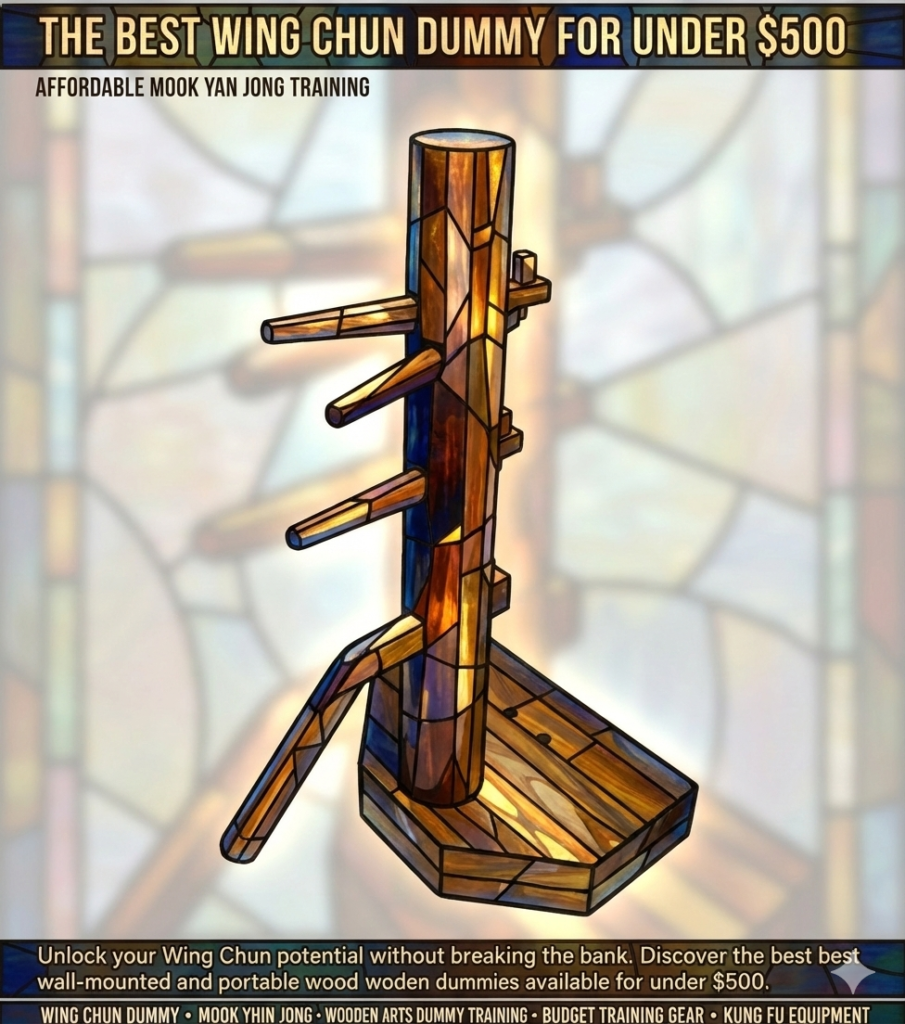
The Wing Chun Wooden Dummy (Mook Yan Jong) is most famous for its three arms, which train the practitioner in the intricate art of trapping, striking, and centerline control. 🥋
However, to focus solely on the arms is to neglect the dummy’s most structurally vital component: the single, downward-protruding leg. 🦵
This unsung hero of the Mook Yan Jong is the key to mastering Wing Chun’s footwork, developing powerful low-line kicks, and forging the unshakeable structural integrity necessary to defeat a larger opponent. 🌳
The leg is not merely a target; it is a physical representation of the opponent’s base, forcing the practitioner to engage with the lower half of the body—the foundation of all martial arts combat. 🦶
This comprehensive guide will unlock the secrets of the Mook Yan Jong leg, providing a detailed training regimen that integrates footwork, structural alignment, and devastating low-line offense and defense. 🤓
The Structural Purpose of the Dummy Leg
The single leg of the Mook Yan Jong is strategically placed to simulate the opponent’s lead leg, or the position of their leg when they are attempting to kick or sweep. 📐
Its primary purpose is to teach the practitioner to maintain a dominant position relative to the opponent’s base, which is the essence of Chum Kiu (Seeking the Bridge) footwork. 🌉
Training the “Foot-to-Foot” Alignment
The most fundamental drill involving the leg is training the correct foot-to-foot or shin-to-shin alignment. 📏
When executing a forward step or a pivot, the practitioner must ensure their lead foot is positioned correctly relative to the dummy’s leg to maintain the centerline advantage. 🎯
If the footwork is too wide, the practitioner loses power and opens themselves to a sweep. If it is too narrow, they lose balance. ⚖️
The dummy leg acts as a constant, unyielding obstacle, forcing the practitioner to step around it, through it, or against it with precise, economical movements. 🔄
This is the core of Wing Chun footwork: maintaining a stable, powerful base while constantly seeking the most advantageous angle of attack. 🚀
The leg ensures that every hand technique is supported by a structurally perfect stance, linking the power from the ground directly to the point of contact. 🔗
The Leg as a Barrier and a Bridge
The dummy leg serves as both a barrier and a bridge. 🚧
As a barrier, it teaches the practitioner to use their own leg and stance to check or block the opponent’s leg, preventing sweeps or kicks. 🛡️
As a bridge, it is the point of contact that allows the practitioner to “stick” to the opponent’s lower body, maintaining control and preventing them from retreating. 🤝
This dual function is critical for developing the Chi Gerk (Sticking Legs) sensitivity, which is the lower-body equivalent of Chi Sau. 🖐️
Essential Footwork Drills on the Dummy Leg
The leg is the silent partner in all Mook Yan Jong footwork drills, ensuring that movement is always purposeful and structurally sound. 👣
Drill 1: The Three-Step Pivot (Chum Kiu Focus)
This drill focuses on the three primary footwork movements of Wing Chun: the forward step, the side step, and the pivot. 🔄
The practitioner starts in a neutral position and practices stepping around the dummy leg to attack from the outside, then pivoting to maintain the centerline, and finally stepping back to a safe distance. 🏃
The key is to keep the knees slightly bent and the weight centered, ensuring that the movement is driven by the hips and the ground, not the upper body. 🏋️
This drill is essential for developing the mobility and balance needed to maneuver around a live opponent’s base. ⚖️
Drill 2: The Closing and Opening the Gate
This drill uses the dummy leg to train the concept of “closing the gate” (blocking the opponent’s line of attack with your own leg) and “opening the gate” (creating an angle for your own attack). 🚪
The practitioner steps in, using their lead leg to check or align with the dummy leg, effectively “closing the gate” to the opponent’s low-line attack. 🛡️
They then pivot slightly, “opening the gate” for a low-line kick or a powerful hand technique. 💥
This trains the practitioner to use their entire body, from the ground up, in a coordinated offensive and defensive action. 💯
This video provides simple drills that focus on footwork and position, which are directly applicable to the dummy leg. 🎥
Offensive and Defensive Leg Techniques
The dummy leg is the perfect tool for conditioning and refining Wing Chun’s signature low-line kicks and defensive leg techniques. ⚔️
Offensive: The Low-Line Disruption Kick
Wing Chun kicks are typically low, fast, and aimed at disrupting the opponent’s balance and mobility, rather than knocking them out. 🎯
The dummy leg is the ideal target for practicing the front kick (to the shin or knee) and the side kick (to the knee joint). 🦵
The drill involves combining a hand technique on the dummy’s arms with a simultaneous, non-committal kick to the leg. 🔄
The key is to withdraw the kick immediately after contact, maintaining balance and structural integrity. 🏃
The unyielding nature of the wooden leg provides the necessary resistance to condition the striking surface of the foot and shin, preparing them for real-world impact. 🦴
Defensive: The Structural Check (Chi Gerk)
The dummy leg is used to simulate an opponent’s leg coming into contact with the practitioner’s base, forcing a defensive reaction. 🛡️
Drills involve stepping into the dummy and using the shin or knee to check the dummy leg, simulating a block against a low kick or a sweep attempt. 🛑
This trains the practitioner to use their bone structure and stance to absorb and redirect force, rather than relying on muscular tension. 🌊
The goal is to develop the reflexive ability to maintain a solid base even when the opponent’s force is directed at the lower body. 💯
Advanced Integration: Leg and Arm Coordination
True mastery of the Mook Yan Jong involves the seamless coordination of the upper and lower body. 🤝

The leg techniques must be integrated into the 116 movements of the form, ensuring that every hand technique is supported by the correct footwork. 🎯
The Simultaneous Control Drill
This advanced drill focuses on controlling both the dummy’s arms and its leg simultaneously. 🔗
The practitioner executes a hand technique (e.g., Pak Sau and a strike) on the arms while simultaneously stepping in and checking the dummy leg with their own shin. 🔄
This simulates the real-world scenario where an opponent attacks with both their hands and their feet, forcing the practitioner to manage two lines of attack at once. 🤯
The drill refines timing and coordination, ensuring that the lower body is never neglected during a hand exchange. ⏱️
The Leg-to-Hand Transition
This drill trains the practitioner to transition from a low-line attack to a high-line attack, or vice versa. 📈
The practitioner delivers a quick, low kick to the dummy leg, immediately followed by a chain punch to the trunk, or vice versa. 💥
This trains the nervous system to switch between the two ranges instantly, making the practitioner unpredictable and highly efficient. 💡
The dummy leg is the pivot point for this transition, ensuring that the change in range is always structurally sound and centered. 🏆
This video demonstrates a complex training technique that requires high-level coordination between the hands and the footwork around the dummy. 🎥
Leg Technique Training Regimen
A balanced training regimen should dedicate equal time to footwork, low-line offense, and defensive structural checks. 📊
| Drill Category | Focus | Goal |
|---|---|---|
| Footwork Drills | Stepping, Pivoting, and Angling around the leg. | Develop balance, mobility, and the ability to maintain the centerline advantage. |
| Offensive Kicking Drills | Low front and side kicks to the dummy leg. | Condition the shin/foot and train fast, non-committal low-line disruption. |
| Defensive Structural Drills | Checking the dummy leg with the shin or knee. | Develop reflexive leg checks and structural integrity against sweeps/kicks. |
| Integration Drills | Simultaneous hand techniques on arms and leg checks/kicks. | Refine timing and coordination between the upper and lower body. |
Conclusion: The Complete Wing Chun Warrior
The Wing Chun dummy leg is far more than a simple wooden protrusion; it is a sophisticated training tool that completes the Mook Yan Jong experience. 🏆
By dedicating time to the leg techniques, you move beyond the two-dimensional hand fight and enter the three-dimensional reality of full-body combat. 🌍
Mastering the footwork around the leg ensures your hand techniques are always supported by a powerful, unshakeable base. 🌳
Mastering the low-line kicks and checks gives you the ability to disrupt an opponent’s foundation, neutralizing their strength at its source. 💥
Embrace the challenge of the dummy leg, and you will find that your Wing Chun structure becomes deeper, your footwork more precise, and your overall combat effectiveness significantly enhanced. 💯
The complete Wing Chun warrior is one who is as competent with their feet as they are with their hands. 🙏
References
[1] Understanding the Wing Chun Dummy: A Comprehensive Guide – My Karate Store
[2] Practicing the wooden dummy wing chun – Facebook
[3] Wooden Dummy for Beginners: How to Use a Wing Chun Dummy – Dragon Institute
[4] Wing Chun Dummy: The Complete Guide To Using The Wooden Dummy – World of Martial Arts TV
[5] Using Wooden Dummy as a Training Partner – Wing Chun Kung Fu – UMF Academy