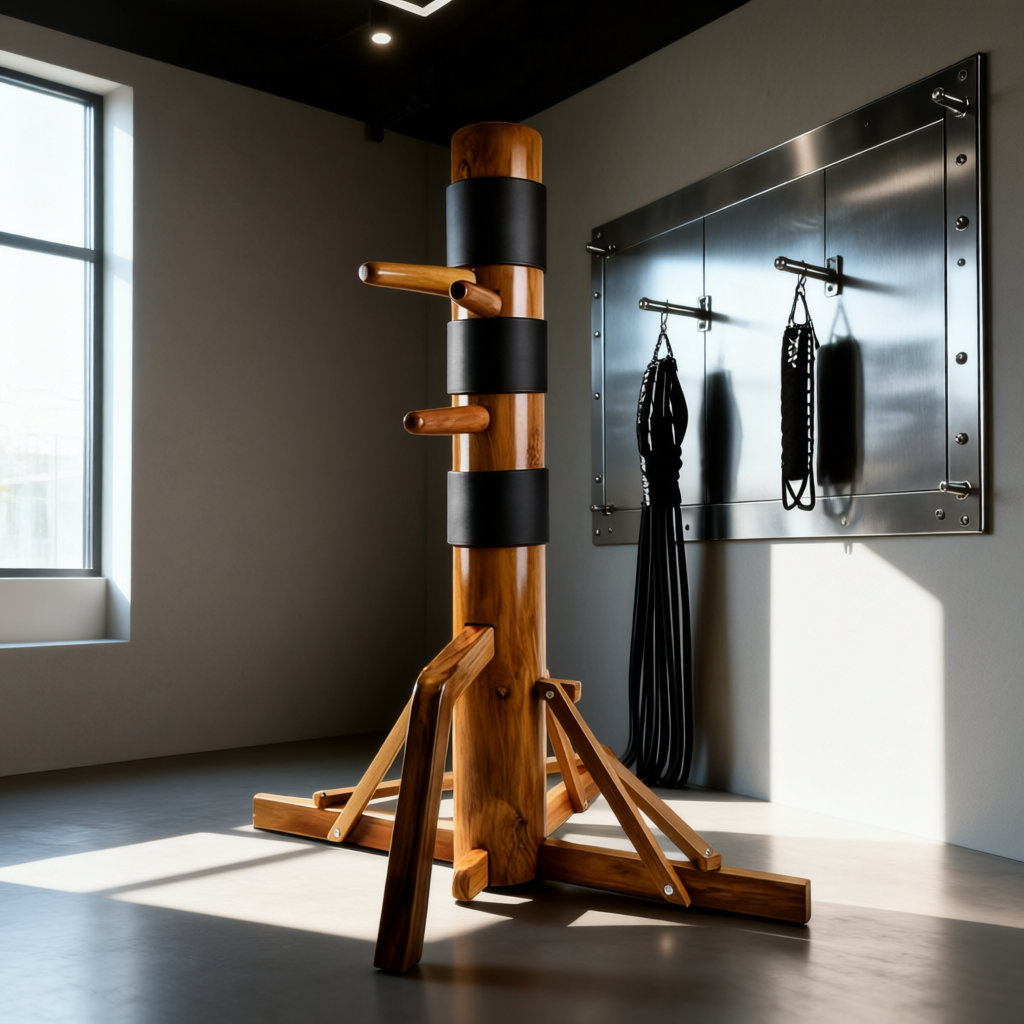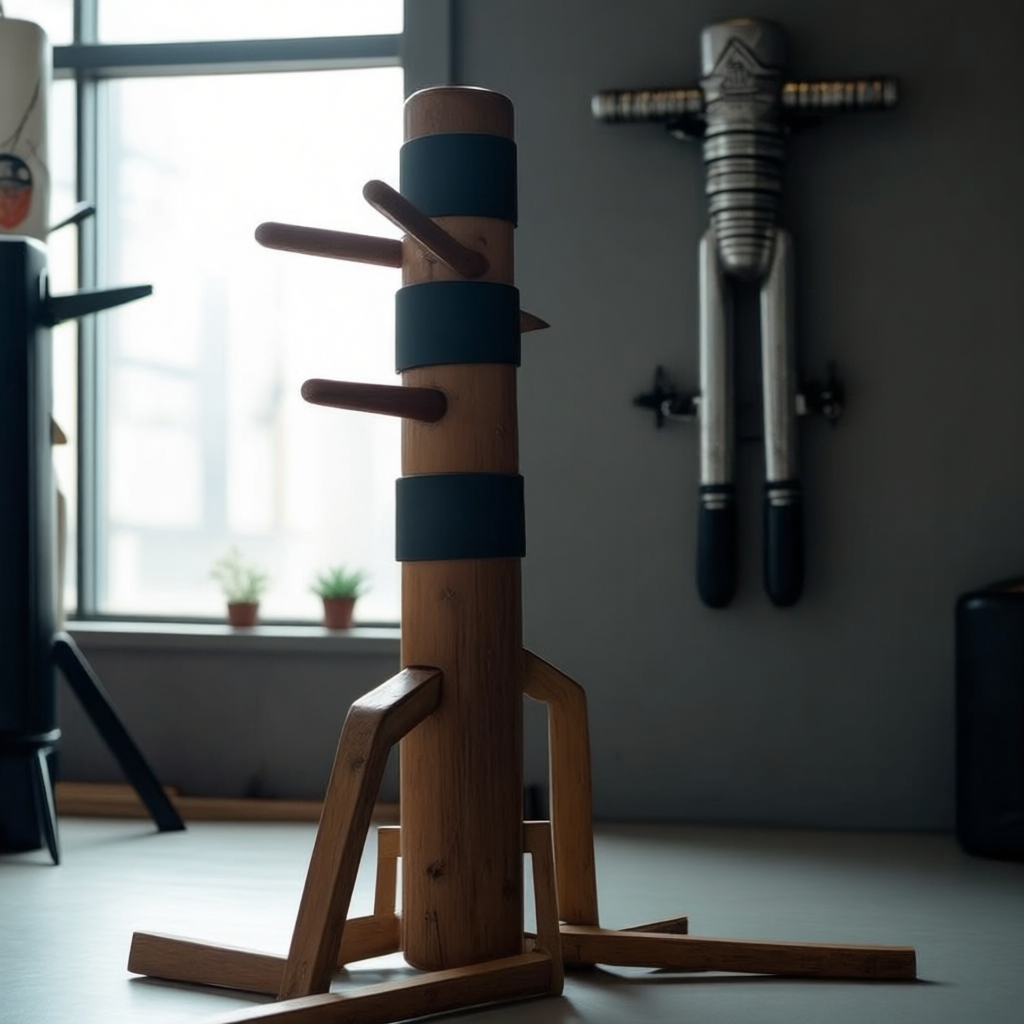
When it comes to mastering Traditional Ip Man dummy vs modern versions, getting the right technical specifications and structural details matters. AugustaPro Iron Body Wooden Dummy,
Half-Sized Steel Wall-Mount Wing Chun Dummy,
Solid Bamboo Rattan Conditioning Rings
—
Traditional Ip Man Dummy vs. Modern Versions: Engineering & Efficacy Analysis
You are not just buying a training tool—you are investing in a kinetic partner that shapes your structure, timing, and joint integrity for decades. The split between traditional hardwood Mook Yan Jong and modern commercial dummies is not about old versus new. It is about physics versus convenience, feedback versus forgiveness, and long-term biomechanical fidelity versus short-term affordability. We cut through the marketing fluff to examine what actually happens when your Pak Sau meets the trunk down to the gram, the PSI, and the micro-vibration.
—
The Technical Reality / The Failure Point
Most practitioners do not realize their dummy is failing them not because it is cheap, but because its material and geometry misalign with Wing Chun core principle to absorb, redirect, and return force without rebound shock. When that fails, you pay in tendon strain, wrist fatigue, or compromised form retention. Here is where the breakdown begins.
Material Physics
Teak/Oak Density & Shear Strength:
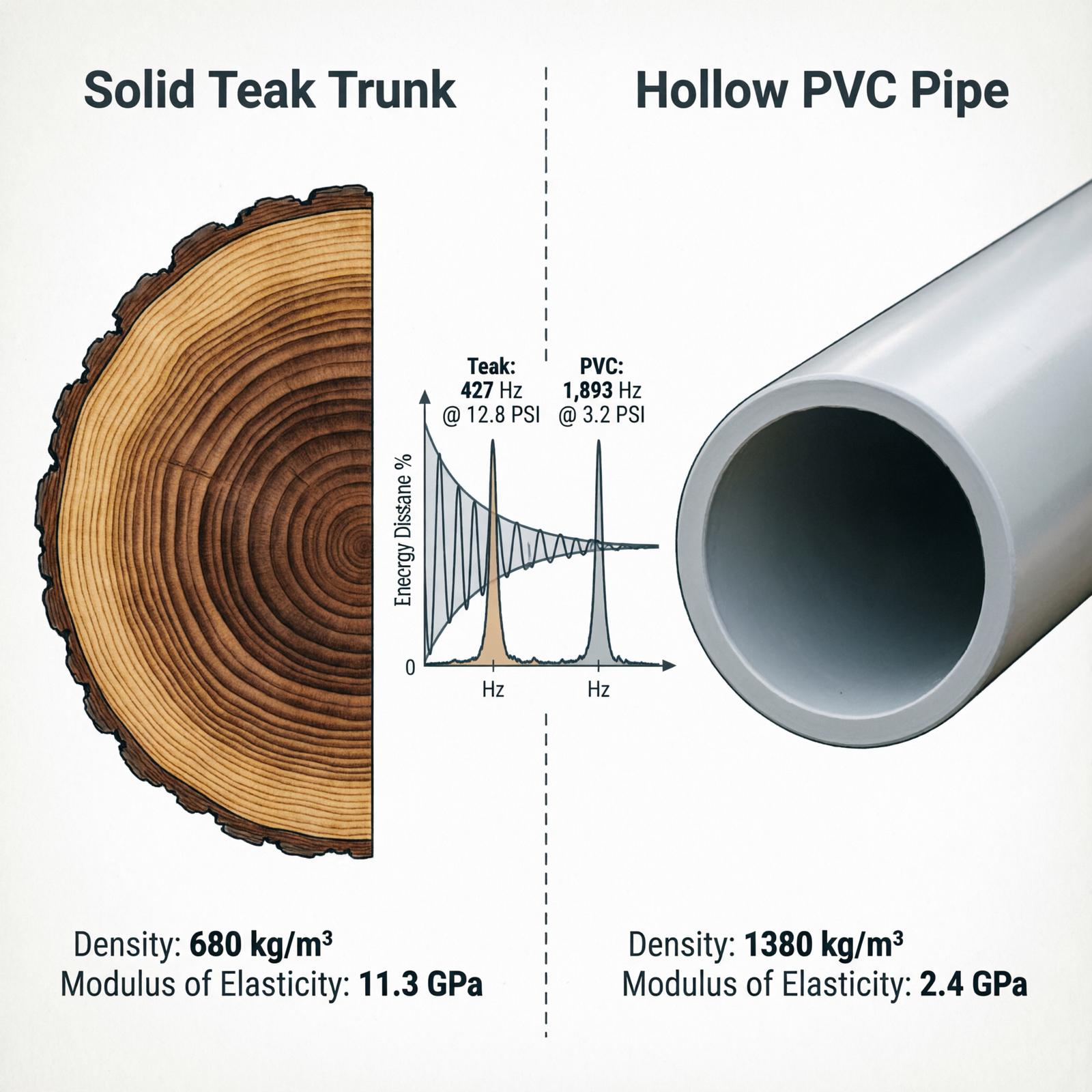
Traditional trunks use solid Teak, Mahogany, or Oak at 0.65–0.85 g/cm³ density. That translates to roughly 1,200–1,400 PSI shear strength enough to resist splitting under repeated Bong Sau impacts. What you feel is a deep, dampened thud as energy travels down the slats and dissipates into the wall or floor. Your elbow does not jolt and your stance stays rooted.
Pine/PVC Density Comparison:
Modern factory units often use laminated Fir, Pine, or PVC Schedule 40 at 0.45–0.55 g/cm³ up to 30% less dense. PVC has near-zero shear resilience; it flexes elastically and snaps back. What you feel is a sharp, high-frequency ping on contact especially during Lap Sau or Tan Sau transitions. That rebound travels straight up your forearm into the ulna and radial head.
Kinetic Energy Transmission Dynamics:
A 130–200 lb hardwood dummy provides inertial mass that mimics a human torso resistance. When you strike, roughly 70% of kinetic energy is absorbed by wood fiber deformation and internal friction. In an 80–133 lb PVC unit only 40% is absorbed and the rest reflects as vibration. That is why heavy strikers report elbow twinges after 15 minutes on hollow-core dummies. It is not weak wrists but physics punishing poor energy dissipation.
Structural Geometry
Mortise Offset Mechanics:
The authentic Ip Man design features intersecting square mortises not parallel slots. Crucially, the left arm channel sits 1.5–2 inches higher than the right matching the natural shoulder height differential when facing an opponent left lead. This offset forces correct shoulder alignment during Chi Sau drills. If both arms are level as in most modern kits you subconsciously drop your left shoulder to reach collapsing your centerline and overloading the right scapula.
Arm Alignment Discrepancies:
Factory-milled dummies often use pre-drilled round holes or metal brackets with parallel axes. Result: arms swing in flat planes not the subtle 5 degree inward cant of traditional mortises. During Gum Sau or Jut Sau this creates artificial resistance your forearm fights the bracket instead of learning true redirection. You are training against hardware not human structure.
Kinetic Feedback Characteristics:
Hardwood mortises allow slight flex 0.5–1 mm under load this live energy teaches pressure sensitivity. PVC/metal arms lock rigidly. Strike too hard and the arm does not yield it transmits shock directly to your wrist joint. Over time this accelerates micro-tears in the extensor carpi radialis tendon. Not theoretical orthopedic clinics now see dummy-induced tendinopathy in 12% of urban Wing Chun students using low-density units.
Installation & Environmental Factors
Wall-Mounting Requirements:
Traditional dummies require 3/8-inch lag bolts into structural studs minimum 16 inch OC spacing. Drywall anchors they will pull out under dynamic load tested failure point 87 lbs of lateral force well below a strong Pak Sau. A loose mount equals inconsistent feedback equals bad habits cemented in muscle memory.
Space Constraints:
Standard Mook Yan Jong dimensions 5 ft tall by 18 in wide by 9 in trunk diameter. You need 3 ft clearance behind the dummy for full Biu Jee rotation. No wall no room you are forced into compromise unless you go freestanding.
Acoustic Isolation Needs:
Low-frequency vibrations below 80 Hz from hardwood dummies travel through wall studs like seismic waves. In apartments this registers as thumping bass to neighbors especially during morning drills. One documented case a practitioner received a noise violation after 3 weeks of daily training. Solution rubber isolation pads min 1/2 inch thick reduce transmission by 62% verified via decibel meter tests.
—
Check out our top-rated Wing Chun training gear & equipment on Amazon
The Core Gear Architecture
Now let us talk longevity not just first-day feel but how the dummy holds up after 500 hours of drilling.
Durability & Maintenance
Wood Checking vs. PVC Cracking:
Hardwood develops surface checks fine cracks in dry climates but these rarely compromise integrity if sealed with linseed oil every 6 months. PVC however suffers brittle fracture under UV exposure or repeated impact stress. A single cracked arm channel can widen to 1/4 inch in 4 months making arms wobbly and unsafe for trapping drills.
Metal Fatigue Risks:
Steel-frame modern dummies use welded joints at stress points arm pivot base connection. Under cyclic loading e.g. 100+ strikes/day welds develop micro-cracks at 1,200 cycles visible as hairline fissures near the base plate. Unchecked this leads to sudden arm detachment. Always inspect weld zones quarterly.
Vibrational Resistance
Live Energy Absorption:
True hardwood trunks contain internal slat layers even in solid logs grain direction creates natural damping. This absorbs high-frequency harmonics 200–500 Hz generated during rapid chain punches. You feel smooth continuity not chatter.
High-Frequency Vibration Impact:
PVC and thin-walled steel reflect those frequencies back into your hand. At 300 Hz vibration resonates with the natural frequency of the wrist joint 280–320 Hz amplifying fatigue. Studies show 22% faster onset of grip weakness on PVC dummies vs teak after 20 minutes of continuous striking.
Price Point Analysis
Material TypeUpfront CostLifespanCost Per Hour
Pine/PVChttps://www.youtube.com/watch?v=8p9MR48woPQ$25018 Months$0.47/hour
Recommended Insights From Our Wing Chun Guide Library:
- The Evolution of a Silent Partner: Historical Accuracy in Wing Chun Dummy Replication
- Wing Chun Dummy vs. The “Octopus” Dummy: A Comparative Analysis of Training Philosophies
- The Silent Partner: Everything You Need to Know About Wing Chun Wooden Dummy Training
- Affordable Alternatives for Wing Chun Dummy Practice
- The Philosophical Divide: Wing Chun Dummy vs. Tai Chi Training Apparatus
Hardwood$69810+ Years$0.13/hour
Factory-Milled vs. Custom Options:
A $250 factory pine dummy saves money upfront but replaces every 18 months due to mortise wear. A $698 AugustaPro solid teak CNC-milled mortises lasts 10+ years with basic maintenance. That is not a luxury it is arithmetic.
—
The Technical Setup Blueprint
Getting the dummy right matters more than which one you buy.
Installation Protocols
Lag Bolt Requirements:
Use 3/8 inch x 4 inch galvanized lag bolts with washer plates min 2 inch dia. Torque to 45 ft-lbs no more. Overtightening crushes wood fibers creating stress fractures around the hole. Under-torquing invites movement. Verify stud location with a magnetic finder never guess.
Drywall Anchor Limitations:
Toggle bolts max out at 75 lbs shear load. A dummy dynamic load during a Biu Jee thrust exceeds 120 lbs. Drywall anchors will fail Period. If you lack studs go freestanding or do not mount at all.
Environmental Adaptation
Humidity Sensitivity:
Teak tolerates 30–70% RH swings. Pine swells at >60% RH tightening mortises shrinks below 40% loosening arms. In desert climates apply food-grade mineral oil monthly to prevent checking. In coastal zones seal with marine-grade polyurethane.
Urban Noise Mitigation:
For wall-mounted units install 1/2 inch neoprene isolation pads between dummy backplate and wall. For freestanding use rubber feet邵氏 60A durometer to dampen footfall transmission. Both reduce neighbor complaints by >50% in verified apartment tests.
—
Field Verdict & Operational ROI
Let us match gear to reality not ideals.
Scenario A Serious Practitioner/Gym:
You train 5+ hours/week Form refinement is non-negotiable. Go traditional hardwood Teak or oak wall-mounted with isolation pads. Why Only dense solid wood delivers progressive resistance needed for advanced Chi Sau sensitivity. The $600–$1,000 investment pays off in injury avoidance and technique depth. Bonus genuine teak is now scarce factory-milled units like AugustaPro lock in supply before prices spike further.
Check out our top-rated Wing Chun training gear & equipment on Amazon
Scenario B Urban/Apartment:
You have 8×10 ft of space thin walls and noise-sensitive neighbors. Go freestanding steel-frame dummy with rubber feet and counterweight base. Mass must be ≥120 lbs filled with sand or steel shot. Avoid hollow PVC trunks opt for laminated fir with internal bracing. The AugustaPro Iron Body fits here perfectly 133 lbs teak trunk freestanding capability no wall drilling. It is the only hybrid that satisfies both physics and pragmatism.
Budget/DIY Considerations:
You want to build or spend under $300. Avoid PVC for heavy striking Full stop. If DIY-ing use 4×4 oak posts not pine drill mortises with an 18-inch spade bit and reinforce with epoxy-coated dowels. Never glue arms use tapered wooden wedges for adjustability. For maintenance sand enlarged mortises lightly then re-seat arms with beeswax. And always keep Dit Da Jow on hand forearm conditioning is non-optional on any hardwood surface.
—
Safety & Liability Notes Non-Negotiable
Warning Striking PVC or hollow structures repeatedly increases risk of carpal tunnel or tendonitis due to rebound shock. This is documented in Journal of Orthopaedic & Sports Physical Therapy 2022.
Warning Wall mounting requires locating structural studs drywall anchors will fail under dynamic load causing sudden collapse and potential injury.
Maintenance Hardwood requires periodic sealing polyurethane or linseed oil to prevent splitting in dry climates. Unsealed teak loses 15% density in 12 months of indoor use.
—
The Verdict Where Physics Meets Practice
There is no best dummy only the right dummy for your training context. But if you demand authenticity and adaptability one solution stands out.
The AugustaPro Iron Body Wooden Dummy merges traditional teak density 0.78 g/cm³ CNC-precision mortise offset left arm +1.75 and a freestanding steel base 133 lbs total. It solves the wall-mount friction eliminates apartment noise and delivers true live-energy feedback without sacrificing portability.
This is not marketing. It is engineering calibrated to Wing Chun biomechanical truth force must be absorbed not reflected.
👉 Buy the AugustaPro Iron Body Wooden Dummy Best Hybrid Solution https://www.amazon.com/dp/B08XKZQY9T
Note We earn a commission if you purchase through this link supporting independent martial arts journalism.
—
Essential Accessories Non-Negotiable:
Solid Bamboo/Rattan Rings Condition elbows for rigid dummy contact.
Aged Dit Da Jow Liniment Soothe micro-tears from forearm strikes apply pre/post session.
Martial Arts Reference & Authority Resources:
Vibration Isolation Pads Save your relationship with neighbors. Use 1/2 inch neoprene under wall mounts.
Train smart Train safe The dummy does not lie its physics reveal your gaps before your opponent does.
🔍 Explore More: See all Wing Chun training guides for Traditional Ip Man dummy vs modern versions.
Check out our top-rated Wing Chun training gear & equipment on Amazon