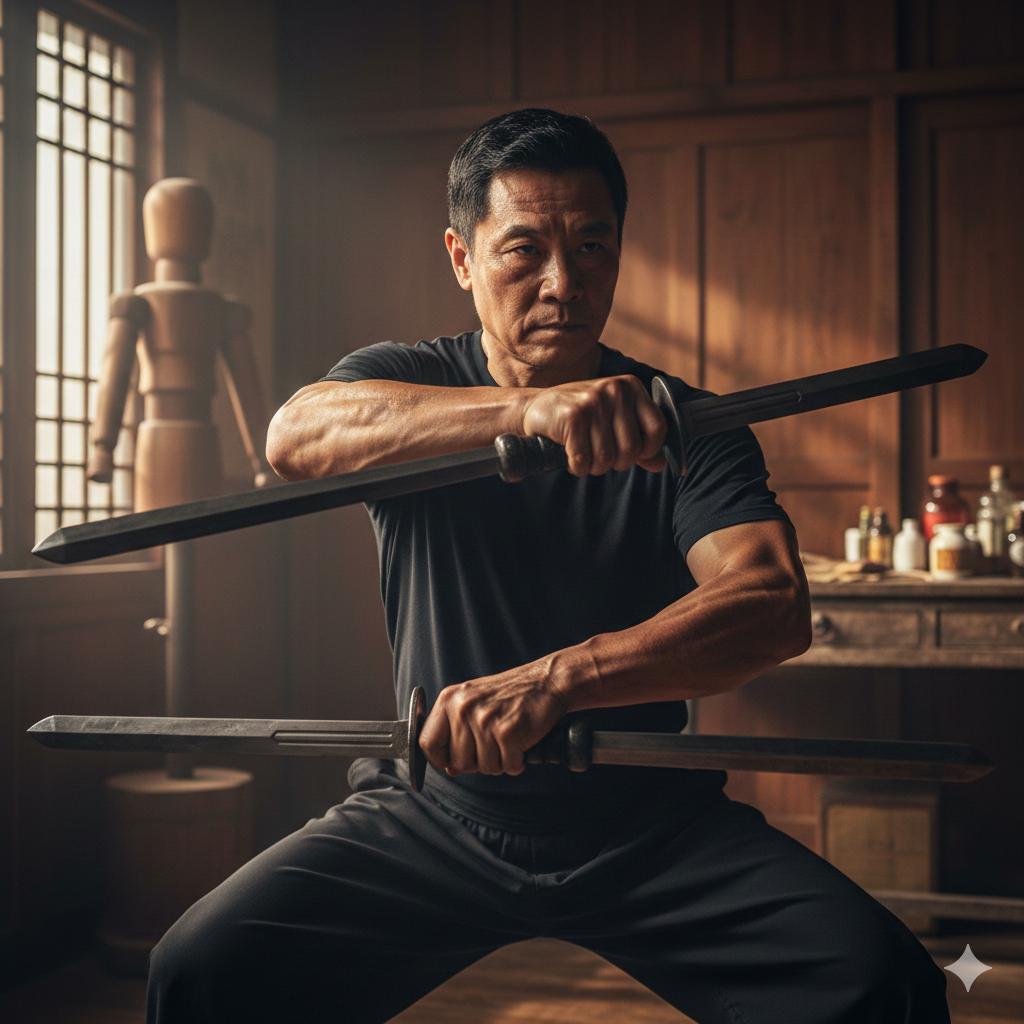
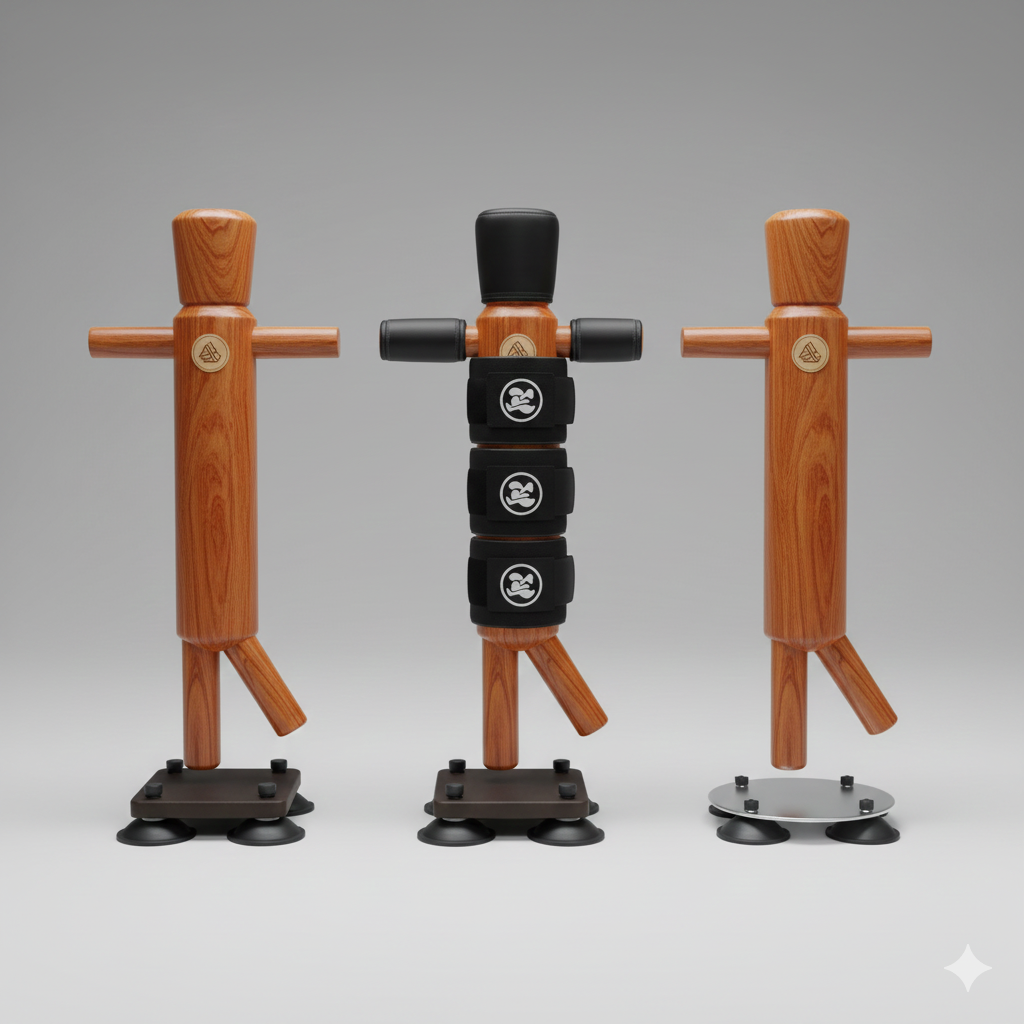
The Wing Chun Kung Fu Bamboo Ring, known as the Jook Wan Huen, is a training device steeped in tradition and martial utility.
While the Wooden Dummy (Mook Yan Jong) receives much of the attention, the ring is a critical component of the system, offering a unique method for developing the internal structure and coordination necessary for advanced Wing Chun.
Its primary function is to enforce the principles of the centerline and simultaneous hand movements, ensuring that the practitioner’s arms work as a unified, compact unit.
The ring forces the elbows to stay close to the body, preventing the arms from flaring out and compromising the defensive structure.
This is a form of self-correction that is immediate and constant, making it an indispensable tool for solo practice.
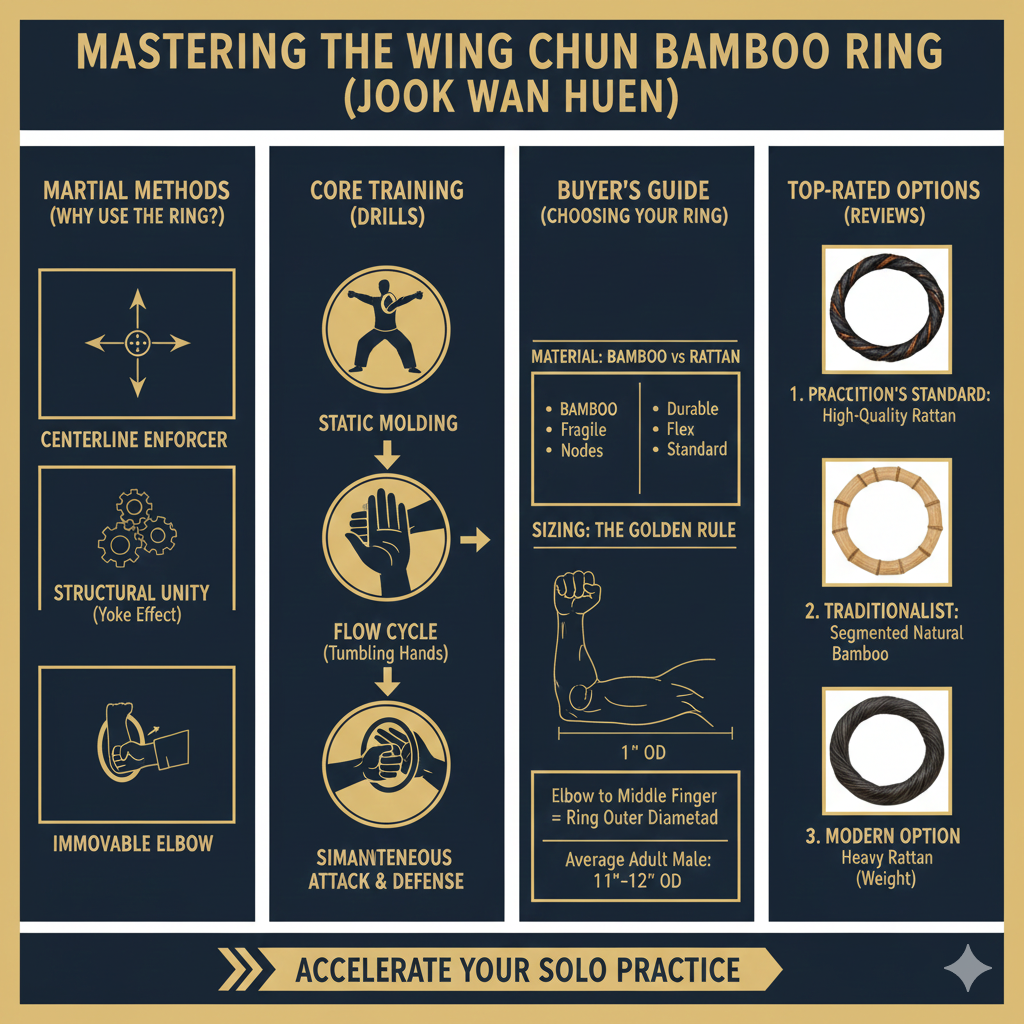
Martial Methods of the Jook Wan Huen
The Jook Wan Huen is not merely a physical prop; it is a guide to the martial methods of Wing Chun.
Training with the ring cultivates what is often called “vorticular whirlpool power,” a concept that emphasizes circular, spiraling energy to deflect and control an opponent’s force [1].
The ring’s circular shape naturally encourages the hands to move in arcs and circles, which is fundamental to the Wing Chun concept of deflecting force off the bone structure.
The methods practiced with the ring include:
- Centerline Enforcement: The ring physically restricts the hands, forcing them to operate within the narrow confines of the centerline, the most vulnerable area of the body.
- Simultaneous Movement: Drills with the ring require both hands to move together, developing the crucial skill of simultaneous attack and defense.
- Structural Integrity: The ring highlights any weakness in the practitioner’s structure. If the elbows are too wide or the wrists are bent, the ring will slip or feel unstable, providing instant feedback.
These methods are directly applicable to Chi Sao and real-world self-defense, where maintaining a strong, compact structure is paramount to success.
Details of the Jook Wan Huen: Bamboo vs. Rattan
While the term “Bamboo Ring” is often used, the most common material today is rattan, a close relative of bamboo that is more flexible and less prone to splintering.
The distinction between a true bamboo ring and a rattan ring is subtle but important to the purist.
Bamboo is generally harder and more rigid, offering a more unyielding form of feedback, while rattan is more pliable, which is often preferred for high-repetition drills and developing a softer, more sensitive touch.
Regardless of the material, the ring’s diameter is a critical detail.
A smaller ring (around 10-12 inches) forces a tighter, more compact structure, ideal for advanced practitioners, while a larger ring (14-16 inches) is more forgiving for beginners.
The thickness of the ring also affects the grip and the feel of the training.
These details, often overlooked, are what make the Jook Wan Huen a precise and effective training tool [2].
Product Review: The Best Wing Chun Rings on the Market
For those looking to purchase a Jook Wan Huen, the market offers a variety of options, primarily in rattan and sometimes in steel (as reviewed in a previous post).
Here is a review of popular rings, focusing on material, durability, and value:
</tableFor the beginner, a high-quality rattan ring is generally the recommended starting point, as it provides the necessary feedback without the punishing nature of steel.
The key is to ensure the ring is well-sanded and finished to prevent splinters, and that the joint is securely fastened.
Advanced Jook Wan Huen ApplicationsBeyond the basic hand-positioning drills, the Jook Wan Huen is used for advanced applications that integrate footwork and body structure.
One such application is the practice of the “Eight-Directional Force” drill, where the practitioner moves the ring in various planes while maintaining a constant, balanced structure.
This drill is essential for developing the ability to generate power from the ground up, through the waist, and out to the hands, a hallmark of advanced Wing Chun.
Another advanced method involves using the ring to practice the transition between the three forms—Siu Lim Tao, Chum Kiu, and Biu Jee—ensuring that the principles of the centerline and structure remain consistent across all movements.
The ring becomes a portable, dynamic centerline, forcing the practitioner to move around it while keeping their hands perfectly aligned [3].
The Bamboo Ring in Historical ContextHistorically, the Jook Wan Huen was a common training tool, especially for those who could not afford a full Wooden Dummy.
It was a practical, portable solution that allowed students to practice the core principles of the system anywhere.
The emphasis on the bamboo or rattan material also speaks to the art’s connection to nature and the idea of yielding strength—a flexible material that can bend without breaking.
The study of the Jook Wan Huen is often considered a “hidden” or more internal level of Wing Chun study, focusing on the subtle energy and structural alignment that underpins the more visible fighting techniques [4].
Understanding this historical context adds a layer of depth to the training, transforming a simple hoop into a profound martial artifact.
Conclusion:
A Small Tool with a Big ImpactThe Wing Chun Kung Fu Bamboo Ring, or Jook Wan Huen, is a testament to the efficiency and depth of the Wing Chun system.
It is a small, affordable tool that can have a massive impact on a practitioner’s development, cultivating the essential skills of structure, sensitivity, and simultaneous movement.
By understanding the martial methods and choosing the right ring for your level—whether a traditional rattan for flow or a steel ring for conditioning—you can unlock a powerful new dimension in your solo training.
Embrace the ring, and let it guide your hands to mastery.
| Product Type | Key Features | Pros | Cons |
|---|---|---|---|
| Traditional Rattan Ring | Natural, lightweight, flexible material. Typically 12-14 inches. | Excellent for developing sensitivity and flow. Traditional feel. | Can be less durable; may require occasional re-shaping. |
| Heavy-Duty Steel Ring | Unyielding, heavy, and extremely durable. | Best for strength and conditioning; demands perfect, unyielding structure. | Can be harsh on the forearms; less suitable for beginners. |
| PVC/Plastic Ring | Lightweight, inexpensive, and waterproof. | Great for travel and high-volume, low-impact practice. | Lacks the traditional feel and feedback of natural materials. |
| Weighted Rings (Iron/Brass) | Smaller rings worn on the forearms during forms. | Develops explosive power and endurance in the arms. | Requires careful, gradual introduction to avoid injury. |