

Wing Chun Dummy for Kids and Youth Training: Size, Safety, and Scale 🧒🥋
The Importance of Scale: Why Adult Dummies Fail Young Students
The dimensions of the traditional Mook Yan Jong are based on the average adult male physique.
When a child trains on an adult dummy, the proportions are fundamentally incorrect, which can ingrain bad habits. ⚠️
- Incorrect Structure: A child must reach too high for the arms, forcing them to lift their shoulders and break their elbow-down structure, compromising the fundamental principle of the system.
- Poor Positioning: The arms are too far apart, causing the child to widen their stance or lean, leading to inaccurate centerline training.
- Injury Risk: The hard, dense wood of an adult dummy, designed for conditioning mature bones, poses a significant risk to the softer, still-developing bones and joints of a child.
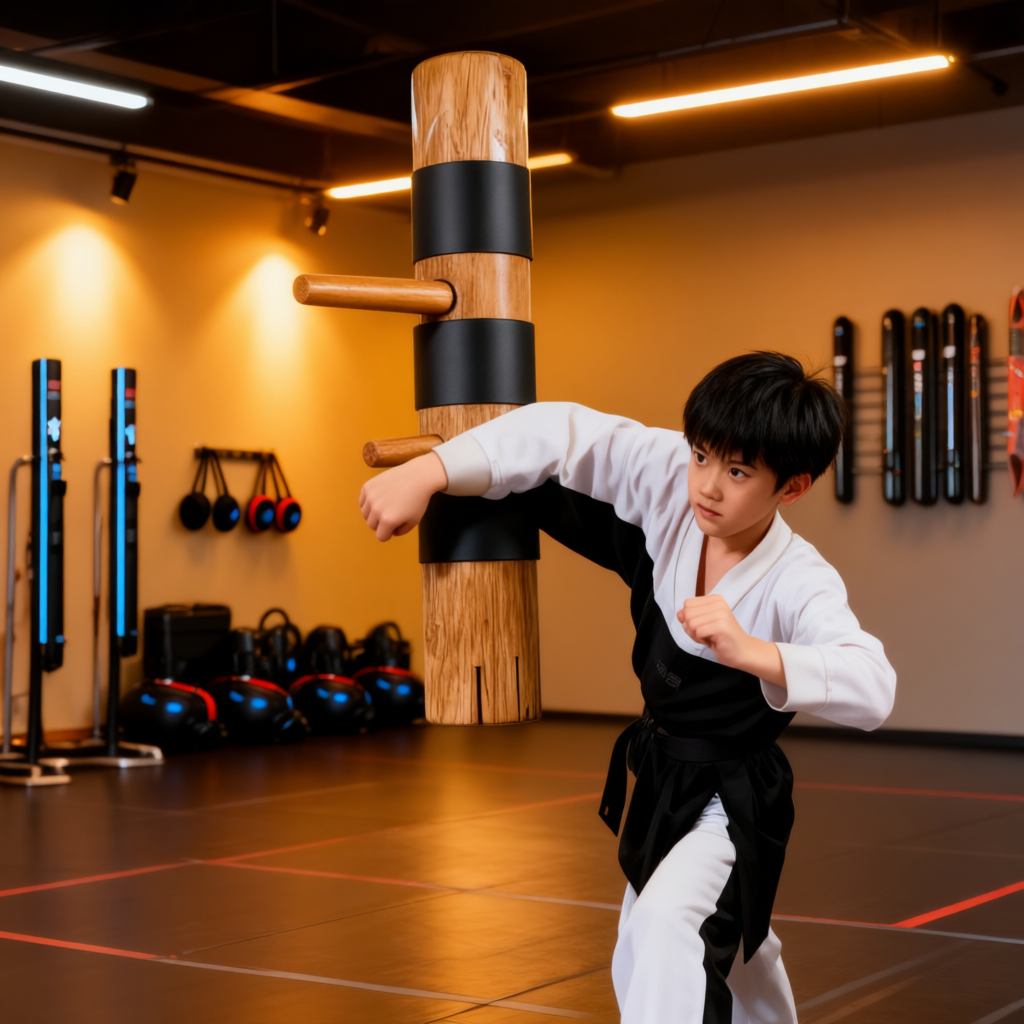
A youth dummy must be a scaled-down replica of the adult version, maintaining correct geometric relationships between the arms, leg, and trunk, but sized appropriately for the student’s height.
Key Considerations for a Youth Dummy
When selecting or building a dummy for a young practitioner, three factors must guide the decision. 💡
A. Size and Proportion
The most crucial element is ensuring the dummy’s dimensions are proportional to the student’s body.
The goal is to allow the student to maintain a correct, relaxed stance while executing techniques.
| Feature | Youth Dummy (Ages 8-13) | Adult Dummy (Standard) |
|---|---|---|
| Trunk Height | ~130-150 cm (51-59 in) | ~165 cm (65 in) |
| Trunk Diameter | ~15-18 cm (6-7 in) | ~20-23 cm (8-9 in) |
| Top Arm Placement | Should align with the child’s shoulder height | Fixed at ~135 cm (53 in) |
| Arm Length | Shorter and thinner, proportional to the trunk | Standard length and diameter |
The top arms should be positioned so the student can strike them while maintaining a relaxed, elbow-down structure.
As the child grows, the dummy must be adjusted. 📏
B. Safety First: Material and Padding
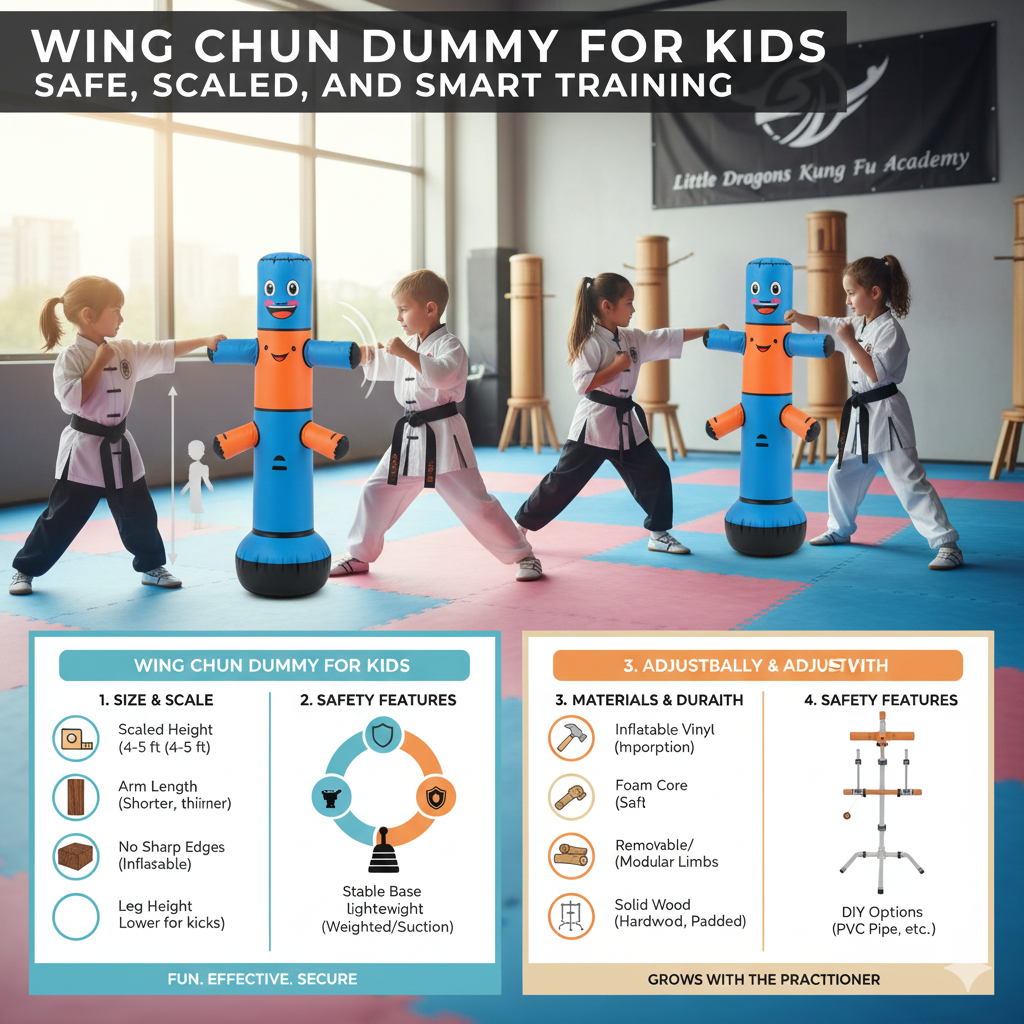
Safety is paramount for youth training. The dummy should be firm enough to provide resistance but forgiving enough to prevent injury. 🛡️
- Softer Wood: Consider using Pine or Poplar for the trunk and arms. Softer than hardwood, it reduces impact stress on joints.
- Padded Arms: Arm pads are highly recommended. They allow striking and trapping without bruising.
- Rounded Edges: Ensure all edges, especially the ends of the arms and top of the trunk, are well-sanded to eliminate sharp points.
- Freestanding Preference: A freestanding dummy is safer for youth, placed in an open area to prevent wall damage.
C. Adjustability for Growth
Children grow quickly, making an adjustable dummy a necessity for long-term use. 🌱
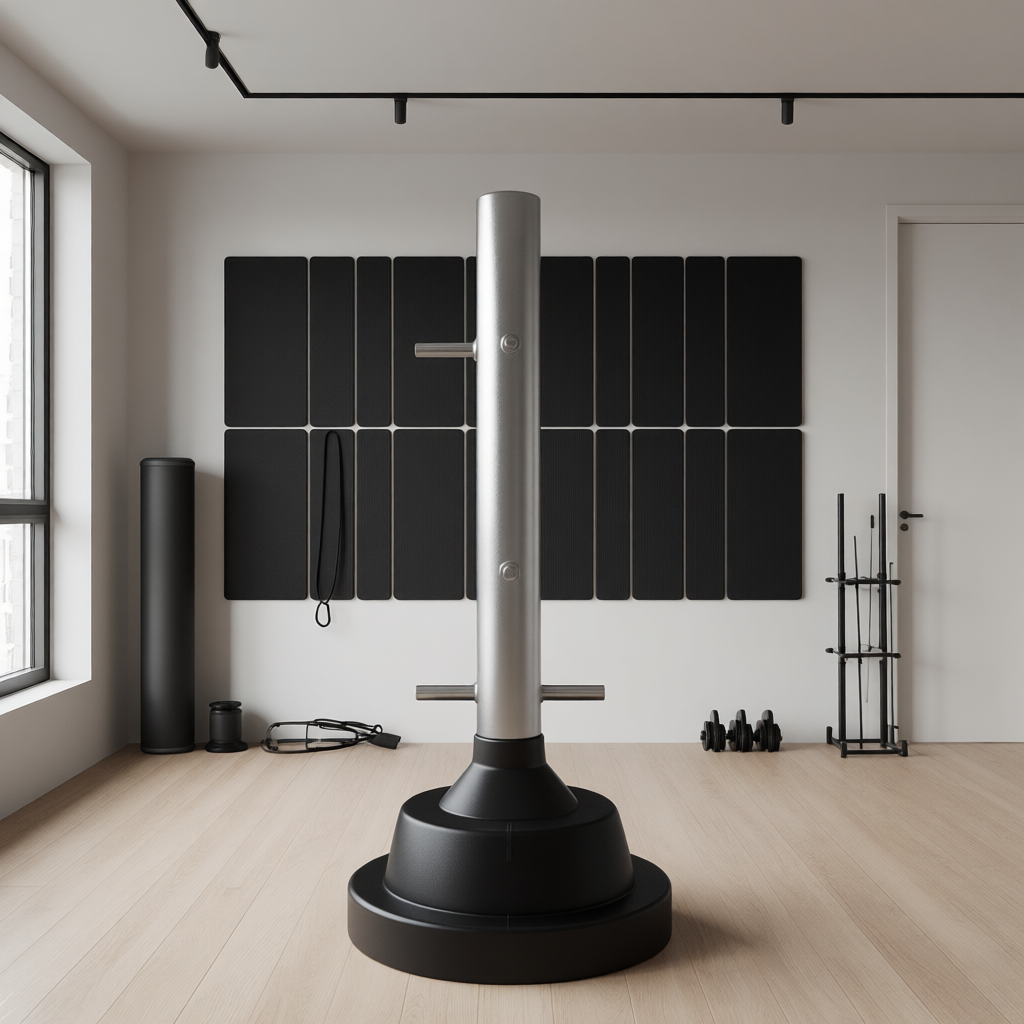
- Adjustable Stand: A freestanding model with a height-adjustable base allows the dummy to rise as the student grows.
- Adjustable Arm Holes: Some custom dummies feature multiple arm holes for matching the student’s increasing height.
Product and DIY Options
A. Commercial Youth Dummies
Several martial arts suppliers offer purpose-built youth dummies. 🏢
- Scaled: Built to smaller proportions.
- Freestanding: Mounted on a stable base, often height-adjustable.
- Cost: Typically $400-$800, representing a significant investment.
B. Low-Cost DIY Solutions
For parents or instructors with basic woodworking skills, DIY options provide low-cost and customizable alternatives. 🔨
- DIY PVC Dummy: Soft, lightweight, easy to scale, and safe. Trunk can be filled with sand or water for stability.
- DIY Pine Dummy: Offers a traditional feel, softer than hardwood, can be precisely scaled, ideal for students outgrowing PVC but not ready for full hardwood.
Conclusion: Training Focus for Young Practitioners
The Wing Chun dummy for kids should be a tool for developing correct positioning, structure, and muscle memory—not hand conditioning or raw power. 🧠
The best choice is a scaled, height-adjustable, and padded dummy, allowing confident training while maintaining system fundamentals.
Whether commercial or custom-built PVC/Pine, ensuring the dummy is proportional to the student is the single most important factor for a safe, lifelong practice. 🎯
References and Further Reading
Wing Chun Dummys — Childrens Dummy / Modern Free Stand
Dragon Institute — How to Build a Wooden Dummy (w/ Plans & FAQs)