
In the high-stakes world of self-defense, training tools are not mere accessories; they are the silent partners that forge reflexive skill and muscle memory. 🛠️
When preparing for a real-world confrontation, a martial artist must consider two distinct phases of conflict: the stand-up phase and the ground phase. ⚖️
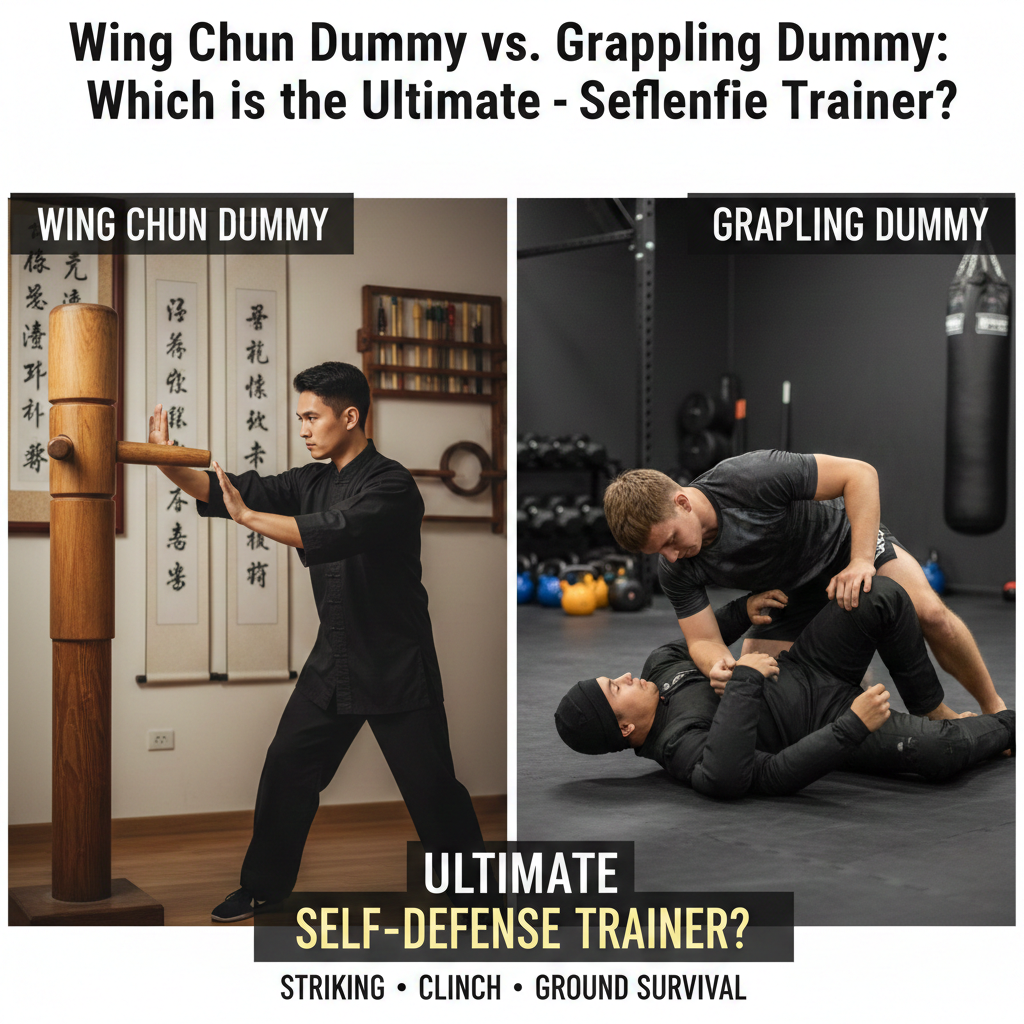
Two specialized training tools dominate these respective domains: the Wing Chun Wooden Dummy (Mook Yan Jong) and the Grappling Dummy. 🥋
While the Mook Yan Jong is the undisputed master of close-range striking and structural control, the grappling dummy is the essential tool for mastering the clinch, takedowns, and ground survival. 🤝
This comprehensive analysis will compare these two specialized apparatuses, dissecting their unique contributions to a complete self-defense skill set and helping you determine how to integrate both for maximum preparedness. 🤓
We will explore how each dummy addresses the critical, often brutal, realities of a self-defense scenario. 💥
The Mook Yan Jong: Mastering the Stand-Up Phase
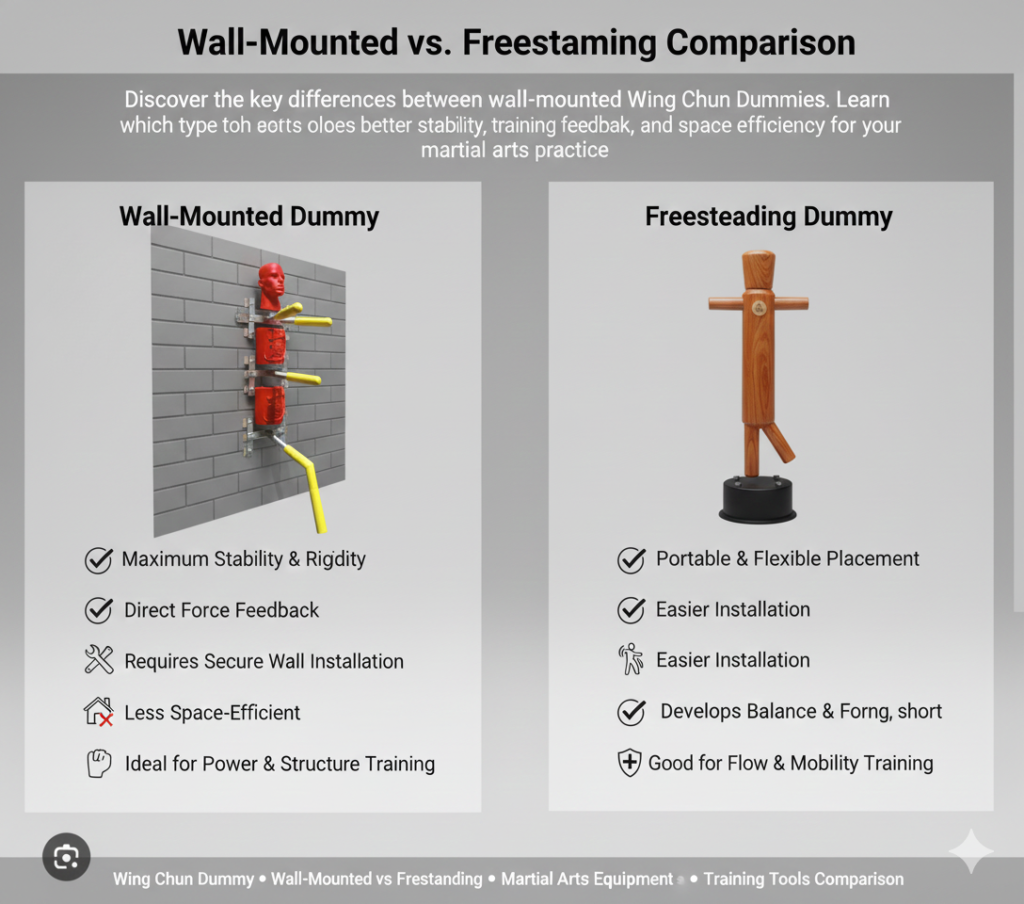
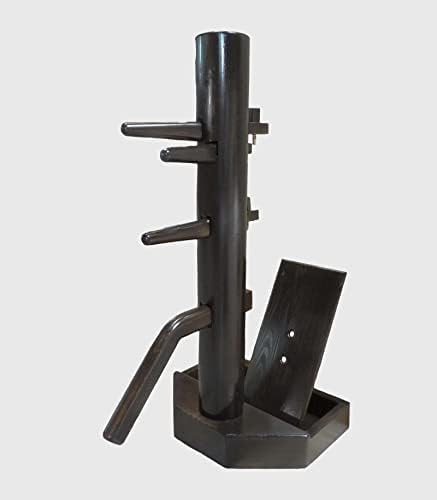
The Wing Chun Wooden Dummy is a highly specialized tool designed to refine the core principles of the Wing Chun system, which are inherently geared toward close-range self-defense. 🎯
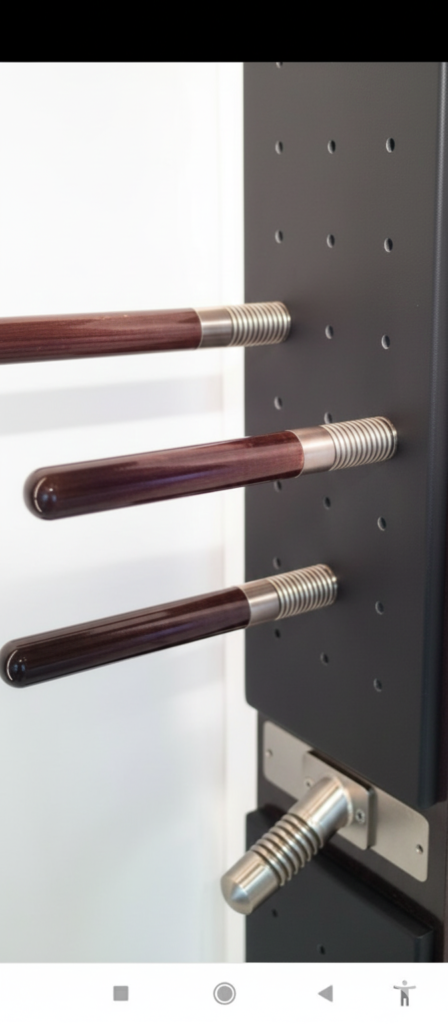
Its structural design—three arms and one leg—is a physical blueprint of an opponent’s guard and stance, forcing the practitioner to engage with precise angles and structural integrity. 📐
The dummy’s contribution to self-defense is primarily focused on the initial, critical moments of a confrontation: closing the distance, controlling the opponent’s limbs, and delivering a rapid, overwhelming barrage of strikes. ⚡
Structural Control and Centerline Dominance
The Mook Yan Jong’s unyielding nature provides immediate, honest feedback on the practitioner’s structure. 🌳
Any misalignment or lack of structural integrity results in a jarring, painful impact, forcing the martial artist to correct their form instantly. 🤕
This is crucial for self-defense, where a momentary loss of structure can lead to a devastating counter-attack. 🛑
The dummy trains the practitioner to maintain a constant forward intent while simultaneously controlling the opponent’s limbs—a principle known as simultaneous attack and defense. ☯️
This is achieved through movements like Pak Sau (slapping hand) and Bong Sau (wing arm) against the dummy’s arms, immediately followed by a strike to the centerline. 📍
The dummy’s arms teach the practitioner to “bridge the gap” and control the opponent’s weapons, which is the essence of Wing Chun self-defense. The Wing Chun dummy is a highly effective tool for self-defense training, particularly for refining close-range techniques. [1]
The training develops tactile reflexes—the ability to feel the pressure of an opponent’s limb and react instantly without visual input. 🖐️
In a chaotic self-defense scenario, this reflexive, non-visual response is invaluable. 🧠
The Mook Yan Jong is the ultimate tool for teaching you to occupy and defend the centerline, the shortest and most vulnerable path to the body. ➡️
Clinch and Trapping Applications
While not a grappling tool, the Mook Yan Jong is excellent for training the transition into the clinch and the short-range striking that occurs there. 🤝
The dummy’s arms and trunk allow for the practice of trapping—controlling both of the opponent’s arms to neutralize their ability to strike. 🔗
Techniques like Jut Sau (jerking hand) and Gaan Sau (splitting hand) are practiced against the dummy to create openings for close-range strikes, such as elbows, knees, and the signature Wing Chun chain punch. 💥
The dummy’s leg is also used to train low-line kicks and to practice the structural integrity needed to withstand a takedown attempt. 🦵
The goal is to maintain a devastating striking offense while simultaneously managing the opponent’s attempts to grab or take you down. 🛡️
This video demonstrates how Wing Chun dummy training is specifically applied to self-defense scenarios, focusing on the initial confrontation. 🎥
The Grappling Dummy: Mastering the Ground Phase
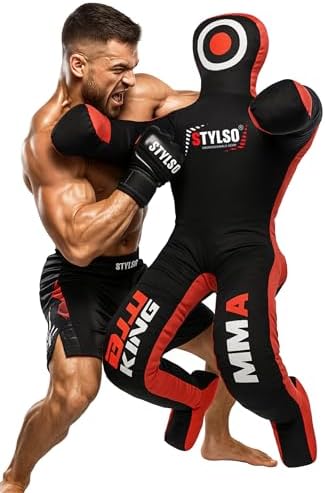
The Grappling Dummy is a specialized, articulated tool designed to simulate the weight, limbs, and joint structure of a human opponent for ground fighting and submission practice. 🧘
Its contribution to self-defense is centered on the reality that many confrontations end up on the ground, where striking skills are often neutralized. ⬇️
The grappling dummy is essential for developing the skills needed to survive, escape, and reverse a ground-based attack. 🔄
Submission Practice and Joint Manipulation
The primary use of the grappling dummy is to practice submissions, such as armbars, chokes, and joint locks, without risking injury to a training partner. 🤕
In a self-defense context, submissions are crucial for quickly neutralizing a threat without relying on brute force, which is especially important if the defender is smaller or weaker than the attacker. 🤏
The dummy allows for endless repetition of the intricate movements required to secure a submission, building the precise muscle memory needed for high-pressure situations. 🧠
The ability to transition between positions—from side control to mount, or from guard to a sweep—is a core self-defense skill that the dummy facilitates. 🚶
This practice is not just about offense; it is about positional control—the ability to maintain a dominant position that prevents the attacker from striking or escaping. 🛡️
Takedowns, Throws, and Ground Survival
The full-size grappling dummy is invaluable for practicing takedowns and throws, which are often necessary to control the distance and dictate the terms of the fight. 🤸
Techniques like single-leg takedowns, double-leg takedowns, and hip throws can be practiced with full force and commitment, which is difficult to do safely with a live partner. 🏋️
Furthermore, the dummy is a perfect tool for practicing ground survival—drills focused on escaping from a mount or side control position. 🏃
In a self-defense situation, the ability to quickly get back to your feet or reverse a bad position is paramount. ⬆️
The dummy’s weight and shape simulate the dead weight of an opponent, forcing the practitioner to use proper body mechanics and leverage, rather than relying on strength alone. 💪
The grappling dummy is the essential training partner for the 90% of self-defense encounters that end up in a clinch or on the ground. 🌍
This video provides insight into the application of Wing Chun techniques, which often involves managing the transition to a clinch, a critical bridge between the two dummies’ domains. 🌉
The Self-Defense Synthesis: Bridging the Gap
For complete self-defense preparedness, neither dummy is sufficient on its own. 🙅
The most dangerous moment in a fight is the transition between the stand-up and ground phases. ⚠️
The Mook Yan Jong prepares you for the initial striking exchange and the clinch. The grappling dummy prepares you for the ground fight. 🤝
The truly prepared martial artist must train to seamlessly transition between the two. 🔄
For example, a Wing Chun practitioner might use a Pak Sau and a chain punch on the Mook Yan Jong, and then immediately transition to a takedown drill on the grappling dummy. 🏃
This cross-training ensures that the skills learned on one dummy are not isolated but are integrated into a continuous, fluid self-defense response. 🌊
The goal is to develop a holistic self-defense structure that is equally competent in striking, clinching, and grappling. 💯
The dummy training must be viewed as a means to an end: the development of reflexive, intelligent responses that work when you need them most. 💡
Self-Defense Training Tool Comparison
| Training Tool | Mook Yan Jong (Wooden Dummy) | Grappling Dummy |
|---|---|---|
| Primary Self-Defense Phase | Stand-Up, Close-Range Striking, Clinch Entry | Ground Fighting, Submissions, Takedowns |
| Key Skill Developed | Tactile Reflexes, Structural Control, Centerline Attack | Positional Control, Joint Manipulation, Ground Escapes |
| Feedback Mechanism | Rigid resistance, structural jarring on misalignment | Weight distribution, limb articulation, joint lock pressure |
| Best for Wing Chun Self-Defense | Controlling the opponent’s arms and striking through the guard | Surviving a takedown and escaping from a bad ground position |
Advanced Integration: The Hybrid Approach
For the serious self-defense practitioner, the ideal scenario involves a hybrid training approach that utilizes the strengths of both dummies. 💡
This is where the concept of “functional self-defense” truly comes into play. 🛡️
The Mook Yan Jong is the tool for developing the “stop hit”—the immediate, overwhelming response that is the hallmark of Wing Chun. 💥
The grappling dummy is the tool for developing the “survival and control” skills necessary when the initial stop hit fails or the fight goes to the ground. 🌍
Consider a drill where you practice a Wing Chun block and counter on the Mook Yan Jong, then immediately drop to the floor and practice a guard pass or a submission on the grappling dummy. 🔄
This trains the nervous system to switch between striking and grappling mindsets instantly, which is a key component of real-world self-defense. 🧠
The biggest mistake in self-defense training is neglecting one phase of the fight, and these two dummies ensure a balanced, comprehensive preparation. 🛑
The grappling dummy’s articulated limbs also allow for the practice of joint locks and breaks that are often taught in Wing Chun’s advanced forms, providing a realistic, non-partner way to drill these techniques. 🦴
This synergy between the two tools creates a complete self-defense system that covers all ranges of combat. 💯
This video further explores the concept of fast defense training using the Wing Chun dummy, emphasizing the speed and efficiency needed in a sudden confrontation. 🚄
Conclusion: The Complete Self-Defense Arsenal
The Wing Chun Wooden Dummy and the Grappling Dummy are not competitors; they are complementary specialists in the self-defense arsenal. 🤝
The Mook Yan Jong is your specialist for the vertical fight, ensuring your striking is structurally sound and your limb control is reflexive. ⬆️
The Grappling Dummy is your specialist for the horizontal fight, ensuring your ground survival is robust and your submissions are precise. ⬇️
For a complete self-defense structure, you must train with both. 🌟
Embrace the rigid feedback of the wood to perfect your striking structure, and embrace the dead weight of the grappling dummy to perfect your ground control. 🌍
By integrating the lessons of both, you build a self-defense capability that is prepared for any range, any angle, and any opponent. 🏆
Train with purpose, and let these two essential tools guide you to complete self-protection. 🙏
References
[1] Understanding the Wing Chun Dummy: A Comprehensive Guide – My Karate Store
[2] 5 Techniques You Can Practice With a Grappling Dummy – Maxx Pro Boxing
[3] The truth about Self Defense training systems – KW Union
[4] Grappling & Throwing Dummies – Revgear
[5] Grappling Dummies – Century Martial Arts