
In the world of martial arts, the pursuit of perfect structure is a lifelong endeavor. 🥋
Structure is the invisible framework that allows a practitioner to generate maximum power with minimal effort and to withstand incoming force without collapsing. 🧱
Two iconic training tools dominate the landscape for developing this crucial foundation: the Wing Chun Wooden Dummy (Mook Yan Jong) and the ubiquitous Boxing Heavy Bag. 🥊
While both are used for striking, their design, purpose, and the structural feedback they provide are fundamentally different. 💡
This comprehensive guide delves into the structural showdown between these two titans of training, helping you understand which tool is best suited for specific aspects of your martial arts development. 🤓
We will explore how each apparatus shapes your body mechanics, force generation, and overall structural integrity. 🚀
Defining “Structure” in Martial Arts Training
Before comparing the tools, we must first clarify what we mean by “structure.” 🤔
Structure is not merely a static posture; it is a dynamic, interconnected alignment of the body that allows for the efficient transfer of force. 🔄
In the context of striking arts, good structure means that the force of your strike originates from the ground, travels through your legs and hips, and is delivered through a perfectly aligned skeleton, preventing energy from dissipating. ⚡
Conversely, when receiving a strike, good structure allows the force to be absorbed and redirected through the strongest parts of the body, minimizing shock to the joints and vital organs. 🛡️
The goal of structural training is to achieve a state where your bones, rather than your muscles, bear the brunt of the work, allowing for relaxation and speed. 🕊️
This is a core principle that both the Mook Yan Jong and the heavy bag aim to develop, albeit through vastly different methodologies. ⚖️
The Mook Yan Jong: The Structural Architect
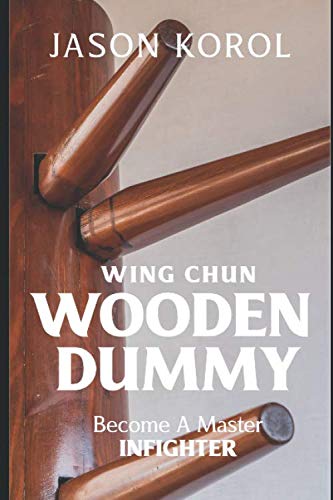
The Wing Chun Wooden Dummy is a masterpiece of functional design, a silent partner that demands precision and structural perfection. 🌳
It is not designed to be hit with brute force, but rather to be engaged with the precise angles and movements of the Wing Chun system. 📐
The dummy’s fixed, unyielding nature is its greatest teacher. 🎓
If your structure is even slightly misaligned, the feedback is immediate and often painful, forcing you to correct your angle and posture instantly. 🤕
Tactile Sensitivity and Contact Geometry
The dummy’s primary function is to develop tactile sensitivity—the ability to “read” pressure, force, and direction through contact. 🖐️
The arms and leg of the dummy are positioned to represent the opponent’s limbs, allowing the practitioner to train contact geometry—the precise angles and movements needed to control the opponent’s structure. 🔗
Training on the dummy sharpens what is known as “tactile density,” which is the brain’s ability to process multiple variables of sensory information simultaneously through touch. 🧠
This includes subtle changes in pressure, speed, and the direction of force, which are crucial for the reflexive, close-range fighting of Wing Chun. The Mook Yan Jong form is a living framework that encodes these principles of timing, pressure, and contact geometry. [2]
The slight give and spring of the dummy, mounted on two cross-pieces, simulates the resistance of a human body without the unpredictable movement of a heavy bag. 🤸
This allows the practitioner to focus entirely on their own internal alignment and the external angle of attack. 🎯
The Mook Yan Jong forces the practitioner to maintain a constant forward intent, or Jing, while simultaneously managing the dummy’s “limbs”. ➡️
This simultaneous attack and defense, or Lin Wan Kuen principle, is the core of Wing Chun structural training. ☯️
Centerline Control and Conditioning
The trunk of the dummy represents the opponent’s centerline, the most vulnerable line of attack. 📍
Every movement on the dummy is designed to control this line, either by occupying it or by deflecting the opponent’s defense away from it. 🚧
The dummy is also used for conditioning the forearms and shins, toughening the contact points to withstand impact. 💪
However, this conditioning is a secondary benefit; the primary goal remains the development of perfect structural alignment and reflexive control. 💯
As the Mu ren zhuang has been used in various Chinese martial arts for centuries, its enduring design proves its effectiveness as a structural training tool. [3]
This video provides a visual comparison, highlighting the distinct purposes of the wooden dummy versus the heavy bag. 🎥
The Heavy Bag: The Power and Conditioning Engine
The boxing heavy bag is the workhorse of almost every striking art, from boxing and Muay Thai to Karate and MMA. 🏋️
Its primary structural contribution is the development of full-body power generation and muscular endurance. 🔋
Unlike the fixed dummy, the heavy bag is a yielding, moving target that absorbs and swings with force. 🌊
This movement forces the practitioner to develop dynamic footwork, rhythm, and timing—all crucial components of a functional fighting structure. ⏱️
Dynamic Force Transfer and Endurance
When striking the heavy bag, the goal is to make the bag move, not just to hit it. 🎯
This requires the practitioner to drive the force of the strike through the bag, engaging the hips and core to create a powerful, whipping motion. 🌀
The bag’s weight provides significant resistance, which is essential for building the explosive power needed to knock an opponent off balance. 💥
The repetitive nature of heavy bag work, often done in timed rounds, builds incredible muscular and cardiovascular endurance. 💖
This endurance is a structural necessity, as a fatigued body will inevitably lose its alignment and power. 📉
The heavy bag is also excellent for training combinations and flow, allowing the practitioner to transition seamlessly between different strikes while maintaining a balanced stance. 🚶
The structural feedback here is different: it is about mass displacement and rhythmic stability. 🎶
If your structure is weak, your punch will lack penetration, and the bag will simply absorb the force without swinging. 📉
If your stance is unstable, the bag’s swing will easily knock you off balance, forcing you to correct your footwork. 🦶
The heavy bag is the ultimate test of whether your power is truly coming from your core and legs. It rewards the martial artist who can maintain a solid base while delivering dynamic, full-power strikes. 🥇
Refining Technique and Footwork
While the heavy bag does not offer the same limb-control training as the dummy, it is invaluable for refining the mechanics of individual strikes. 🛠️
It allows for the practice of full-extension punches, kicks, and elbows, ensuring that the entire body is involved in the strike. 🦵
Drills focusing on movement around the bag, such as circling and cutting angles, are essential for developing the dynamic structure needed in a live encounter. 🏃
For instance, heavy bag drills are known to refine technique, improve coordination, and increase punching power. [5]
The bag’s movement also helps train the ability to strike a moving target, a skill the fixed dummy cannot replicate. 🎯

This is a critical structural element: the ability to maintain alignment and balance while engaging a non-stationary opponent. ⚖️
This video highlights a heavy bag training hack that emphasizes the dynamic, life-saving structural elements developed through bag work. 💡
Direct Comparison: Fixed Precision vs. Dynamic Power
The core difference between the two tools lies in the type of resistance they offer. 🔄
The Mook Yan Jong offers fixed, rigid resistance, demanding absolute precision in angle and alignment. 📏
The Heavy Bag offers yielding, dynamic resistance, demanding power, endurance, and rhythmic stability. 🌊
Treating the dummy like a heavy bag will result in injury and poor technique. ❌
Treating the heavy bag like a dummy will result in weak, ineffective strikes that fail to utilize the bag’s potential for power development. 📉
The structural lessons learned from each are complementary, not contradictory. 🤝
The dummy teaches you how to align your structure for maximum efficiency at the point of contact. 📌
The heavy bag teaches you how to drive that structurally sound force through a moving mass over an extended period. ⏱️
The Mook Yan Jong is the laboratory for structural theory; the heavy bag is the testing ground for structural application. 🧪
The practitioner who masters both will possess a superior, well-rounded fighting structure. 🏆
Structural Training Comparison Table
| Structural Element | Mook Yan Jong (Wooden Dummy) | Heavy Bag |
|---|---|---|
| Primary Focus | Internal Alignment, Contact Geometry, Tactile Reflexes | Power Generation, Muscular Endurance, Dynamic Footwork |
| Resistance Type | Fixed, Rigid, Unyielding | Yielding, Dynamic, Moving Mass |
| Feedback Mechanism | Immediate, sharp pain/jarring on misalignment | Lack of penetration, loss of balance, minimal bag movement |
| Best for Developing | Centerline Control, Short-Range Force, Joint Stability | Explosive Power, Cardiovascular Stamina, Rhythmic Flow |
| Risk of Injury (Misuse) | High (Joint damage from brute force) | Moderate (Wrist/hand injury from poor wrapping/technique) |
Integrating Both Tools for Superior Structure
The most effective training regimen incorporates both the precision of the dummy and the power of the bag. 🤝
Think of your training in two phases: Structural Calibration and Structural Application. 🛠️
Phase 1: Structural Calibration (Mook Yan Jong)
Dedicate time to the dummy to ensure your fundamental structure is flawless. 💯
Focus on the feeling of your bones stacking up, your elbows dropping, and your force traveling along the centerline. 📏
This phase is about internalizing the principles of Wing Chun structure, making them reflexive. 🧠
The dummy is where you correct the micro-movements that steal power and compromise your defense. 🤏
The goal is to achieve a state where you can engage the dummy’s arms and trunk without your own structure being compromised. 🛡️
This is the foundation upon which all power is built. 🏗️
The training here is slow, deliberate, and focused on the quality of contact. 🧘
You are teaching your nervous system the language of structural integrity. 🗣️
The unforgiving nature of the wood is your greatest ally in this phase, as it provides honest, immediate feedback on every structural flaw. 🛑
Phase 2: Structural Application (Heavy Bag)
Once your structure is calibrated, take that perfect alignment to the heavy bag. 🎯
Here, you test your ability to maintain that structure while moving, generating full power, and enduring fatigue. 🥵
The heavy bag is where you transition from the theoretical perfection of the dummy to the practical reality of dynamic combat. 🥊
Drills should focus on high-volume, high-intensity striking, ensuring that your core and legs are driving every punch and kick. 🦵
If your structure is truly sound, you will find that you can hit the heavy bag harder and longer without losing form. 📈
The heavy bag allows you to practice the full range of motion and power that the dummy’s fixed position restricts. 🔄
It is the perfect tool for building the muscular scaffolding that supports your structurally perfect strikes. 💪
Some practitioners even adapt dummy movements to the heavy bag to bridge the gap between the two tools. This integration is a sign of advanced understanding, recognizing the unique benefits of each apparatus. 🤝
This video demonstrates how to apply wooden dummy techniques to the heavy bag, effectively linking the two training methodologies. 🔗
Conclusion: Two Paths to One Goal
The debate over the Wing Chun Wooden Dummy versus the Boxing Heavy Bag is ultimately a false dichotomy. 🙅
Both are indispensable tools, each serving a distinct and vital role in the development of a complete martial arts structure. ☯️
The Mook Yan Jong is the master sculptor, carving out the perfect internal alignment and reflexive sensitivity. 🗿
The Heavy Bag is the forge, hardening that structure with explosive power and unyielding endurance. 🔥
To achieve a truly superior fighting structure, you must embrace the lessons of both. 🌟
Start with the dummy to calibrate your form, then move to the bag to apply and condition that form under duress. 🔄
The result will be a structure that is not only perfectly aligned but also dynamically powerful and resilient—a structure that can withstand and deliver force with equal mastery. 🏆
Train smart, train hard, and let these two great tools guide you on your journey to structural perfection. 🙏
References
[1] Structure and Form Crucial Elements in Training – Strickland’s Martial Arts
[4] Heavy Bag Workouts for Power, Speed and Conditioning – Zebra Athletics
[5] 6 Timeless Heavy Bag Drills For Boxers Of All Levels – Evolve MMA