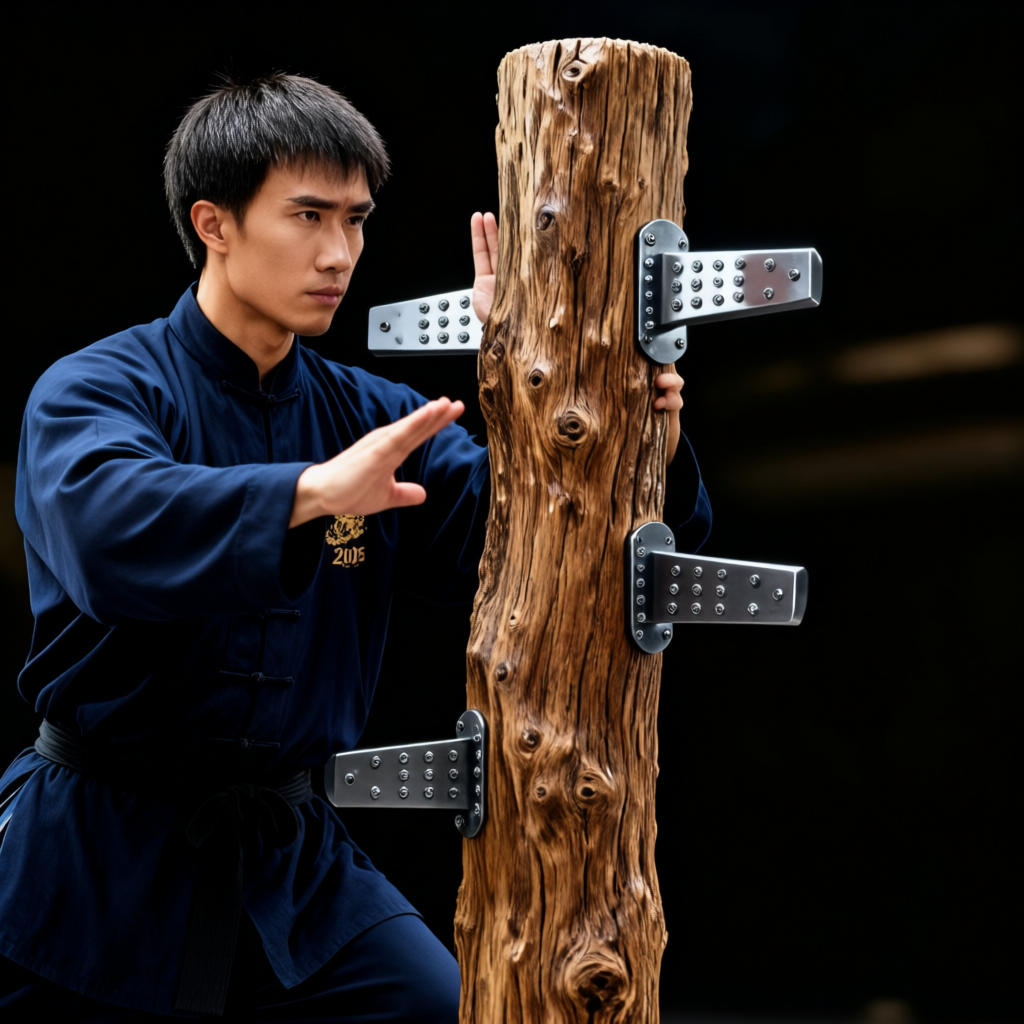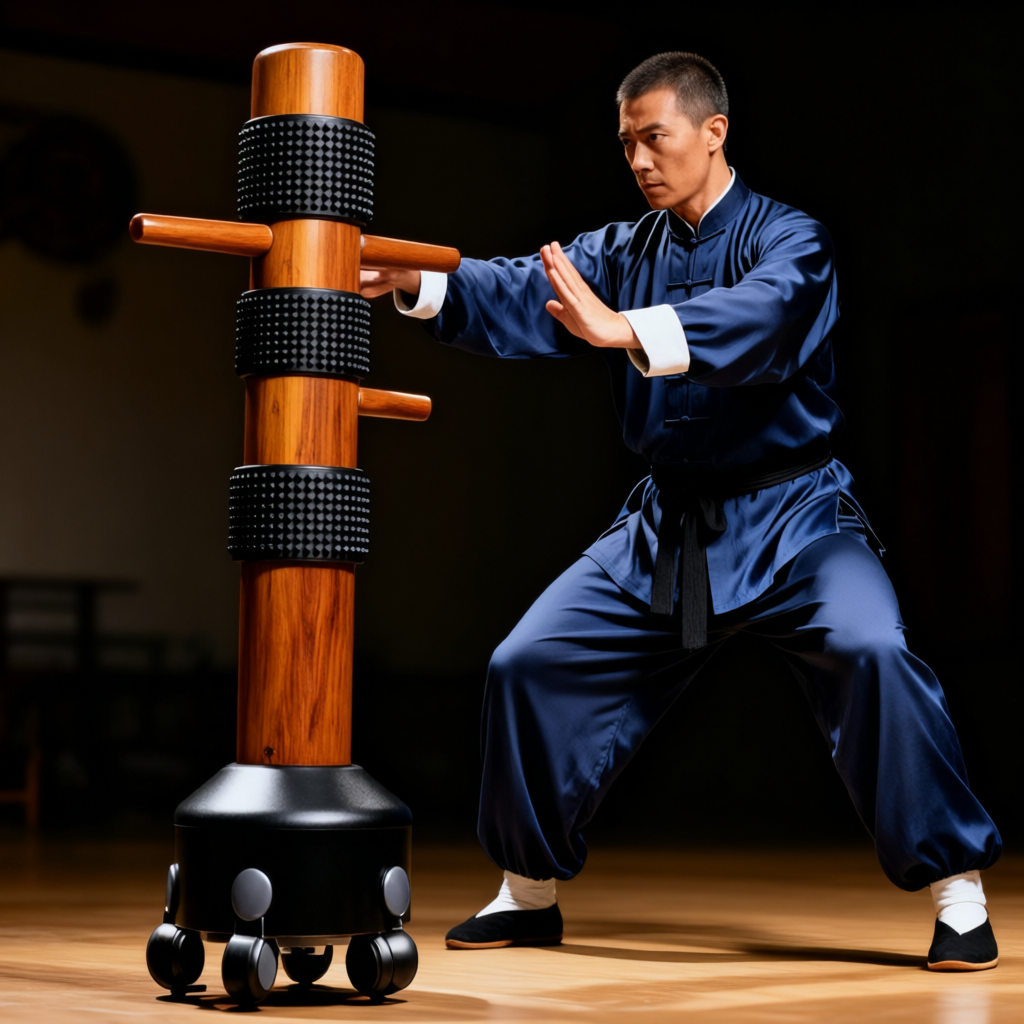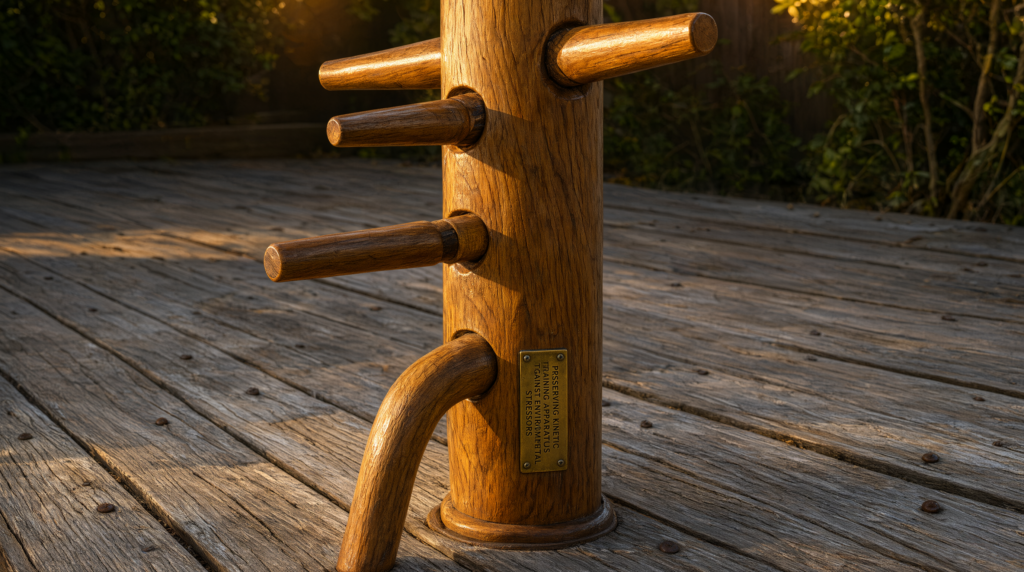
When it comes to mastering How to stop a wooden dummy from rotting outside, getting the right technical specifications and structural details matters. Extech MO250 Pinless Moisture Meter
TotalBoat Marine Spar Urethane with UV Inhibitors
Heavy-Duty Breathable Outdoor Cover with Ventilation Grommets (Canvas/Poly Blend)
The Physics of Outdoor Wood Decay
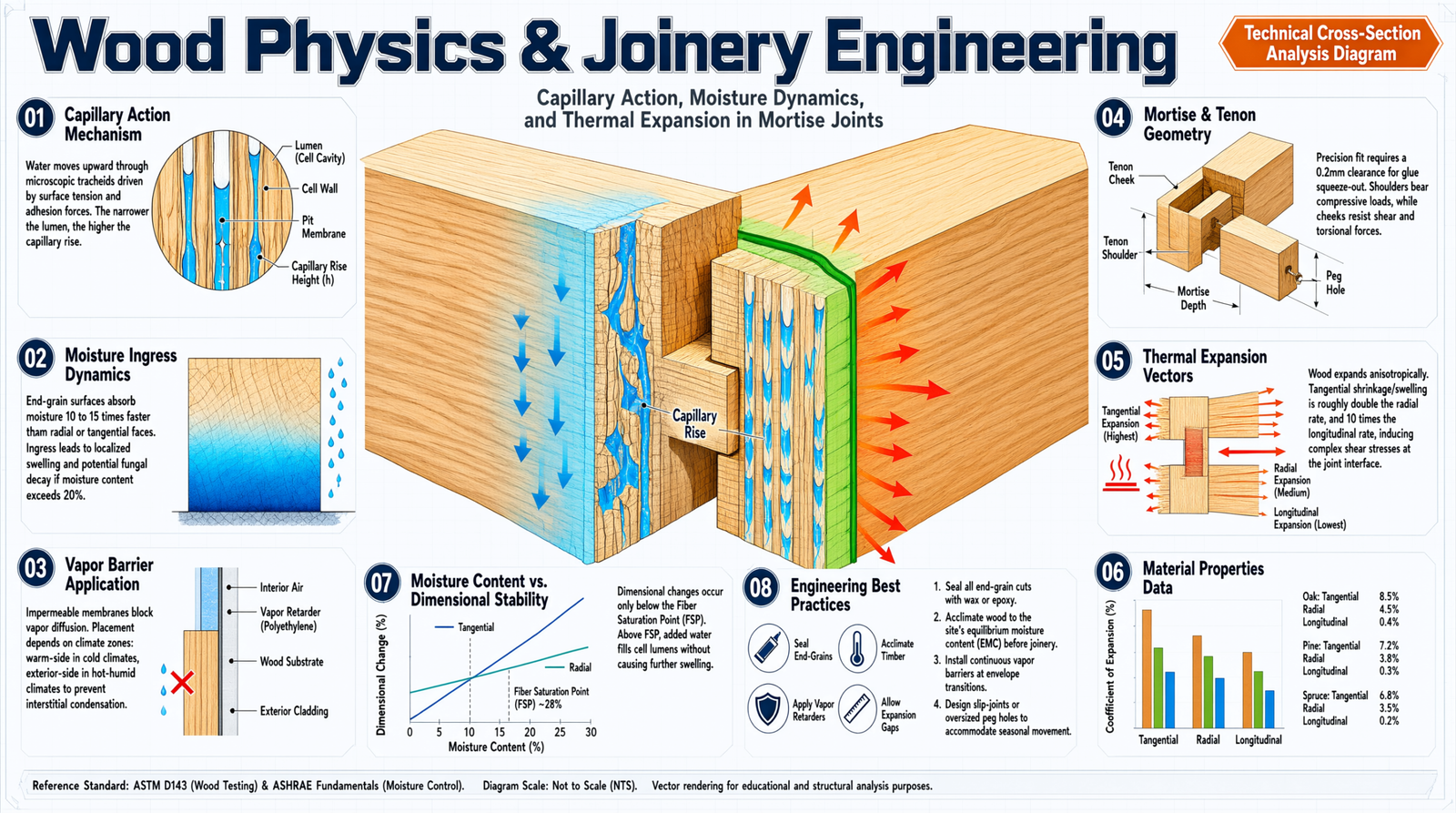
A Wing Chun wooden dummy typically features a nine-inch diameter trunk weighing 130 to 200 pounds kiln dried to six to eight percent moisture content during fabrication. Outdoors wood seeks equilibrium at 12 to 16 percent moisture content creating a mismatch that triggers rapid capillary absorption especially in end grain surfaces. The arms leg and top bottom of the trunk swell 10 to 15 times faster than face grain causing swelling that directly jams the mortise joints enabling live energy movement.
UV radiation breaks down lignin the wood structural glue within weeks surface checking appears as micro cracks acting as moisture highways. When moisture content exceeds 20 percent oxygen and ambient temperatures between 40 to 90 degrees Fahrenheit create ideal conditions for brown rot or white rot fungi consuming cellulose and lignin reducing shear strength by up to 70 percent before visible softening occurs. Surface mold is merely cosmetic while structural rot acts as a silent failure point compromising centerline alignment and joint safety.
Rain running down the arms does not just wet the surface but pools inside the mortise channels saturating the lower trunk and leg joint first. That is where ground wicking begins even on grass capillary action pulls moisture upward through the base rotting the critical 15 degree downward leg mortise angle from below.
Immediate Structural Assessment Protocol
Before applying any sealant or cover verify structural integrity with objective tools rather than guesswork.
Moisture Meter Calibration requires using a digital pinless meter such as Extech MO250 Pinless Moisture Meter. Safe training range remains under 15 percent moisture content while the critical threshold sits above 20 percent. At 22 percent or higher fungal colonization is likely active even if the surface looks dry.
Screwdriver Probe Test involves inserting a flathead screwdriver tip into end grain zones like arm tips leg top and trunk base. Penetration beyond one eighth inch indicates soft rot. If the wood yields like damp cork the slats have lost flex modulus and kinetic energy no longer dissipates through the dummy instead rebounding into your wrists and elbows.
Arm Play Measurement requires the dummy upright inserting a one sixteenth inch thick feeler gauge or folded business card between the arm channel wall and the arm tenon. Clearance must be between one sixteenth and one eighth inch. Less than that means swelling has locked the joint while more means lateral play has shifted the centerline. Either condition alters the precise 15 degree downward leg angle distorting stance geometry and forcing compensatory tension in the shoulder girdle.
This is not maintenance theater but biomechanical triage. A compromised dummy degrades training quality and increases injury risk per strike.
Active Remediation & Stabilization
If probe test shows early soft rot less than one quarter inch depth but moisture content remains under 20 percent stabilization is possible. Do not pressure wash because high PSI fractures end grain fibers and accelerates moisture ingress. Instead follow this protocol.
Surface Cleaning applies oxygenated bleach not vinegar since acidity degrades lignin further with a soft brush. Rinse with distilled water then air dry 72 hours in indirect sun.
Epoxy Consolidation injects penetrating epoxy like Smith CPES or Abatron WoodEpox into softened end grain zones using a syringe. Capillary action draws it deep restoring density and shear strength. One full saturation cycle takes 48 hours to cure. Do not sand until fully hardened because epoxy must bond structurally not just coat.
Replacement Threshold dictates replacing components if arm tenons are loose and moisture content exceeds 22 percent or if the trunk base feels spongy under thumb pressure. Salvaging a severely compromised leg mortise risks catastrophic joint failure mid strike.
Note epoxy adds rigidity. After consolidation recheck arm clearance because swelling may have permanently altered tolerances. If clearance falls outside one sixteenth to one eighth inch sand the tenon minimally no more than one thirty second to restore live energy movement. Never force fit arms back in.
Long-Term Weatherproofing Engineering
Sealing is not about aesthetics but controlling moisture flux at the physics level.
End Grain Saturation Protocol applies three to five coats of marine grade spar urethane like TotalBoat Marine Spar Urethane with UV Inhibitors to all end grain surfaces first. Each coat must fully penetrate before the next. End grain absorbs finish like a sponge so surface only coating cracks under thermal cycling. Spar urethane high flex modulus accommodates daily temperature swings from minus 10 to 110 degrees Fahrenheit without micro fracturing.
Finish Comparison
Check out our top-rated Wing Chun training gear & equipment on Amazon
Finish TypePenetrationUV ResistanceFlex ModulusBest Use Case
Tung Linseed OilDeepLowHighCovered areas only
https://www.youtube.com/watch?v=-DDMz-Dc-UMExterior Semi Transparent StainMediumHigh
Recommended Insights From Our Wing Chun Guide Library:
- Fortify Your Wing Chun Training Post: Marine-Grade Wood Preservation Guide
- Mook Yan Jong Maintenance and Oiling Guide: Preserving Your Silent Partner – Wing Chun Dummy
- Climate-Proof Your Training Dummy: Wood Science for Every Zone
- The Ultimate Guide to Choosing the Right Wood for Your Homemade Wing Chun Dummy
- Mastering Wooden Dummy practice : A Comprehensive Guide
LowPatio shelter
Marine Spar UrethaneSurface/End GrainVery HighVery HighFull Exposure
Penetrating EpoxyDeep StructuralNoneHighRemediation Onlyhttps://www.youtube.com/watch?v=M3eQ7bSc0hk
Elevation Requirements dictate raising the dummy minimum three to four inches off ground. Use concrete pavers or rubber vibration isolators like Sorbothane pads. Ground contact wicking is the number one cause of lower trunk rot even on well drained soil. Isolators also prevent metal lag bolts from corroding in damp conditions preserving joint integrity.
Stainless steel lag bolts 316 grade are non negotiable for outdoor mounting. Galvanized fasteners corrode within 18 months in humid climates weakening the trunk to base connection.
Check out our top-rated Wing Chun training gear & equipment on Amazon
Breathable Storage & Environmental Control
A tarp is not storage but a condensation chamber. Non breathable vinyl traps evaporated moisture against the wood surface. Overnight dew forms inside the cover. By morning moisture content spikes five to eight percent enough to trigger fungal growth within 48 hours.
The fix involves heavy duty canvas poly blend covers with ventilation grommets minimum four spaced evenly. Airflow prevents humidity buildup while blocking rain and UV. Position the dummy so prevailing winds pass through the cover not over it to maximize drying.
For enclosed storage like garage or shed integrate silica gel desiccant packs near the base. Replace every 60 days. In high humidity zones greater than 70 percent relative humidity add a rechargeable dehumidifier rated for 20 to 30 square feet.
Strategic placement matters. A covered patio with northern exposure reduces UV dose by 60 percent versus full southern sun. Even partial shade extends finish life by two to three times.
Training Reality & Safety Thresholds
When wood loses flex modulus due to waterlogging or brittleness the live energy slats stop absorbing impact. Instead kinetic energy reflects straight back into your striking limb. You will feel it as a sharp jolt in the wrist after a bong sao or elbow strain during pak sao. Practitioners unconsciously compensate by striking harder accelerating joint inflammation and tendon micro tears.
Swollen arm channels eliminate independent shoulder simulation. The arms move as one rigid unit collapsing the subtle rotational feedback needed for luk sao and jut sao. Your centerline drifts and footwork compensates creating chronic hip misalignment over time.
Safety Thresholds require stopping drills if arm clearance is less than one sixteenth inch or greater than one eighth inch making the dummy unsafe for live drills. Do not strike if moisture content exceeds 22 percent at the leg mortise because rot here compromises the entire load path. Replace immediately if the trunk base feels hollow when tapped with a knuckle.
At this point transition to a commercial weather treated unit factory sealed hardwood steel hybrid or relocate indoors. DIY fixes have diminishing returns past critical decay. Your joints are not worth the 200 dollars saved on a replacement.
Final Operational Verdict
Stopping a wooden dummy from rotting outside is not about one product but managing three physical vectors. Moisture ingress affects end grain thermal stress impacts UV plus temp swing and biological attack targets fungi.
The highest ROI steps are non negotiable. Elevate three to four inches on non wicking isolators. Seal end grain with three plus coats of marine spar urethane. Use breathable covers with grommets never vinyl tarps.
If your dummy is already compromised beyond 20 percent moisture content skip remediation. Invest in a factory sealed unit. Modern hybrids use marine grade teak or Ipe with stainless hardware and UV stabilized finishes requiring zero maintenance for five plus years outdoors.
Martial Arts Reference & Authority Resources:
Your training longevity depends on respecting wood physics not hoping it holds up. Treat the dummy as a precision instrument not yard furniture. When it is structurally sound every strike reinforces correct biomechanics. When it is rotting every strike erodes your foundation.
Choose wisely. Train safely.
🔍 Explore More: See all Wing Chun training guides for How to stop a wooden dummy from rotting outside.
Check out our top-rated Wing Chun training gear & equipment on Amazon