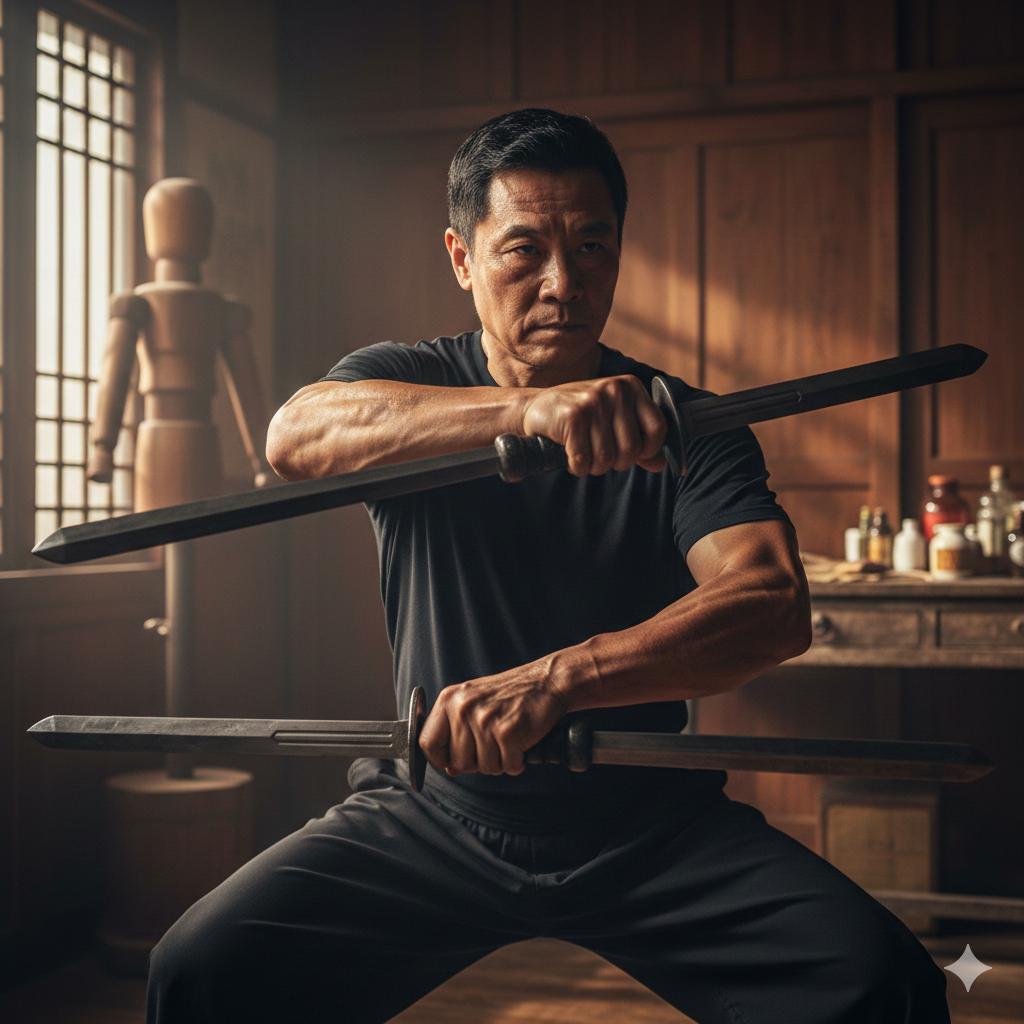
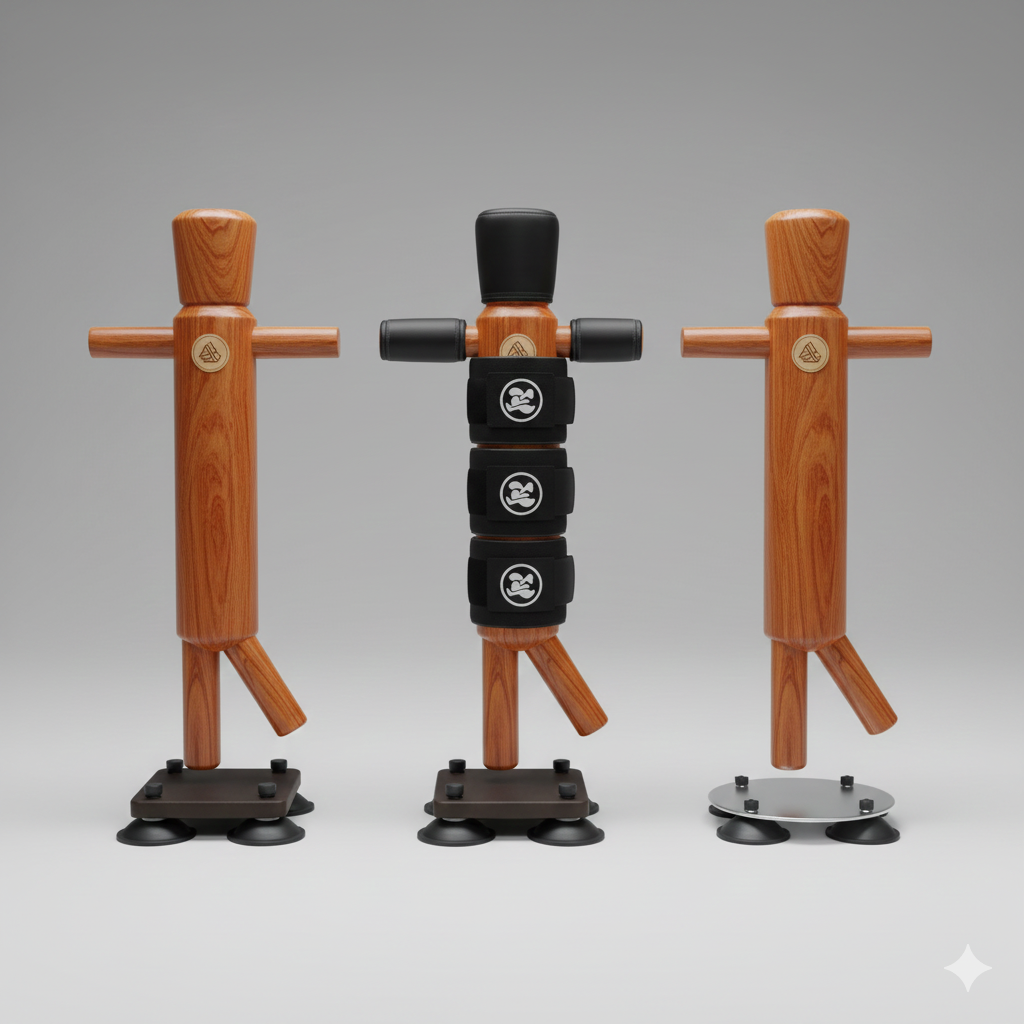
The image of a Wing Chun practitioner is often associated with the Wooden Dummy or the Rattan Ring, tools that embody the art’s focus on structure and centerline control.
However, the martial arts world is vast, and cross-training with unconventional tools can unlock new levels of skill.
One such tool is the Chinese Kung Fu Tai Chi Fan, a seemingly delicate instrument that, in the hands of a skilled martial artist, becomes a surprisingly effective training aid.
While the fan is traditionally associated with the flowing, expansive movements of Tai Chi and Wushu, its application can be adapted to sharpen several core Wing Chun skills, particularly those related to wrist strength, precision, and the rapid-fire trapping hands.
This fusion of disciplines offers a unique pathway to enhancing the practitioner’s overall dexterity and control.
The Tai Chi Fan as a Wing Chun Training Tool
The primary benefit of training with a folding fan, especially a heavier stainless steel model, is the development of hyper-specific wrist and forearm strength.
Wing Chun relies heavily on the small, precise movements of the wrist and fingers for techniques like Jut Sao (jerking hand) and the subtle deflections in Chi Sao.
The act of rapidly opening and closing the fan, as well as manipulating its weight in various circular and linear patterns, directly strengthens the muscles responsible for these fine motor skills.
Furthermore, the fan’s edge and tip can be used to practice precision targeting.
The goal is to strike a specific point with the fan’s edge, mimicking the precision required for finger jabs or the sharp, focused strikes of the Biu Jee form.
This focus on a small, concentrated point of impact translates directly to improved accuracy in all Wing Chun hand techniques [1].
Faan Sao and the Fan: A Natural Synergy
One of the most compelling connections between the fan and Wing Chun is its application to the Faan Sao (Trapping Hand) principle.
Faan Sao emphasizes rapid, continuous, and overwhelming hand movements to trap and strike an opponent simultaneously.
The folding fan, with its ability to transition instantly from a compact striking weapon to a broad, deflecting surface, perfectly embodies this principle.
When closed, the fan acts as a solid, weighted bar, ideal for short-range strikes and blocks, similar to the use of the forearm in Bong Sao or Tan Sao.
When snapped open, the fan’s wide surface can be used to momentarily blind or distract an opponent, creating an opening for a follow-up strike, much like a quick Pak Sao (slapping hand) or Gan Sao (cutting hand).
Practicing the rapid transition between these two states—closed for striking, open for deflection/distraction—is an excellent way to internalize the Faan Sao concept of continuous change and adaptation [2].
Product Review: Stainless Steel Martial Arts Folding Fans
When selecting a fan for martial arts training, especially for Wing Chun applications, the material is crucial.
The decorative silk or bamboo fans used for dance are too light and fragile.
The preferred tool is the Stainless Steel Martial Arts Folding Fan, which is built for durability and impact.
These fans typically feature a stainless steel frame and a durable nylon or silk cloth, providing the necessary weight and resilience for serious practice.
</tableWhen purchasing, look for fans explicitly marketed for Kung Fu or Tai Chi weapons practice, as these will have the necessary construction to withstand the rigors of Wing Chun training [3].
Integrating Fan Drills into Your Wing Chun RoutineTo effectively use the Tai Chi Fan to enhance your Wing Chun, integrate it into your existing solo training.
A simple yet effective drill is to practice the opening and closing of the fan while performing the movements of the Siu Lim Tao form.For example, as you execute a Tan Sao, snap the fan open; as you transition to a Fook Sao, snap it closed.This forces the wrist to engage dynamically and improves the coordination between the hand and the forearm.
Another drill involves using the closed fan to simulate the movements of the Bart Cham Dao (Eight Cutting Knives), the Wing Chun double swords.
The fan’s compact, weighted nature makes it an excellent proxy for the short-range, powerful movements of the knives, helping to develop the necessary wrist flexibility and power generation [4].
The fan, therefore, serves as a versatile bridge between empty-hand forms and the more advanced weapon forms.
Safety and Practice ConsiderationsWhile the fan is a relatively safe training tool, the stainless steel versions can be heavy and have sharp edges.It is crucial to start slowly, focusing on the precision of the wrist movements before introducing speed and power.
The loud snap of the fan, while a great training aid, can be startling, so practice in an appropriate environment.The goal is not to master the Tai Chi Fan form itself, but to extract the elements that benefit Wing Chun—namely, the development of explosive wrist power, fine motor control, and the ability to transition rapidly between defensive and offensive states.
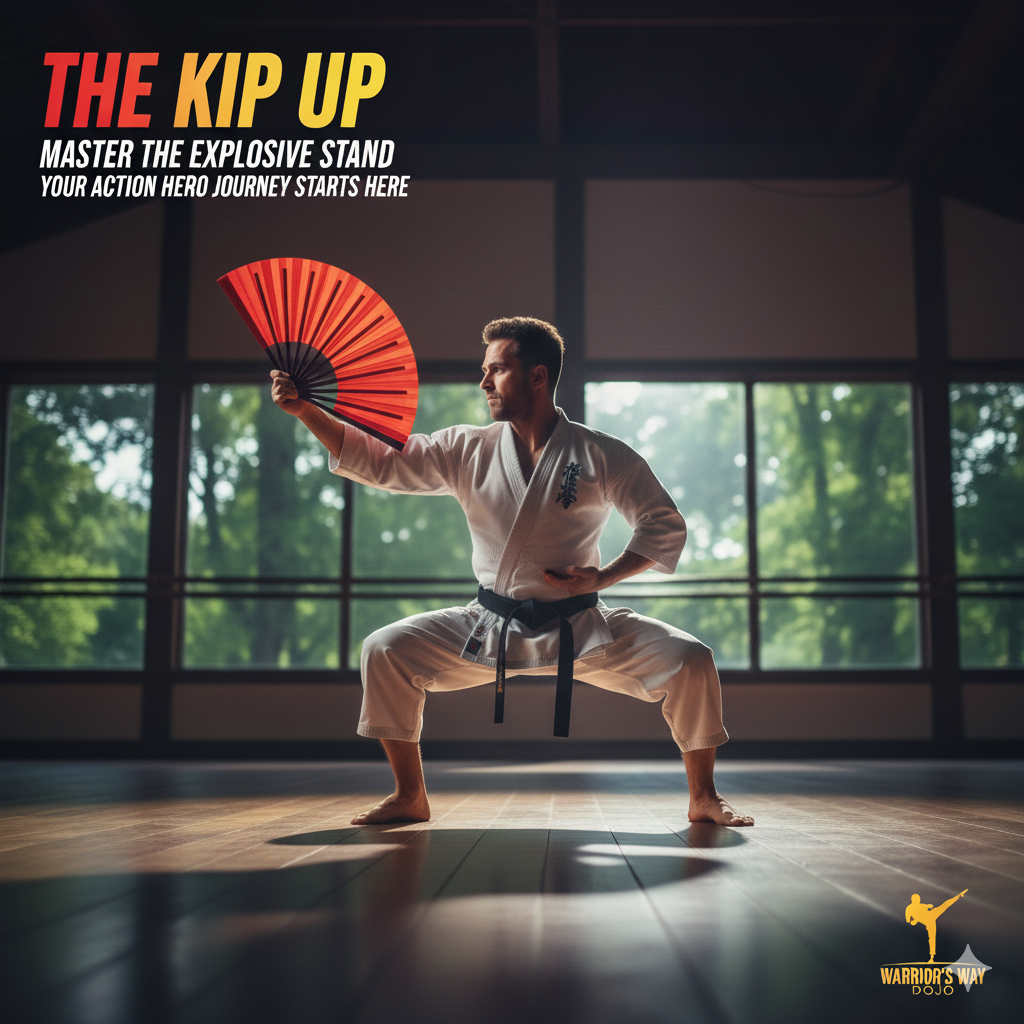
By treating the fan as a specialized conditioning tool, the Wing Chun practitioner can gain an unconventional edge in their training, leading to a more refined and powerful expression of their art [5].
Conclusion: An Unconventional Path to MasteryThe Chinese Kung Fu Tai Chi Fan, particularly the durable stainless steel variant, offers a unique and effective way for the Wing Chun practitioner to enhance their skills.
It is a tool that demands precision and develops the explosive wrist power essential for the art’s close-quarters techniques.
By integrating fan drills into your routine, you are not only adding variety to your training but also reinforcing the core principles of Wing Chun in a new and challenging way.
Embrace this unconventional tool, and watch your Faan Sao and overall hand speed reach new levels of mastery.
| Feature | Stainless Steel Fan | Wing Chun Training Benefit |
|---|---|---|
| Material (Stainless Steel) | Heavy and durable metal frame. | Develops wrist and forearm conditioning for Bong Sao and Tan Sao. |
| Loud Snap Sound | Creates a sharp, loud sound when opened quickly. | Trains explosive wrist speed and can be used for psychological distraction. |
| Compact/Extended Form | Transitions between a short bar and a wide surface. | Perfect for practicing the Faan Sao principle of rapid, continuous change. |
| Pointed Tip | The end of the closed fan is often pointed. | Excellent for precision targeting drills, similar to Biu Jee. |