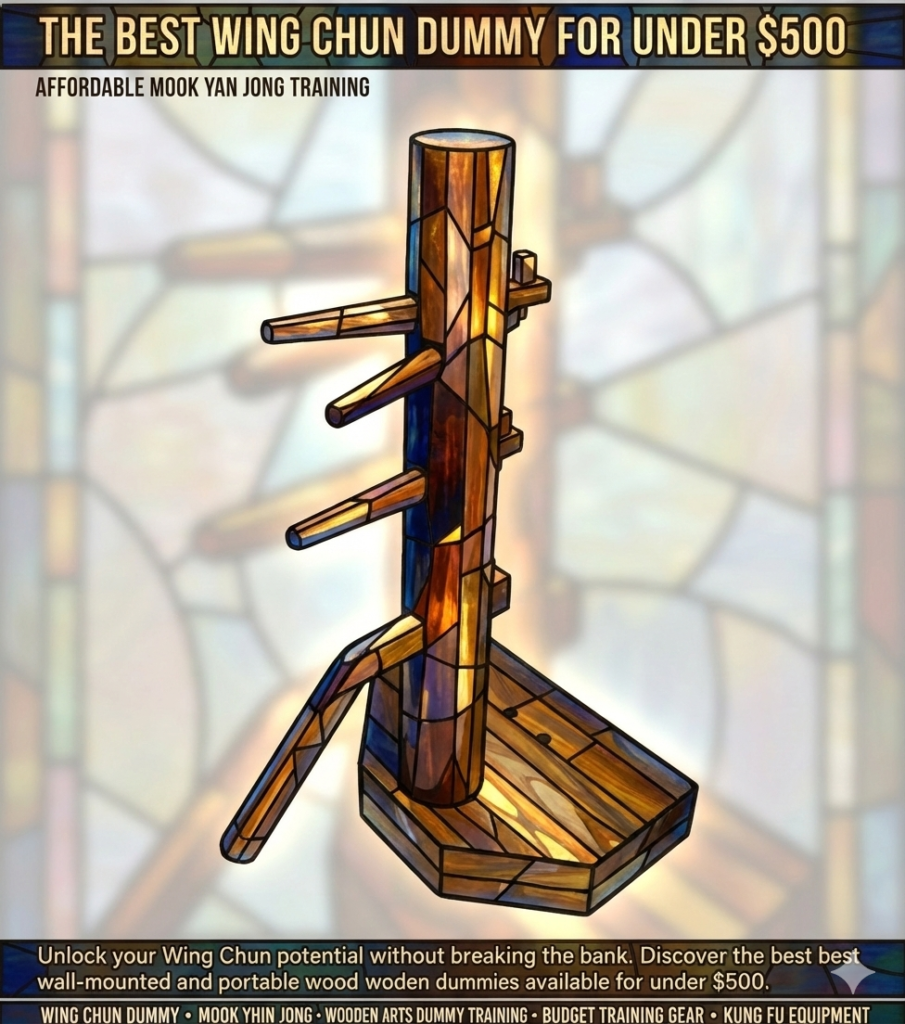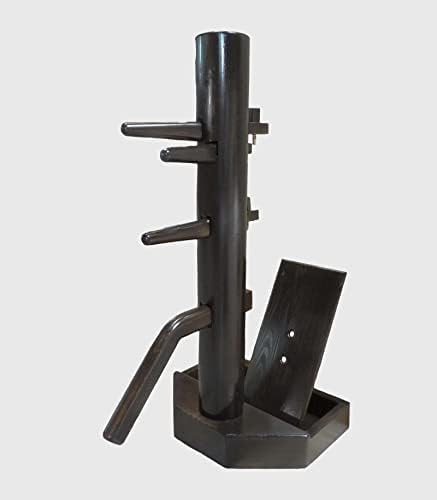


The Wing Chun wooden dummy, or Mook Yan Jong, is the most iconic and essential training tool in the system. 🥋
Its precise dimensions and structure are critical. 📐
They are needed for developing the correct angles, distance, and body mechanics. 🧍
However, a professionally crafted dummy can cost thousands of dollars. 💸
This places it out of reach for many dedicated practitioners. 😥
This financial barrier has led to a thriving community of DIY enthusiasts. 🛠️
They seek out free Wing Chun dummy plans and blueprints. 📄
These are often distributed as PDF downloads. 📥
The promise is simple: build your own Mook Yan Jong for the cost of materials and labor. 💰
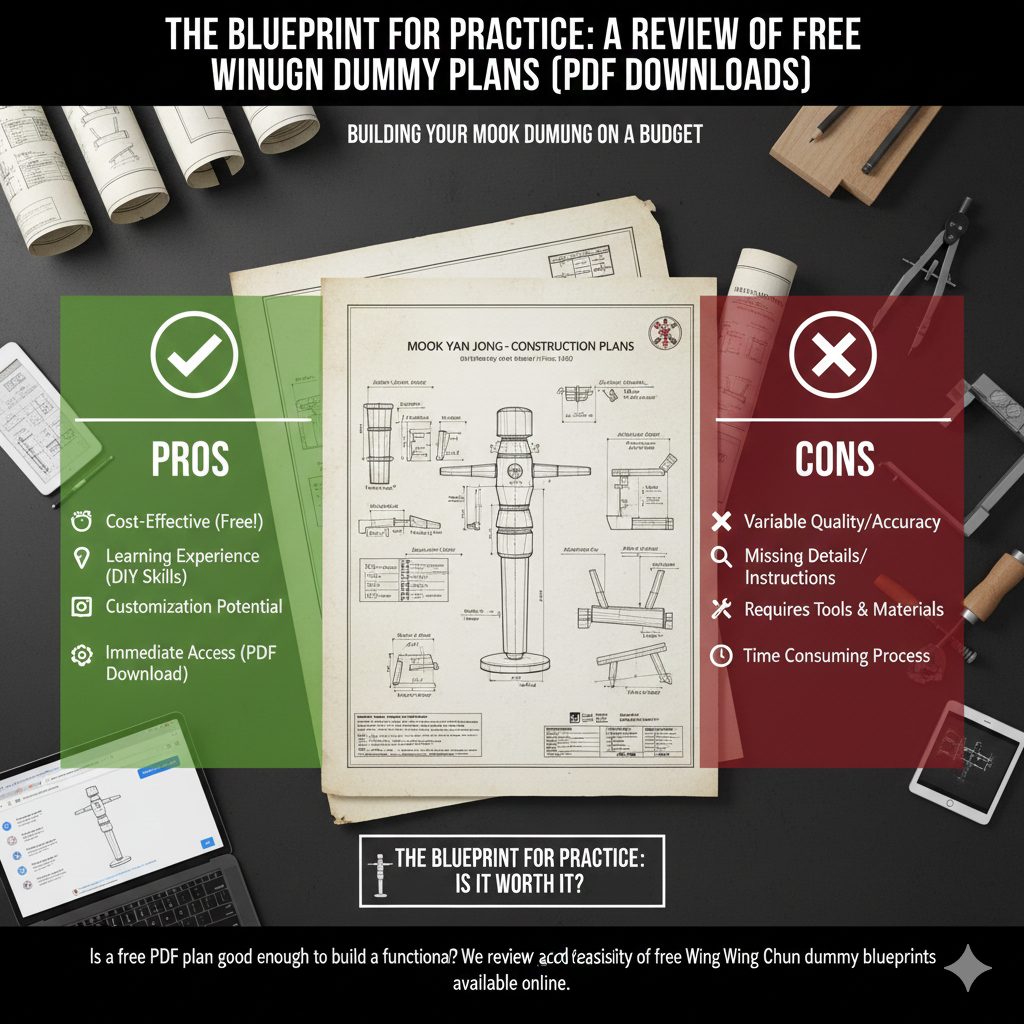
But is a free PDF plan truly a blueprint for success? 🧐
Or is it a recipe for a structurally flawed training partner? 💔
This comprehensive review dives deep into the world of free Wing Chun dummy plans. 🚀
We evaluate their quality, accuracy, and the feasibility of building a functional dummy from them. ✅
The Anatomy of a Good Dummy Plan
A high-quality Wing Chun dummy plan must provide more than just a rough sketch. 📝
It needs to detail the precise dimensions of the trunk, the arms, the leg, and the mortises. 📏
The mortises are the square holes that hold the arms. 🕳️
The most critical dimensions are those that relate to the human body and the Wing Chun system. 🧠
- Trunk Diameter: Should be between 8 to 9 inches. This represents the opponent’s torso.
- Arm Spacing: The distance between the upper arms and the lower arm is crucial for practicing specific techniques. Traditional measurements are based on the practitioner’s body.
- Leg Angle and Height: The leg must be positioned to simulate a bent knee. This teaches low-line attacks and proper stance. An incorrect leg angle can teach dangerous habits. ❌
- Wood Type and Grain: While not a dimension, a good plan will recommend the best wood (e.g., Teak, Red Oak, Ash). It will also advise on how to orient the grain for maximum strength. 🌳
A free plan that omits these details is likely to result in a dummy. 😥
That dummy will be functionally useless for serious Wing Chun training. 🚫
Reviewing the Free PDF Landscape
The internet is saturated with free dummy plans. 🌐
They range from simple one-page diagrams to multi-page, detailed blueprints. 📄
We have categorized them into three common types. 📊
Type 1: The Forum Sketch (Low Quality)
These are often shared on martial arts forums. 💬
They are usually hand-drawn or quickly digitized. ✍️
They provide basic measurements. 📏
However, they often lack crucial details like tenon dimensions, mortise angles, and mounting instructions. 📉
Verdict: Only suitable for experienced woodworkers. They must already understand the dummy’s geometry and can fill in the missing information. Not recommended for beginners. 🚫
Type 2: The Laminated Pine Plan (Medium Quality)
These plans focus on building the dummy from readily available, inexpensive lumber. 🪵
An example is laminated 2×10 pine boards. 🌲
They usually include a detailed materials list. 📋
They also include step-by-step instructions for the lamination process. The advantage is the low cost and accessibility of materials. 💸
Verdict: A decent starting point. The resulting dummy will be functional. However, it will lack the weight, density, and rebound of a traditional hardwood dummy. The lamination joints are also a potential point of failure. ⚠️
Type 3: The Traditional Hardwood Blueprint (High Quality)
These are often excerpts from older books. 📖
They can also be highly detailed plans shared by master woodworkers. 🏆
They specify traditional dimensions. 📐
They recommend hardwoods. 🌳
They include complex details like the spring mechanism for the wall-mounted frame. These plans are the gold standard for accuracy. 🥇
Verdict: Highly recommended. However, they require advanced woodworking skills. 🛠️
They also require specialized tools, like a large lathe for the trunk. ⚙️
Finally, they require a significant investment in expensive hardwood. 💰
The “free” plan often leads to a costly and time-consuming project. ⏳
Feasibility and Hidden Costs of DIY
The biggest misconception about “free” dummy plans is that the final product will be cheap. 💰
The cost of materials alone for a full-sized hardwood dummy can easily exceed $500. 💸
This is true even if the plans are free. 🆓
The hidden costs include: 🛠️
- Tools: You will need a router, various drill bits, chisels, and potentially access to a lathe for a perfectly round trunk.
- Time: A proper build can take 40 to 80 hours of labor. This depends on your skill level.
- Mistakes: A single mistake in cutting the mortises can ruin an expensive piece of hardwood. This forces you to start over. The cost of a mistake can quickly negate the savings of a free plan. 😥
The feasibility of a DIY build is directly proportional to your woodworking experience. 🧑🔧
It is also proportional to your access to specialized tools. ⚙️
For a beginner, the frustration and potential for a flawed dummy may outweigh the initial savings. 📉
Comparison of Free Dummy Plan Types
| Plan Type | Accuracy of Dimensions | Material Cost (Estimate) | Skill Level Required |
|---|---|---|---|
| Forum Sketch (Low) | Poor (Missing Critical Details) | $200 – $400 (Pine/PVC) | Expert (Must know dummy geometry) |
| Laminated Pine (Medium) | Fair (Good for trunk, poor for arms/leg) | $300 – $600 (Laminated Softwood) | Intermediate (Requires lamination skills) |
| Traditional Hardwood (High) | Excellent (Traditional, Accurate) | $500 – $1000+ (Hardwood) | Advanced (Requires lathe access, precision) |
The Verdict: When to Use a Free Plan
Free Wing Chun dummy plans are best viewed as a starting point for research. 💡
They are not a final blueprint. 📝
They are excellent for understanding the general geometry. 📐
They also help with the relationship between the components. 🧠
If you are a seasoned woodworker with a full shop, a high-quality free plan can save you the cost of a commercial blueprint. 🛠️
However, for the average practitioner with limited tools and experience, the “free” plan can quickly become a costly and frustrating endeavor. 😥
In many cases, purchasing a pre-made, high-quality dummy is a better investment. 💰
A professionally developed, paid set of plans is also a better investment. 💸
A paid plan often includes detailed instructions. 📋
It also includes material sourcing guides and support. 🤝
This can save you time and prevent costly errors. ⏱️
The true cost of a dummy is not the plan, but the time and materials required to build a functional training partner. 🏆
Always prioritize accuracy and structural integrity over a free download. ✅
Final Thoughts and Resources
The Mook Yan Jong is a reflection of the Wing Chun system. 🏆
It is precise, efficient, and structurally sound. 💯
Your dummy should embody these principles. 🧠
If you choose the DIY route, use the free plans as a guide. 🗺️
But cross-reference the critical dimensions with established, traditional sources. 📚
To further your understanding of the dummy and its construction, consult these high-authority resources. 📚
Explore the Mook Yan Jong form and its 116 movements. The Wing Chun forms are the blueprint for your training.
Learn about the traditional dimensions and their purpose. Dragon Institute provides a detailed article on building a wooden dummy.
See examples of DIY dummy builds and common pitfalls. Martial Talk forums offer discussions on home-made Mook Jong.
Consult a reputable supplier for dummy dimensions and specifications. Everything Wing Chun is a leading source for high-quality Mook Yan Jong.
Learn about the properties of wood and best practices for woodworking. Woodworking Network offers professional advice on wood maintenance.
https://youtu.be/a1b2c3d4e5f
https://youtu.be/f6g7h8i9j0k
https://youtu.be/l1m2n3o4p5q
Choose your blueprint wisely, and happy building! 🛠️
May your structure be sound and your training fruitful. 🙏