
The world of martial arts is rich with iconic weaponry, each reflecting the culture and combat philosophy from which it emerged. 🌍
Two of the most fascinating and effective close-quarters weapons are the Wing Chun Butterfly Swords, or Bart Cham Dao, and the diverse blades of Filipino Kali, Arnis, or Eskrima. ⚔️
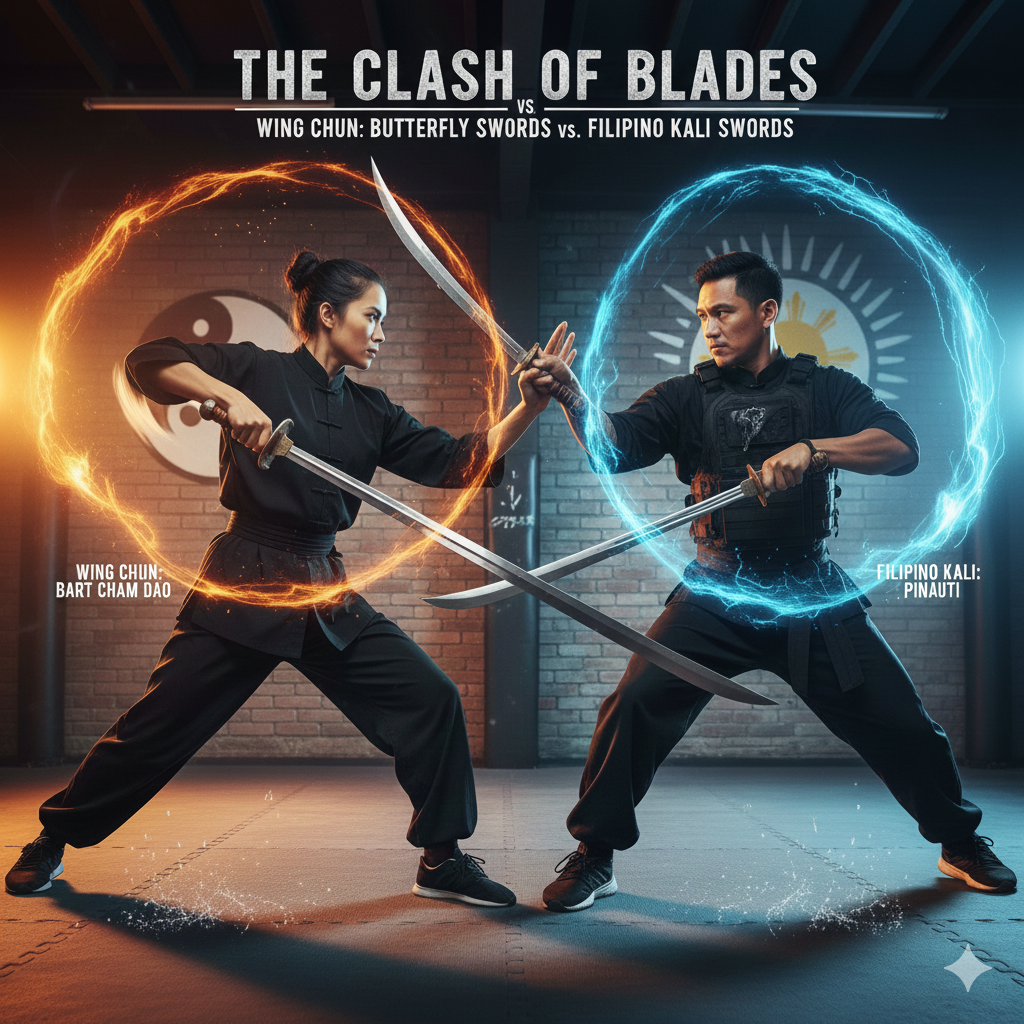
While both systems emphasize close-range fighting and weapon retention, their tools and underlying principles offer a compelling study in contrast and convergence. 🧐
This in-depth comparison will dissect the design, combat application, and philosophical underpinnings of these two formidable weapon sets. 💡
Understanding these differences is key to appreciating the unique genius of each martial tradition. 🥋
Design and Function: Bart Cham Dao vs. Kali Blades
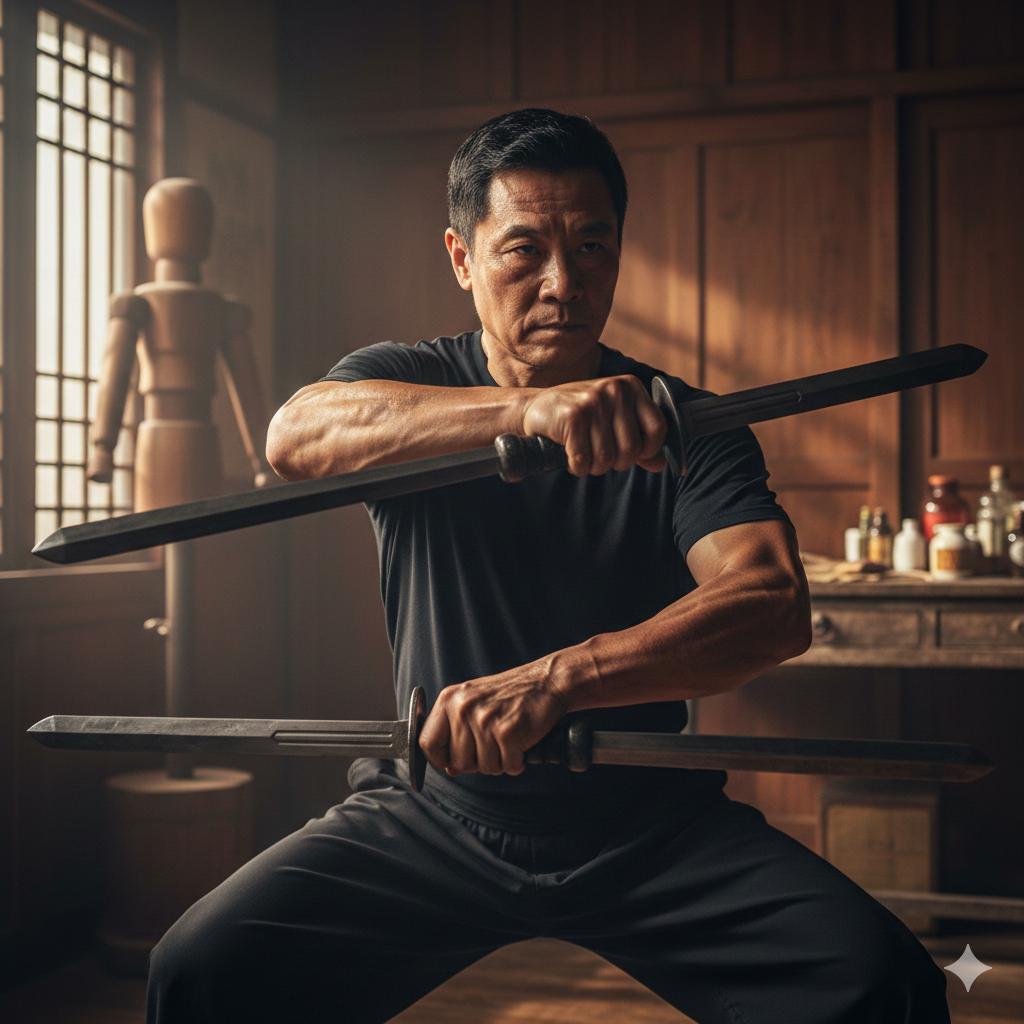
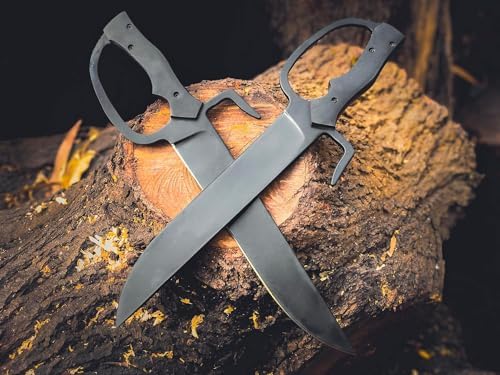
The Wing Chun Butterfly Swords are instantly recognizable: a pair of short, broad, single-edged blades, often featuring a large D-guard to protect the hands. 🛡️
Their design is highly standardized, reflecting the focused, linear nature of Wing Chun combat. 📏
The name Bart Cham Dao literally translates to “Eight Cutting Knives,” emphasizing their primary function as a tool for slicing and chopping in close proximity. 🔪
The D-guard is not just for defense; it is also used offensively for trapping, hooking, and punching, making the weapon an extension of the empty-hand techniques. 🖐️
In stark contrast, Filipino Kali, Arnis, and Eskrima (FMA) utilize a vast arsenal of blades, often reflecting the utility tools and agricultural implements of the Philippines. 🇵🇭
The most common examples include the Bolo, a heavy, forward-weighted blade similar to a machete, and the Kris, a distinctive wavy-bladed sword. 🌊
Unlike the Bart Cham Dao, FMA blades are highly varied in length, curvature, and weight, designed for both slashing and thrusting, and often used in a single or double-weapon configuration. 🎯
The Kali philosophy often dictates that the weapon should be an extension of the arm, but the sheer variety of blades means the fighting style must be more adaptable and less standardized than in Wing Chun. 🔄
Combat Philosophy: Centerline vs. Angles of Attack
The combat philosophy of the Bart Cham Dao is intrinsically linked to the core principles of Wing Chun: the defense of the centerline. 📍
The swords are used to control the space directly in front of the practitioner, deflecting incoming attacks and simultaneously delivering devastating cuts. 💥
Footwork is paramount, allowing the practitioner to quickly close the distance and trap the opponent’s weapon or limb, turning the fight into a close-quarters engagement where the short blades excel. 👣
The swords are often used in a paired, symmetrical manner, with one blade defending while the other attacks, embodying the principle of simultaneous attack and defense. ☯️
Filipino Kali, on the other hand, is famous for its comprehensive system of angles of attack. 📐
Training often begins with the 12 basic angles, which cover every conceivable line of attack a human can generate. 🔢
The focus is on flow, continuous motion, and the concept of “defanging the snake,” which means targeting the opponent’s weapon-bearing limb to disarm or disable them. 🐍
While Wing Chun seeks to dominate the centerline, Kali embraces the circular and angular nature of combat, using footwork to evade and counter-attack from unexpected directions. 🌪️
The FMA practitioner is trained to seamlessly transition between single-weapon, double-weapon, and empty-hand fighting, making their system incredibly versatile. 🤸
Application and Training Methodology
Training with the Bart Cham Dao in Wing Chun is typically the final, most advanced stage of the system, following the empty-hand forms and the long pole form. 🎓
The form, Baat Jaam Do, is a highly structured solo exercise that internalizes the Wing Chun principles through the weapon. 🧘
The swords are seen as an extension of the hands, and the techniques directly mirror those of the empty-hand forms like Siu Nim Tao and Chum Kiu. 🔗
This methodology ensures that the practitioner’s core skills are fully developed before adding the complexity of the weapon. 🏗️
In contrast, Filipino Kali often introduces weapons training early, sometimes even before empty-hand techniques. 👶
The belief is that the principles learned with a weapon, such as distance, timing, and footwork, are directly transferable to empty-hand combat. ➡️
Training is highly dynamic, involving partner drills, flow patterns (like the *sinawali*), and full-contact sparring with padded sticks or rattan weapons. 🎋
This emphasis on live, continuous drilling makes Kali a highly practical and immediately applicable system for weapon defense and offense. 💯
The Legacy of Interconnection
The comparison between these two systems is not merely academic; it has a real-world legacy in modern martial arts. 📜
The famous martial artist Bruce Lee, a student of Wing Chun, was heavily influenced by Filipino Martial Arts later in his life, particularly through his training partner, Dan Inosanto. 🤝
This cross-pollination of ideas led to the creation of Jeet Kune Do, which synthesized the best elements of various arts, including the close-quarters trapping of Wing Chun and the angular, fluid weapon work of Kali. 🌟
Today, many modern self-defense systems and tactical training programs draw inspiration from both the linear efficiency of the Bart Cham Dao and the comprehensive weapon versatility of Kali. 🎯
The principles of simultaneous attack and defense from Wing Chun can be applied to a Kali stick, just as the angular footwork of Kali can enhance a Wing Chun practitioner’s mobility. 💡
The ultimate lesson is that mastery lies not in the weapon itself, but in the principles and adaptability of the practitioner. 🧠
Comparative Summary of Weapon Systems
To summarize the key differences and similarities, the table below provides a side-by-side comparison of the two weapon systems. 📊
| Feature | Wing Chun Bart Cham Dao | Filipino Kali Swords (e.g., Bolo, Kris) |
|---|---|---|
| Weapon Type | Paired, short, broad, single-edged swords | Single or paired, varied length, often curved or wavy blades |
| Primary Focus | Close-quarters cutting, trapping, and centerline control | Angular slashing, disarming, and continuous flow |
| Hand Guard | Large D-guard for protection and offense (hooking) | Minimal or no guard (relying on hand speed and footwork) |
| Training Stage | Advanced stage, after empty-hand mastery | Often introduced early in training |
| Core Principle | Simultaneous attack and defense on the centerline | Flow, continuous motion, and “defanging the snake” |
Conclusion: Two Paths to Mastery
Both the Wing Chun Butterfly Swords and the Filipino Kali blades represent highly refined systems of close-quarters weapon combat. 🌟
The Bart Cham Dao is a specialized tool, perfectly suited to the linear, efficient, and trapping-focused style of Wing Chun. 🎯
The Kali blades are a versatile family of weapons, reflecting a more fluid, angular, and adaptable combat system. 🌊
For the Wing Chun practitioner, the Bart Cham Dao is the ultimate expression of their empty-hand skill, an extension of their body’s structure and power. 💪
For the FMA practitioner, the sword is one of many tools, all governed by the same universal principles of movement and angle. 🌐
Ultimately, the best weapon is the one that is mastered, and both of these traditions offer profound lessons in the art of the blade. 💯
The study of one can undoubtedly enrich the understanding of the other, leading to a more complete martial artist. 🤝
We encourage all serious students to explore the history and application of both. 📚
References and Resources
To deepen your understanding of these two martial arts traditions, consider exploring the following resources. 📌
- The Bart Cham Dao for Wing Chun: The Baat Cham Dao for Wing Chun
- Wing Chun Knife Form – Bart Cham Dao: Wing Chun Knife Form – Bart Cham Dao
- 7 Filipino Sword Types and Their Use in the History: 7 Filipino Sword Types and Their Use in the History
- Blade Design in Relation to Technique (FMA): Blade Design in Relation to Technique
- Comparison Between FMA & Wing Chun: Comparison Between FMA & Wing Chun : r/martialarts
We hope this detailed analysis has been informative and inspiring for your training journey. 🙏
Remember, the journey of a thousand miles begins with a single step, or in this case, a single cut. 🗡️
📝