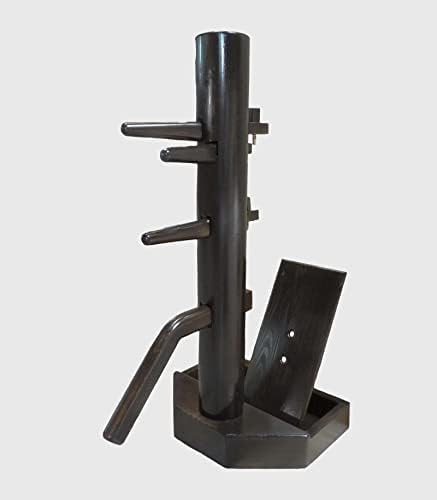
The Wing Chun wooden dummy, or Mook Yan Jong, is most famously associated with the intricate hand techniques and structural integrity of the upper body. 🤓
However, the dummy is an equally vital tool for developing the often-underestimated low-line kicking techniques and the crucial footwork of the Wing Chun system. 💡
Choosing the right dummy design is paramount, as the leg’s angle, the dummy’s mounting, and its overall stability directly impact the quality of your kicking and stepping practice. 📌
The Role of the Dummy Leg in Wing Chun Training
The single, bent leg of the Mook Yan Jong is not merely an afterthought; it is a critical component that serves multiple, interconnected training purposes. 🥋
It represents the opponent’s lead leg, forcing the practitioner to address the lower gate and to integrate their footwork with their hand techniques. 🧐
The leg’s primary function is to train the practitioner to maneuver around an obstacle while maintaining a forward, aggressive structure. ➡️
The Wing Chun dummy form contains numerous applications that involve attacking, controlling, and maneuvering around the leg, making it a complete body training tool. [1]
The leg also serves as a target for the system’s low-line kicks, which are typically aimed at the knee, shin, or groin, emphasizing short-range, non-telegraphic attacks. 💥
The Ideal Leg Angle and Height
The leg is typically set at an angle of approximately 15 degrees from the vertical post, simulating the natural forward lean of an opponent’s lead leg. 📐
The height of the leg is also crucial; the knee joint (the bend in the leg) should generally align with the practitioner’s own knee, ensuring that the low-line attacks are practiced at a realistic combat height. 🦵
This specific angle and height are designed to force the practitioner to step and kick with precision, avoiding the common mistake of kicking too high or too wide. 🎯
A dummy with an incorrect leg angle can lead to flawed footwork and poor distance management, which are detrimental to the entire Wing Chun structure. ❌
Comparing Dummy Mounting Types for Kicking
The way a dummy is mounted is the single most important factor when considering its suitability for kicking techniques. 📋
Different mounting styles offer varying degrees of stability, recoil, and 360-degree access, all of which are essential for comprehensive footwork and kicking practice. ⚖️
1. Wall-Mounted Dummies (The Traditional Choice)
The classic wall-mounted dummy is the most traditional design, popularized by Grandmaster Ip Man for apartment living in Hong Kong. 🏠
It is mounted on two horizontal wooden slats that provide the necessary “spring” or recoil when struck, simulating the opponent’s involuntary reaction. 🔄
For kicking, the wall-mounted dummy offers excellent stability for low-line strikes, as the force is absorbed and returned by the wall and the spring mechanism. 🧱
However, its major drawback for kicking is the limited access; the practitioner can only work the front and sides, making it impossible to practice the full 360-degree footwork and rear-side attacks. 🚫
This design is best for practitioners who prioritize structural integrity and hand-leg coordination in a fixed, frontal engagement. 🤝
2. Free-Standing Dummies (The Kicking Champion)
The free-standing dummy is the superior choice for practitioners who want to maximize their kicking and footwork training. 🏆
These dummies are mounted on a heavy base, often filled with sand or water, allowing for full 360-degree movement around the post. 🌐
The ability to circle the dummy and attack from all angles is crucial for developing the Wing Chun stepping and turning that is essential for combat. 👣
The best free-standing models feature a recoil reaction stand that allows the dummy to move slightly when struck, providing a more realistic, dynamic target for kicks. ⚡
This movement forces the practitioner to constantly adjust their distance and angle, which is the essence of advanced footwork training. The free-standing dummy is the most versatile option for comprehensive kicking practice. 🌟
3. Tri-Pole Dummies (The Footwork Specialist)
A lesser-known but highly effective tool for footwork and low-line training is the Tri-Pole Dummy (or Saam Sing Jong). 🌳
This apparatus consists of three vertical posts arranged in a triangular pattern, often without any arms or legs. 🔺
While it is not a traditional Mook Yan Jong, it is excellent for isolating and perfecting the Wing Chun stepping and turning movements (e.g., Biu Ma, Juen Ma) that are used to maneuver around the dummy leg. 🚶
The Tri-Pole dummy forces the practitioner to find the narrowest path between the posts, directly translating to the precision needed to step around the single leg of the Mook Yan Jong. 🔑
Key Features of the Best Kicking Dummies
When selecting a dummy with a focus on kicking, several technical specifications must be considered to ensure maximum training benefit. 📋
The quality of the leg and the stability of the base are non-negotiable for effective low-line attack practice. 🛡️
| Feature | Ideal Specification | Training Benefit |
|---|---|---|
| Mounting Type | Free-Standing with Recoil Base | Allows 360-degree footwork and realistic, dynamic target for kicks. |
| Leg Angle | 15 degrees from vertical | Forces precise, narrow-stance stepping and realistic low-line attack angle. |
| Leg Material | Solid Hardwood (e.g., Ash, Ipe’) | Provides necessary resistance for bone conditioning and structural feedback. |
| Leg Height | Knee joint aligns with practitioner’s knee | Ensures kicks are practiced at a realistic, low-line combat height. |
| Base Stability | Heavy, wide base (sand/water filled) | Prevents tipping during powerful low kicks and sweeping movements. |
Training Drills for Low-Line Kicks
Once the ideal dummy is selected, the focus shifts to maximizing the training benefit for low-line techniques. 🎯
Wing Chun kicks are characterized by their speed, low trajectory, and minimal wind-up, making them difficult for an opponent to see and block. 💨
The dummy’s leg is the perfect target to cultivate these attributes. 🦵
Here are some essential drills to practice on a kicking-optimized Mook Yan Jong: 📝
- Stepping and Kicking: Practice the Juen Ma (Turning Stance) and Biu Ma (Darting Step) while simultaneously delivering a low kick to the dummy’s leg. The kick should be a natural extension of the step, not a separate movement.
- Hand-Leg Coordination: Execute a hand technique (e.g., a Pak Sau or Lap Sau) on the dummy’s arms, immediately followed by a low kick to the leg. This trains the simultaneous attack principle.
- The “No-Look” Kick: Practice kicking the leg without looking down, relying entirely on your footwork and sense of distance. This develops the tactile sensitivity needed for real combat.
- The Sweeping Leg: Use the dummy’s leg to practice the Gua Choi (Hooking Kick) or sweeping techniques, forcing the dummy to shift on its base, which is only possible with a free-standing model.
- Conditioning Drills: Perform sets of low kicks with the shin and instep against the dummy leg to gradually build bone density and reduce sensitivity, a long-term benefit of dummy training.
The key to all these drills is to ensure that the kick is delivered from a stable, rooted stance, with the power generated from the ground up through the hips. The dummy’s leg will instantly expose any flaw in your rooting. 🌳
The Importance of the Free-Standing Base
For the serious practitioner focused on kicking, the free-standing base is a necessity, not a luxury. 🏆
The wall-mounted dummy, while excellent for hand techniques, limits the practitioner to a single plane of movement, which is unrealistic for combat. 🚫
A free-standing dummy, particularly one with a wide, stable base, allows for the continuous, circular movement that is vital for closing the distance and attacking the opponent’s blind side. 🌐
When you kick the leg of a free-standing dummy, the slight movement of the post forces you to re-establish your balance and structure immediately, simulating the dynamic nature of a real fight. 🔄
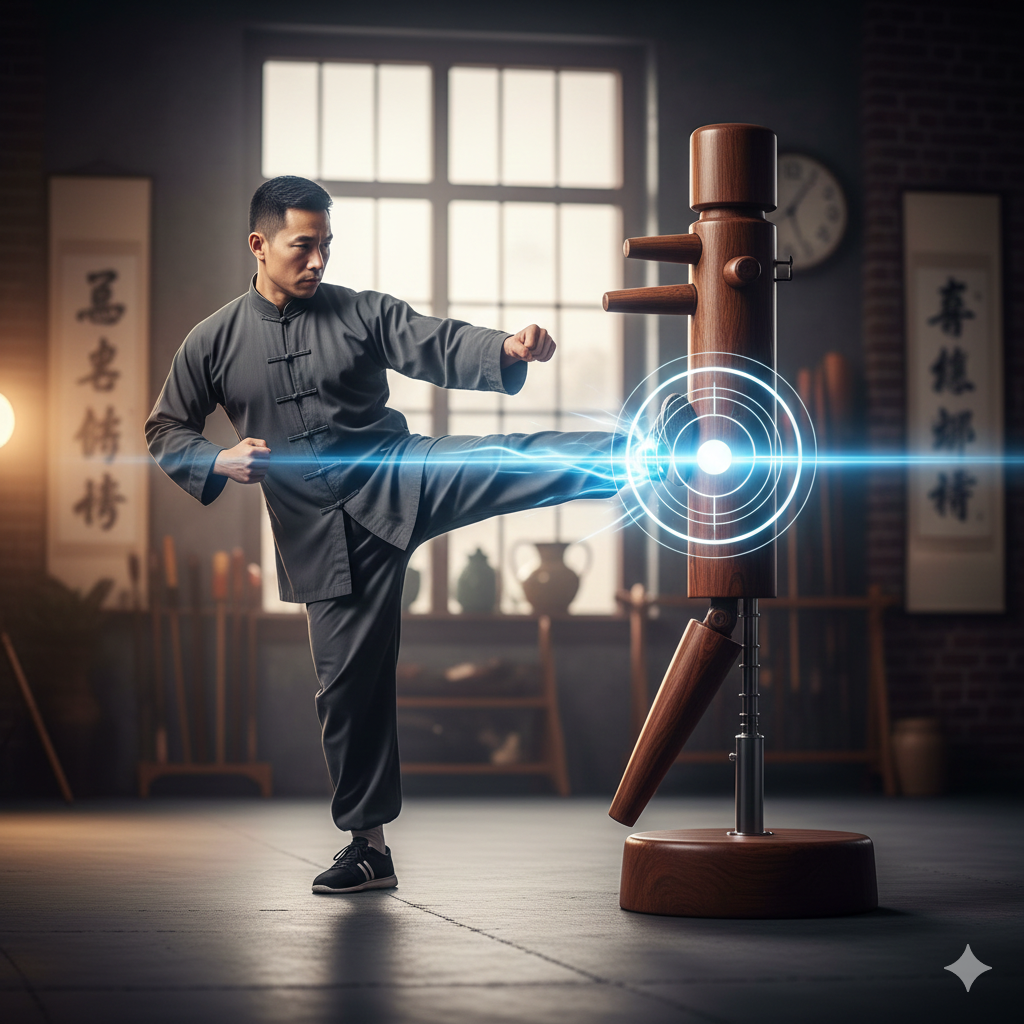
This dynamic feedback is what elevates the free-standing dummy to the best choice for comprehensive kicking and footwork training. It is the only design that allows for the full range of Wing Chun footwork. 👣
Further Resources for Mastering Kicking Techniques
To fully integrate the low-line techniques into your Wing Chun practice, it is beneficial to study the applications within the dummy form and the principles of Wing Chun footwork. 📚
The following resources offer deeper insights into the dummy’s leg and its role in developing powerful, precise kicks. 🌐
External Links:
- Kwok Wing Chun’s page details the dummy form, emphasizing the need to maneuver around and attack the leg.
- Everything Wing Chun discusses the benefits of free-standing dummies for portability and small spaces, ideal for full-circle footwork.
- Wing Chun Dummys highlights the recoil reaction stand, a key feature for dynamic kicking practice.
- Dragon Institute’s article on the purpose of the wooden dummy emphasizes its role in developing position and footwork around the leg.
- Sparring Gear Set offers an example of a durable, freestanding dummy, suitable for repeated low kicks.
Video Resources:
A demonstration of the Tri-Pole Dummy, a tool specifically for training the footwork needed to maneuver around the Mook Yan Jong leg. 🔺
A look at Wing Chun Wooden Dummy Techniques, including applications that involve the leg and low-line attacks. 🦵
The Saam Sing Jong routine, which heavily integrates footwork and turning, essential skills for effective kicking. 👣
For mastering Wing Chun kicking techniques, the choice is clear: a free-standing dummy with a stable, recoil-enabled base is the best investment. 🏆
It provides the necessary 360-degree access and dynamic feedback to turn your low-line attacks into an unstoppable force. Train your foundation, and your entire structure will benefit. 🌟
Happy training! 🤓
[1] The dummy form is the only Wing Chun form that includes the use of the leg, making it crucial for low-line training.
[2] The 15-degree angle is the standard specification for the dummy leg, simulating the opponent’s lead leg position.
[3] Free-standing dummies with a recoil base are considered superior for footwork as they allow for full-circle movement and dynamic feedback.
[4] The Tri-Pole Dummy is a specialized training tool used to isolate and perfect the stepping and turning movements of Wing Chun.
[5] The importance of low-line kicks in Wing Chun is emphasized by their speed and non-telegraphic nature, making them highly effective in close-quarters combat.