The Myth of the Pushing Block
The wooden dummy is not a heavy bag. It is a precision engineering instrument designed to expose structural flaws. If your Fook Sau (Wing Arm) feels like a struggle against the wood, you are likely relying on muscle instead of mechanics.
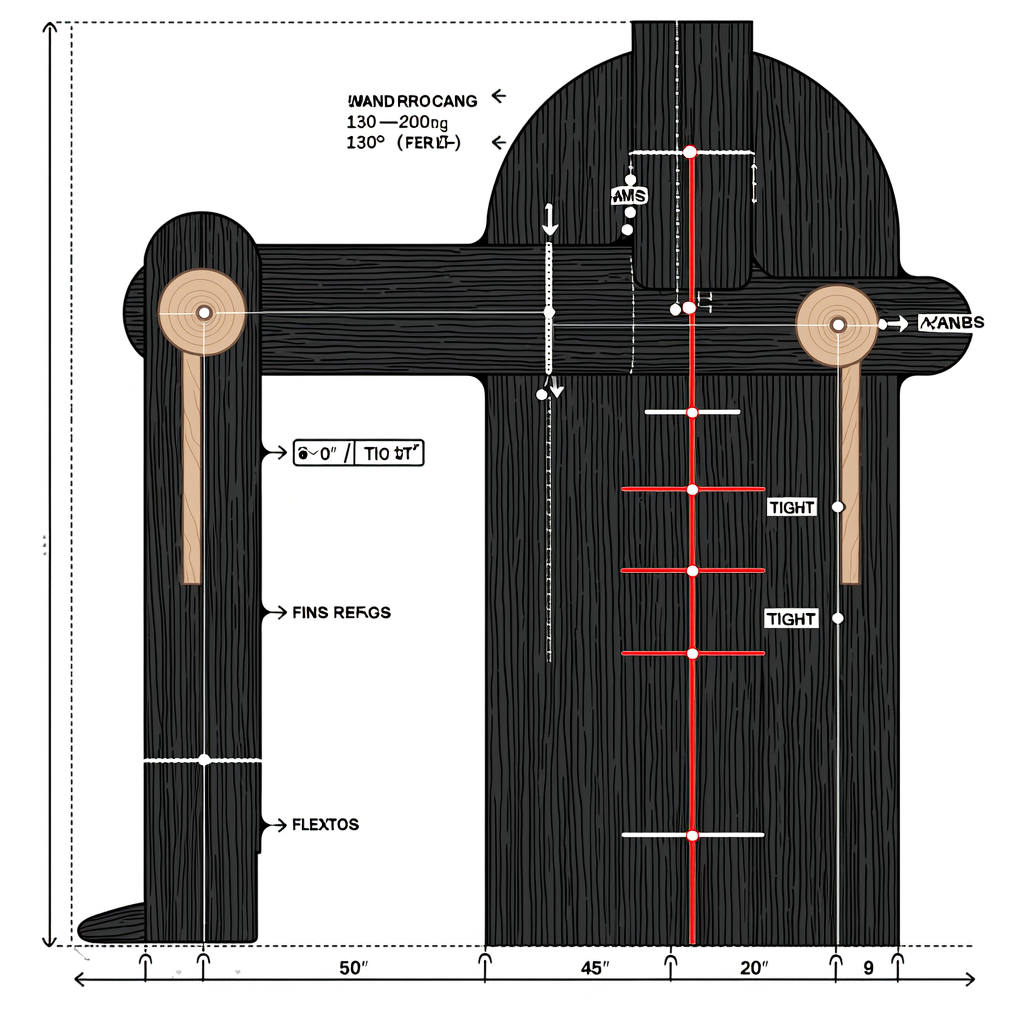
Data: The mechanical advantage of a Fook Sau is dictated by the distance from the elbow to the palm. On a static dummy, the fixed arm length forces you to shorten your leverage correctly.
Impact: Pushing with biceps or triceps creates a flat, predictable block that shatters on impact. Structure over strength means using your skeleton as a lever. The dummy’s ~9-inch trunk diameter and 130–200 lb mass do not yield to arm strength. They yield to an aligned kinetic chain. When you stop pushing and start structuring, the block becomes a diagnostic tool rather than a test of endurance.
Step-by-Step Execution Protocol
Mastering the Fook Sau on the dummy requires isolating three variables: stance, elbow geometry, and impact timing. Follow this protocol to recalibrate your form.
1. Stance Verification
Data: The Yee Jee Kim Yeung Ma stance must maintain a grounded center of gravity that resists forward momentum.
Impact: If the dummy tips or shifts significantly upon Fook Sau impact, your base is floating. Root through the balls of your feet and lock the hips. The dummy should feel immovable because your structure absorbs the rebound, not because you are leaning into it.
2. Elbow Lock
Data: The elbow acts as a hinge pinned to the ribcage, maintaining a fixed distance from the torso throughout the deflection.
Impact: Visualize the dummy arm sliding along your forearm rather than being blocked by it. This prevents shoulder rotation and keeps the centerline intact. If your elbow flares or drops, you break the geometric triangle that makes the block unbreakable.
3. The Snap
Data: Impact follows an acceleration-deceleration curve. You accelerate into contact and decelerate instantly upon impact.
Impact: This creates the \”stopping power\” feel. A stiff push transfers energy backward into your joints. A snap creates a percussive deflection that redirects force while keeping your wrist aligned. The wood slats must flex slightly to absorb the shock, returning energy to your skeleton to reinforce bone density.
4. Angle Calibration
Data: Standard dummies feature offset upper arm planes and intersecting mortise channels that allow independent arm movement. The left arm is typically set higher to match the downward diagonal trajectory of a Fook Sau.
Impact: This geometry lets you practice deflection angles that a human partner cannot safely replicate. Adjust the left arm height until your palm intercepts the imaginary strike line without crossing your centerline. The mortise channels should allow the arm to pivot slightly on impact, preventing high-frequency wrist vibration.
The Solo Prerequisite: Building the Elbow Structure
You cannot learn Fook Sau effectively on heavy wood if your elbow isolation is weak. Before striking the dummy, you must condition the structural pathway.
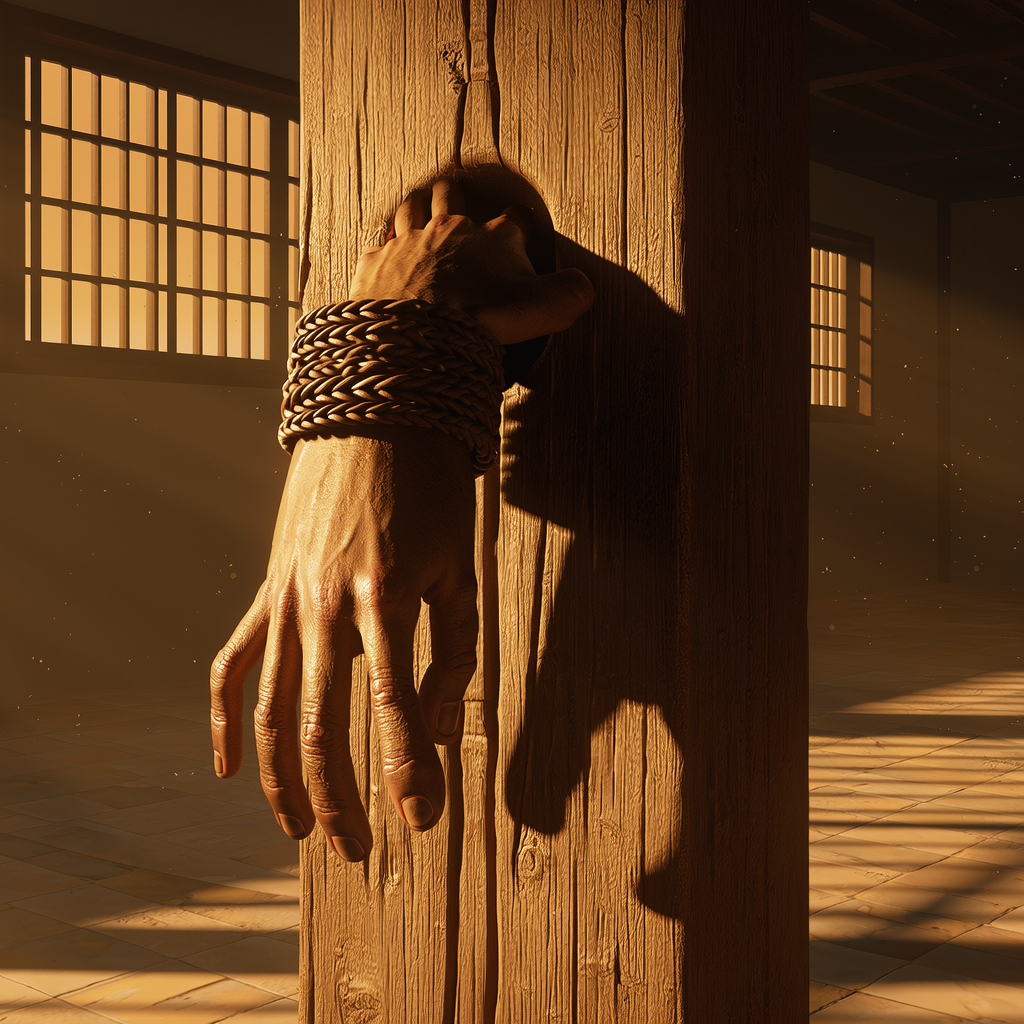
Data: Solid rattan training rings (Jook Wan Heun) force the elbow to maintain a tucked position by creating a physical boundary against the torso.
Impact: Wrapping a ring around the dummy’s arm, or practicing with a ring on your own arm, eliminates shoulder rotation. It builds the muscle memory required before hitting the heavy wood. You will immediately feel when your elbow drifts, allowing you to correct it in real time.
Check out our top-rated Wing Chun training gear & equipment on Amazon
Solid Rattan Training Rings (Jook Wan Heun)
Injury Prevention & Recovery
Repetitive impact on rigid surfaces creates cumulative stress. The difference between iron arm conditioning and chronic joint damage lies in equipment setup and recovery protocols.
Data: High-density hardwoods like Teak or Oak have high shear strength (PSI) and minimal flex, while Pine offers lower density and greater shock absorption. Rigid PVC or solid hardwood without flexible mounting slats creates high-frequency vibration in the wrist.
Impact: If the horizontal mounting slats are too tight, the Fook Sau feels like hitting a wall, leading to wrist strain and ulnar nerve compression. If too loose, the arm wobbles, destroying structural integrity. Always check slat tension before training. Pair this with topical recovery to thicken fascia and reduce inflammation.
Aged Shen Formula Dit Da Jow Liniment
Advanced Application: Simulating Attack Timings
Once structure and conditioning are dialed in, the dummy becomes a timing calibrator. Modern practitioners use the \”Mirror Drill\” to bridge solo practice and live application.
Data: The 15-degree downward leg angle on standard dummies aligns with the natural trajectory of low-line deflections and Fook Sau variations that travel under the opponent’s arm.
Impact: This angle lets you practice low-line Fook Sau mechanics without compromising your stance. Instead of pre-planning the movement, visualize an incoming strike and trigger the Fook Sau only when the imaginary hand reaches your centerline. Use the dummy’s fixed position to calibrate the exact moment of deflection.
Urban practitioners often add leather wraps to the striking surfaces to dampen acoustic feedback. This reduces percussive noise while preserving the \”thud\” required for proper impact calibration. The goal is reaction speed, not destruction. A high-quality hardwood dummy is built to last decades; your training should refine skill, not test equipment limits.
Equipment Upgrade Considerations
If your current dummy feels unresponsive or causes consistent joint pain, the issue may lie in the fabrication specs rather than your technique.
Data: Track saws and 18-inch spade bits are standard for cutting precise mortise channels in commercial dummies. Offset arm planes and calibrated slat tension determine how energy transfers during Fook Sau, Bong Sau, and Pak Sau drills.
Impact: A poorly fabricated dummy with misaligned mortises or rigid mounting will punish correct form. Look for dummies with independent arm suspension, properly tensioned slats, and wood density matched to your conditioning level. Beginners benefit from Pine or laminated composites for shock absorption. Advanced practitioners prefer Teak or White Oak for maximum feedback and iron arm development.
FeatureBeginner-Friendly
Recommended Insights From Our Wing Chun Guide Library:
- Top 10 Moves of Wing Chun
- Wing Chun Dummy Drills for Small Spaces: Mastering the Mook Yan Jong at Home
- Structural Calibration for Solo Combat Readiness – Wing Chun Dummy
- Mastering Sticky Hands: How the Wing Chun Dummy Elevates Your Chi Sao Training
- The Unseen Force: A Creative Exploration of Wing Chun’s Basic Moves
Advanced-Grade
Wood DensityPine, Laminated CompositeTeak, White Oak
Slat TensionLoose, Flexible MountingCalibrated, Independent Suspension
Mortise Geometryhttps://www.youtube.com/watch?v=7-eDnnJ_GyYStandard OffsetPrecision-Engineered, Angled Channels
Shock Absorption
Check out our top-rated Wing Chun training gear & equipment on Amazon
HighLow
Feedback FidelityMutedExtreme
AugustaPro Wing Chun Wooden Dummy
Final Diagnostic Checklist
Treat every Fook Sau session as a structural audit.
– Does your wrist ache after ten reps? Your slats are too tight or your palm angle is misaligned.
– Does the dummy shift when you strike? Your stance is floating and your hips are not locked.
Martial Arts Reference & Authority Resources:
– Does your elbow flare outward? Your shoulder is dominating the movement. Break down to rattan ring drills until the hinge returns to the ribcage.
The Mook Yan Jong does not lie. It reflects your biomechanics back to you with zero bias. Master the elbow, respect the wood, and let the structure do the work.
🔍 Explore More: See all Wing Chun training guides for How to practice the Fook Sau on the dummy.
Check out our top-rated Wing Chun training gear & equipment on Amazon