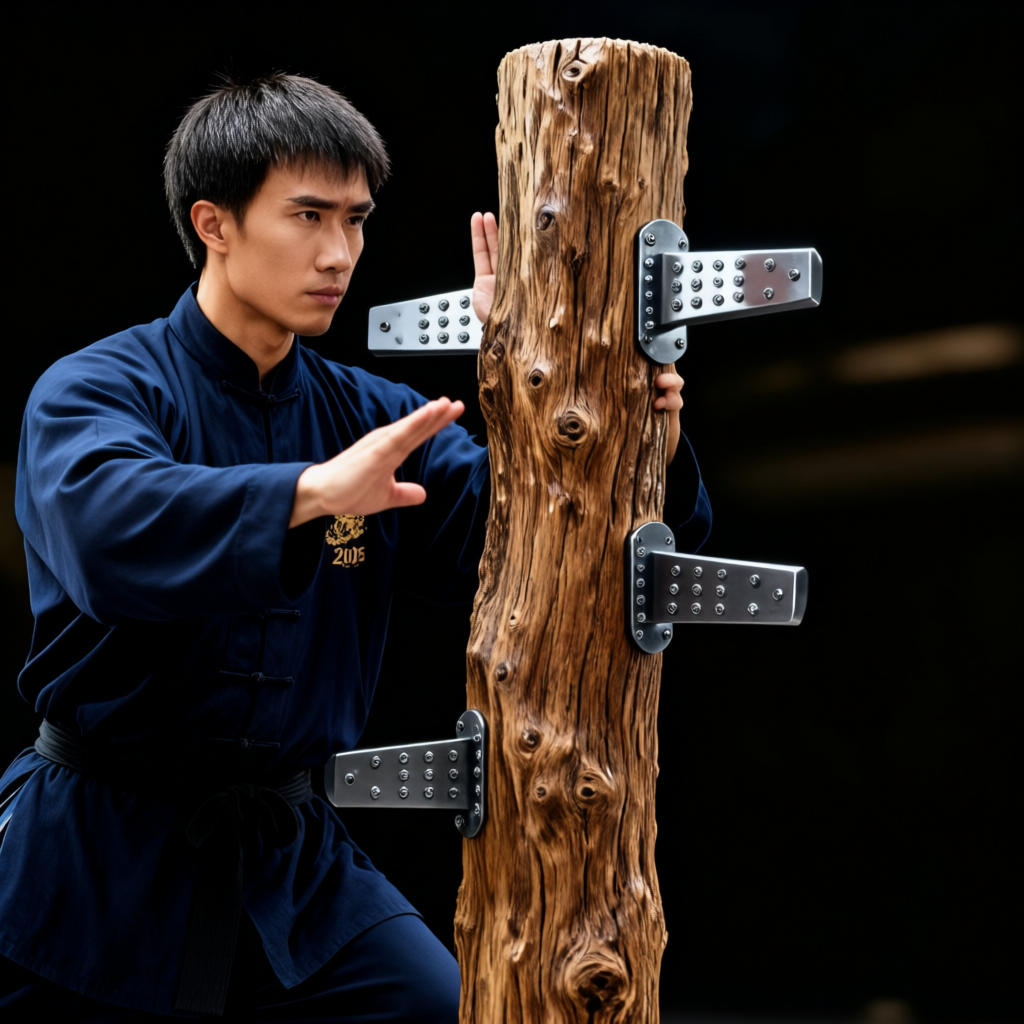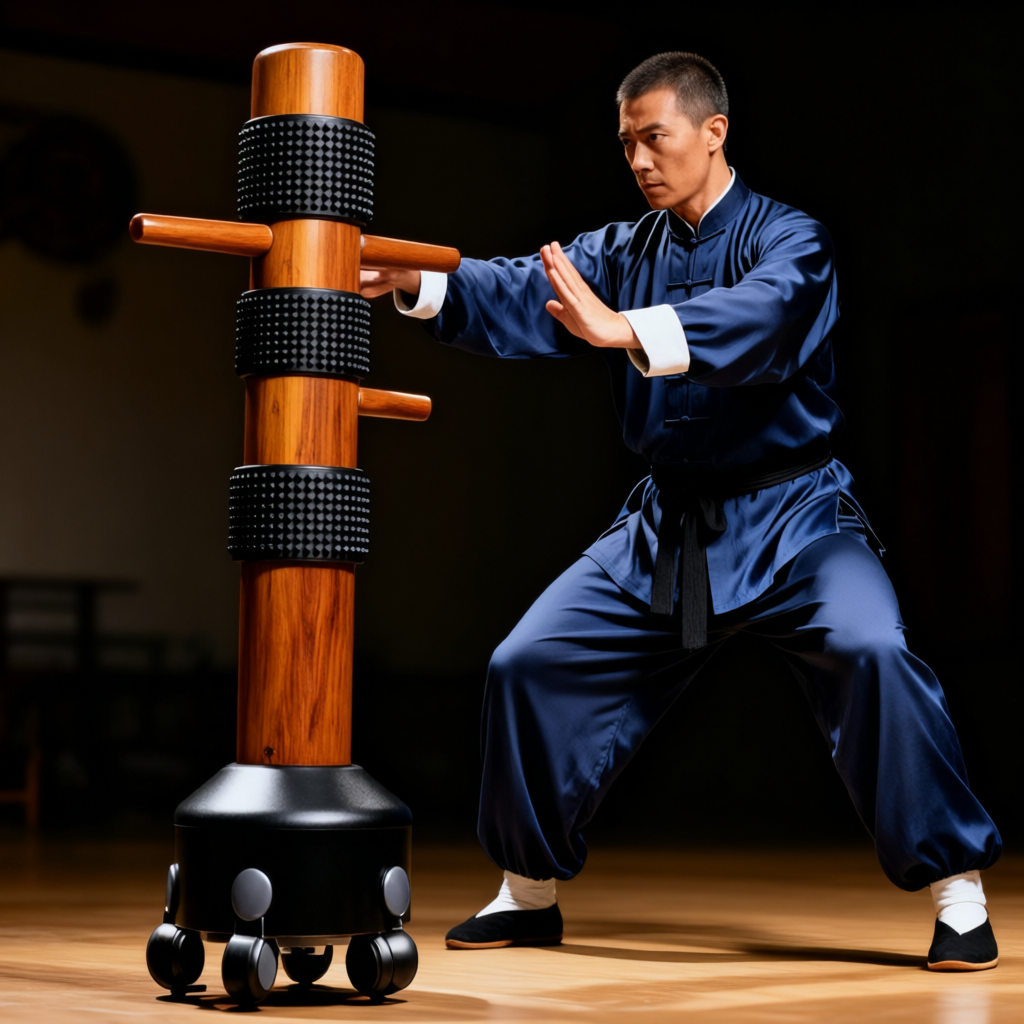
Mounting Geometry as Simplicity
The most common source of training complexity is a shifting base. If the trunk rocks upon contact, your nervous system automatically allocates processing power to stabilize your stance instead of refining your centerline.
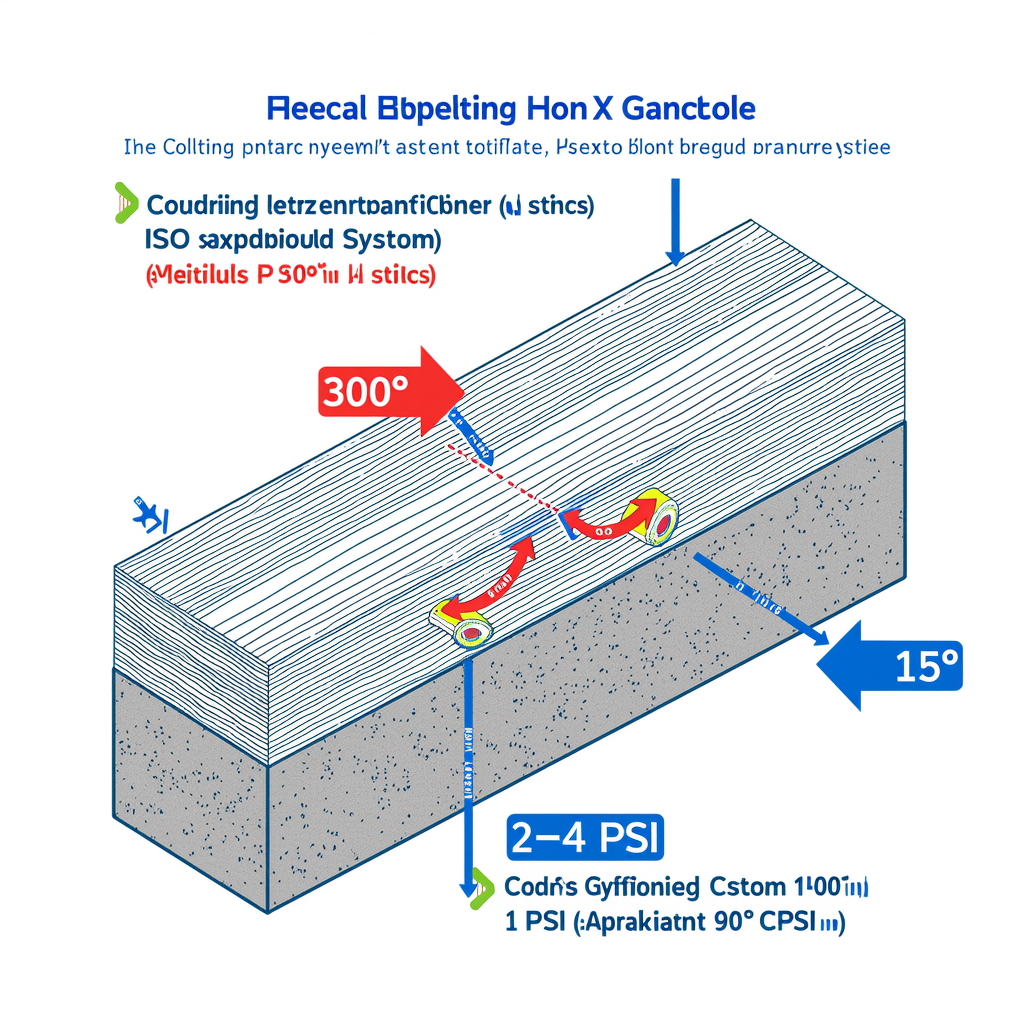
Data: A properly mounted dummy must restrict trunk displacement to less than one inch under a solid palm strike. The base mass must exceed the striking surface mass to maintain a low center of gravity. Counterweight strategies typically involve filling hollow bases with 150–200 lbs of sand or anchoring to a concrete subfloor.
Translation: If the dummy moves more than an inch when you strike, your feet are doing the work your hands should be doing. A rigid, immovable base eliminates guesswork. You stop fighting the floor and start trusting your structure.
Lean Application: Check your mounting plate before every session. Tighten all tension bolts. If using a freestanding frame, load the base with sandbags rather than relying on friction alone. Stability is the foundation of simplicity.
Dynamic Alignment vs. Static Rigidity
Traditional hardwood dummies often feel dead because the horizontal slats are over-tightened or the wood lacks natural yield. Wing Chun relies on Sheng Ging (live energy), where the dummy absorbs and returns force rather than acting as a static wall.
Data: High-density hardwoods like Teak or White Oak possess a PSI shear strength exceeding 1,400 PSI, but unyielding mortise tension can generate joint compression forces above 300 PSI during rapid Pak Sau or Tan Sau transitions. Flexible rubber bushings or adjustable tension nuts allow the slats to swing 2–4 degrees upon impact.
Translation: Fighting a dead dummy turns Wing Chun into powerlifting. Proper flex absorbs shock, protecting your wrist and elbow ligaments. When the arms yield slightly, you learn to redirect force instead of blocking it. Relax your shoulders, let the equipment move, and your technique sharpens.
Lean Application: Loosen the horizontal slat tension until the arms swing freely under hand pressure. Retighten only enough to prevent clattering. The dummy should feel alive, not locked.
Spatial Footprint & Acoustic Management
Size and noise create psychological friction. A towering trunk in a cramped room or the thunderous crack against drywall builds mental resistance. Simplification means shrinking the footprint and silencing the feedback loop.
Data: Standard wall-mounted dummies transfer impact vibrations at frequencies between 80–120 Hz directly into structural drywall, causing audible rattle and potential anchor fatigue. Neoprene isolators and floating bracket systems decouple the mounting plate from the wall, reducing transmitted vibration by up to 70%.
Translation: Noise creates guilt. Guilt kills consistency. Dampening materials let you train high-volume drills without disturbing neighbors or damaging your walls. Remove the mental barrier, and daily practice becomes automatic.
Lean Application: Install neoprene washers between the mounting plate and wall studs. Use floating brackets to break the direct vibration path. Train at any hour without hesitation.
Scaling Complexity Down
Full forms on a 5-foot trunk overwhelm beginners and stall intermediates. Simplicity emerges when you strip the dummy back to its core function: centerline reinforcement.
Data: The Mook Yan Jong features offset upper arm planes intersecting at precise angles, with a 15° downward leg angle designed to simulate realistic opponent geometry. Solid rattan rings and compact arm attachments reduce the striking surface to isolated joint zones.
Check out our top-rated Wing Chun training gear & equipment on Amazon
Translation: You do not need to hit every angle to improve. Focus on the centerline. Isolate single joints. Smaller attachments remove the intimidation of a full trunk and let you drill one mechanic until it becomes reflex.
Lean Application: Cover the lower legs with a towel or detach them temporarily. Drill only the centerline arms. Execute 50 repetitions of Tan Sau or Bong Sau on a single slat. Master the zone, then expand.
Engineering Constraints & Material Limits
Simplifying usage does not mean simplifying construction. If you are modifying or building, precision dictates performance. Loose geometry introduces error. Error destroys flow.
Data: A standard trunk diameter measures approximately 9 inches, with total mass ranging from 130 to 200 lbs. Mortise channels must maintain strict 15° downward leg angles and intersecting upper arm planes. Cutting requires 18-inch spade bits or track saws calibrated to 0.5 mm tolerance. Softwoods like Pine exhibit PSI shear strength below 800 PSI and compress rapidly under repeated impact.
Translation: Precision angles keep your strikes aligned. If the holes are loose or the angles drift, your arms slip out of position mid-drill. Dense timber like Teak or Oak holds its shape through thousands of strikes. Softwoods deform quickly, changing the geometry mid-training and forcing you to relearn your spacing.
Lean Application: Verify all mortise angles with a digital protractor before assembly. Use dense hardwood for high-intensity drilling. Check arm fit weekly. Tighten or shim as needed. Consistent geometry equals consistent technique.
The Tuning Kit & Product Bridge
Upgrading your setup is not about buying bigger equipment. It is about buying smarter tools that remove friction from your training loop.
Data: High-density commercial units like the AugustaPro Mook Yan Jong ship pre-calibrated with balanced mass distribution and factory-set tension. Vibration-dampening wall mount pads isolate acoustic transfer. Aged Dit Da Jow liniment contains herbal compounds that accelerate micro-trauma recovery in dense connective tissue. Adjustable wrenches and laser levelers ensure mounting plates sit perfectly plumb.
Translation: A pre-tuned system eliminates guesswork. Dampening pads solve noise instantly. Recovery liniment keeps your joints healthy for daily repetition. The right tools make setup foolproof. When the equipment works with you, training feels effortless.
Lean Application: Replace wobbling bases with stable commercial units. Add isolation pads to existing mounts. Apply Dit Da Jow post-session to maintain tissue resilience. Keep a leveler and wrench in your training kit. Tune once, train forever.
https://www.youtube.com/watch?v=NE9-QW9YSIcComponentOptimal Specification
Recommended Insights From Our Wing Chun Guide Library:
- Wing Chun Dummy: Intro – Use & Benefits –
- Mastering Dummy Mechanics for Martial Arts Balance and Precision
- Unlocking True Wing Chun Sensitivity Through Precision Equipment Selection
- Master Wing Chun Dummy Geometry: Biomechanical Alignment and Kinetic Flow
- Mastering Effective Banned Moves Through Wing Chun Dummy
Consequence of Failure
Trunk Mass150–200 lbsExcessive movement → loss of structural feedback
Arm Swing Tolerance2–4°Over-tightened → joint stress >300 PSI
https://www.youtube.com/watch?v=FjthA2_2zGgLeg Angle15° downwardDeviation >2° → misaligned strikes, compromised centerline
Check out our top-rated Wing Chun training gear & equipment on Amazon
Wall Vibration Reduction≥70% via neoprene/floating mountsAudible rattle → psychological resistance to daily training
Wood DensityTeak or White Oak (≥1,400 PSI)Softwood deformation → geometry drift, relearning required
Martial Arts Reference & Authority Resources:
- What is the Wooden Dummy For? – The Dragon Institute
- DVD Wing Chun style Kung Fu
- Wing Chun Lessons: Learn Wing Chun Online w/ Sifu Adam Williss
The AugustaPro Mook Yan Jong, Heavy-Duty Vibration-Dampening Wall Mount Pads, and Aged Dit Da Jow Recovery Liniment are not upgrades—they are enablers. They remove the friction between intention and execution. When your equipment no longer fights you, your technique reveals itself.
🔍 Explore More: See all Wing Chun training guides for How to use the dummy for better simplicity.
Check out our top-rated Wing Chun training gear & equipment on Amazon