The Physics of Directness: Engineering Meets Biomechanics
Directness is fundamentally a function of energy efficiency. When a strike lacks directness, kinetic energy bleeds into lateral vibration or rotational torque. The dummy must be built to expose that leak immediately.
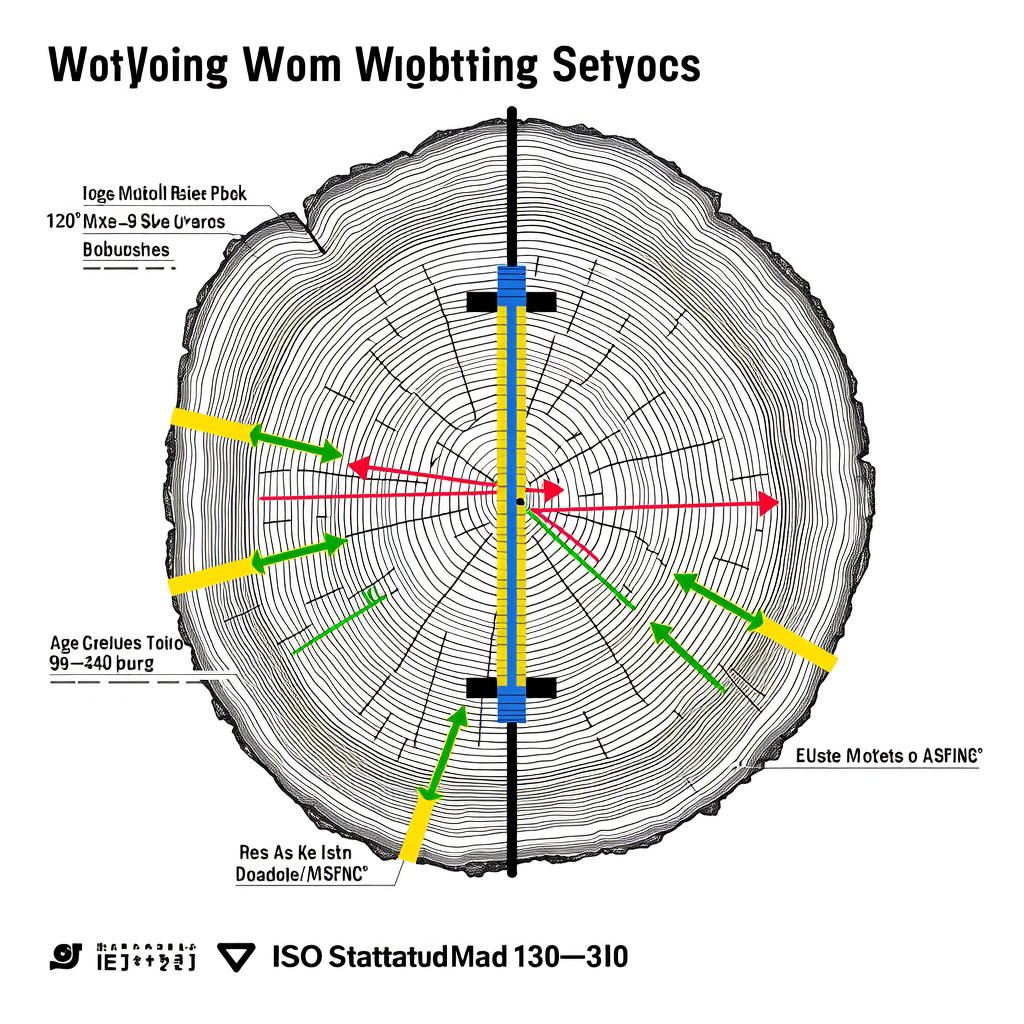
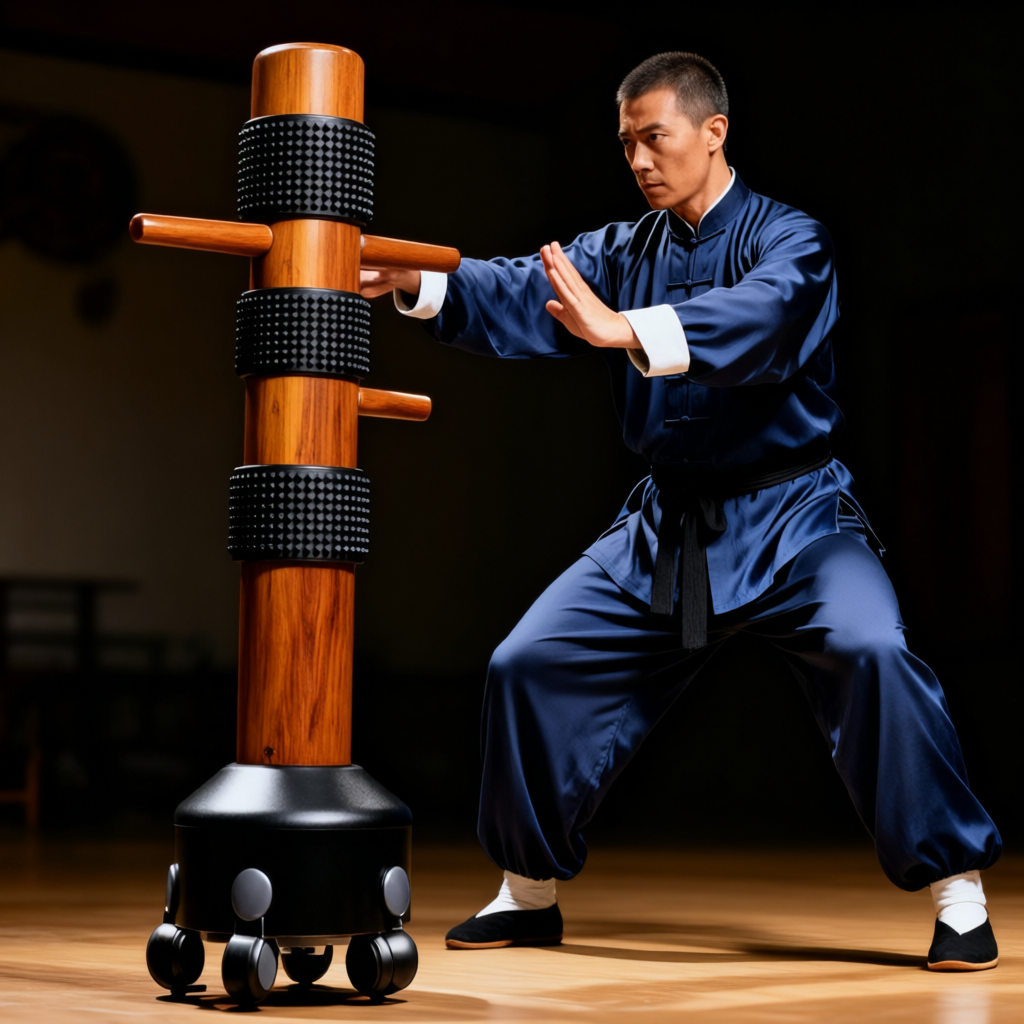
A AugustaPro Wing Chun Dummy with a ~9-inch trunk diameter creates the necessary mass to resist lateral torque without shaking. That nine-inch solid core forces your forearm to meet a fixed plane, so your nervous system learns to stop pushing and start snapping.
A total weight of 130–200 lbs anchors the structure to the floor. This mass prevents the base from sliding or rocking when you commit to a forward strike, keeping your stance grounded and your power transfer linear.
Teak and Oak density outperform Pine because dense hardwoods return immediate tactile feedback. Soft pine flexes under impact, absorbing your intent and teaching you to overcommit or pull back, which breaks the flow required for direct striking.
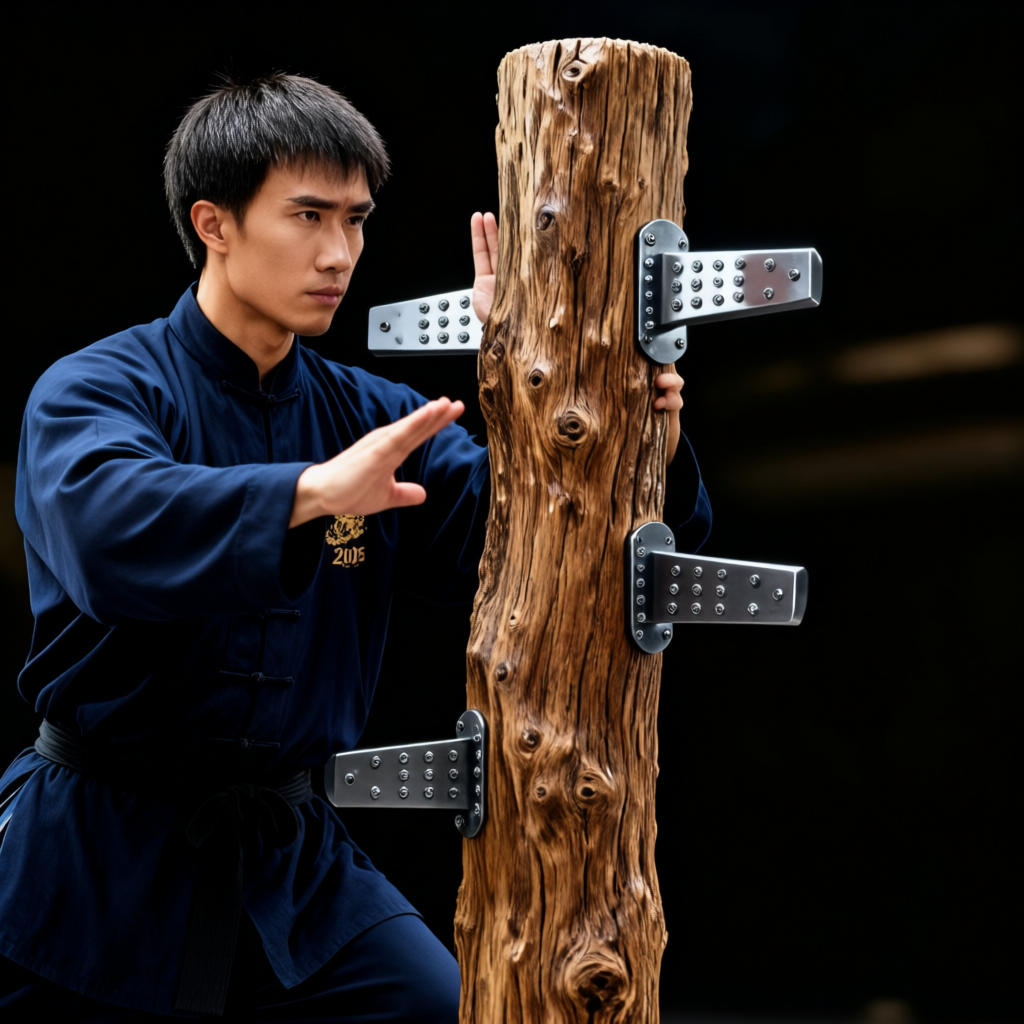
High PSI shear strength in the mortise joints ensures the arms lock firmly into the offset upper arm planes. Proper shear ratings eliminate rotational play, so your Bong Sau and Tan Sau meet zero wobble when they cross the centerline.
A 15° downward leg angle aligns your kicking trajectory with your stance geometry. This precise angle keeps your center of gravity low, stabilizes your base during low-line sweeps, and allows ground reaction force to travel straight up through your hips into your punch.
When you combine these metrics, you create what traditional practitioners call Sheng Ging, or live energy. The trunk becomes a rigid reference point. The horizontal slats act as tensioned dampers. Strike directly along the centerline, and the energy transfers through your arm, into the trunk, and dissipates cleanly through the slats without significant recoil. Strike indirectly at an angle, and the slats twist. That twist creates physical resistance that blocks your motion until you realign your hips and shoulders. The dummy does not judge you. It simply reports your structural accuracy.
Specific Drill Concepts for Better Directness
Directness cannot be taught through theory alone. It must be drilled through controlled repetition that isolates the kinetic chain. These micro-drills leverage the dummy’s fixed geometry to rewire your movement patterns.
The Centerline Snap Drill
Focus on the speed of the Bong Sau and Tan Sau. The goal is to strike the dummy’s upper arms so quickly that the arms cannot rotate before impact. You are training your nervous system to bypass hesitation. Start slow. Align your elbow with your ribs. Fire the strike. If the dummy’s arm rotates before your fist lands, you telegraphed. Reset. Repeat until the contact feels instantaneous.
The Angle Correction Drill
Intentionally strike at a 45-degree angle to the dummy’s face. The fixed structure will resist this misalignment, creating a sharp block sensation. Do not fight the resistance. Feel the torque in your wrist. Correct your hip rotation to re-establish the vertical centerline before striking again. This drill teaches you to recognize off-center mechanics in real time and adjust your structure before power generation begins.
The One-Inch Power Integration
Use the dummy to practice generating force within a minimal range of motion. Because the dummy is stationary, you cannot rely on arm extension or wind-up swings. You must learn to generate force through body compression. Drop your weight slightly. Engage your rear leg. Compress the torso. Release. The strike should feel short, heavy, and direct. If you feel strain in your shoulder, you are muscling it. If you feel the impact travel through your centerline, you are aligning it.
Material Friction Points: When the Equipment Fails You
If you are struggling with directness, the problem may not be your technique. It may be the equipment itself. Poor fabrication introduces variables that destroy feedback accuracy.
Worn mortise joints are the primary cause of soft training that fails to develop directness. If the square holes in the trunk develop play, the arms will wobble. That wobble creates a dead zone where strikes feel non-committal. Your brain compensates by swinging wider to find purchase. Wide swings destroy directness.
Improper leg alignment breaks structural integrity. If the lower leg is not cut at the precise 15-degree downward angle, your stance becomes unstable during low kicks or sweeps. An unstable base prevents the transfer of ground reaction force into the punch, making the strike feel indirect and weak.
Incorrect slat tension disrupts flow. Over-tightened slats create a dead wall effect, rebounding force painfully into the wrist and encouraging you to pull back. Under-tightened slats allow excessive movement, robbing you of the tactile feedback needed to verify alignment. Both scenarios force you to train around the equipment instead of through it.
Check out our top-rated Wing Chun training gear & equipment on Amazon
When fabricating or maintaining a dummy, use 18-inch spade bits for clean, consistent mortise drilling. Pair them with track saws for precise slab cuts. Clean geometry yields clean feedback. Dirty geometry yields bad habits.
ComponentOptimal SpecificationFailure ModeConsequence
Trunk Diameter9 inchesUnder 8\”Excessive vibration, loss of centerline reference
Masshttps://www.youtube.com/watch?v=-DTC_Pm4SmA130–200 lbsUnder 100 lbs
Recommended Insights From Our Wing Chun Guide Library:
- Wing Chun Dummy vs. Live Training Partner: Which is Better for Your Practice?
- Introduction to Wing Chun Dummy and it’s Training
- The Purpose of Wing Chun Dummy: A Comprehensive Guide for Beginners
- Unlocking Kinetic Flow: The Art of Training with the Wooden Dummy
- Master Wing Chun Dummy Geometry: Biomechanical Alignment and Kinetic Flow
Base shifts, power transfer becomes angular
Wood TypeTeak, OakPine, PlywoodEnergy absorption, false sense of impact
Mortise Shear StrengthHigh PSI, no playLoose fit, gapsArm rotation, telegraphing, broken flow
Leg Anglehttps://www.youtube.com/watch?v=6_aWUXoFiMU15° downwardVertical or angled >20°Unstable stance, weak low-line power
Check out our top-rated Wing Chun training gear & equipment on Amazon
Slat TensionFirm but springyOver-tightened or slackRebound injury or lack of feedback
Auxiliary Tools, Recovery, and Skill Integration
Training for directness requires high-frequency impact. Your hands, wrists, and joints will accumulate micro-trauma. Recovery is non-negotiable.
A Aged Dit Da Jow Liniment penetrates deep tissue, reduces inflammation, and maintains hand health while you drill repetitive, precision movements. Apply it after every session. Consistency beats intensity.
If your dummy has developed mortise play, do not replace the entire unit. Use high-quality wooden wedges or shims to adjust arm height and eliminate wobble. This simple fix restores the rigid feedback loop required for directness training.
For fine motor skill refinement, integrate Solid Rattan Chi Sao Rings into your warm-up routine. These tools allow you to train centerline retention and directness concepts without the full weight of the dummy. They build the neural pathways for straight-line movement before you introduce heavy impact.
Martial Arts Reference & Authority Resources:
Conclusion: Reading the Sensor
The Mook Yan Jong does not care how hard you hit. It only cares how accurately you align. Training on the dummy for better directness is a process of learning to trust the feedback loop. The apparatus will tell you when you are off-center through vibration, rotation, or painful rebound. It will tell you when you are aligned through stillness and clean energy transfer. Stop trying to overpower the wood. Start listening to it. Align your structure. Snap your strikes. Recover your joints. Repeat until directness becomes your default state.
🔍 Explore More: See all Wing Chun training guides for Training on the dummy for better directness.
Check out our top-rated Wing Chun training gear & equipment on Amazon