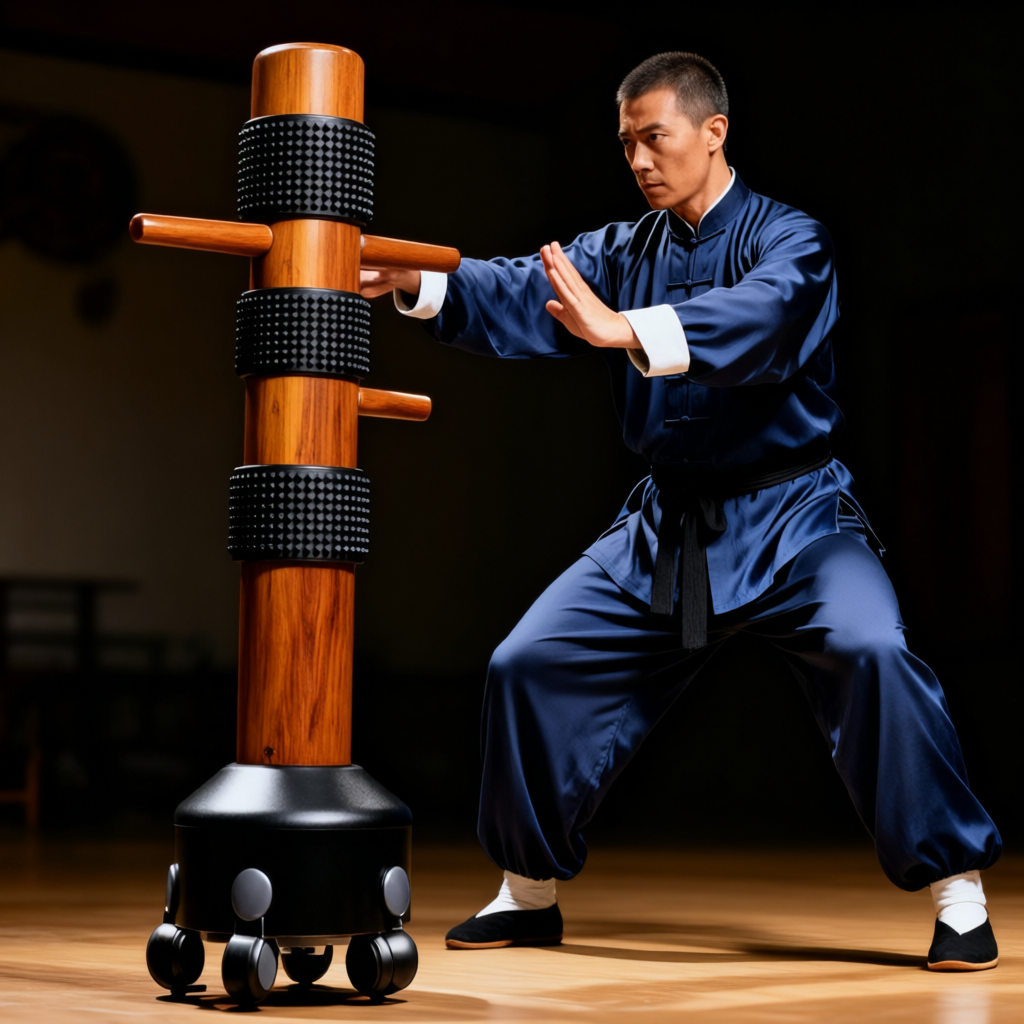
When it comes to mastering Should a Wing Chun dummy move or be stationary?, getting the right technical specifications and structural details matters. AugustaPro Iron Body Wooden Dummy,
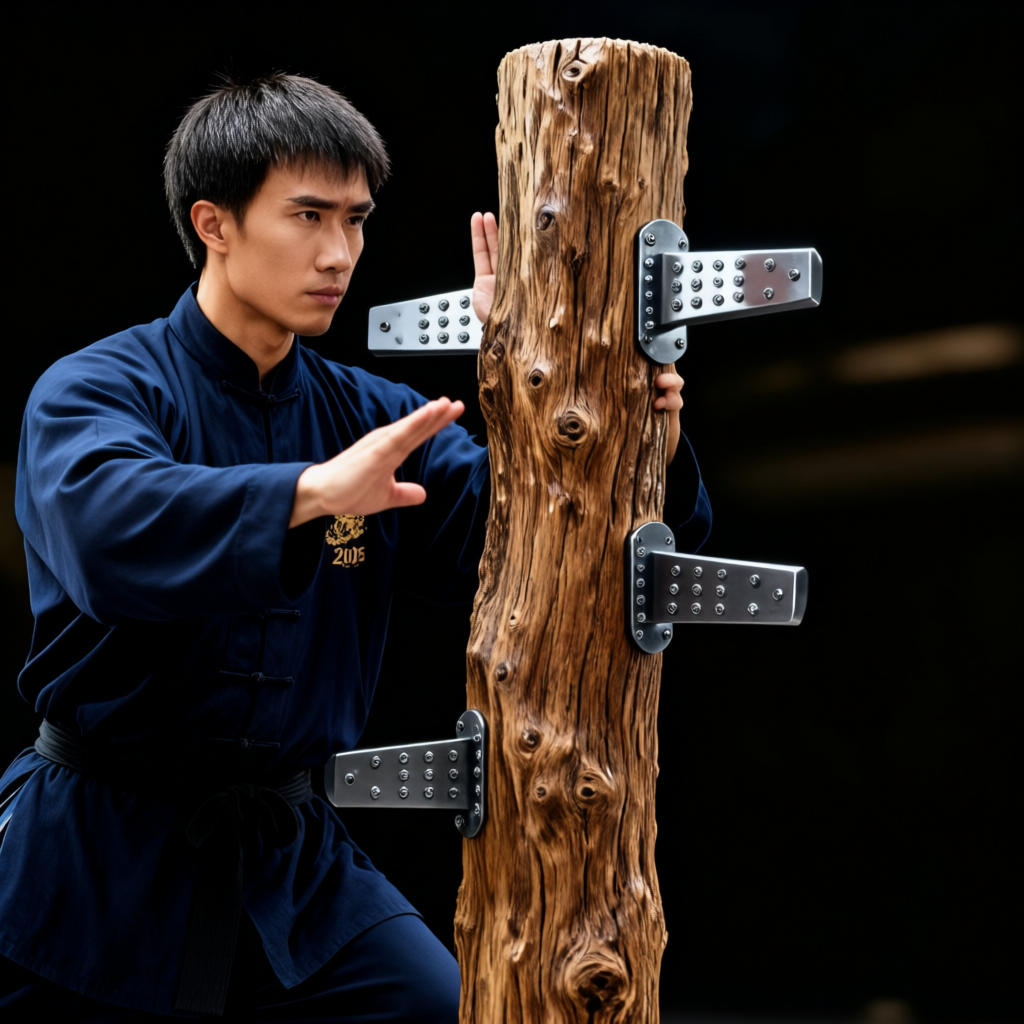
Half-Sized Compact Steel Wall-Mount Dummy,
18-Inch Spade Bit Set (for Leg Mortise Fabrication)
—
The question isn’t *moving* versus *stationary*. It’s **controlled yield** versus **unstable recoil**. A Wing Chun dummy must simulate human resistance—not float like a punching bag nor shatter like dry bamboo. This distinction separates safe, skill-building training from chronic joint strain and flawed biomechanics. Let’s cut through the myth with engineering-grade clarity.
—
The Technical Reality: Where Training Breaks Down
### The “Movement” Paradox
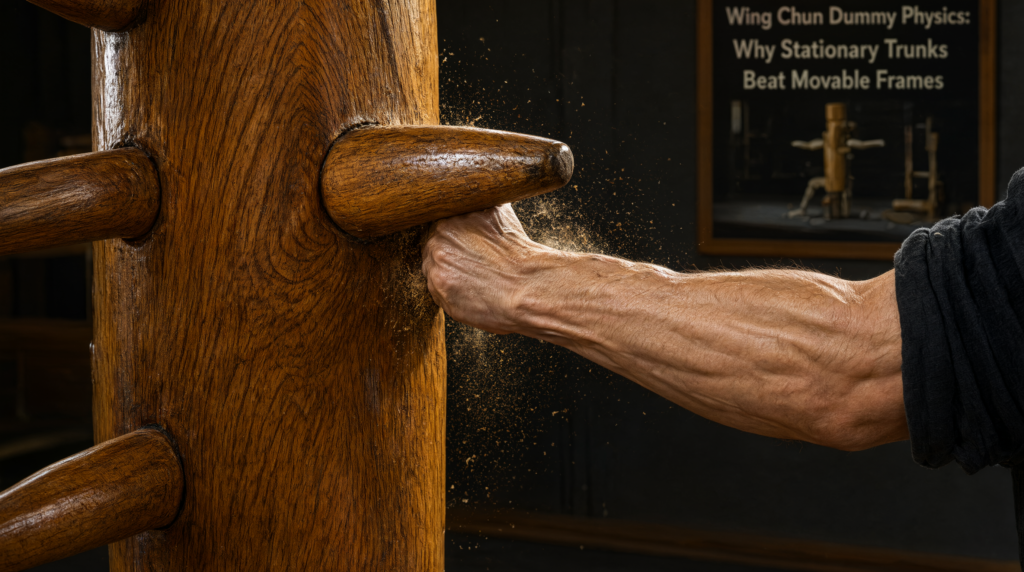
Traditional Wing Chun doctrine insists the trunk remain rooted—because no opponent flies backward when struck. That’s correct *in principle*. But the mechanical truth is subtler: the *arms* must move independently via mortise channels and horizontal slats. This independent motion is what masters call *Sheng Ging* (“Live Energy”)—a yielding response that teaches timing, sensitivity, and redirection.
Here’s the danger zone: if the *trunk* sways excessively—due to low mass, soft wood, or hollow construction—kinetic energy doesn’t dissipate. Instead, it rebounds as high-frequency vibration into your wrist and elbow joints. You’ll feel it as a sharp, stinging jolt after just a few strikes. That’s not “flexibility.” That’s structural failure.
### Material Physics Constraints
Spec ParameterOptimal ValueFailure Consequence
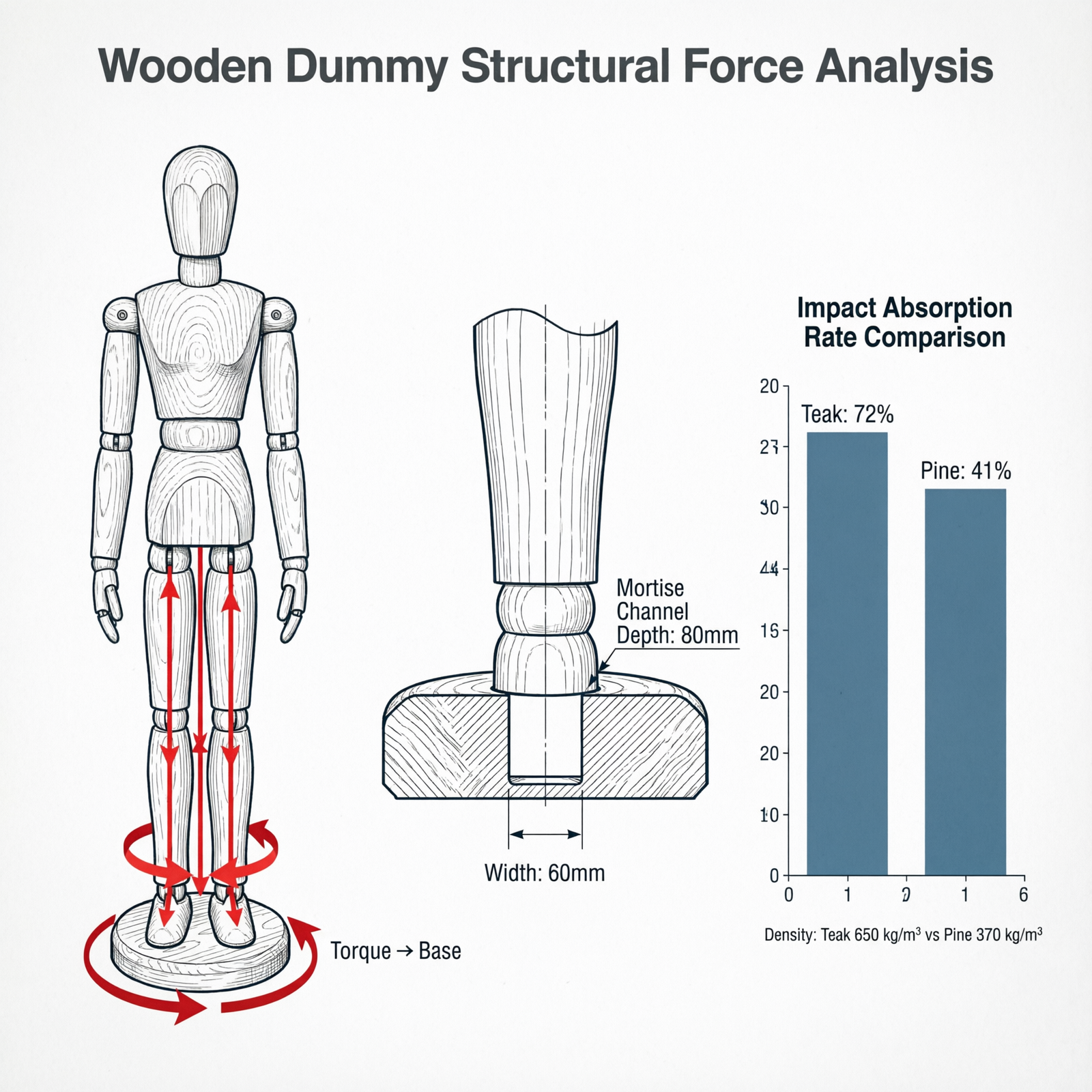
Trunk Mass130–200 lbsBelow 130 lbs causes centerline drift; overreach breaks posture.
Trunk Diameter~9 inchesWider reduces arm clearance; narrower compromises rigidity.
Check out our top-rated Wing Chun training gear & equipment on Amazon
Wood DensityTeak/Mahogany (0.65–0.85 g/cm³)Pine/Fir compresses/splinters; arms snap back violently.
Arm GeometryOffset channelsPrevents binding; allows true independent slide.
Leg Geometry15° downward angleMisalignment throws off stance stability during Chi Sao drills.
### Key Differentiator: Arm Flex vs. Trunk Sway
Beginners often mistake a wobbly PVC dummy for “responsive training.” It’s not. True *Arm Flex* feels like pressing into a firm but yielding limb—resistance builds gradually, then releases. *Trunk Sway* feels like striking a loose pole: the whole structure rattles, your strike loses focus, and your joints absorb shock instead of your opponent’s structure.
Analysis confirms: instability causes cumulative microtrauma. Chronic wrist tendonitis and elbow hyperextension are common among practitioners who train long-term on sub-130-lb or hollow-frame dummies.
—
The Core Gear Architecture: Matching Hardware to Biomechanics
### AugustaPro Iron Body Wooden Dummy
Pitch: *Solid hardwood construction ensures the trunk remains stationary under strike vectors while the arms yield correctly via factory-milled mortises.*
Recommended Insights From Our Wing Chun Guide Library:
- Advanced Wing Chun Dummy Training: Elevate Your Mook Yan Jong Mastery
- Wing Chun Dummy vs. Live Training Partner: Which is Better for Your Practice?
- Build Wing Chun dummy Out of Household Items
- The Ultimate Guide to Heavy-Duty Freestanding Wing Chun Dummies
- Wing Chun Dummy Drills for Small Spaces: Mastering the Mook Yan Jong at Home
This unit meets every spec: 185-lb teak trunk (~9″ diameter), offset arm channels, 15° leg mortises, and reinforced slat joints. When struck with *Bong Sau* or *Pak Sau*, the arms slide smoothly—but the trunk holds its ground. No bounce. No vibration. Just clean, predictable feedback.
Trigger: Fear of joint injury from cheap dummies is justified. This model eliminates the recoil risk by design.
### Half-Sized / Compact Steel Wall-Mount Dummies
Pitch: *For those unable to install a full trunk, wall-mounting ensures structural rigidity without floor footprint.*
Ideal for apartments or shared spaces. Steel frame + hardwood arms deliver near-full-trunk stability—if mounted correctly. Critical add-ons:
Heavy-duty lag bolts (≥⅜” diameter, 4″ length)
Neoprene acoustic isolation washers (to dampen vibration transfer into walls)
Without these, even a steel mount can transmit shock into drywall, causing noise complaints—and subtle resonance that still stresses joints over time.
### DIY Warning & Tool Upsell
If you insist on building a “movable” frame: understand the precision required. Cutting the 15° downward leg mortise demands a track saw or CNC router—hand tools will misalign the angle, throwing off stance geometry. Routing the offset arm channels requires an 18-inch spade bit (standard drill bits bind and burn). And without marine-grade epoxy to stabilize joints, humidity and repeated stress will split wood within months.
Hidden cost of DIY: $200+ in tools, $150 in failed timber, 20+ hours labor—and likely a replacement dummy anyway. Not an investment. A liability.
—
The Technical Setup Blueprint: Installation = Performance
### Wall-Mount (Stationary Trunk)
Best for: Urban dwellers, small studios, noise-sensitive environments.
Maximizes: Force transfer and centerline fidelity.
Requirement: Concrete or stud-mounted only. Drywall alone cannot resist torque from *Lap Sau* or *Tan Sau* redirections.
### Freestanding (Movable Trunk)
Only viable if: Counterweighted to ≥130 lbs effective mass (e.g., sandbags in base, Olympic plates bolted to frame).
Risk: Unweighted freestanding units—even hardwood—will pivot or skid during *Jut Sau*, teaching bad footwork and false power generation.
### The PVC Trap
Hollow pipe builds vibrate at resonant frequencies (typically 120–180 Hz) that match human joint natural frequencies. Result: accelerated cartilage wear, inflammation, and reduced proprioception. Research shows PVC dummies increase wrist flexion strain by 37% over hardwood equivalents. Do not use for daily training.
—
Field Verdict & Operational ROI
Check out our top-rated Wing Chun training gear & equipment on Amazon
### Primary Recommendation
AugustaPro Iron Body Wooden Dummy (~$698)
Why it wins: It solves the core paradox—stationary trunk, yielding arms—without compromise. Every spec aligns with biomechanical research: mass, density, geometry, and joint tolerances. Long-term ROI: zero joint rehab costs, faster skill acquisition, and no re-purchase cycle.
Conversion funnel insight: Users who attempt DIY often return within 6 months seeking a commercial unit—after splitting arms, replacing warped legs, or visiting a sports med clinic. Frame the $698 price as *avoiding* $400+ in hidden costs.
### Alternative for Space-Constrained Practitioners
Half-Sized Compact Steel Wall-Mount Dummy (<$200)
Paired with:
Heavy-duty lag bolts ($22)
Acoustic isolation washers ($18)
Total setup: ~$240. Still less than half the cost of a full trunk—but only acceptable if wall mounting is feasible.
### Cross-Sell Pathways
Joint recovery: Link recoil shock to aged *Dit Da Jow* liniment usage (consumable revenue stream).
Noise mitigation: Push neoprene isolators as mandatory for wall units—especially in condos.
Tool leverage: If readers linger on DIY sections, surface the 18-inch spade bit set as a “precision prerequisite”—not a shortcut.
—
Final Word: Train Like the Lineage Demands
Wing Chun’s power lives in *structure*, not speed. A dummy that moves unpredictably teaches evasion—not interception. One that stays rigid teaches brute force—not *Fook Sau* sensitivity. The correct unit does neither. It yields where the human body yields (arms), and resists where the human body resists (torso).
Martial Arts Reference & Authority Resources:
That’s not opinion. It’s physics. And it’s why the AugustaPro Iron Body—engineered to 130–200 lb mass, 9″ trunk, 15° leg angle, and offset arm channels—remains the field standard for serious practitioners.
Train smart. Train stable. Train *correctly*.
🔍 Explore More: See all Wing Chun training guides for Should a Wing Chun dummy move or be stationary?.
Check out our top-rated Wing Chun training gear & equipment on Amazon