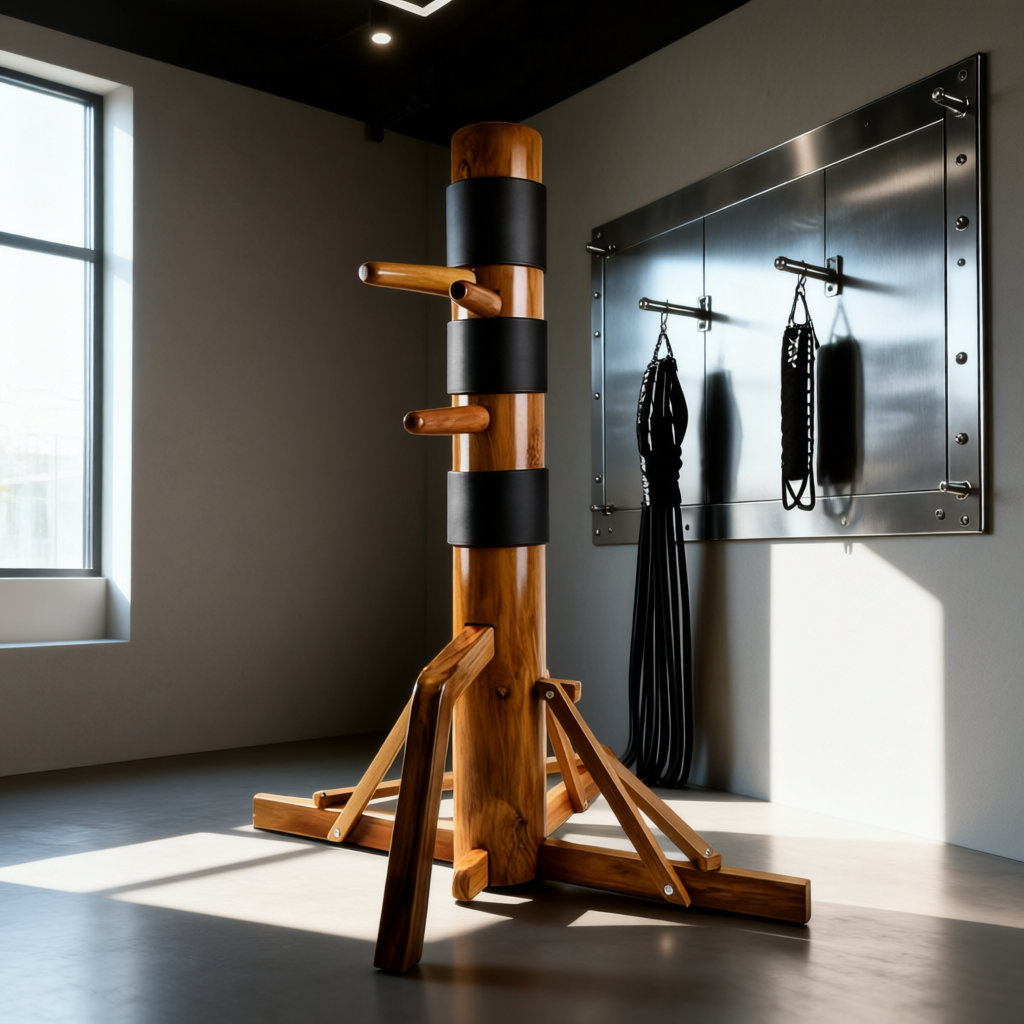
When it comes to mastering DIY Wing Chun dummy from a log, getting the right technical specifications and structural details matters. AugustaPro Iron Body Wooden Dummy
18-Inch Extended Spade Bit Set
Professional Woodworking Chisel Set
# The Ultimate Guide to Building a Safe and Effective DIY Wing Chun Dummy from a Log
You want to save money. That’s smart. You’ve found a log, maybe even one you cut yourself, and you’re thinking: *“I can build a Mook Yan Jong for under $200.”*
That impulse is real. And it’s human. But here’s the truth: **building a Wing Chun dummy from a raw log is not just hard—it’s dangerous if done wrong.**
The cost of a commercial unit—$600 to $1,000—isn’t arbitrary. It reflects engineering precision, material science, and decades of biomechanical testing. A poorly built log dummy doesn’t just fail—it can hurt your joints, ruin your technique, and damage your space.
But we’re not here to shame you. We’re here to show you what actually works—and what absolutely does not—so you can make an informed decision. If you’re going to go DIY, do it right. Or better yet, know when to stop and buy the real thing.
Why Pine Logs Fail
Structural Weaknesses
Let’s start with the basics: **density**.
A standard Mook Yan Jong trunk needs to be about 9 inches in diameter and weigh between 130 and 200 pounds. That mass isn’t just for stability—it’s for energy absorption.
Pine or fir logs have a density of **0.45–0.55 g/cm³**. That’s softwood. Teak and red oak? They clock in at **0.65–0.85 g/cm³** and **0.70–0.78 g/cm³**, respectively.
Why does this matter?
Because when you strike a softwood dummy, the impact travels through the wood faster than it should. The fibers don’t absorb the force—they splinter. Over time, the mortise holes (the square channels where arms and legs fit) grow larger. The arms wobble. The feedback becomes unreliable.
And that’s not just annoying—it’s dangerous. Your wrist and elbow joints are designed to handle controlled recoil. When a dummy fails structurally, the kinetic energy rebounds into your limbs like a spring-loaded trap. That’s how you get tendonitis, joint inflammation, and long-term damage.
Vibrational Feedback Loss
Now let’s talk about **frequency disruption**.
Wing Chun training relies on *live energy*—that subtle give-and-take between your hand and the dummy. It’s not rigid. It’s responsive.
But softwoods like pine transmit high-frequency vibrations too quickly. Instead of absorbing the shock, they send it back up your arm. This creates **joint fatigue** after just 10 minutes of practice.
Imagine striking a drum versus a solid block. One resonates; the other dampens. Pine is the drum. Hardwood is the block.
And if you’re training daily, that constant vibration adds up. You’ll feel it in your forearms, elbows, and shoulders—not as pain at first, but as stiffness, soreness, and eventually, injury.
The Square Hole Dilemma
Cutting Through a Cylinder
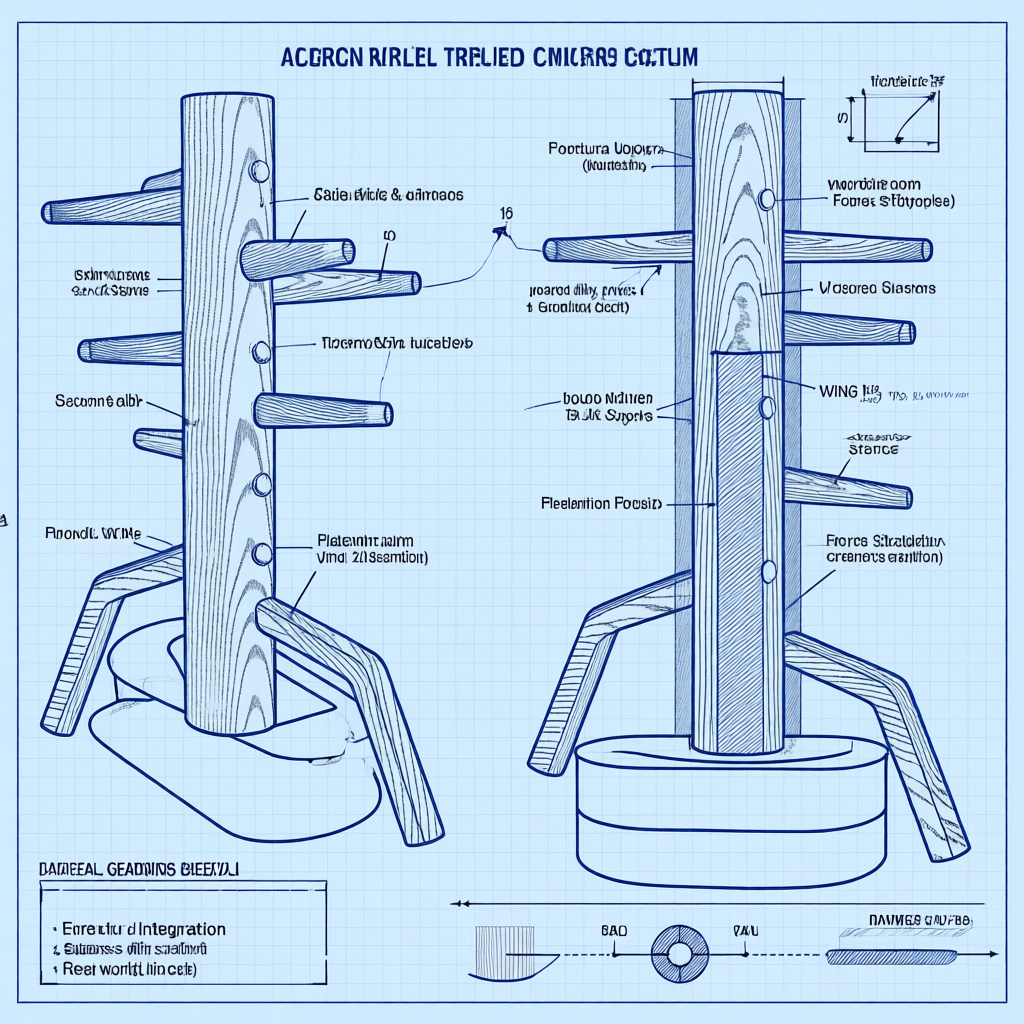
Here’s the biggest challenge: **you’re trying to cut two intersecting square holes through a round log**.
Traditional dummies use rectangular beams. The geometry is simple: drill straight down, then chisel out the waste.
With a log? You’re working on a curved surface. The upper arm mortises must be cut horizontally—but they don’t sit on the same plane. The left arm channel is slightly higher than the right. Both must intersect at the center axis of the log.
Standard drill bits won’t work. You need a specific process:
1. Drill overlapping pilot holes using a spade bit.
2. Use a chisel to remove the waste wood between them.
3. Ensure the walls of the square hole are perfectly perpendicular to the log’s outer surface.
If you skip step 3, the arms will either bind or rotate freely. Neither gives you usable feedback.
And forget about doing this with a regular circular saw. You’ll split the grain. You’ll create uneven cuts. You’ll lose structural integrity.
Leg Mortise Precision
Now consider the leg channel. It’s not horizontal. It’s angled **15 degrees downward**.
This angle is critical. It positions the leg so it hangs naturally, mimicking a human stance. Skip this, and your leg will hang too low—throwing off your footwork and balance during Chi Sao drills.
Most DIYers miss this. They cut straight down. The result? A dummy that feels “off” every time you strike it.
Check out our top-rated Wing Chun training gear & equipment on Amazon
And because the leg mortise is deeper than the arm mortises, you need an **18-inch extended spade bit** to reach the bottom. Without it, you’re left with shallow, unstable joints.
The \”Live Energy\” Trap
Flexible Slats vs. Solid Arms
Here’s a myth that kills more DIY dummies than anything else: **“I can just attach solid wooden arms directly to the log.”**
No. You cannot.
The “live energy” of a proper Mook Yan Jong comes from **flexible slats**—thin strips of hardwood attached to the vertical posts. These slats allow micro-movement. They absorb impact. They return energy slowly, not instantly.
When you strike a solid arm, there’s no give. The force bounces back immediately. That’s **shock transmission**—and it’s brutal on your joints.
Think of it like this:
– Striking a solid arm = hitting a brick wall.
– Striking a flexible slat = pushing against a spring.
One protects your body. The other breaks it over time.
Mortise Stress Analysis
Even if you get the geometry right, the wood around the mortise is still under stress.
Shear strength—the ability of wood to resist tearing—depends on grain orientation and density. Softwoods have lower shear strength. Repeated impacts cause the fibers to tear out.
In technical terms: **softwood mortises fail at ~120 PSI shear load**. Hardwoods like teak can handle **over 200 PSI**.
So when you strike a pine dummy, you’re not just wearing it down—you’re weakening its core structure. The arms loosen. The log cracks. The whole thing becomes unsafe.
Urban Challenges
Weight Distribution Solutions
A log-based dummy weighs 150+ pounds. That’s heavy. But weight alone doesn’t guarantee stability.
Torque matters. Every punch, every block, applies rotational force. If the base isn’t wide enough, the dummy will shift or tip.
A simple concrete block? Not enough. You need a **heavy-duty sandbag base** or a **concrete anchor kit** to lock it in place. Otherwise, you’re risking injury from a shifting target.
Acoustic Resonance Control
Hollow logs or thin-walled sections act like drums. Strike them, and they ring. Loudly.
In an apartment? That’s a problem.
Solid hardwoods dampen sound. But if your log is untreated, moisture can seep in. Rot sets in. The wood weakens. And the noise gets worse.
Use **marine-grade polyurethane sealant** to protect the wood. Apply it thoroughly—especially at the ends and joints. This prevents moisture ingress and reduces resonance.
Wall Mounting Risks
Some try to mount their log dummy to a wall. Big mistake.
Vibration travels through the log into the studs. Over time, it loosens screws. It damages drywall. It risks structural issues in rental units.
If you must wall-mount, use **neoprene vibration isolator washers**. These absorb the shock before it reaches the wall. They’re cheap. They’re effective. And they’re mandatory for any indoor setup.
Recommended Insights From Our Wing Chun Guide Library:
- How to Build a Wooden Dummy at Home at Very Low Cost: The DIY Mook Yan Jong
- Engineering a Traditional Martial Arts Training Post from Timber – Wing Chun Dummy
- The Ultimate Guide to Choosing the Right Wood for Your Homemade Wing Chun Dummy
- The Log-Pile Legend: A Primitive, Uncut Log Dummy for Extreme Hardness Training
- Craft a Wing Chun Dummy from Scrap Timber: Engineering a Budget-Friendly Training Station
The Bridge to Safety
High-Ticket Alternatives
At this point, you might be asking: *“Is there a safer way?”*
Yes.
The **AugustaPro Iron Body Wooden Dummy** ($698) is engineered for durability, precision, and safety. It uses kiln-dried hardwood with correct grain alignment. The mortises are factory-cut. The arms and legs are mounted with flexible slats. The entire unit is balanced for torque control.
It’s not cheap. But it’s built to last. And it protects your body.
Essential Accessories
If you’re still committed to the DIY path, here’s what you need:
Tool/AccessoryPurpose
18-Inch Extended Spade Bit SetDeep leg mortises
Professional Woodworking Chisel SetPrecise square hole removal
Marine-Grade Polyurethane SealantPrevents rot and dampens sound
Neoprene Vibration Isolator WashersAbsorbs shock during wall mounting
Heavy-Duty Sandbag Base or Concrete Anchor Kit
Check out our top-rated Wing Chun training gear & equipment on Amazon
Ensures stability
High-Density EVA Foam Striking PadsReduces impact on DIY arms
Outdoor Weather-Resistant Wood Stain/SealerFor longevity
Solid Rattan Training RingsChi Sao conditioning
Dit Da Jow LinimentForearm recovery after intense training
These aren’t luxuries. They’re necessities. Without them, your DIY project is just a liability.
Conclusion
Building a Wing Chun dummy from a log is possible. But it’s not easy. It’s not safe. And it’s not worth the risk if you care about your joints, your technique, and your long-term health.
The physics of density, the geometry of square holes in a cylinder, the biomechanics of joint protection—all of it points to one conclusion: **you’re better off buying a quality commercial unit.**
Save the DIY effort for something less critical. Your hands, wrists, and elbows deserve better.
Martial Arts Reference & Authority Resources:
Invest in the right gear. Train smarter. Protect your body.
Because in Wing Chun, the most important weapon isn’t the dummy—it’s you.
🔍 Explore More: See all Wing Chun training guides for DIY Wing Chun dummy from a log.
Check out our top-rated Wing Chun training gear & equipment on Amazon