The Technical Reality / The Failure Point
Bamboo’s Hollow Nature & Node Weaknesses
Density Variance Across Species and Age
Fresh green bamboo registers at approximately 0.60 g/cm³ but retains massive internal moisture. When you strike a wet, unseasoned trunk, the impact energy dissipates into the water content rather than reflecting back, creating a spongy, unpredictable rebound that disrupts chain punch timing and accelerates internal rot.
This moisture-driven softness makes the material feel alive under pressure — a dangerous illusion for martial artists expecting solid resistance. The result is inconsistent feedback, misaligned muscle memory, and accelerated fungal decay.
Dried Bamboo: Brittle but Dense
Properly cured bamboo can reach 0.80 g/cm³, rivaling some hardwoods in surface hardness. That increased density comes with a trade-off: the material loses flexibility and becomes highly brittle, meaning repeated heavy strikes will cause micro-fractures that quickly propagate into structural splits.
The surface may feel solid on first impact, but after 50–100 strikes, hidden cracks begin to form along the grain. These are invisible until the trunk suddenly fractures mid-training — a catastrophic failure risk.
Structural Weaknesses at Nodes
Radial Grain Structure Causes Splitting
Bamboo nodes act as natural stress concentrators where the radial grain structure fans outward. When impact force hits a node, the energy travels along those radial lines rather than through the tube wall, causing the bamboo to split longitudinally instead of absorbing the blow.
This is why even well-dried bamboo fails at the node — the internal fibers are not aligned to resist lateral shear. Impact doesn’t travel through the wall; it tears it apart.
Drilling Through Nodes = Instant Failure
Attempting to drill a mortise directly through a node guarantees immediate structural failure. You must map your arm and leg placements to the hollow internode sections, as cutting through the dense node walls will shatter the surrounding tissue and compromise the entire trunk.
The Core Gear Architecture
Kinetic Feedback Loop Challenges
Vibrational Resonance (Pak Sau)
Bamboo possesses high tensile strength but significantly lower compressive shear strength than dense oak. When you execute a Pak Sau against an unmodified hollow trunk, the thin walls cannot dampen the impact, causing violent vibrational resonance that travels straight up your forearm and shocks the wrist joint.
This resonance doesn’t just feel uncomfortable — it induces micro-trauma in the tendons and ligaments of the forearm with every repetition. Over time, this leads to chronic tendinitis and reduced striking accuracy.
Why Thin-Walled Trunks Shatter
Without internal mass, a hollow bamboo trunk behaves like a spring rather than an anchor. The kinetic energy from your strikes reflects back into your body instead of transferring into the ground, leading to rapid joint fatigue and eventual wall collapse under sustained training loads.
The result is not just discomfort — it’s a training distortion. You’re not learning to strike a solid target. You’re learning to brace against a spring, which undermines the entire biomechanical foundation of Wing Chun.
Core Modification Requirements
Weight Increase via Concrete/Sand Fill
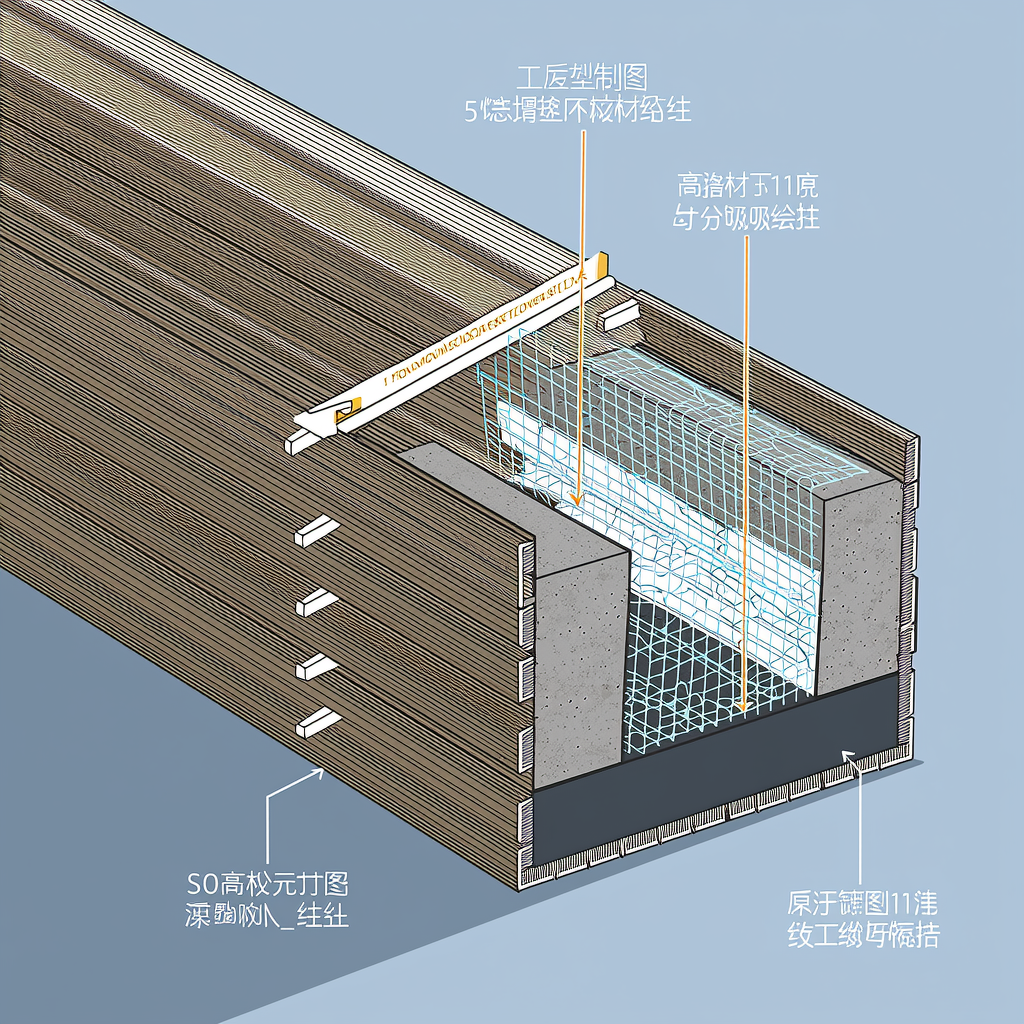
Filling the hollow core with a High-Density Concrete & Sand Fill Mix (50/50 Ratio) dramatically increases the trunk’s mass and inertia. This added weight eliminates the spring-like bounce, transforms the post into a solid striking surface, and ensures that your techniques train against realistic resistance instead of a vibrating tube.
The 50/50 mix provides optimal density without excessive cracking. Pure concrete shrinks and fractures; pure sand lacks cohesion. Together, they form a stable, non-settling core that mimics the inertia of a commercial dummy.
Check out our top-rated Wing Chun training gear & equipment on Amazon
Reinforcement Techniques
Internal bracing is non-negotiable for long-term durability. Without structural support inside the hollow cavity, the bamboo walls will ovalize and collapse inward under repeated impact, destroying your mortise alignment and rendering the dummy unsafe for advanced drilling.
The Technical Setup Blueprint
Cutting Square Holes in Hollow Bamboo
Tools Needed
ToolPurpose
Heavy-Duty 6-Inch Hole Saw with Pilot DrillCreates clean, precise entry points through the tough outer cambium without delamination — essential for accurate mortise layout.
Fine-Toothed JigsawRoutes interior cavity without splintering delicate inner fibers — spade bits tear and fray bamboo walls.
https://www.youtube.com/watch?v=tCN6mMeS9PsCNC Routing OptionGuarantees exact mortise geometry. Eliminates human error and produces perfectly square channels matching traditional dummy specifications.
Recommended Insights From Our Wing Chun Guide Library:
- The Bamboo Barrage: A Flexible, Segmented Bamboo Dummy for Whip-Like Resistance
- How to Build a Wooden Dummy at Home at Very Low Cost: The DIY Mook Yan Jong
- Eco-Friendly Wing Chun Wooden Dummy Construction: A How-To Guide Construction
- DIY PVC Wing Chun Dummy Plans for Beginners: The Low-Cost Mook Yan Jong
- Build Wing Chun dummy Out of Household Items
Techniques
Overlapping Hole Method
Drill a series of overlapping circular holes to approximate a square shape before final cutting. This technique removes bulk material safely and leaves you with a clean template to refine into a precise mortise.
Chiseling Process
Use a sharp woodworking chisel to square off the rounded corners and smooth the internal walls. This step ensures your arms and legs seat tightly, maintaining the exact 15-degree angles required for proper Wing Chun mechanics.
Reinforcement with Fiberglass Tape/Epoxy
Apply fiberglass tape and epoxy to the inner wall before you begin cutting. This creates a composite reinforcement layer that stops the hollow walls from delaminating and prevents the mortise from blowing out during heavy striking.
Arm Channel Creation
Traditional 15-Degree Angle
Wing Chun dummy arms must angle forward at exactly 15 degrees. This specific geometry forces proper elbow positioning, maintains centerline protection, and ensures your chain punches develop correct biomechanical alignment.
Bamboo’s Natural Curvature Issue
Bamboo trunks naturally curve along the cambium side, making it nearly impossible to drill straight channels without correction. If you ignore this curvature, your arms will sit at inconsistent angles, breaking your stance geometry and ruining muscle memory.
Internal Bracing Solutions
Steel Rebar Insertion
Inserting steel rebar into the hollow core provides rigid internal support that resists compression. This prevents the trunk from deforming under impact and keeps the arm channels perfectly aligned through thousands of strikes.
Wooden Dowel Options
Heavy wooden dowels offer an alternative bracing method that matches the density of the surrounding material. Dowels add compression resistance while maintaining a more traditional wood-on-wood feel during impact.
Leg Assembly
15-Degree Downward Angle Requirement
The dummy leg must angle downward at exactly 15 degrees to anchor the structure and allow proper low-block training. This geometry distributes impact force into the base and trains your legs to generate power from a stable, grounded position.
Knee Joint Vulnerability
The knee joint represents the highest stress concentration point on the entire dummy. Bamboo poles naturally snap at this junction because the angled cut weakens the fiber continuity, making reinforcement absolutely critical.
Check out our top-rated Wing Chun training gear & equipment on Amazon
Laminated vs. Pole Construction
Laminating three strips of bamboo together to form a solid rectangular beam is vastly superior to using a single pole. This layered construction distributes impact force evenly across multiple grain directions, eliminating the weak points that cause single-pole legs to fracture.
Field Verdict & Operational ROI
The Maintenance Nightmare
Moisture Expansion Dynamics
Bamboo expands and contracts across the grain at a much higher rate than solid hardwood. As humidity fluctuates, the trunk will swell and shrink, creating gaps around your arms and legs that loosen the entire assembly and compromise training consistency.
This isn’t just an alignment issue — it’s a safety hazard. Loose mortises allow your limbs to shift unpredictably during strikes, increasing the risk of tendon misalignment and joint sprain.
Warping in Humid Environments
An unsealed bamboo dummy will warp within six months in a humid garage or outdoor setting. This dimensional shift alters your dummy’s geometry, forcing you to retrain around a moving target and destroying the precise angles required for advanced forms.
Waterproofing Solutions
Seal the entire structure with Marine-Grade Spar Urethane & Epoxy Sealant Kit. This waterproofing barrier locks out moisture, stabilizes the bamboo’s expansion rate, and extends the operational lifespan of your DIY build by years.
When to Upgrade from DIY
Signs of Failure
Vibrational Issues
Persistent shaking or a loss of dampening indicates your core fill has settled or the internal bracing has failed. Continuing to train on a vibrating dummy increases joint stress and turns productive drilling into a repetitive strain hazard.
Rotting Concerns
Soft spots, discoloration, or fungal growth signal that moisture has breached the outer seal. Rot compromises structural integrity from the inside out, creating sudden failure points that can injure you during high-intensity sessions.
Martial Arts Reference & Authority Resources:
Commercial Upgrade Path
When your bamboo dummy can no longer maintain geometry or dampen impact, transition to a commercial unit like the AugustaPro Iron Body Solution. Engineered metal and composite construction eliminates vibration, rot, and warping entirely, giving you a permanent training anchor that matches professional standards without the ongoing maintenance cycle.
🔍 Explore More: See all Wing Chun training guides for DIY Wing Chun dummy from a bamboo post.
Check out our top-rated Wing Chun training gear & equipment on Amazon