The Biomechanics of Wu Sau on a Static Object
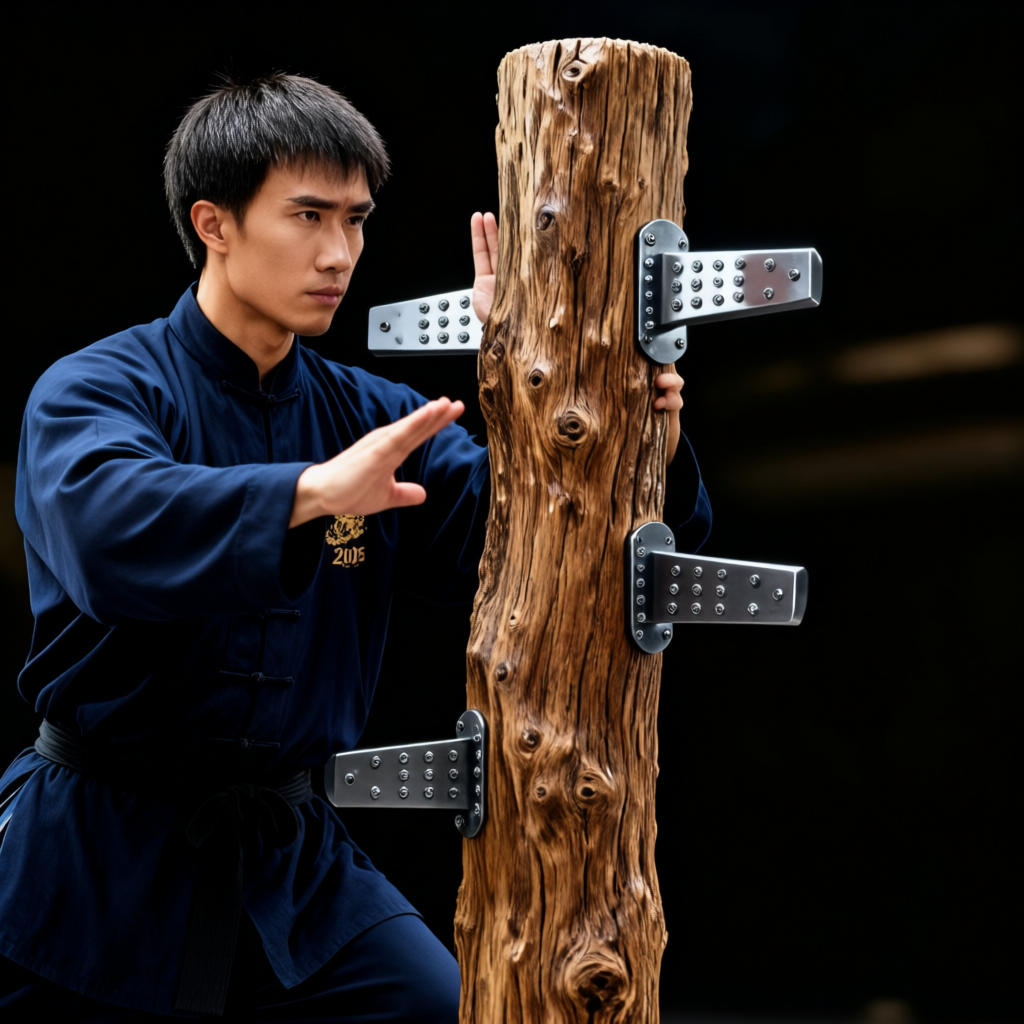
The core challenge of dummy training lies in the difference between live resistance and static mass. A traditional dummy trunk typically measures around a 9-inch diameter and weighs between 130 and 200 pounds. This massive, stationary weight means there is zero natural give. When you throw a Wu Sau, you are not stopping a moving limb; you are redirecting force against an immovable object. If you meet the wood head-on, your momentum halts instantly, transferring shock directly into your radial and ulnar bones and causing immediate joint lock-up.
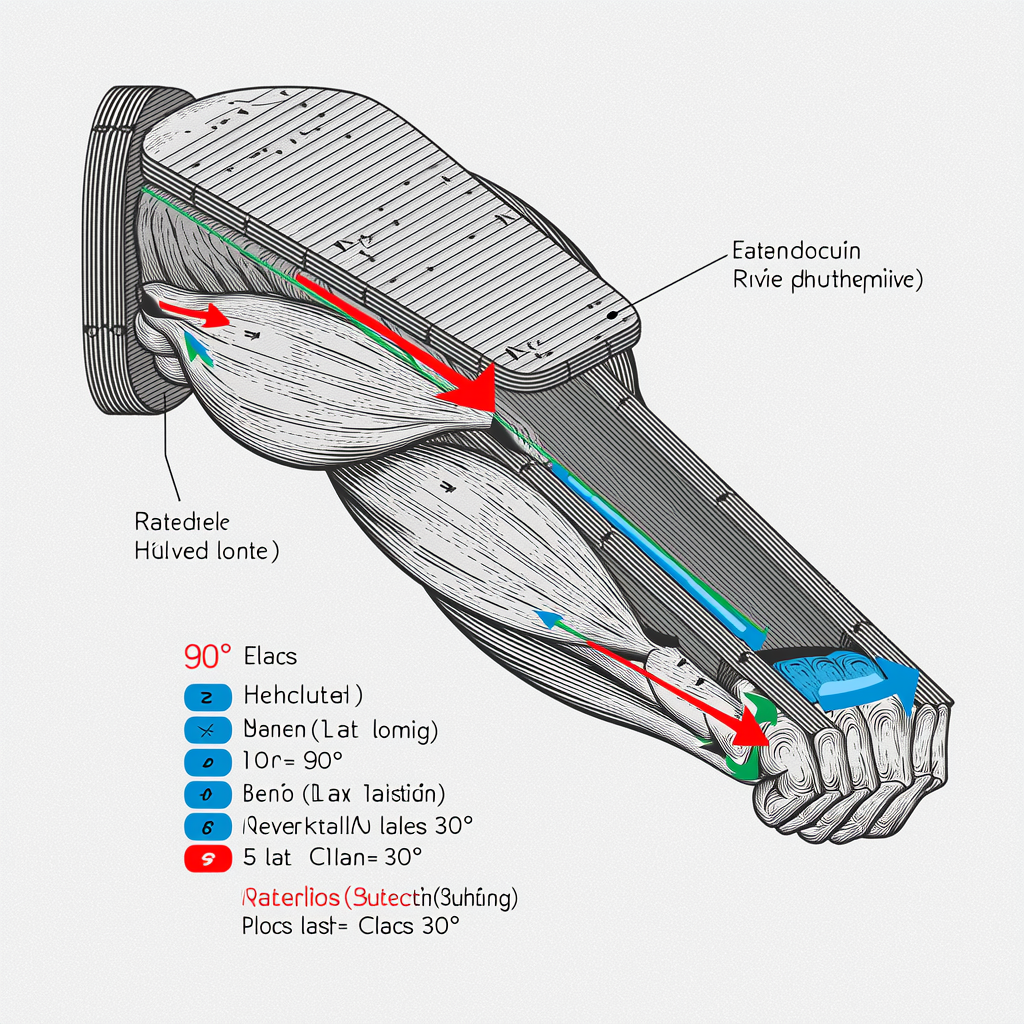
To solve this, you must simulate live energy through structural manipulation. The Wu Sau relies on a tight circular deflection that maintains your centerline while pushing an incoming attack outward. On a dummy, visualize the upper left arm as the attacker. Your forearm should make contact slightly off-center, using a gliding motion to push the dummy’s arm approximately 30 degrees away from your midline before snapping back to guard. This creates artificial resistance. The kinetic feedback loop is critical here. Striking at a 90-degree angle creates a sharp acoustic resonance that vibrates through your joints. Angling your block at roughly 45 degrees upward and outward allows the energy to dissipate through the dummy’s flexible slats rather than bouncing back into your wrist. You will know you are applying the correct vector when the impact produces a dull, absorbed thud instead of a sharp clack.
Preparing the Dummy for Blocking Drills
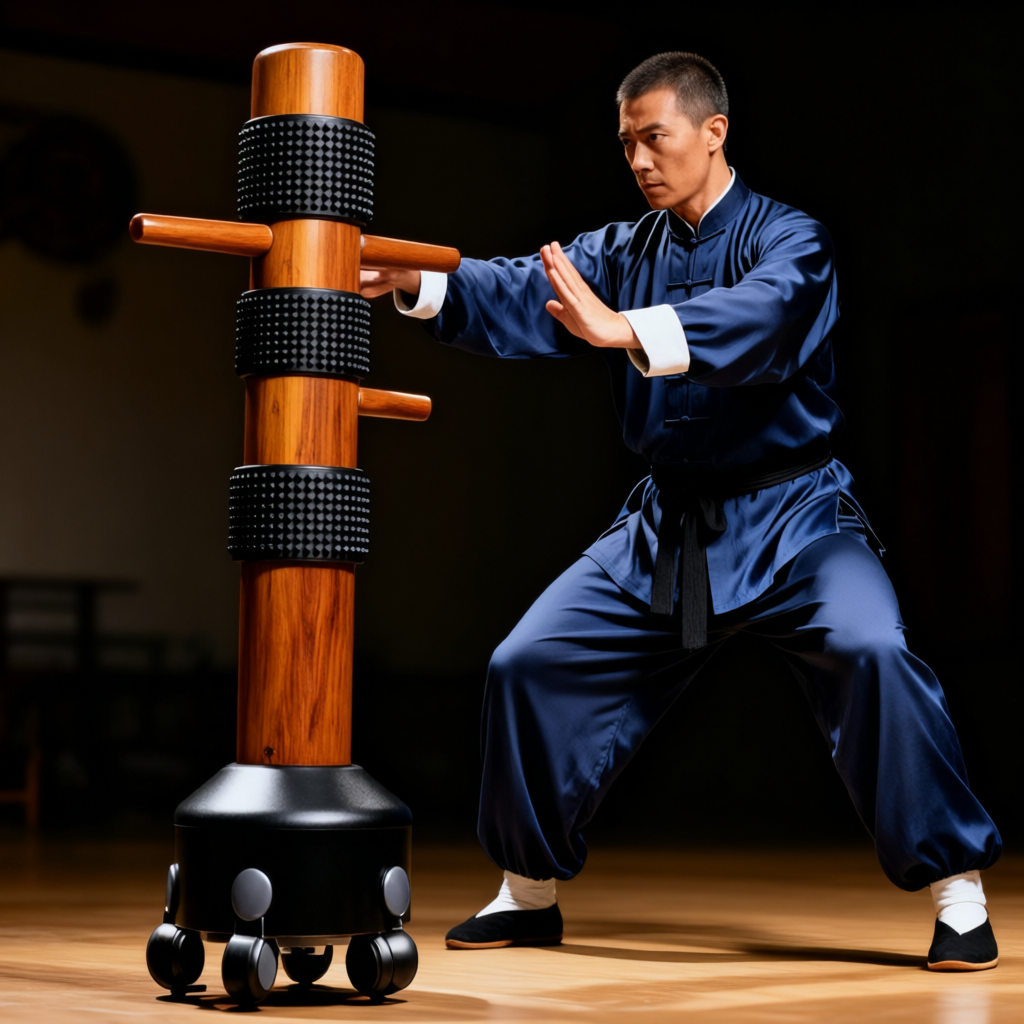
Your equipment must provide consistent feedback. Inconsistent movement breeds bad habits. Before drilling, inspect the mortise geometry. Quality dummies feature offset upper arm planes and a 15-degree downward leg angle to mimic human skeletal alignment. If your dummy is constructed from softwood like pine or fir, the shear strength of the wood may degrade over time, causing the mortise holes to widen. This leads to wobbling arms that shift unpredictably during deflection drills, forcing your nervous system to compensate rather than refine technique.
Check the arm alignment by applying light pressure to each slat. They should offer firm, uniform resistance. If an arm feels loose, it compromises the structural integrity needed for precise Wu Sau practice. Tighten any loose joints using a heavy-duty mortise repair kit or high-grade wood glue designed for hardwoods. For those fabricating or maintaining their own equipment, understanding the role of tools like 18-inch spade bits and track saws is essential. These tools create clean, precise boreholes that maintain the exact tolerances required for consistent arm flex. Brands like AugustaPro utilize these precise tolerances to ensure the dummy acts as a rigid but responsive partner, giving you the exact tactile feedback needed to calibrate your elbow position and forearm alignment.
Step-by-Step Wu Sau Drills
Check out our top-rated Wing Chun training gear & equipment on Amazon
Mastering the Wu Sau on a dummy requires isolating specific movement patterns. Focus on these three foundational drills to build muscle memory and structural efficiency.
Drill A: The Deflection Push
Stand in your standard stance with the dummy’s upper left arm positioned at chest height. Extend your left forearm in a Wu Sau configuration, keeping the elbow tucked and the wrist straight. Push the dummy’s arm outward using hip rotation and core engagement, not isolated arm strength. Drive the arm until it swings roughly 30 degrees off-center, then immediately snap your forearm back to the centerline. Repeat this rhythmically. This drill trains the kinetic chain to generate deflection force from the ground up, preventing wrist strain and reinforcing proper elbow mechanics.
Drill B: The Circular Redirect
Simulate an incoming strike to the face. As you step forward, execute the Wu Sau to deflect the imaginary punch down and across your body. Use the dummy’s right arm as a visual guide for the deflection trajectory. Your hand must travel in a tight, controlled circle, ending with the palm facing inward or upward depending on your lineage’s standard. Focus on maintaining a relaxed shoulder while the forearm does the work. This drill bridges the gap between static blocking and dynamic redirection, teaching you to guide force rather than oppose it.
Drill C: The Transition Flow
Recommended Insights From Our Wing Chun Guide Library:
- Wing Chun Dummy Drills for Small Spaces: Mastering the Mook Yan Jong at Home
- Top 10 Moves of Wing Chun
- Unlocking Kinetic Flow: The Art of Training with the Wooden Dummy
- Mastering Wing Chun: The Benefits of Sparring Dummy Practice
- Mastering Sticky Hands: How the Wing Chun Dummy Elevates Your Chi Sao Training
Integrate the Wu Sau directly into the Bong Sau to Tan Sau sequence. Strike the dummy’s upper arm with a Bong Sau, then immediately transition into a Wu Sau to neutralize the recoil. Use the Wu Sau to clear the line and set up a Tan Sau counter. This flow mimics real-world trapping and counter-attacking scenarios. The Wu Sau acts as the structural bridge, allowing you to maintain centerline control while shifting between defensive and offensive postures. Practice this sequence slowly, prioritizing smooth transitions over speed.
Troubleshooting Common Errors
Even experienced practitioners encounter friction points when drilling alone. If the dummy’s arm bounces back too hard after your deflection, you are likely striking at too steep an angle or using excessive muscular tension. Adjust to a shallower 45-degree deflection path and relax your grip. If your wrist twists during the circular redirect, check your elbow position. The elbow must remain slightly lower than the wrist to maintain structural alignment and prevent joint lock-up.
Excessive dummy shaking usually indicates improper stance geometry or a loose base. Ensure your feet are grounded and your weight is distributed evenly to absorb the kinetic feedback. For practitioners training in apartments or small spaces, wide deflections can cause accidental wall strikes. If clearance is limited, consider using a compact wall-mount dummy or reducing the range of motion until your control improves. Modern training aids like slow-motion video analysis apps can also help you verify your arc and elbow alignment in real time.
Safety and Recovery Protocols
The repetitive gliding motion of Wu Sau drills places significant stress on the forearm tendons and radius bone. Without proper preparation, you risk chronic tendonitis or acute bruising. Always wear leather forearm striking pads during intensive blocking sessions. These pads distribute impact force and protect the skin from abrasion against the wood. After training, apply an aged Dit Da Jow liniment, such as the Shen Formula, to promote circulation and reduce inflammation. The herbal compounds penetrate deep into the connective tissue, accelerating recovery from high-frequency vibration and micro-trauma.
Listen closely to your joints. Sharp pain or persistent swelling signals that your technique or equipment needs adjustment. Do not push through structural discomfort. Proper Wu Sau practice should feel challenging but sustainable, with energy flowing through your structure rather than pooling in your joints.
Check out our top-rated Wing Chun training gear & equipment on Amazon
Optimizing Your Solo Training Setup
Practicing the Wu Sau on a dummy is a precision discipline that demands the right tools and consistent feedback. If you are struggling with wrist pain, loose equipment, or unclear elbow mechanics, targeted accessories can bridge the gap between frustration and mastery.
Solid Bamboo Training Rings provide immediate visual feedback for elbow isolation and alignment.
Leather Forearm Striking Pads protect your forearms during high-repetition deflection drills.
Martial Arts Reference & Authority Resources:
Aged Dit Da Jow Liniment remains an essential investment for tendon health and joint longevity.
Pair these tools with deliberate, structured drilling, and your Wu Sau will develop the fluid redirection and structural integrity needed for both solo practice and live application.
🔍 Explore More: See all Wing Chun training guides for How to practice the Wu Sau on the dummy.
Check out our top-rated Wing Chun training gear & equipment on Amazon