The Physics of Feedback
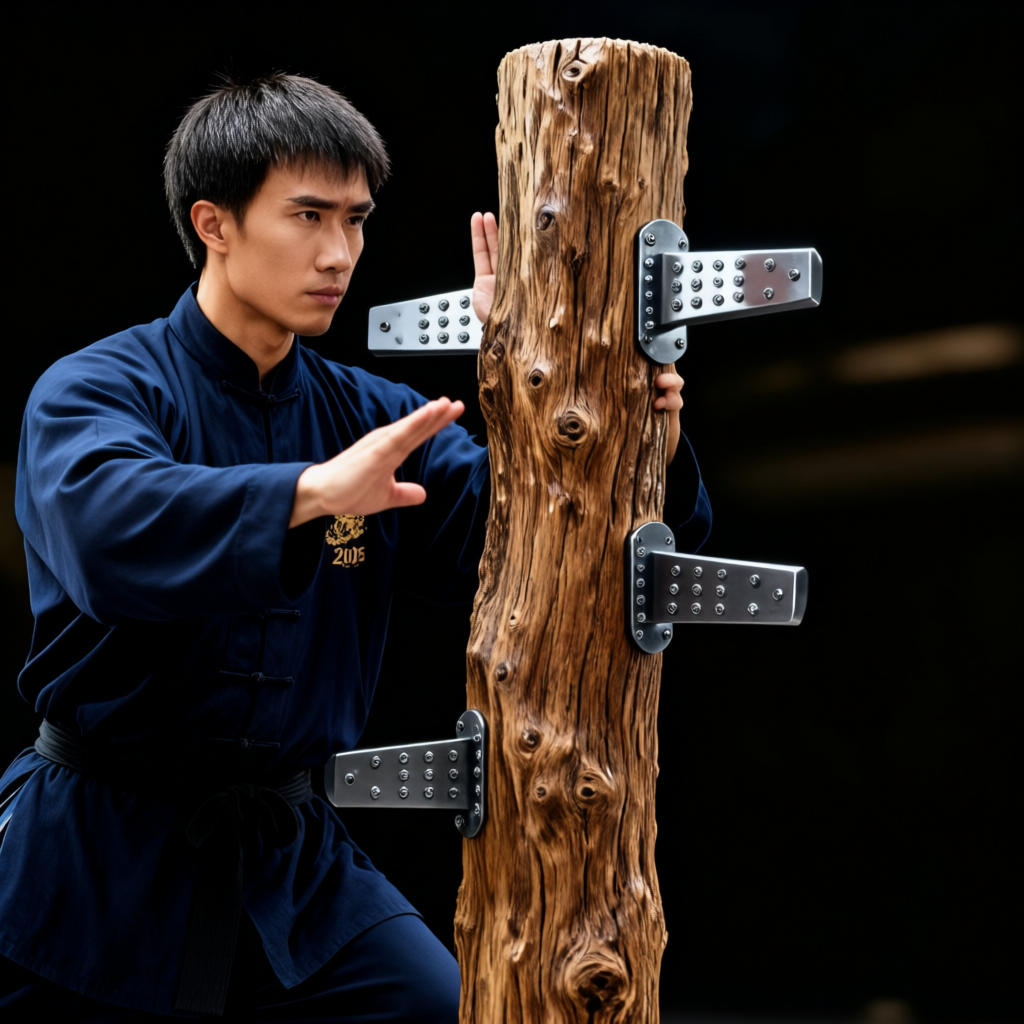
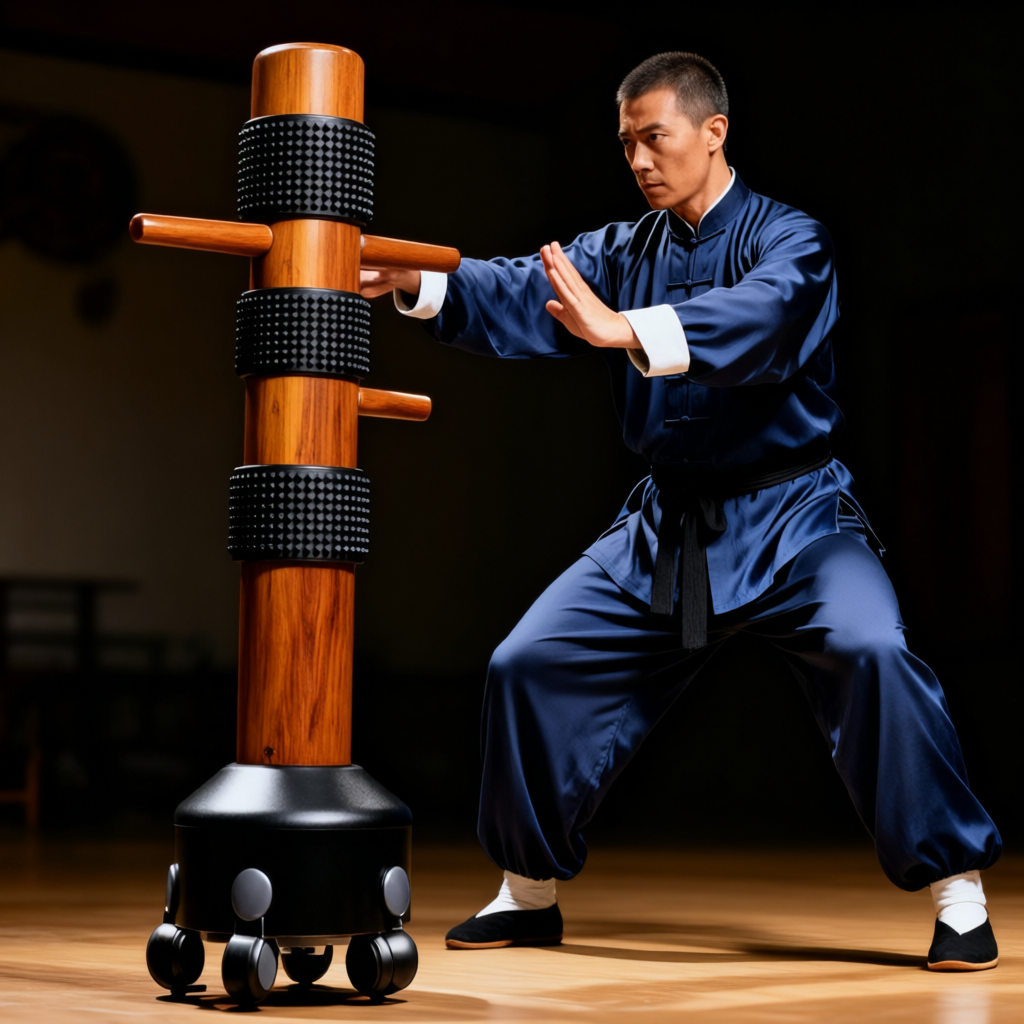
Material density dictates drill efficacy. A standard practice dummy features a ~9\” trunk diameter and weighs between 130–200 lbs. This mass creates the necessary inertia to resist your strikes. If you train on hollow PVC or lightweight softwood, the material flexes and vibrates. That springy rebound masks poor structure and encourages you to pull back or stiffen your joints incorrectly. A solid hardwood trunk absorbs the shock directly into the base. This forces your stance to stabilize and your skeleton to bear the load.
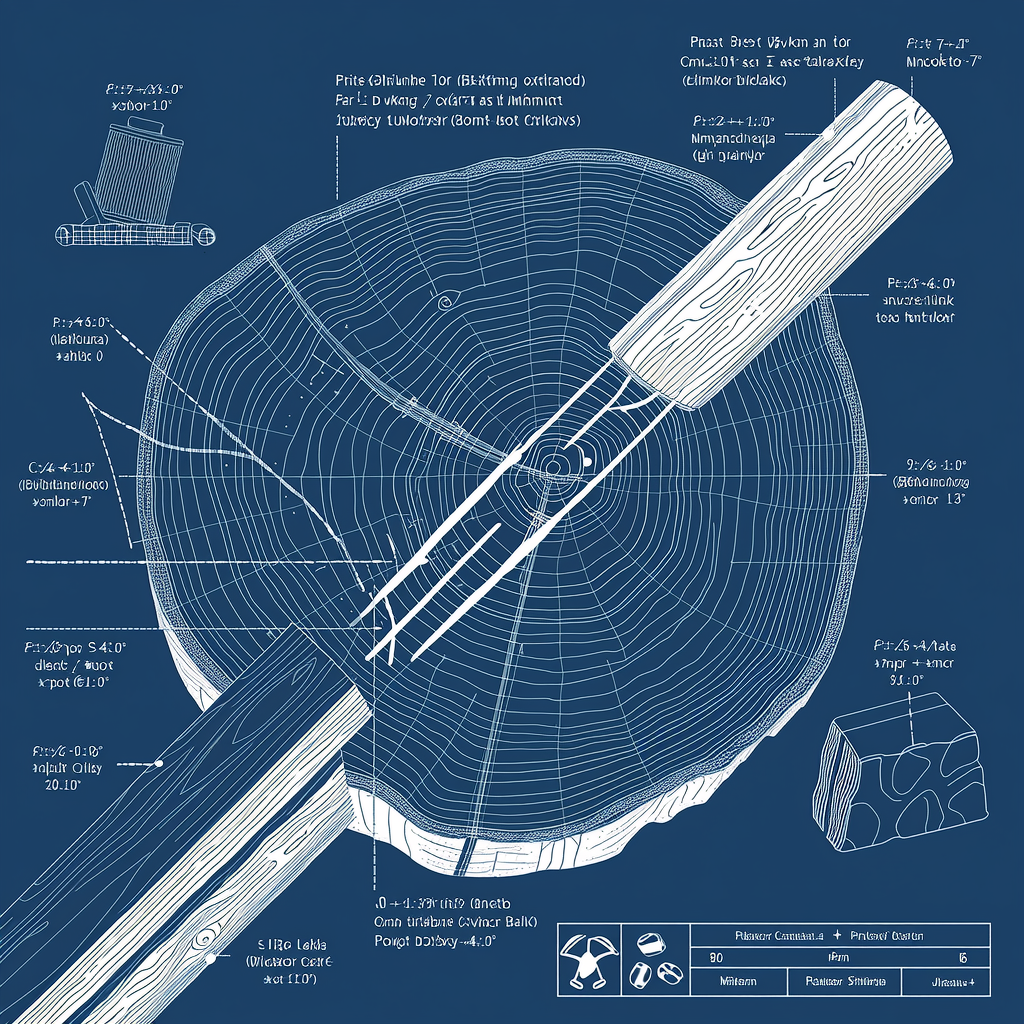
Hardwood species like Teak, Oak, and dense Pine offer varying PSI shear strength ratings that directly impact feedback quality. Teak and Oak provide high shear resistance, meaning they do not compress under impact. When you strike these woods, the energy returns through your arm as a clean, immediate signal. Softwoods compress slightly, dampening the feedback loop. You end up guessing whether your structure held, rather than feeling it lock into place.
Drill 1: The Hip-Drive Check
This drill isolates hip rotation to correct the kinetic chain. Practitioners often rotate their shoulders independently of their hips. This disconnect weakens the strike and places unnecessary stress on the shoulder girdle. You will perform single-arm repetitive strikes, focusing on Bong Sau and Pak Sau mechanics, while driving the entire body mass through the dummy arm.
The correction mechanism relies on immediate bio-feedback. If your structure fails, your elbow will drop or your wrist will buckle. The dummy’s resistance will physically stop the motion or cause a painful rebound. This teaches you to generate Live Energy, or Sheng Ging. The dummy must act as an extension of your skeleton, not an external object. You will feel the difference between muscle tension and structural drive when your hips initiate the movement and your arm simply channels that force.
Drill 2: The Offset Channel Navigation
Traditional MYY fabrication uses specific mortise geometry to create offset upper arm planes. The left arm channel sits higher than the right. Many practitioners try to strike both arms symmetrically. This approach is biomechanically inefficient and ignores the realistic angles of attack the dummy is designed to simulate.
You must navigate these asymmetric channels to train proper centerline integrity under load. When striking the higher left arm, your torso naturally adjusts to maintain alignment. When striking the lower right arm, your lead foot and sternum must stay locked to the central axis. The 15° downward leg angle built into the dummy’s base matches the natural width of a Wing Chun stance. Drilling across these offsets trains your body to absorb lateral displacement forces without leaning away for leverage.
Drill 3: The Immovable Elbow Circuit
Wing Chun relies heavily on the elbow remaining tucked and rigid during trapping. This drill enforces the Lap Sau position using the dummy’s upper arms or solid training rings. You will maintain light contact while rotating your hips to generate power. The strict no-drop rule applies: your elbow must never fall below the centerline.
Solid Bamboo or Rattan Training Rings, typically ranging from 8\” to 12\” in diameter, are excellent tools for this circuit. They force your elbows high and tight against your ribs. When you rotate your hips against the ring or dummy arm, you train the adductor muscles and skeletal locking mechanism to resist lateral forces. If your elbow drops, the ring slips or the dummy arm catches your forearm. This physical feedback instantly corrects your posture.
Equipment Requirements for Structural Drills
Executing these drills safely requires equipment that matches your training goals. The AugustaPro Iron Body Wooden Dummy serves as the primary benchmark. It sits at a ~$698 price point, stands 67\” in height, and features a ~133 lbs solid hardwood build with a yellow wood base. This weight distribution and wood density provide the necessary resistance for serious structural work.
If you cannot drill into walls or need portability, modular mounting systems are essential. Steel frames with sandbag bases allow for stable drilling without damaging floor structures. Half-sized or compact steel wall-mount dummies and modular spring-loaded arm attachments offer space-efficient alternatives. Portable frame systems with heavy counterweight bags replicate the inertia of a floor-standing dummy. Always use leather arm striking pads when transitioning from softwood to hardwood training. They protect your forearms during high-repetition structural drills.
Check out our top-rated Wing Chun training gear & equipment on Amazon
Equipment TypeWeight RangeMaterialFeedback QualityBest For
Recommended Insights From Our Wing Chun Guide Library:
- When to Incorporate the Wooden Dummy into Your Wing Chun Training
- Wing Chun Dummy Drills for Small Spaces: Mastering the Mook Yan Jong at Home
- Mastering Kinetic Chain Stability on the Wooden Dummy
- Wing Chun Dummy Drill for Beginners: Mastering the Fundamentals
- Mastering the Bridge: How the Wing Chun Dummy Elevates Your Entry Techniques
80–110 lbsPine, FirLow — Dampened, delayed feedbackBeginner technique drills
Solid Bamboo / Rattan Training Rings (Jook Wan Heun)2–4 lbs eachHand-finished bamboo/rattanHigh — Tactile elbow positioningElbow retention, trapping drills
Modular Steel Frame w/ Sandbag Base
Check out our top-rated Wing Chun training gear & equipment on Amazon
Variable (up to 200 lbs)Steel frame + sandbagsMedium–High — Adjustable inertiaApartment training, portability
Common Mistakes & Injury Prevention
A paradox exists in structural training. You must strike with intent to build bone density and alignment, but improper structure leads to injury. The solution lies in drill progression. Start with slow, structural checks to verify alignment before increasing velocity. Rushing into high-speed impacts with poor mechanics will cause wrist buckling and elbow strain.
Acoustic and vibration management also reveals structural flaws. In apartment settings, poor structure transfers vibration through the floor and walls. If your drilling creates excessive noise, your body is not absorbing the energy. The force is bouncing off the dummy and into the building structure. Correct structure dampens this transfer.
Finally, structural drilling causes micro-trauma to tendons and joints. Traditional Dit Da Jow (Fall & Hit) Liniment (Shen Formula), aged 3+ years, is crucial for recovery. It promotes circulation and allows for consistent daily practice.
When building or maintaining your training station, precision matters. Fabrication requires 18-inch spade bits and track saws to achieve clean mortise cuts and exact arm alignment. Rough channels or misaligned arms will distort your drill mechanics. A properly constructed dummy provides consistent resistance, ensuring your feedback loop remains accurate.
Martial Arts Reference & Authority Resources:
Conclusion
Consistent drilling transforms the wooden dummy from a static object into a mirror of your internal structure. By respecting material density, navigating offset geometry, and enforcing the immovable elbow rule, you replace muscle tension with skeletal integrity. The dummy does not care about your effort. It only responds to correct alignment. Train with precision, respect the feedback, and your structure will solidify.
🔍 Explore More: See all Wing Chun training guides for Wing Chun dummy drills for improving structure.
Check out our top-rated Wing Chun training gear & equipment on Amazon