Solid Bamboo/Rattan Rings (Jook Wan Heun)
Aged Dit Da Jow Liniment
AugustaPro Mook Yan Jong Training Dummy
Most practitioners approach the Mook Yan Jong like a heavy bag. They throw hard, chase power, and wonder why their strikes lack snap. The friction point is rarely the equipment. It is almost always the body mechanics. Hitting the wood statically creates a dead stop. Energy rebounds directly into the wrist. Joint stress builds. Progress stalls.
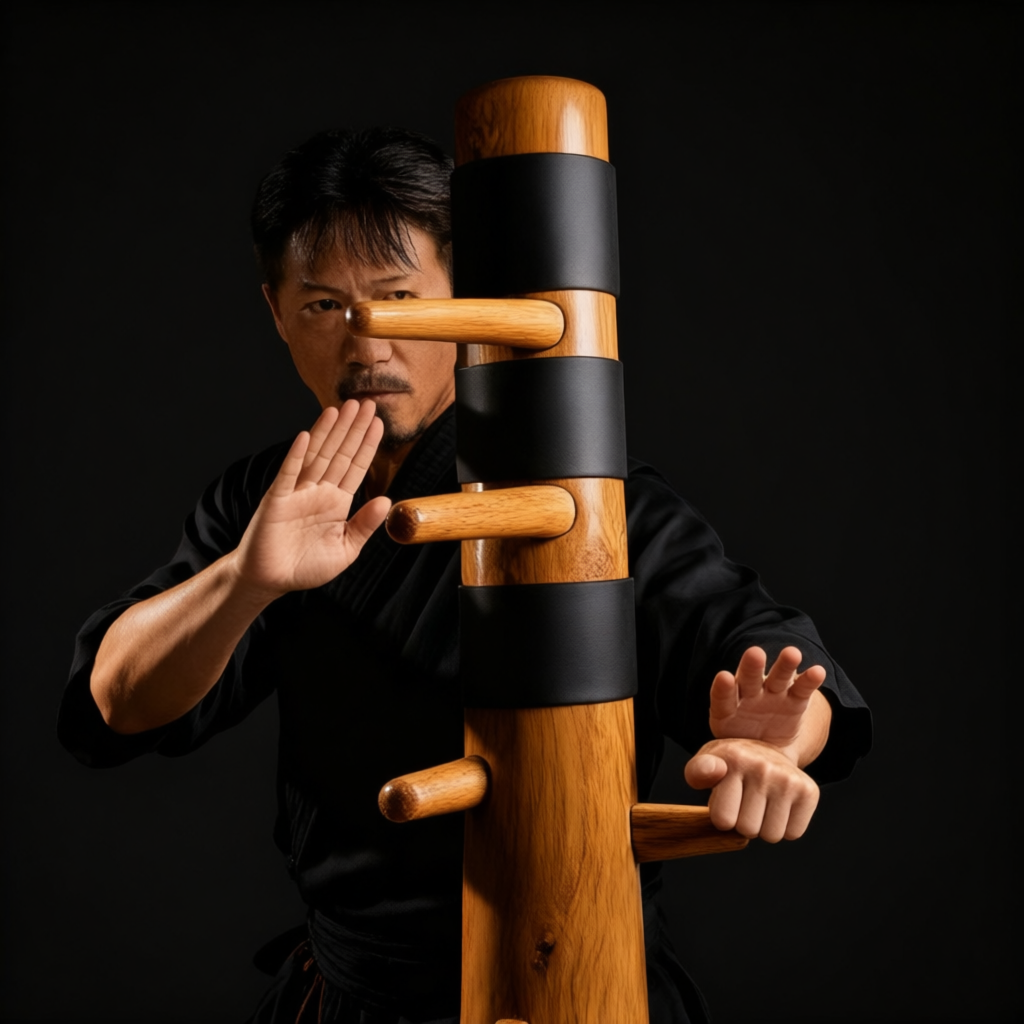
Leverage in Wing Chun is not about arm length or brute force. It is about creating a fulcrum that redirects mass instead of fighting it. The dummy is not a target to be smashed. It is an extension of the centerline that measures your kinetic chain. When you align your hips, root your stance, and time your impact correctly, the machine rotates around its vertical axis. Your elbow stays soft. Your force flows through the wood. The strike finally connects.
This guide breaks down the biomechanics of leveraged striking, provides four precision drills to fix your hip rotation, and explains how proper fabrication tolerances directly impact your training feedback.
The Myth of Arm Strength and the Physics of the Flex
Static strength fails against structured resistance. Modern martial arts forums increasingly emphasize the kinetic chain over isolated muscle power. When you push the dummy with your shoulder, you disconnect your lower body. The strike dies at the point of contact. True leverage requires the ground, the hips, and the centerline to work as a single unit.
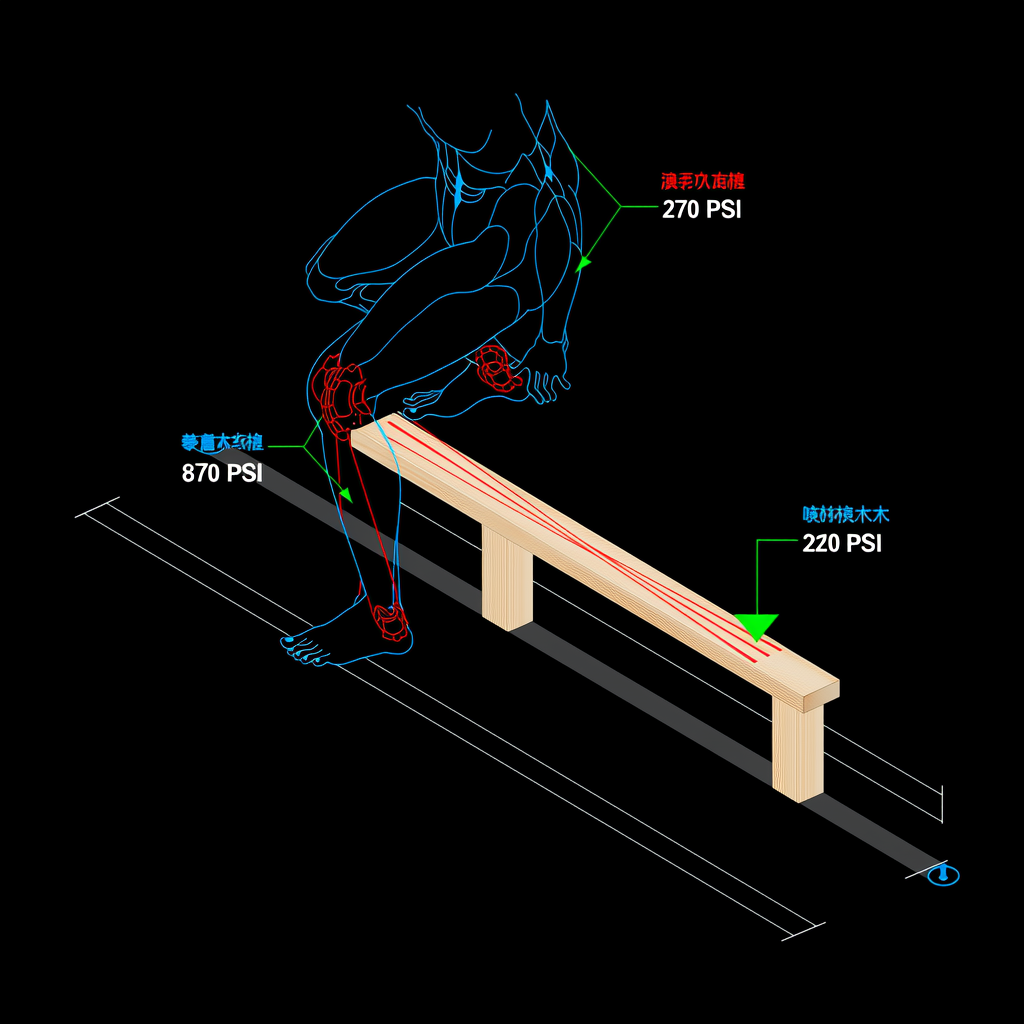
Hardwoods like Teak or Oak provide the necessary shear strength (1800–2200 PSI) for these dynamic drills. This density ensures the dummy absorbs impact without deforming, giving you immediate tactile feedback on your strike alignment. Softwoods or hollow PVC dampen this signal, making it nearly impossible to feel the connection between your hips and the impact point.
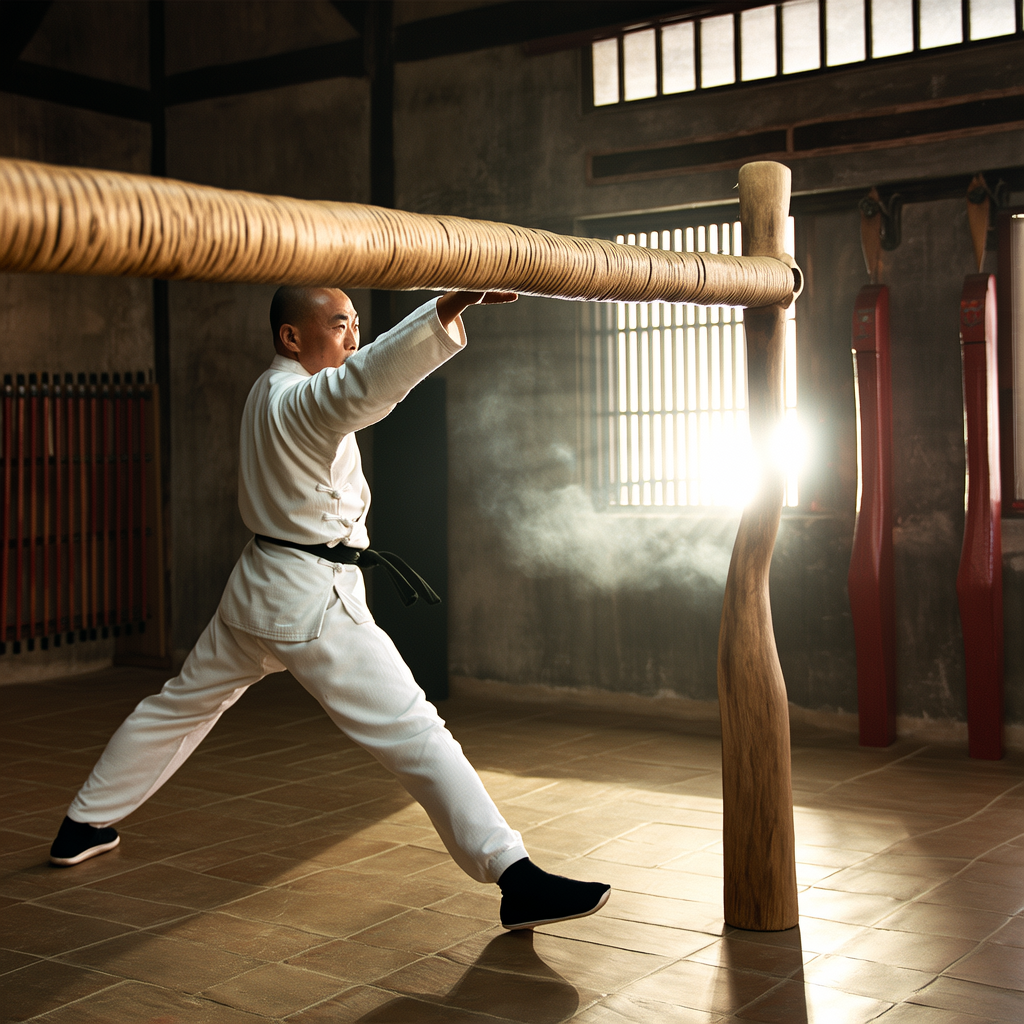
Horizontal slats must allow for flex to store elastic energy. The dummy acts as a spring, returning force to extend your strike range and simulate a living opponent. Rigid mounts kill this live energy. They create high-frequency vibration that shocks the joints, breaking the leverage chain before you can refine your technique.
Step-by-Step: Four Drills to Fix Your Hip Rotation and Stop Pushing the Dummy
The Static Pivot and Hip Rotation
Stand in Siu Lim Tao stance facing the dummy. Hold your arms in a relaxed Bong Sau position. Rotate your entire torso 45 degrees off-centerline. Snap back and strike the left arm with your right hand. Time the impact so your fist lands exactly as your hips pass through the centerline.
By delaying the hand strike until the hips have rotated, you use rotational inertia to accelerate the fist. The dummy’s resistance forces you to maintain this hip engagement. Strike too early with the arm, and the wood absorbs the force statically. The leverage is lost. On a heavy hardwood trunk, you should feel a distinct kick or vibration travel up the forearm only upon correct hip alignment.
The Elastic Recoil (Sheng Ging)
Perform Pak Sau drills where you strike the dummy arm and immediately follow through. Allow the horizontal slats to flex. Do not pull your hand back after impact. Keep your hand on the arm as the dummy recoils. You are riding the wave of energy.
This utilizes the elastic potential energy stored in the slats. Instead of fighting the return motion, you use it to extend your strike range and power. This mimics the feeling of hitting a moving target. The drill highlights the necessity of proper slat flexibility found in quality hardwood builds. PVC or over-tightened mounts will fail here, turning a fluid drill into a joint-shocking mistake.
The Off-Center Deflection
Attack the dummy’s upper left arm. Upon contact, deflect the arm slightly outward, creating a 15–20 degree angle, while stepping in with your lead foot. The dummy’s offset mortise design naturally encourages this angular movement.
Check out our top-rated Wing Chun training gear & equipment on Amazon
Changing the angle of impact changes the vector of the force. Pushing perpendicular to the arm creates maximum resistance. Deflecting along the grain or at an angle reduces resistance and allows you to slip inside the guard. This applies leverage directly to the neck or centerline. The drill exposes the importance of intersecting mortise channels. Parallel cuts cause the arms to bind. You will fight the tool’s geometry instead of mastering yours.
ComponentCorrect ToleranceDefective ToleranceTraining Consequence
Upper Arm Mortise Angle3° higher left than rightParallel or levelBind during deflection, disrupts centerline penetration
https://www.youtube.com/watch?v=tF_bhCjqwfMLower Leg Mortise Angle15° downward cut
Recommended Insights From Our Wing Chun Guide Library:
- The Best Wing Chun Dummy for Women’s Self-Defense Training: Leverage Over Strength
- Integrating Wing Chun Dummy Training with Conditioning Workouts
- Wing Chun Dummy Drill for Beginners: Mastering the Fundamentals
- Mastering Dummy Mechanics for Martial Arts Balance and Precision
- Wing Chun Dummy Drills for Small Spaces: Mastering the Mook Yan Jong at Home
Vertical or upwardKnee misalignment, loss of root during sweeps
Trunk Diameter8.5–9.5 inchesUnder 7 inchesInsufficient inertia, dummy shifts, teaches leaning
Material Density1800–2200 PSI shearSoftwood or PVC
https://www.youtube.com/watch?v=xrYGHcCSVLANo
tactile feedback, false sense of power
The Weight Transfer Bridge
Check out our top-rated Wing Chun training gear & equipment on Amazon
Perform Tan Sau drills while stepping forward aggressively. Drive your heel into the floor. Transfer that weight through your leg, up your spine, and out your palm into the dummy’s centerline.
The dummy serves as the anchor point. If you step forward without driving the weight down, the strike lacks power. This drill forces you to realize the ground is the source of power. The dummy merely provides the resistance needed to measure that transfer. If the dummy shifts significantly upon impact, you are leaning into it. A properly anchored dummy should remain stable, forcing you to generate internal leverage.
The DIY Trap: Why a Wobbly Dummy Destroys Your Leverage Training
Fabrication tolerances dictate training quality. A standard trunk measures ~9 inches in diameter and weighs between 130 and 200 pounds. This mass creates the necessary inertia to resist your strikes without shifting, forcing your body to generate internal leverage. Lightweight or poorly anchored builds will slide. They teach you to lean instead of drive.
Intersecting mortise channels must be cut precisely using an 18-inch spade bit and track saw. Parallel cuts cause the arms to bind under pressure, breaking your kinetic chain. Properly intersecting channels allow the arms to pivot, mimicking a living opponent’s structure. The left arm channel must be slightly higher than the right to simulate human shoulder asymmetry and facilitate the off-center deflection drill.
The lower leg mortise requires a 15-degree downward cut to maintain proper knee height during low sweeps. Incorrect angles disrupt the weight transfer drill. If the leg sits too high or too low, your stance geometry collapses. You lose root. You lose leverage.
If you are working with a DIY build that vibrates excessively, install vibration dampening pads made from neoprene or dense wood between the trunk and the floor. This bridges the gap between a flawed project and a functional training tool. It absorbs high-frequency shock while preserving the structural feedback needed for skill acquisition.
Safety First: Protecting Your Wrists When Drilling for Power
Leverage fails when pain forces you to compensate with poor form. Repeated impact on hardwood generates high-frequency vibration that shocks the joints. Without proper conditioning and protection, this feedback leads to micro-trauma and chronic wrist strain. Users are increasingly aware of joint lock injuries stemming from poor dummy feedback, driving demand for better damping solutions and proper form guides.
Apply Aged Dit Da Jow Liniment to promote circulation and accelerate tissue recovery. This is a non-negotiable safety item for serious drillers. It penetrates deep into the connective tissue, reducing inflammation and preparing the forearms for high-volume impact.
Leather striking pads or gloves provide a necessary barrier during intensive sessions. They absorb initial impact shock while preserving the tactile feedback needed for technique refinement. Transitioning from softwood to hardwood requires this protection. It allows you to drill for power without sacrificing joint integrity.
Final Thoughts: The Dummy as a Teacher
Martial Arts Reference & Authority Resources:
Wing Chun dummy drills for improving leverage are not about breaking wood. They are about building structure. The machine does not care how hard you hit. It only responds to correct alignment, rooted weight transfer, and timed hip rotation. When you stop pushing and start redirecting, the strike changes. The snap appears. The centerline holds.
Treat the dummy as a biomechanical mirror. Drill slowly. Feel the flex. Trust the ground. The leverage will follow.
🔍 Explore More: See all Wing Chun training guides for Wing Chun dummy drills for improving leverage.
Check out our top-rated Wing Chun training gear & equipment on Amazon