The Myth of Constant Tempo: Why Repetitive Striking Kills Timing
The fundamental paradox of Wing Chun training is that the dummy is static, yet it must simulate a moving opponent. Most practitioners train at a constant tempo, ignoring the concepts of yielding and sticking. When striking for better timing, the goal is not impact frequency. The goal is the synchronization of your internal clock with the dummy’s reactive physics.
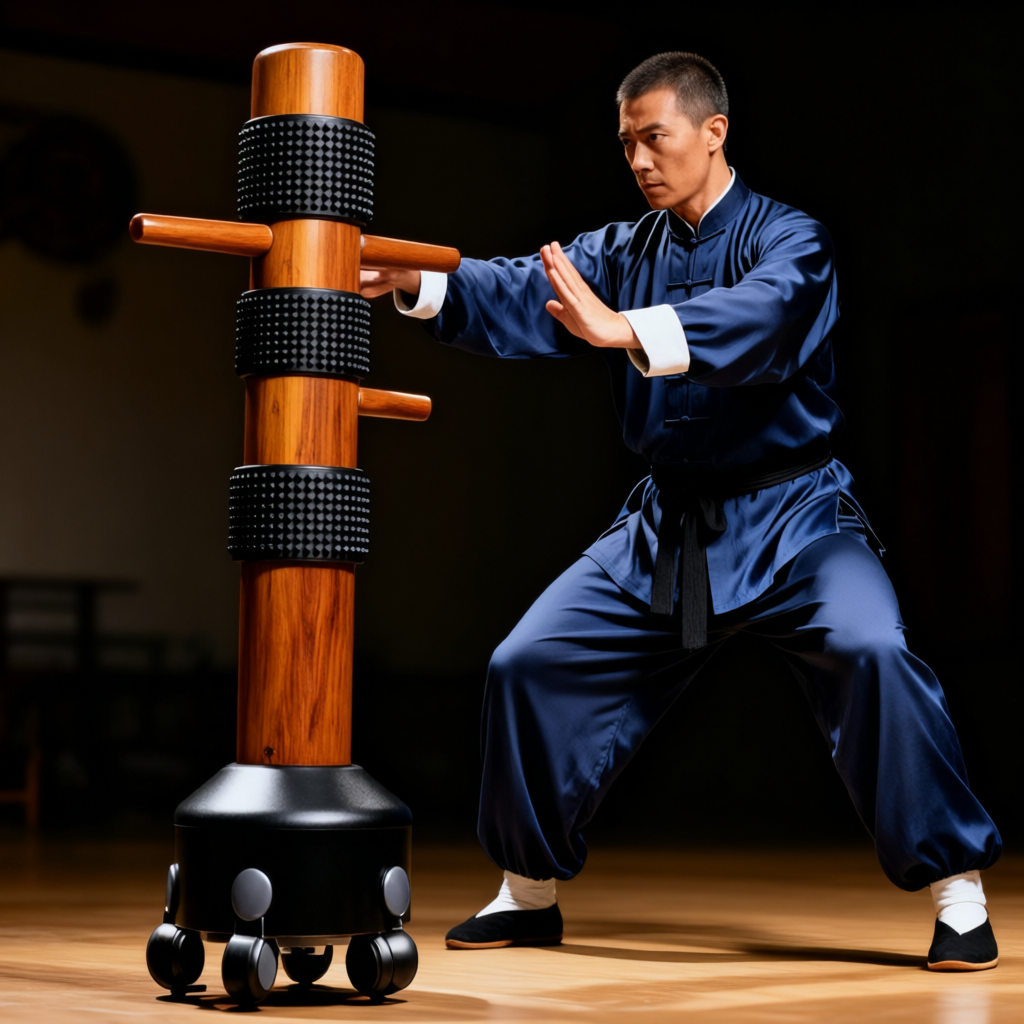
Data Point: A standard dummy weighs 130–200 lbs. This mass must remain stable during strikes. If the base shifts, the practitioner is fighting a moving target, which skews timing data.
Translation: That heavy mass is your anchor. When you strike, the dummy should absorb the blow and return energy slowly enough for you to feel the centerline disruption. If the unit wobbles or slides, your nervous system receives conflicting signals. You will instinctively pull back early to compensate, destroying your follow-through timing.
Data Point: Research in motor learning shows that variable practice yields better retention than constant practice.
Translation: Static repetition builds muscle memory of the wrong tempo. You must vary your distance, angle, and intensity within a single session. Hitting the same spot at the same speed trains you for a static target, not a live exchange.
The Physics of Feedback: How Wood Density and Slat Flexibility Dictate Impact Perception
The condition of your dummy dictates the quality of your timing feedback. Material physics directly controls how your hands and joints perceive contact.
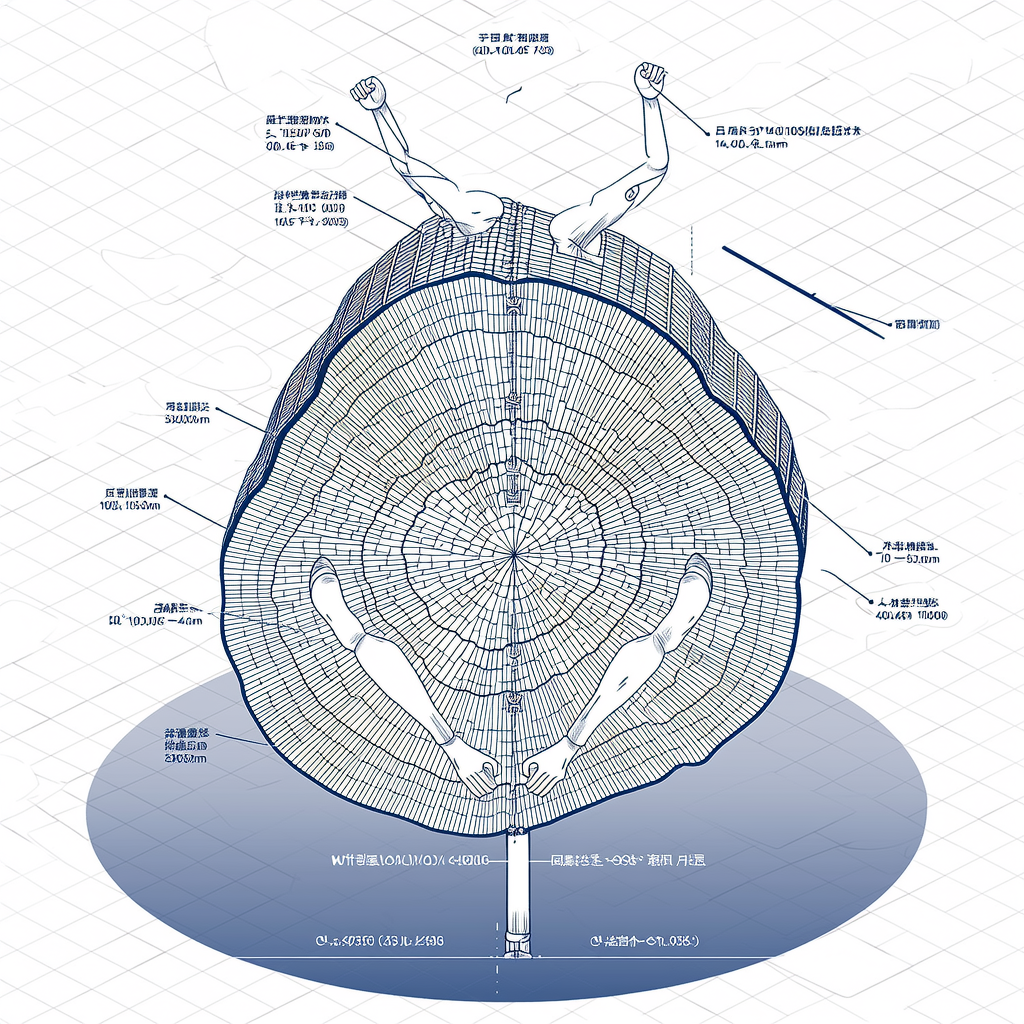
Data Point: A standard dummy features a ~9\” trunk diameter with wood shear strength ratings typically exceeding 1,000 PSI for dense hardwoods like Teak or Oak, while softwoods or hollow PVC lack this structural integrity.
Translation: That thickness and density are non-negotiable for timing work. A thinner trunk or weaker wood will flex unpredictably under repeated impact, absorbing energy you need to feel for rhythm calibration. You need a rigid core that returns predictable force, not a splintering post that collapses under pressure.
Data Point: The horizontal slats on the dummy trunk act as springs. Their flexibility determines the give of the dummy.
Translation: In a well-tuned dummy, a Pak Sau (slap) should cause the trunk to rotate slightly backward, absorbing the blow. If the slats are too tight or the wood is overly dense without flex, the impact feels like hitting concrete. Your body will naturally recoil prematurely to protect your joints, ruining the rhythm you are trying to build.
The Three Pillars of Dummy Timing: Centerline Integrity, Footwork Synchronization, and Recoil Management
Timing cannot exist in isolation from movement. It relies on three interconnected pillars.
Data Point: All timing drills must originate from and return to the centerline. Deviation indicates a timing error in footwork or hip rotation.
Translation: Your hands and feet must move as one unit. When you strike, step into the centerline while maintaining the rhythm of your hand technique. If your upper body moves faster than your lower body, you create a disconnect. Proper timing requires your hips to rotate and drive the strike, not just your shoulders.
Data Point: The leg mortise angle is approximately 15 degrees downward. This ensures the lower leg aligns correctly for kicking drills.
Translation: That specific angle dictates your stance geometry. If you fight against a poorly cut angle, you will subconsciously compensate with your knees or ankles. This alters your overall timing mechanics and drains energy from your strikes.
Data Point: The intersecting square holes in the dummy trunk allow for independent arm movement. If these holes are worn, the arms wobble.
Translation: Worn mortises make timing impossible to calibrate. You need independent, stable arm movement to practice sticky hand simulations. When contact breaks during a drill, timing is lost. The dummy should deflect under your strikes, not shift violently.
Advanced Drill Protocols: Variable Distance, Resistance Simulation, and Acoustic Cues
To move beyond basic repetition, implement specific drill structures that force neurological adaptation.
Check out our top-rated Wing Chun training gear & equipment on Amazon
Data Point: A deep, resonant thud indicates a perfect centerline strike with full body mass behind it. A sharp, high-pitched crack indicates a glancing blow or poor hip rotation.
Translation: Use sound as a real-time feedback loop. Listen to the impact. A clean thud means your timing and structure are aligned. A sharp crack means you are hitting with the wrong angle or pulling your hip back. Adjust until the sound matches the feeling of solid connection.
Drill Protocol 1: The One-Two-Rhythm Drill. Strike the left arm, pause to feel the recoil, then strike the right arm, pause again. The pause is critical for resetting centerline tension.
Drill Protocol 2: The Flow State Drill. Maintain continuous circular motion around the dummy. Strike the head, chest, and waist without breaking the flow. This trains your brain to anticipate the next target based on fixed geometry.
Drill Protocol 3: The Reaction Delay Drill. Intentionally delay the second strike by 0.5 seconds after the first impact. Wait for the dummy to settle. This builds patience and precise timing over frantic flailing.
Emerging Trend: Hybrid training is growing rapidly. Practitioners now integrate Wing Chun dummy work with MMA conditioning. Use the dummy for clinch timing and sprawl defenses. The timing required for a knee strike differs significantly from a punch. Integrating these variations prevents a narrow, one-dimensional timing profile.
Equipment Essentials for Precision: Why Hand Protection and Isolation Mounts Matter
Skill acquisition requires an ecosystem that supports high-frequency training without injury.
Data Point: Poor timing often results in wrist hyperextension because the practitioner hits the target too early or too late relative to the dummy’s position.
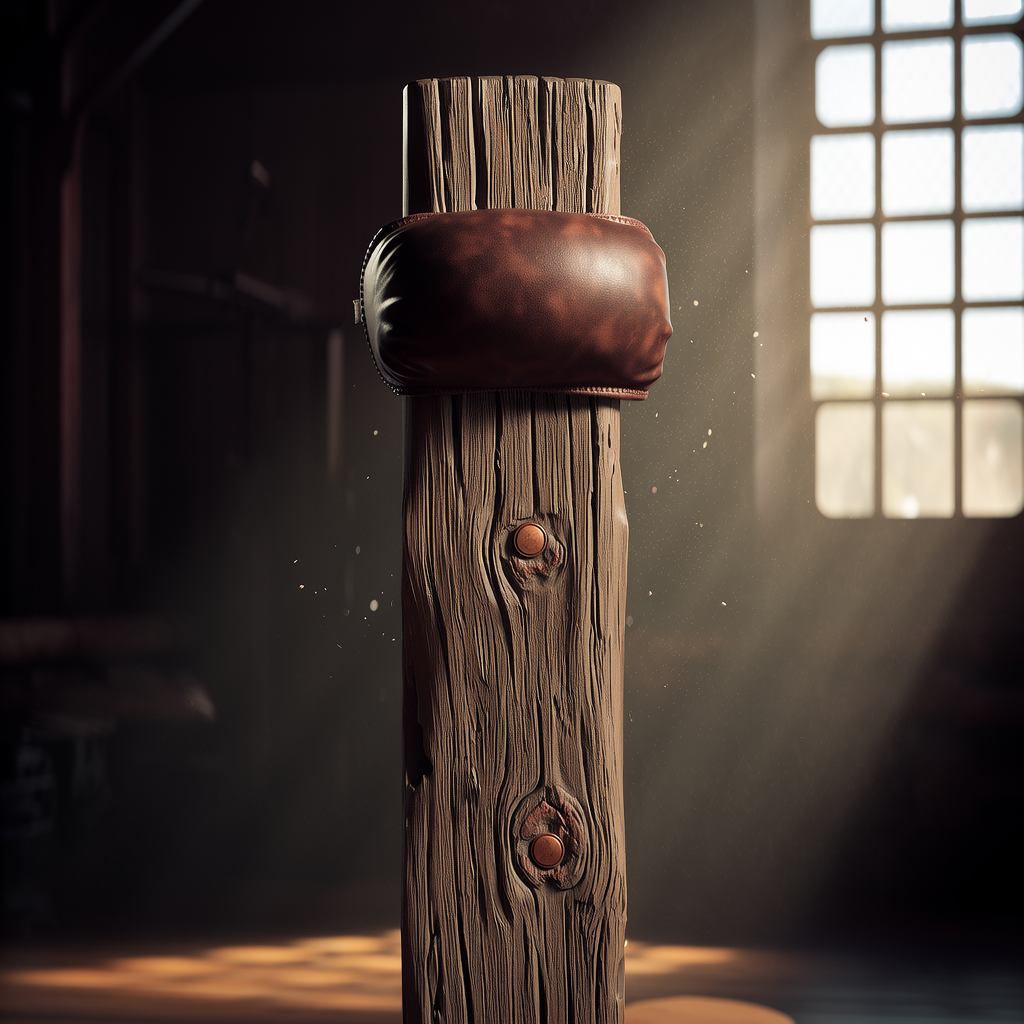
Translation: Without proper hand protection, you will instinctively pull back early to avoid pain. This destroys timing development. Invest in heavy-duty leather striking pads or specialized MMA hand wraps. They allow you to strike with full commitment, letting the dummy’s physics teach you rhythm instead of fear.
Data Point: Hard timing drills cause micro-trauma to the joints and connective tissue.
Translation: Consistency is the only path to timing mastery. Use aged Dit Da Jow liniment to accelerate recovery and reduce joint inflammation. Train every day, recover faster, and refine your rhythm without burning out your wrists or elbows.
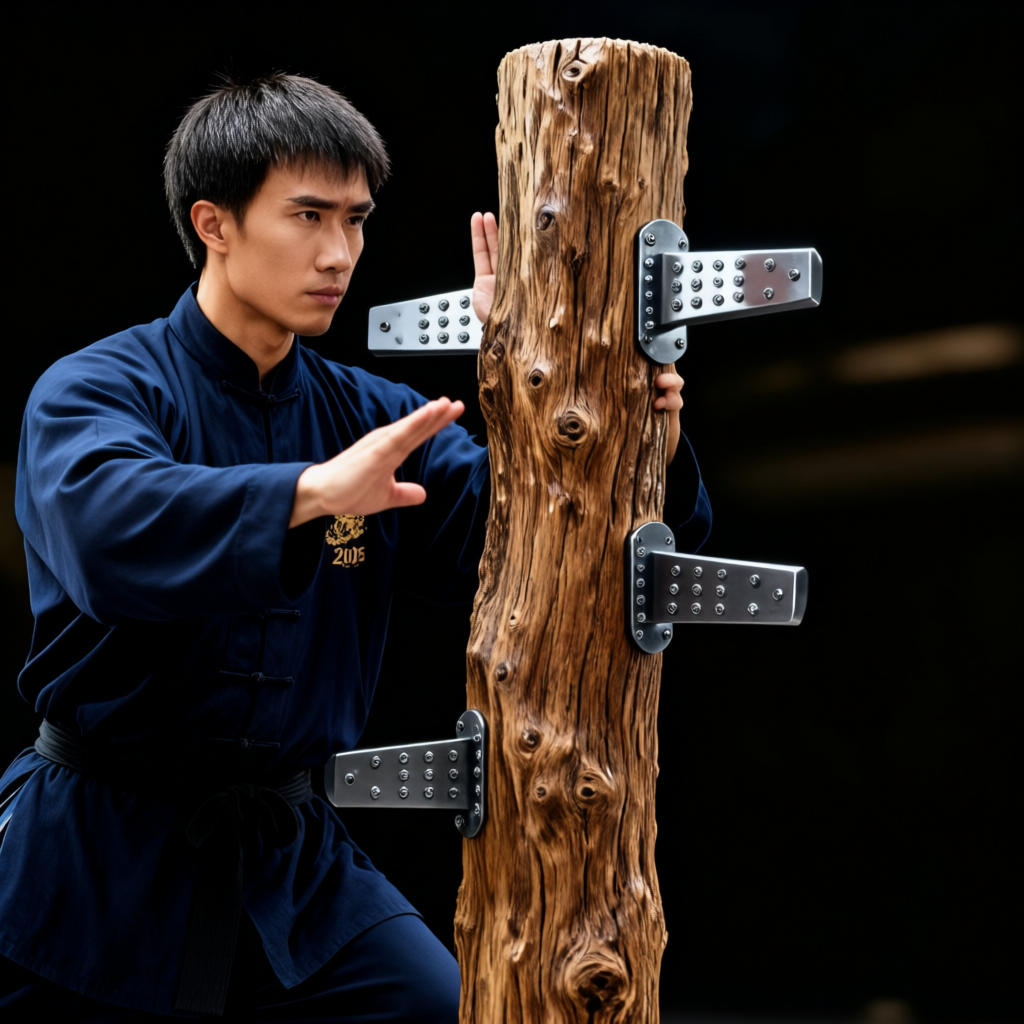
Hardware Note: For timing consistency, wall-mounted units offer steady resistance without the wobble of freestanding bases. However, freestanding units allow full-body rotation drills. If you use a freestanding model, add neoprene isolation pads or heavy wall mount brackets to eliminate base shift. This solves the wobble issue and preserves your kinetic feedback loop.
Common Pitfalls: How Worn Mortises and Improper Slats Distort Timing Perception
Even the best drills fail if the equipment is compromised. Recognize these structural failures before they ruin your progress.
Data Point: Mortise geometry relies on offset upper arm planes and precise square hole intersections, typically cut using track saws and 18-inch spade bits for clean tolerances.
Translation: If your dummy uses softwood or was cut with improper tools, the square holes will enlarge over time. Worn mortises cause arm wobble. You cannot calibrate timing when the target moves unpredictably. Upgrade to a unit constructed with precision woodworking tools for clean, accurate joinery that maintains structural integrity.
Data Point: Jagged edges on old, splintered dummies alter the strike angle.
Recommended Insights From Our Wing Chun Guide Library:
- When to Incorporate the Wooden Dummy into Your Wing Chun Training
- Introduction to Wing Chun Dummy and it’s Training
- Wing Chun Dummy vs. Live Training Partner: Which is Better for Your Practice?
- Mastering Wooden Dummy practice : A Comprehensive Guide
- Wing Chun Dummy Drill for Beginners: Mastering the Fundamentals
Translation: Subconscious form adjustments degrade pure timing skills. Sand down rough edges or replace compromised slats immediately. A smooth surface ensures your hands glide correctly, preserving the sticky hand simulation and accurate centerline alignment.
Future Outlook: Smart training aids are emerging. Sensors that attach to dummies to measure impact velocity and timing accuracy are entering the market. While not mainstream yet, they point toward a future where quantitative data complements traditional tactile feedback.
Final Word: Break the Plateau
Better timing is not found in hitting harder or faster. It is found in listening to the wood, respecting the physics of recoil, and drilling with intentional variation. Stop treating the dummy as a static obstacle. Treat it as a dynamic partner that teaches you when to yield, when to strike, and when to reset.
Equipment TypeCritical SpecificationConsequence of Failure
Dummy Trunk Diameter≥9\” | Hardwood >1,000 PSIUnpredictable flex → distorted recoil feedback
https://www.youtube.com/watch?v=4h2ggqJ0O2YMortise IntegritySquare holes, ±0.5mm tolerance
Check out our top-rated Wing Chun training gear & equipment on Amazon
Arm wobble → broken centerline alignment
Base StabilityFreestanding: ≥40 lb counterweight or wall-mountedBase shift → false timing cues
SlatsControlled flex, no splinteringPremature recoil → joint strain
AugustaPro Wing Chun Dummy Isolation Pads,
Martial Arts Reference & Authority Resources:
Solid Rattan Chi Sao Training Rings,
Aged Dit Da Jow Martial Arts Liniment
🔍 Explore More: See all Wing Chun training guides for Training on the dummy for better timing.
Check out our top-rated Wing Chun training gear & equipment on Amazon