The Static vs. Dynamic Reality Gap
The wooden dummy is a fixed structure. A human opponent is not. When you train on a standard AugustaPro Wing Chun Dummy, you’re not just practicing strikes—you’re learning to adapt your body to a rigid geometry that never moves, never flinches, and never forgives misalignment. Traditional dummies are mounted at a fixed height, typically with upper arms positioned 36–40 inches from the ground. But human shoulders vary between 5’6\” and 6’2\”. If your stance is too far back, your strikes land on the trunk before reaching the intended arm target. If you step in too close, your elbows collapse inside the dummy’s vertical plane, neutralizing your deflections and trapping your own structure.
The Geometry of Distance: The Dead Zone and Kill Zone
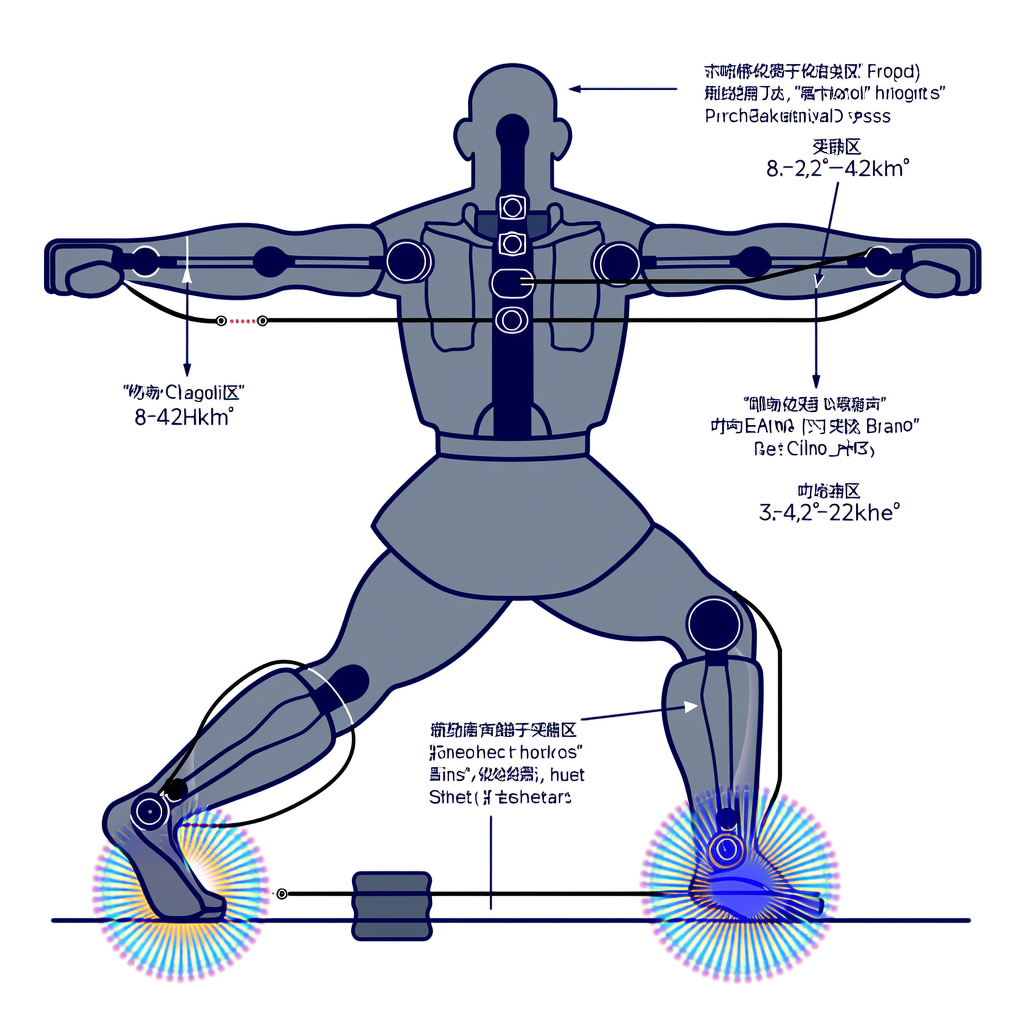
The trunk of a standard dummy measures roughly 9 inches in diameter, with arms extending 18–22 inches laterally from the center. Beginners often strike the neck or shoulder area—not because they’re aiming poorly, but because their distance is misjudged. The key lies in body angulation. To strike effectively, your centerline must align with the dummy’s. Too far, and your bong sau becomes a lever vulnerable to breakage. Too close, and your pak sau lacks the momentum to deflect. The sweet spot is where the wood absorbs impact without your wrist buckling—where hip rotation drives the strike, not arm strength.
Spatial Awareness and Acoustic Feedback
In confined spaces—garages, basements, or small studios—the dummy is often mounted against a wall. Hardwood dummies produce a deep, resonant thud when struck correctly, transmitting low-frequency vibrations through the floor and studs. Softwood or PVC builds emit a hollow, high-pitched clack. This isn’t just noise—it’s real-time feedback. A solid impact sounds grounded; a glancing blow sounds thin. Rubber dampening pads aren’t just for noise reduction—they’re diagnostic tools. If the sound is overly sharp or echoing, you’re likely overreaching or striking with poor alignment. Learn to listen. The wood tells you when you’re in range.
Check out our top-rated Wing Chun training gear & equipment on Amazon
Advanced Biomechanical Drills for Range Management
The One-Step Rule
Take exactly one step forward or backward to engage the dummy—no shuffling, no sliding. If you miss the distance, the drill fails. This forces your legs to generate power, not your arms. It engages the kinetic chain from heel to fist. Most failures in range come from arm-dominant striking. The one-step rule eliminates that weakness by making footwork the gatekeeper of technique.
Blind Spot Navigation
Position the dummy slightly off-center or angled. Move around its bulk to strike the side arms in tan sau position without stepping into the trunk. This simulates evading an opponent’s guard while maintaining trapping range. It trains spatial awareness under constraint—critical for real-world close-quarters scenarios.
Recommended Insights From Our Wing Chun Guide Library:
- Master Wing Chun Dummy Geometry: Biomechanical Alignment and Kinetic Flow
- Structural Diagnostics: Hardwood Dummy Conditioning for Strikers
- Mastering Dummy Mechanics for Martial Arts Balance and Precision
- Master Close-Range Combat: Biomechanical Secrets to Eliminating Dead Energy and Protecting Your Joints – Wing Chun Dummy
- Mastering Wooden Dummy practice : A Comprehensive Guide
Reactive Retreat
Strike, then immediately retreat to a reset position. Use a partner’s signal or a timer to enforce disengagement. Better distance isn’t just about closing the gap—it’s about knowing when to leave it. Retreating with control preserves your structure and prevents overcommitment.
Common Mistakes to Address
Over-extending the arm telegraphs your intent and breaks your centerline. Keep the elbow tucked until the moment of contact. Standing flat-footed removes your ability to adjust. Maintain a slight knee bend—like a coiled spring—to bounce in and out of range instantly. Ignoring the dummy’s weight distribution causes balance collapse. Even a heavy 130–200 lb dummy doesn’t move much, but a poorly built DIY version can shake. Anchor your feet. Your stance must be rooted, not planted.
Equipment Micro-Gaps and Cross-Sport Integration
Check out our top-rated Wing Chun training gear & equipment on Amazon
You may own the right tools but lack the method. Invest in quality leather striking wraps to protect your knuckles and wrists while you refine your distance. Fear of pain causes instinctive pulling back—a silent killer of range. Use High-Density EVA Foam Training Mats for footwork drills on slippery or uneven surfaces. These simulate real-world conditions: mud, snow, concrete. If your DIY dummy vibrates too violently, upgrade to a solid hardwood unit with flexible slats for authentic kinetic feedback. Recover daily micro-trauma with Aged Dit Da Jow Liniment. The discipline of distance on the dummy translates directly to BJJ guard retention and MMA clinch work—where one inch of misstep means submission.
Environmental Factors and Technical Deep Dive
Humidity changes wood density. Dry wood is harder, less forgiving—demanding precision. Wet or humid wood absorbs more shock but can feel mushy if you lack structural firmness. Use visual landmarks on the dummy to gauge stance width without looking down. Align your lead foot with the bottom of the left arm. Practice the touch-and-go drill: rapid, light taps to test range before committing to full power. This builds proprioception. The dummy’s arm slope is designed at 15° downward—this geometry forces downward-forward strikes, reinforcing kinetic alignment. If fabricating your own, use an 18-inch spade bit and track saw to match mortise geometry with offset upper arm planes. Add solid rattan rings around the arm sockets to absorb micro-impacts and prevent splitting during high-frequency drills.
Martial Arts Reference & Authority Resources:
Closing the Gap
Distance is not just space. It is timing, structure, and kinetic efficiency. The dummy does not move—but it demands that you do. Drill the one-step rule. Listen to the wood. Respect the dead zone. Transform a static trunk into a dynamic teacher. Step in. Pivot. Strike. Retreat. Repeat until the geometry feels like muscle memory. Not because you were told to. But because the wood refused to let you lie.
🔍 Explore More: See all Wing Chun training guides for How to use the dummy for better distance.
Check out our top-rated Wing Chun training gear & equipment on Amazon