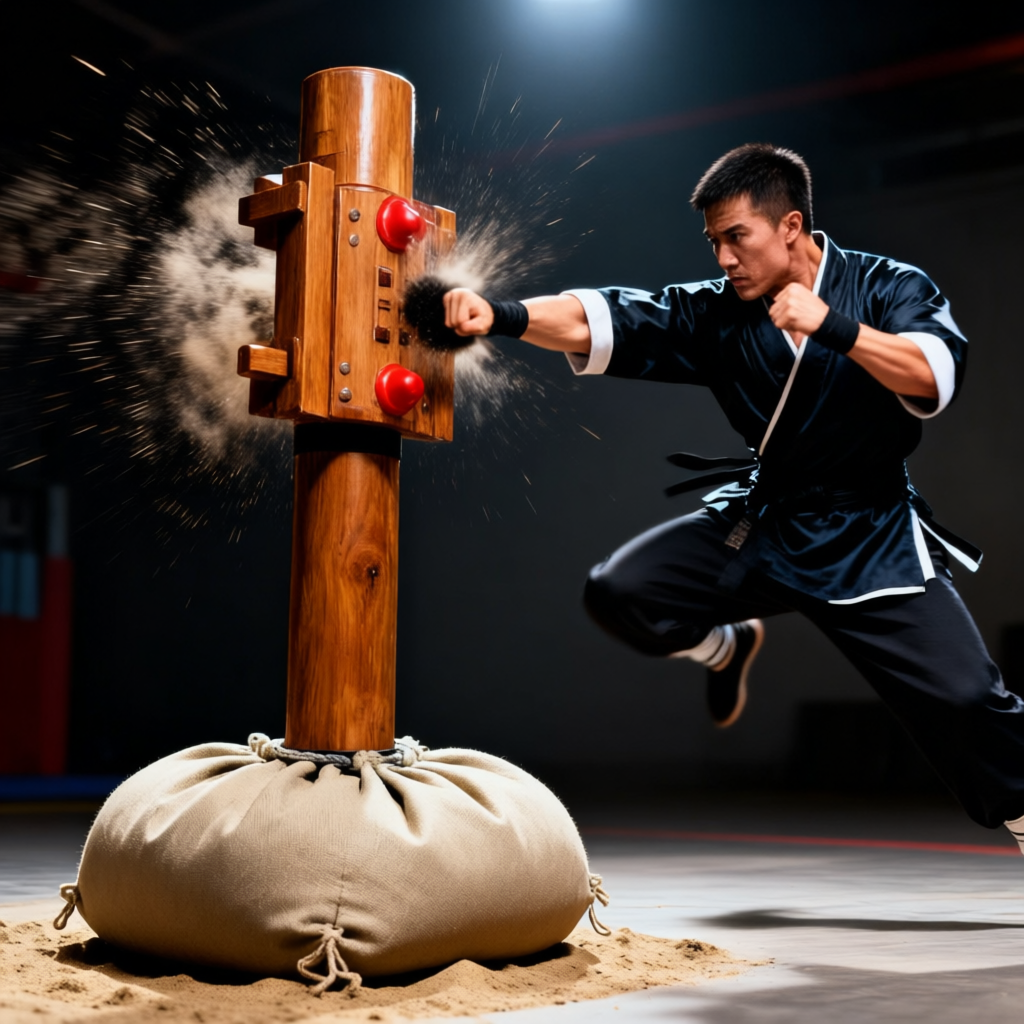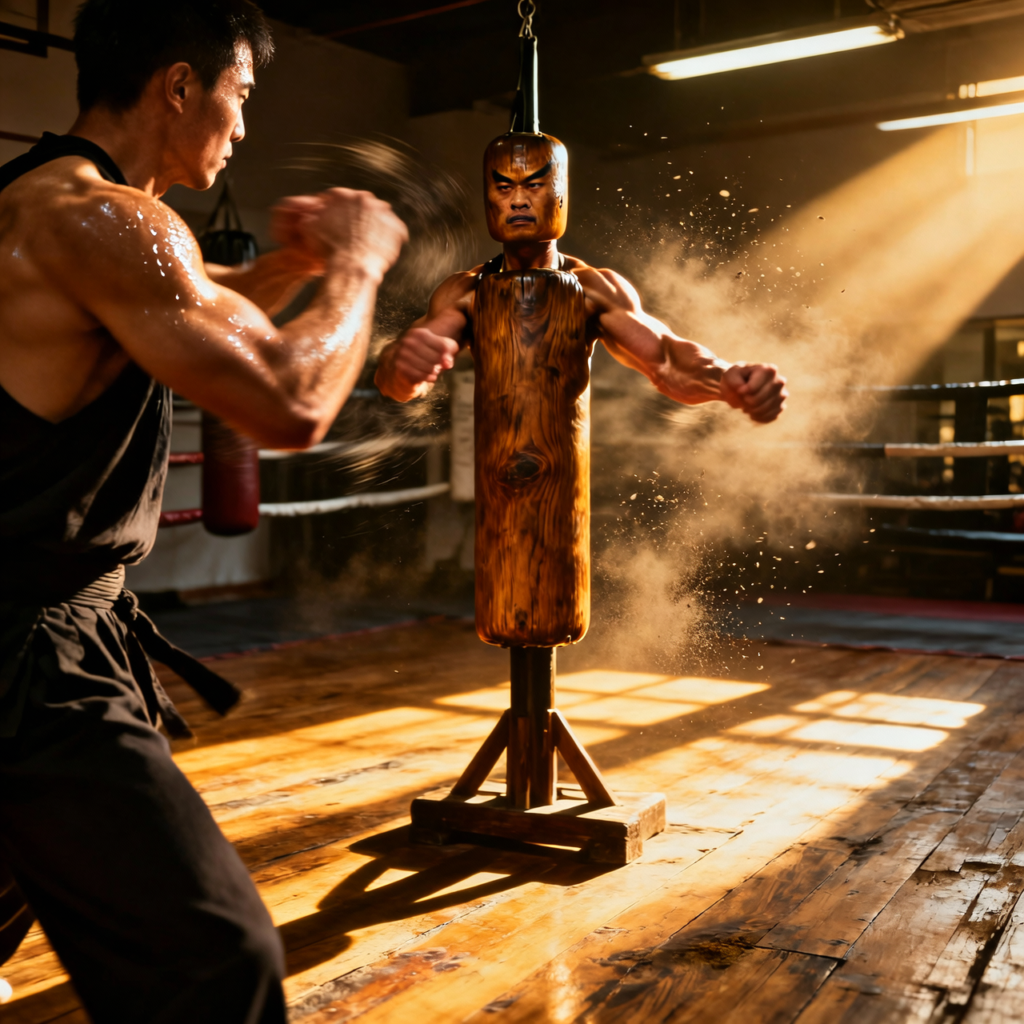
When it comes to mastering Training on the dummy for better reaction, getting the right technical specifications and structural details matters. AugustaPro Iron Body Wooden Dummy
Solid Bamboo/Rattan Chi Sao Rings
Shen Formula Aged Dit Da Jow Liniment
Training on the dummy for better reaction is not about hitting harder. It is about listening closer. The wooden dummy is a biomechanical mirror. It reflects your structure, your timing, and your nervous system efficiency. When you respect the physics of mass, density, and recoil, the dummy stops being a post. It becomes a teacher.
Reaction Mechanics vs. Static Striking
Most practitioners approach the wooden dummy as a static striking post. They repeat linear combinations until their muscles memorize the pattern. This builds technique, but it fails to build reflexes. When you only train against a fixed object, you anticipate the return of the arms based on your own speed. You stop reacting to the target and start reacting to your own rhythm. This creates telegraphing. Real combat demands variable resistance and unpredictable momentum. Training on the dummy for better reaction requires shifting your focus from brute force to kinetic feedback. You must learn to read the equipment like a living opponent.
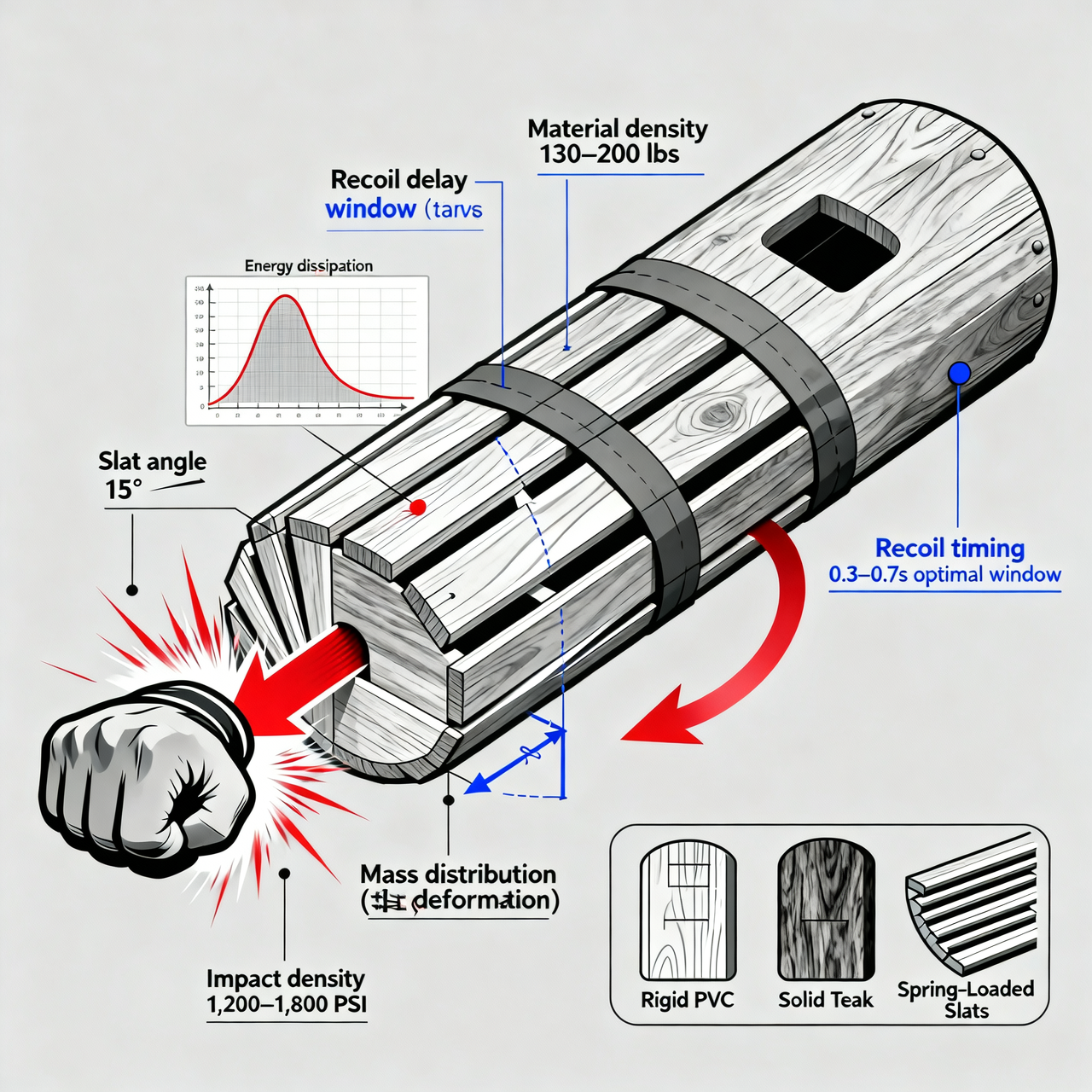
The core physics of reaction improvement relies on the concept of Live Energy, or Sheng Ging. A properly constructed dummy does not stay rigid upon impact. The trunk twists and recoils. This movement dictates how your nervous system adapts. If the horizontal slats are too stiff, the energy rebounds immediately. Your joints absorb the shock. Your reaction timing breaks down. If the slats are too loose, the dummy absorbs too much energy. You feel like you are punching air. Your structure collapses. The optimal setup requires a balance where impact causes a delayed, controlled recoil. This forces you to adjust your centerline instantly. You stop guessing the return path. You start reading the momentum.
Material Physics & Structural Geometry
The choice of material directly dictates the quality of your reaction training. Softwoods like Pine or Fir lack the density to provide sufficient inertial mass. When struck, they compress and rebound too quickly. This gives a false sense of connection. It fails to teach proper weight transfer.
Hardwoods like Teak or Oak offer high PSI shear strength. The kinetic energy is absorbed by the flexing slats and dissipated gradually. This cushioning effect is crucial. It allows you to feel the impact without being jarred off balance. You maintain structure while reacting.
Structural Dimensions and Force Transfer
A standard trunk measures approximately 9 inches in diameter. The total unit mass ranges from 130 to 200 pounds. This weight anchors the base. It prevents the dummy from sliding during aggressive drills. The upper arm planes are deliberately offset. This forces your elbows to track different angles of deflection. The leg slats are mounted at a 15° downward angle. This geometry mimics the natural trajectory of low-line attacks.
Fabrication tools like 18-inch spade bits and track saws are used to carve these precise mortises. The result is a unified structure that transfers force efficiently. PVC and hollow builds fail here. They transmit high-frequency vibrations up the arm. This triggers flinching responses. Flinching is a negative reaction. The goal is a positive, controlled adjustment. Dense, solid-core construction ensures the feedback loop remains accurate.
Drill Methodologies for Reaction Enhancement
You must train the nervous system to process sensory input faster than visual processing allows. Static repetition will not achieve this. You need structured drills that force adaptation.
The Blind Response Drill
Remove visual cues entirely. Train with your eyes closed or looking down. Rely solely on tactile feedback from the dummy’s recoil. When the dummy swings back after a strike, react to its new position before initiating the next movement. This sharpens the reflex arc. You learn to trust touch over sight.
Check out our top-rated Wing Chun training gear & equipment on Amazon
Variable Timing Drills
Abandon the metronome pace. Vary your tempo intentionally. One round should be slow and deliberate. Feel the wood grain absorption. The next round should be explosive. Test how quickly the dummy recovers to a neutral position. This teaches you to read the breathing pattern. You track the slight oscillation between strikes. You time your next engagement accordingly.
Deflection-First Conditioning
Beginners strike first and deflect second. Reaction training reverses this order. Prioritize the Pak Sau and Bong Sau as defensive reactions to an imaginary attack. Use the dummy to practice redirecting force. Make contact with the arms only when the trunk has already begun to move from a previous impact. This simulates a moving target. You condition your hands to intercept momentum, not just meet force.
The Recoil Cycle Breakdown
Every strike follows a predictable physical sequence. Impact occurs first. Energy stores in the flexing slats. The slats release that energy. A response window opens. Your training must target this specific window. You strike, you yield to the recoil, you restructure, you strike again. Mastering this cycle turns a wooden post into a dynamic partner.
Commercial Equipment Integration for Reaction
Many practitioners stall because their equipment cannot support advanced drills. Cheap, rigid dummies offer zero dynamic movement. Upgrading to gear with specific mechanical features bridges this gap.
Adjustable arm heights are essential. Fixed arms lock you into one vertical plane. Adjustable systems let you practice deflections from varying angles. This mirrors real combat geometry. Flexible slat systems are equally critical. Products like the AugustaPro Iron Body Wooden Dummy utilize spring-loaded or tensioned slats. These allow the arms to move independently. The dummy becomes a living target. It reacts to the force you apply.
Weight distribution completes the setup. A top-heavy unit will tip over during aggressive drills. A balanced design with a wide base or heavy sandbag anchor allows full-body commitment. You can shift your stance without compromising stability.
Essential Gear & Recovery for Dynamic Training
Reaction training increases impact frequency. Your forearms and joints endure higher stress. Supporting gear and recovery tools become mandatory, not optional.
Equipment Type
Recommended Insights From Our Wing Chun Guide Library:
- Master Millisecond Reflexes Through Precision Dummy Engineering
- Learning Wing Chun Faster with Multiple Dummies
- Unlock Your Potential: The Recoil Action Wing Chun Dummy
- Developing Chi Sao Sensitivity on the Wooden Dummy
- Wing Chun Dummy vs. Live Training Partner: Which is Better for Your Practice?
FunctionImpact on Training
Adjustable Arm SystemVaries deflection anglesMimics real-world attack trajectories
Spring-Loaded SlatsControls recoil delay
Enables timing precision and structure retention
Heavy-Duty Sandbag Base
Check out our top-rated Wing Chun training gear & equipment on Amazon
Stabilizes freestanding unitsAllows full-power drills without tipping
Neoprene Isolation WashersDecouples wall mountsConverts rigid surfaces into dynamic feedback platforms
Solid Bamboo/Rattan Chi Sao Rings serve as a mid-tier accessory. They develop elbow structure and reaction without the physical bulk of a full dummy. You can drill close-range deflections anywhere.
Recovery is just as important as conditioning. High-frequency deflection drills cause micro-trauma in the forearms and wrists. Shen Formula Aged Dit Da Jow Liniment is critical here. It penetrates deep tissue. It accelerates recovery between sessions. If you use a wall-mounted dummy, add neoprene wall-mount isolation washers. Rigid mounting kills reaction development. It creates a dead surface. Isolation washers convert a rigid mount into a dynamic training surface. They allow slight movement for better feedback.
Martial Arts Reference & Authority Resources:
Conclusion
Training on the dummy for better reaction is not about hitting harder. It is about listening closer. The wooden dummy is a biomechanical mirror. It reflects your structure, your timing, and your nervous system efficiency. When you respect the physics of mass, density, and recoil, the dummy stops being a post. It becomes a teacher. Upgrade your equipment to match your intent. Drill with variable tempo. Prioritize deflection. Protect your joints with proper recovery. Reaction is not inherited. It is engineered through precise feedback and disciplined repetition.
🔍 Explore More: See all Wing Chun training guides for Training on the dummy for better reaction.
Check out our top-rated Wing Chun training gear & equipment on Amazon