The Dummy as a Diagnostic Tool
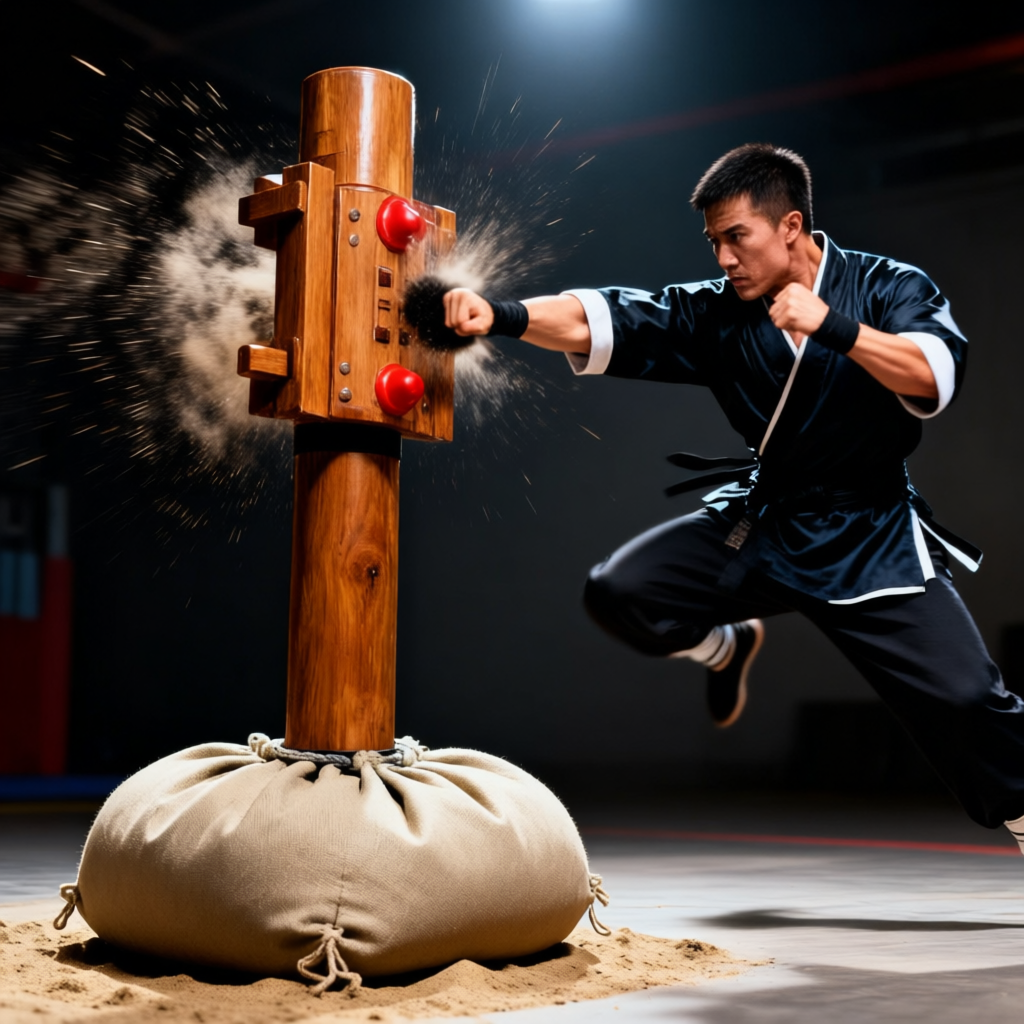
The fundamental friction in dummy training is that the object is passive. Unlike a heavy bag that yields or a sparring partner that reacts, the Mook Yan Jong offers zero escape. This creates a binary outcome for every strike: your structure either collapses into the wood, or the energy rebounds violently into your joints.
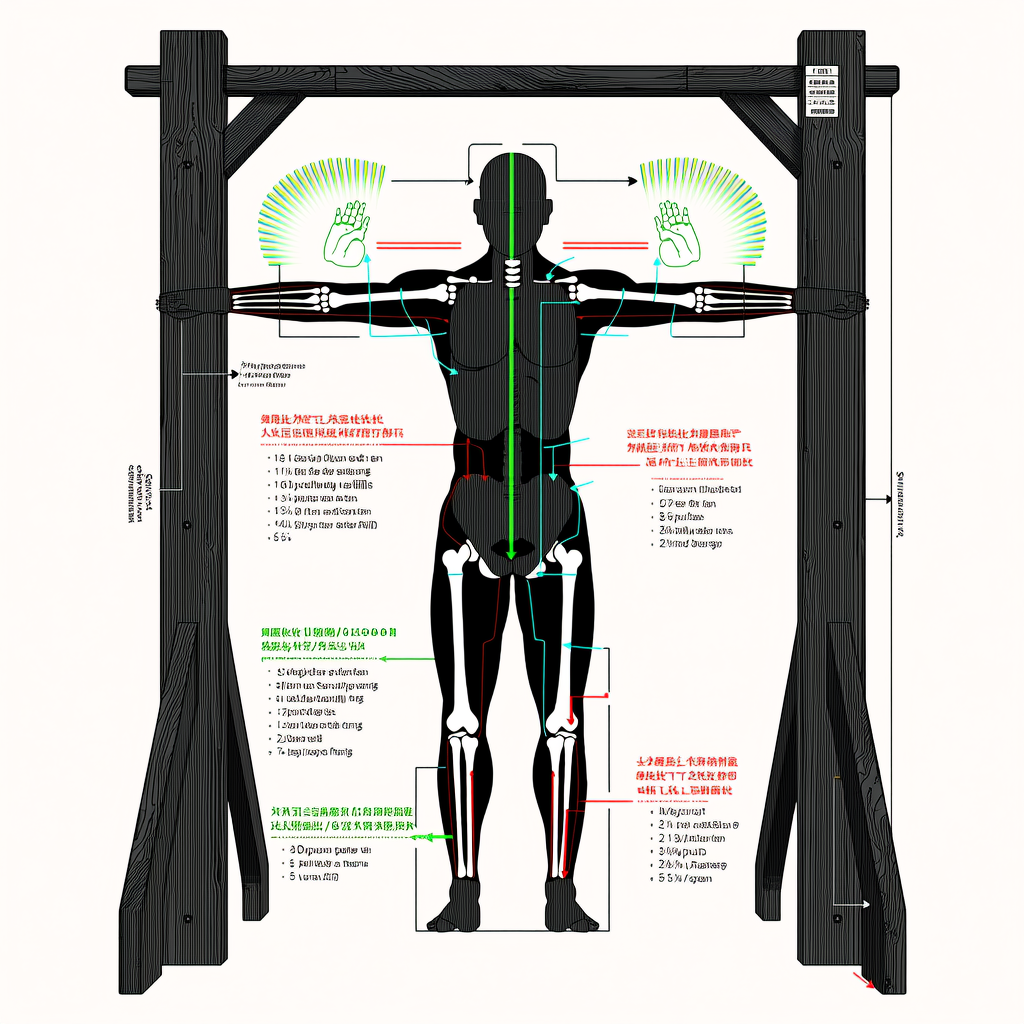
Control is defined as the ability to maintain the Centerline while delivering maximum force without compromising skeletal alignment. The dummy acts as a structural mirror. If your form is sloppy, the dummy shakes uncontrollably. If your form is tight, the dummy absorbs the energy silently. By treating every impact as data, you shift from mindless repetition to precise mechanical correction.
Biomechanical Control Mechanisms
The Immovable Elbow Principle (Bong Sau Stability)
The practitioner must drive the elbow down and forward simultaneously. The forearm must remain perpendicular to the dummy’s trunk at all times.
When the elbow flares outward, the kinetic chain breaks. The dummy’s left arm will swing wildly instead of absorbing linear force. This deviation forces the wrist into hyperextension during Pak Sau (slap) techniques, which leads to joint inflammation. Proper control routes impact force through the ulna and radius directly into the shoulder, protecting the wrist.
Kinetic Energy Dissipation vs. Rebound
Softwood or hollow PVC constructions generate high-frequency vibration. Dense hardwoods like Teak or Oak produce low-frequency absorption. Properly cut horizontal slats flex slightly upon impact and snap back to their original position.
You should feel solid resistance, not bounciness. When mortises are poorly cut or the trunk is too light, energy reflects back up your arm instead of dissipating into the wood. This rebound fatigues joints and ruins timing.
Check out our top-rated Wing Chun training gear & equipment on Amazon
Spatial Footprint and Stance Integrity
The dummy enforces a strict geometric constraint. Practitioners must operate within a defined centerline box. Over-reaching forward breaks balance because the wood cannot move backward to meet the strike.
Lunging forward destroys root stability and leaves the centerline exposed. The dummy immediately punishes over-extension by halting your momentum and throwing you off-axis.
The Leg Mechanics and Low Line Control
The lower leg channel is cut at a strict 15-degree downward angle. Low-line strikes require maintaining deep squat mechanics (Zhuang Bu) throughout the motion.
Poor weight distribution causes practitioners to strike the air above the leg or miss entirely. If the hips rise during the strike, power dissipates and accuracy collapses. The dummy enforces root stability by physically blocking improperly angled kicks.
Advanced Techniques & Drills
The Dead Wood Phenomenon
Recommended Insights From Our Wing Chun Guide Library:
- Mastering Wooden Dummy practice : A Comprehensive Guide
- Wing Chun Dummy vs. Live Training Partner: Which is Better for Your Practice?
- Mastering the Bridge: How the Wing Chun Dummy Elevates Your Entry Techniques
- Exploring the Versatility of the Wing Chun Dummy in Other Martial Arts
- Mastering Wing Chun with Dummy and Safety
Old, dried-out hardwood loses its natural flexibility. A brittle dummy cracks instead of flexing, providing false feedback that encourages over-swinging and joint damage. Check wood moisture content regularly and replace slats that no longer exhibit proper flex. Training on dead wood builds bad habits that transfer directly to sparring.
The Angle of Attack
Control is not just about hitting straight. The angle of entry dictates how force transfers into the dummy’s base. Striking at a 90-degree angle versus a 45-degree angle changes the torque applied to the trunk. Training involves learning to neutralize this torque by adjusting strike angles, ensuring the dummy remains stable and your structure stays aligned.
Proprioception Drills
Close your eyes and strike the dummy using only tactile feedback. Rely on the wood pushing back against your forearm to gauge distance and force. This isolates the nervous system, sharpening your ability to measure range and calibrate impact without visual crutches. It builds a refined tactile feedback loop that translates directly to close-quarters combat.
Core Equipment for Structural Feedback
To train with precision, your tools must amplify—not mask—your biomechanical errors. The following equipment are not optional upgrades; they are extensions of your nervous system.
Check out our top-rated Wing Chun training gear & equipment on Amazon
- Weighted striking gloves
- Adjustable Arm Mount Kits
- Aged Dit Da Jow Liniments
These three tools form the minimal, non-negotiable triad for serious practitioners. Weighted gloves increase resistance to expose elbow drift and wrist collapse. Adjustable mounts ensure your dummy’s arms align with your natural strike plane—critical for long-term joint health. Aged Dit Da Jow liniments don’t just soothe—they condition connective tissue to withstand the repeated impact of hardwood, enabling consistent, high-volume training without micro-fracture accumulation.
Training as a Feedback Loop
Martial Arts Reference & Authority Resources:
The progression is simple: Diagnosis, Correction, Conditioning. The dummy diagnoses structural leaks through its reaction to impact. Drills correct alignment by forcing passive resistance calibration. Conditioning builds the tissue strength required to sustain those corrections under fatigue.
Training on the dummy for better control is not about hitting harder. It is about listening to the wood. Every shake reveals a flaw. Every silent absorption confirms proper alignment. The dummy is not just a training tool—it is a mirror for your biomechanics. Treat it as such, and your control will sharpen far beyond the wooden frame.
🔍 Explore More: See all Wing Chun training guides for Training on the dummy for better control.
Check out our top-rated Wing Chun training gear & equipment on Amazon