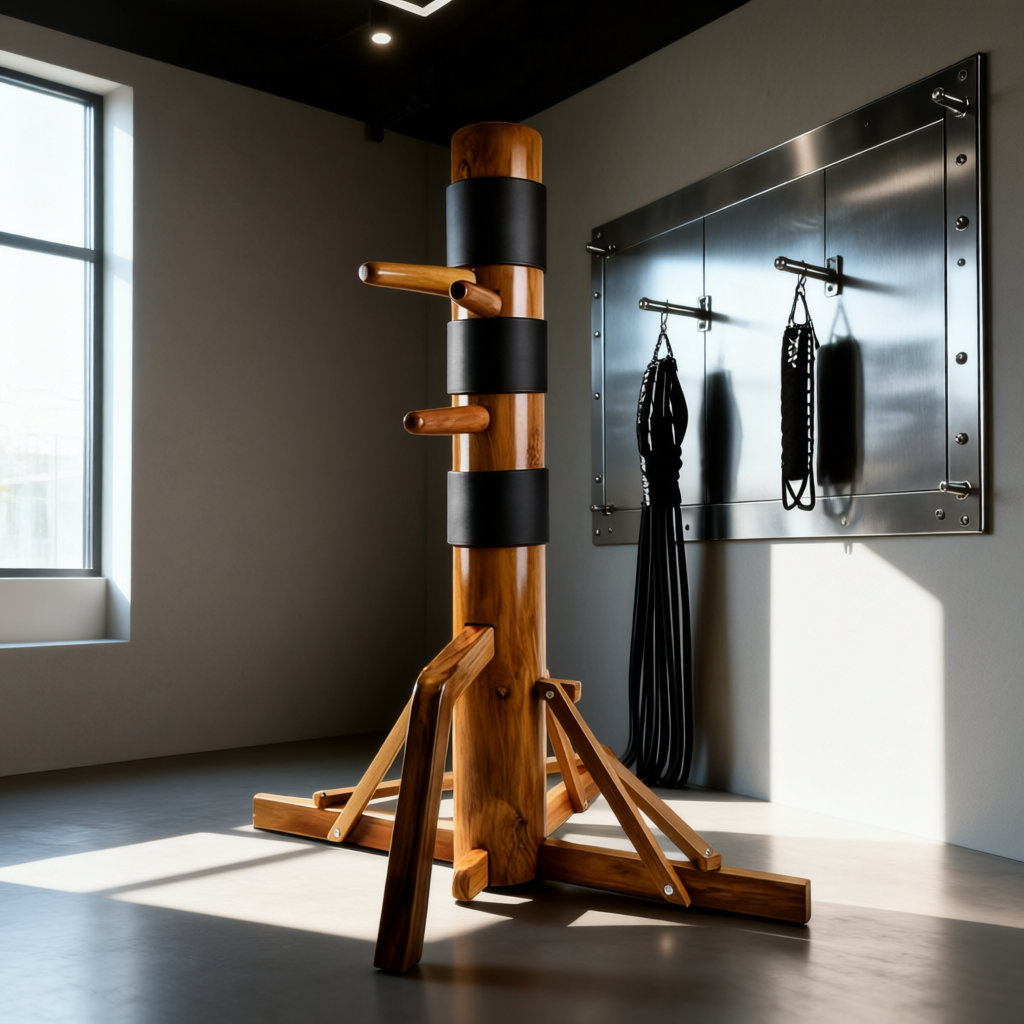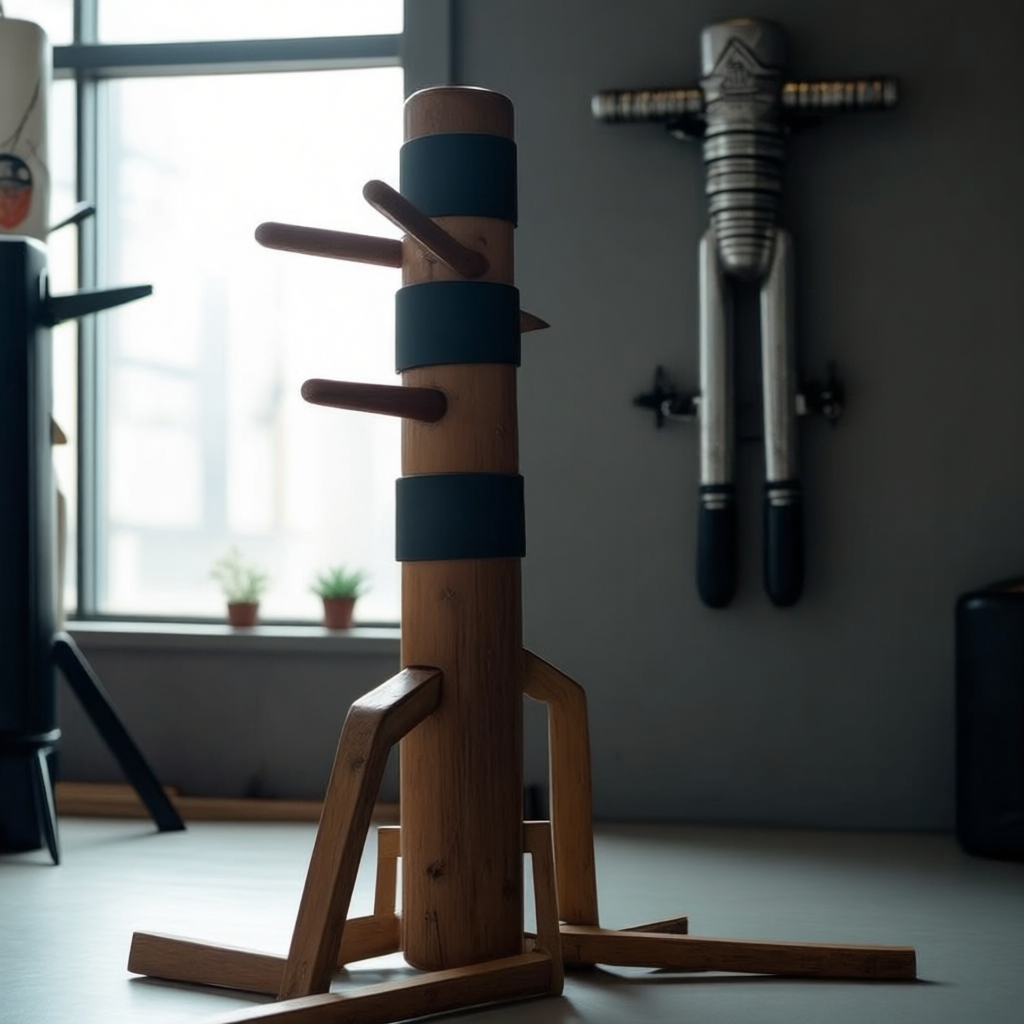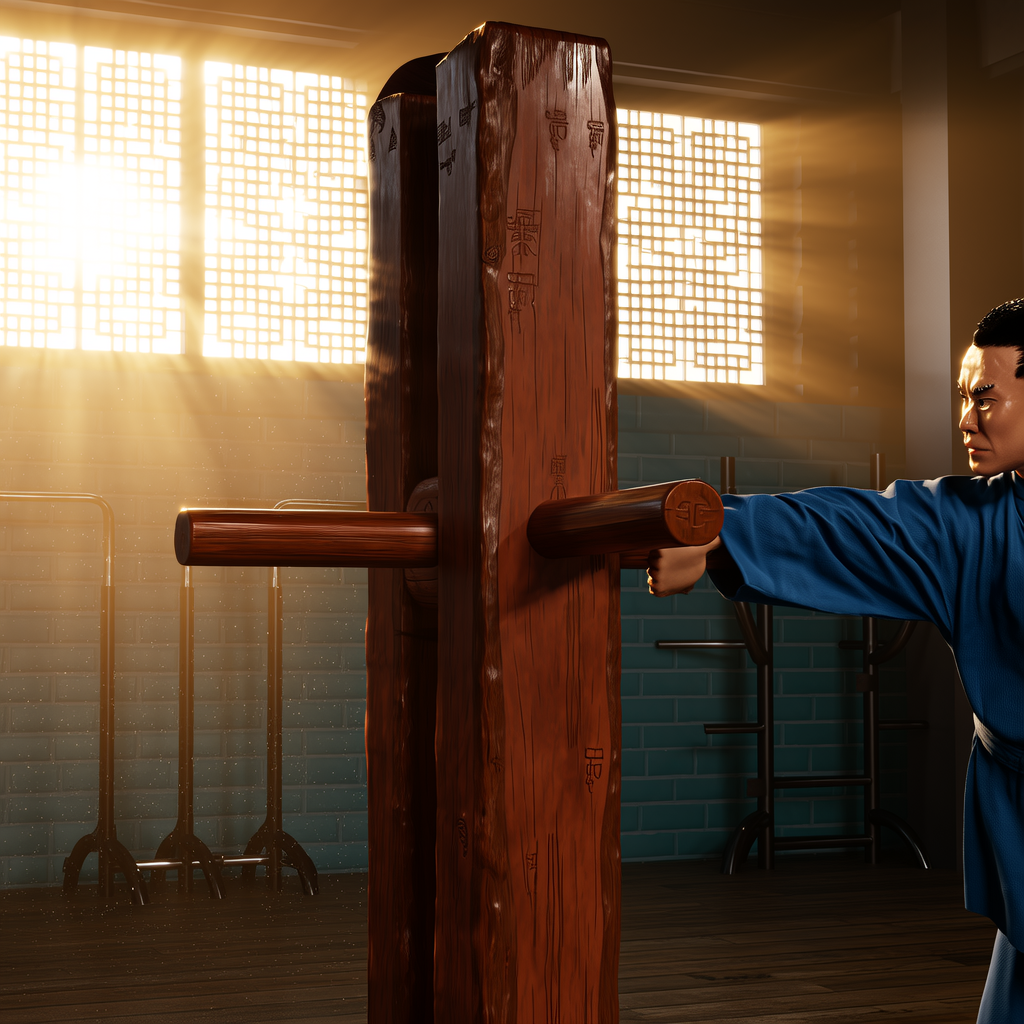
Dead Wood vs. Live Energy: The Core Physics Problem
The fundamental error in dummy training is confusing impact with power generation. Power is not created by the speed of the arm alone; it is created by the efficient transfer of body mass into the centerline, mediated by the dummy’s structure.
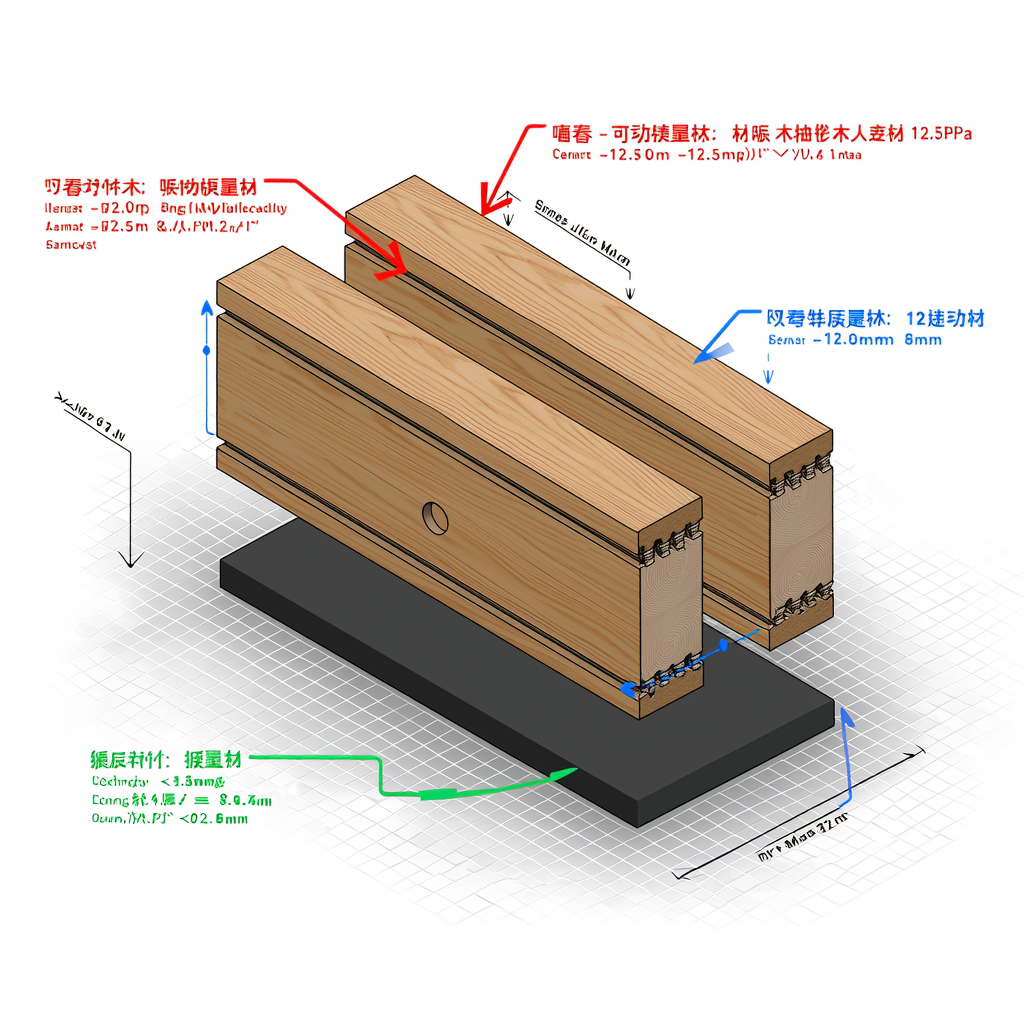
The Myth: Power comes from swinging the arm harder.
The Reality: Power comes from driving the body mass into the centerline while the dummy’s slats flex and return energy.
When you strike the dummy, you are interacting with the wood’s shear strength and inertia. If the dummy is constructed poorly or your technique is flawed, the energy dissipates.
The Loose Arm Problem: If the dummy arms are too loose, the energy from your strike dissipates as lateral vibration. The arms shake, and the kinetic chain breaks. You are essentially hitting a pendulum, which absorbs your force rather than resisting it.
The Rigid Arm Problem: If the arms are overly tight or the wood lacks proper flex, the energy rebounds directly into your elbow and shoulder joints. This causes inflammation and injury, halting your training.
Data: A loose mortise joint allows lateral displacement of the slat.
Impact: If your dummy shakes violently when you strike, you are losing power to vibration. The wood is moving instead of flexing. You cannot develop power if the feedback loop is broken by loose hardware or soft wood.
Data: Hardwood slats have a specific modulus of elasticity.
Impact: You should feel a distinct \”snap\” or rebound in your forearm upon contact. This is the wood storing potential energy and releasing it back to you. If you feel only a dull thud or sharp pain, you are not engaging the live energy of the slat.
Kinetic Pathway Optimization
To extract power, you must optimize the vector mechanics of your strike. The dummy demands precision in three areas: compression, flex, and alignment.
1. Centerline Compression
Power generation begins before contact. You must drive your center of gravity forward along the vertical axis of the dummy trunk.
Technique: Engage your stance and drive your hips forward. Your body mass should compress against the dummy’s centerline.
Impact: Hitting the dummy without forward compression results in a \”push.\” The force remains in the arm. By driving the centerline, you connect the strike to the ground, allowing the mass of your body to load the wood grain.
2. The Slat Flex Mechanism
When executing techniques like Pak Sau (slap) or Tan Sau (downward block), you are engaging the horizontal slats. The wood must compress slightly to store energy.
Technique: Time your follow-through to coincide with the snap-back of the wood. As the slat compresses, maintain pressure. As it rebounds, release the energy explosively.
Impact: The \”pop\” you feel is the potential energy stored in the bent wood grain. Proper usage means you are riding this wave of energy. If you strike and pull back too early, you miss the rebound. If you hold too long, you dampen the flex.
3. Joint Alignment and the Mirror Effect
The dummy acts as a mirror for your structural integrity. If your skeletal alignment is poor, the force cannot transfer to the wood.
Technique: Maintain a rigid skeletal structure. The wrist must be straight, and the elbow must be aligned with the force vector.
Impact: If the dummy shakes violently upon impact, your technique is inefficient. The shaking indicates that your structure is collapsing, and the force is being absorbed by the wood’s movement rather than your strike. A stable strike results in minimal dummy movement and maximum resistance felt in the core.
The Mortise Trap: Material Physics and User Experience
The density and construction of the wood dictate your power ceiling. Not all dummies are created equal, and material selection is critical for power development.
Check out our top-rated Wing Chun training gear & equipment on Amazon
Softwood vs. Hardwood
MaterialShear StrengthStructural BehaviorTraining Impact
Softwood (Pine/Fir)LowMortise holes elongate into ovals; arms become loose over timeAbsorbs power through lateral vibration. Feedback loop broken. No true power development.
Hardwood (Teak/Oak/Mahogany)HighMinimal deformation. Flexes elastically without displacement.https://www.youtube.com/watch?v=qu48u3-Or_4Forces muscular force generation. Immediate, crisp feedback. Tests structural integrity.
Structural Specifications
Recommended Insights From Our Wing Chun Guide Library:
- Unlocking Internal Power: The Wooden Dummy’s Secret to Mind-Body Mastery
- Master Kinetic Force Transfer on the Wooden Dummy Without Joint Damage
- Advanced Wing Chun Dummy Training: Elevate Your Mook Yan Jong Mastery
- Master the Chain Punch: Wing Chun Wooden Dummy Drills for Lightning Speed
- Master Wing Chun Dummy Geometry: Biomechanical Alignment and Kinetic Flow
Data: Standard commercial dummies feature a trunk diameter of approximately 9 inches and a total mass between 130 and 200 lbs.
Impact: This mass anchors the structure. A lighter dummy will shift or tip, absorbing energy through movement. A heavy, dense trunk ensures the slats are the primary point of resistance, allowing for proper flex and rebound.
Data: Legs are cut at a 15° downward angle.
Impact: This geometry directs force into the ground rather than allowing the base to shift. It stabilizes the structure during heavy strikes, ensuring the slats remain the focus of the interaction.
The Pivot Point
The intersection of the upper arm channels is a critical structural zone.
Technique: Strike the specific zone where the slat meets the vertical post, utilizing the angled edge rather than the flat side.
Impact: Striking the flat side of the arm reduces torque and can cause the arm to twist in the mortise. Striking the angled edge maximizes torque and engages the structural integrity of the trunk, providing better feedback for power generation.
Advanced Technique Integration
Once the physics and materials are understood, you must refine your technique to maximize power output.
The \”Sticky Hand\” on Static Wood
Unlike Chi Sao with a partner, the dummy offers no yield. You must learn to \”stick\” to the surface.
Technique: Maintain constant pressure during the strike. Do not bounce off the wood.
Impact: Bouncing reduces power by approximately 40% due to energy loss on separation. By maintaining contact, you ensure that all kinetic energy transfers into the wood. This simulates the \”stickiness\” required in live sparring, where you must control the opponent’s structure.
Angle of Impact
The angle at which you strike the wood determines the resistance you encounter.
Technique: Strike perpendicular to the wood grain to maximize resistance. For Bong Sau, align your forearm parallel to the ground to ensure full surface contact.
Impact: Angled strikes (glancing blows) reduce effective power transmission. Perpendicular impact ensures the full force of the strike loads the slat, testing your structural strength and generating maximum rebound.
Rhythm and Timing
Power is generated in the transition, not the hold.
Technique: Execute explosive entry followed by immediate retraction. Do not hold the strike against the dummy.
Impact: Holding the hand against the dummy creates tension that slows down the next technique. The motion must be fluid: strike, feel the rebound, and retract. This rhythm trains the nervous system to generate power quickly and recover efficiently.
Injury Prevention and Recovery
Check out our top-rated Wing Chun training gear & equipment on Amazon
Training with hardwood dummies places significant shock loads on the joints. Proper recovery is essential for consistent power development.
Data: Hardwood rebound generates high impact forces on the wrist, elbow, and shoulder.
Impact: Without proper care, this leads to joint inflammation and overuse injuries, which stop training entirely.
Solution: Use aged Dit Da Jow Liniment. These traditional herbal formulations penetrate deep into the tissue, promoting circulation and reducing inflammation. Apply liniment before and after training to condition the \”iron arms\” required to handle hardwood rebound.
Accessory Note: When transitioning from heavy bags to the rigid wood of the dummy, consider using leather striking pads to protect the knuckles while you adapt to the increased resistance.
Apartment Optimization: Power in Small Spaces
There is a growing trend toward \”Apartment Martial Arts,\” where practitioners need to develop power without the space or noise tolerance for heavy freestanding units.
Solution: Use wall-mounted dummy systems with isolation pads.
Data: Floating wall mount systems decouple the dummy from the building structure.
Impact: A traditional lag bolt mount transfers vibration directly into the wall, causing noise and structural stress. A floating mount with isolation pads allows for maximum slat flex and rebound without transferring vibration to the building. This preserves the \”live energy\” feedback while keeping neighbors happy.
Comparison: Modular mounting kits offer a bridge between DIY stability and apartment safety. They allow you to install a high-density dummy in a rental unit without permanent modifications, ensuring you can still train power effectively in limited space.
The Dummy as a Calibration Tool
The Wing Chun Dummy is a master of truth. It does not care about your ego; it only responds to correct biomechanics and efficient energy transfer. If your dummy shakes, your technique is leaking power. If your joints hurt, your alignment is flawed or your equipment is inadequate.
To develop better power, you must master the interaction between your kinetic chains and the elastic properties of the wood. This requires:
1. Proper Technique: Centerline compression, slat flex timing, and rigid joint alignment.
2. Quality Equipment: A hardwood dummy with precise mortise geometry and sufficient mass to provide inertial resistance.
3. Recovery: Consistent use of Dit Da Jow Liniment to condition the body for the shock load.
Martial Arts Reference & Authority Resources:
If you are currently training on a softwood or PVC dummy that shakes excessively, you are likely stunting your power development. Upgrading to a solid hardwood unit, such as those from AugustaPro Wooden Dummy, provides the live energy feedback necessary to refine your technique and unlock true kinetic output. Combine this with proper isolation mounting using the Wall Mount Isolation Kit for apartment training, and you have a complete system for power development that works anywhere.
Stop hitting the dummy. Start striking the rebound. That is where the power lives.
🔍 Explore More: See all Wing Chun training guides for How to use the dummy for better power.
Check out our top-rated Wing Chun training gear & equipment on Amazon