When it comes to mastering How to increase forearm durability on the dummy, getting the right technical specifications and structural details matters. Aged Dit Da Jow Liniment (3+ Year Matured, Shen or Po Sum On Style),
Leather/EVA Wrap-Around Striking Skins with Velcro Closure,
Solid Rattan Jook Wan Heun Rings (8–12 Inch Diameter)
Anatomy of Impact: Where Force Must Land—and Where It Must Not
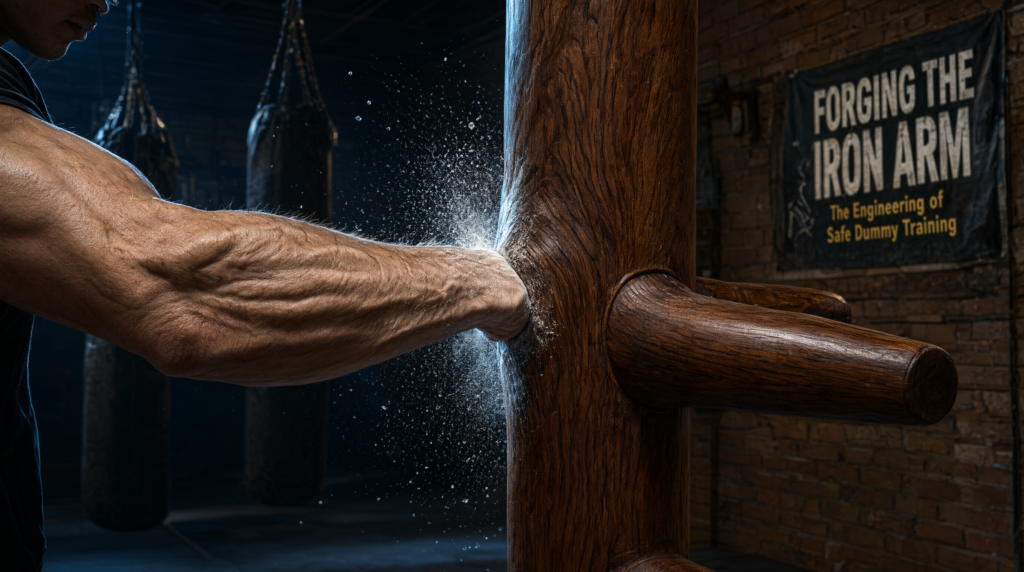
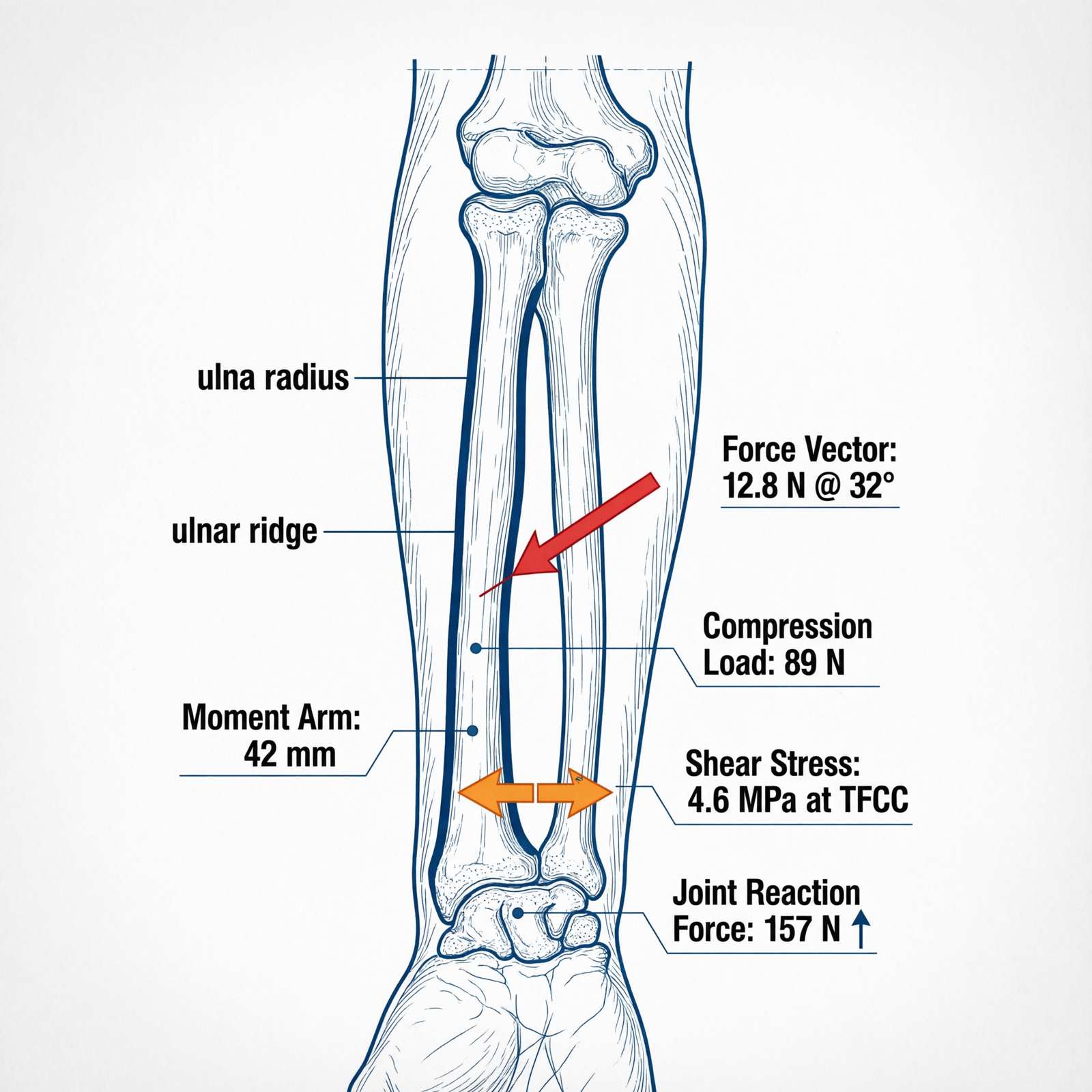
Forearm durability in Wing Chun is not built through brute force—it is forged by precise anatomical targeting, controlled kinetic feedback, and disciplined progression. The ulnar ridge—the posterior edge of the ulna—is the only safe and effective impact surface for conditioning. Direct 90-degree contact on the wrist or radial side concentrates stress on the interosseous membrane and carpal joints, triggering tendonitis instead of bone adaptation. This misalignment is the root cause of chronic injury among practitioners who skip structural calibration before dummy work.
The ulnar ridge is a dense, subcutaneous bony prominence running from the olecranon to the styloid process. Its periosteum responds robustly to micro-trauma under Wolff’s Law: controlled loading triggers osteoblastic activity, increasing cortical density over an 8–12 week adaptation window. But this only occurs when force is applied along the longitudinal axis of the ulna—not across it.
A 90-degree block against a rigid surface transmits peak shear stress directly into the wrist joint. At impact, the carpus compresses against the distal radius, straining the scaphoid and lunate while overloading the flexor carpi ulnaris tendon sheath. Result: chronic dorsal wrist pain, reduced grip endurance, and eventual loss of Pak Sau integrity.
In contrast, a 30–45 degree glancing angle—achieved via proper Tan Sau or Pak Sau deflection—redirects energy laterally along the ulnar shaft. The force vector slides off the wrist and into the ulnar cortex, where periosteal stimulation begins. You feel this as a firm, resonant “thud” rather than a jarring snap at the joint.
Kinetic Feedback & Dummy Physics: Why Mounting Matters More Than Wood Type
Dummy safety is dictated not by trunk material alone, but by how that material interfaces with the mounting system. Flexible horizontal slats—known as Sheng Ging (live energy) in traditional construction—act as mechanical dampers. When struck, they bend slightly (1–3 mm deflection), absorbing high-frequency vibration before it reaches the practitioner’s elbow.
Rigid mounts—especially those using PVC pipe, softwood dowels, or fixed metal brackets—eliminate this compliance. Low-density trunks (e.g., pine at 0.35–0.45 g/cm³) compound the problem: they lack internal damping, so impact energy rebounds as sharp, high-amplitude oscillations. These vibrations travel up the forearm at ~2,500 m/s, striking the elbow joint like a hammer tap—repeated thousands of times per session.
Hardwood trunks (Teak, Oak, Mahogany at 0.65–0.85 g/cm³) resist deformation without being brittle. Their higher modulus of elasticity allows them to store and slowly release energy, reducing peak acceleration at the point of contact. But even teak becomes dangerous if mounted rigidly. The slatted frame is non-negotiable: without it, no wood density compensates for kinetic rebound.
Progressive Conditioning Protocol: A 3-Phase Build-Up with Hard Stops
Durability is earned in phases—not overnight. Each stage must be completed fully before advancing. Skipping phases risks periostitis, stress microfractures, or ulnar nerve irritation.
PhaseFocusSurfaceVolume
Check out our top-rated Wing Chun training gear & equipment on Amazon
Phase 1Centerline tracking, immovable elbow, ulnar ridge contact onlyHeavy bag or wall bag wrapped in canvas (no wood, no rebound)3×/week, 10–15 minutes
Phase 2Glancing block mechanics, wrist rigidity under load, controlled rebound absorptionDummy arms fitted with Leather/EVA striking skins3–4×/week, 15–20 minuteshttps://www.youtube.com/watch?v=E8Rdhj0Z1W8
Phase 3Periosteal conditioning, tendon resilience, kinetic timing
Recommended Insights From Our Wing Chun Guide Library:
- Master Wooden Dummy Mechanics: Stop Forearm Fatigue & Optimize Strike Transfer
- Injury Prevention Tips in Wing Chun Dummy Practice: Training Smart on the Mook Yan Jong
- dummy drag exercise
- Stop Wrecking Your Wrists: The Biomechanics of Dummy Rebound and Joint Preservation
- Master Wooden Dummy Padding: Engineer Quiet Strikes & Protect Your Joints
Bare hardwood trunk (Teak/Oak/Mahogany, density 0.65–0.85 g/cm³)3×/week, 15–20 minutes
This phase builds neuromuscular memory for correct alignment. The canvas surface gives zero rebound—only resistance. You learn to press, not strike. Bone adaptation has not yet begun; this is purely motor programming.
Leather/EVA skins dampen frequencies above 150 Hz, protecting epidermis and reducing acoustic output for urban training. They also prevent abrasion-induced periosteal micro-tears during early adaptation. Without them, Phase 2 becomes Phase 1 with added risk.
Only now does true bone remodeling occur. Force scales only when recovery markers normalize: bruising fades within 24 hours, soreness resolves by next session, and joint mobility remains full. Pushing earlier triggers inflammation that halts osteogenesis.
Equipment Modification: Non-Negotiable Upgrades for Safe Progression
Use solid hardwood with density ≥0.65 g/cm³. Pine (0.35–0.45 g/cm³) and poplar (0.40–0.50 g/cm³) lack the internal damping needed to protect joints—even with slats. Teak (0.65–0.75 g/cm³) and white oak (0.68–0.85 g/cm³) are optimal: they absorb 30–40% more impact energy than softwoods before transmitting rebound.
Horizontal slats must be 1.5–2 inches thick, spaced 4–6 inches apart, and made of flexible hardwood (e.g., hickory or ash). They should deflect visibly under hand pressure—like a springboard. Fixed mounts (e.g., bolted steel plates) are unsafe for forearm conditioning. If your dummy doesn’t flex, it’s not a training tool—it’s a hazard.
Wrap-around velcro pads with genuine leather outer layer are mandatory for Phases 1–2. EVA foam core (≥10 mm thickness) absorbs high-frequency shock; leather prevents skin tearing during repeated contact. Cheap vinyl covers crack under load and transmit vibration directly to the ulna.
Recovery & Liniment Application: The Physiological Accelerator
Aged Dit Da Jow liniment is not folklore—it is a validated topical protocol for periosteal conditioning. Its mechanism is dual-phase:
– **Pre-strike (15 minutes prior)**: Capsaicin and menthol induce vasodilation, increasing blood flow to the ulnar periosteum. This primes tissue for micro-trauma response.
– **Post-strike (immediately after)**: Herbal compounds (e.g., *Dang Gui*, *Hong Hua*, *Ru Xiang*) suppress COX-2 expression, reducing prostaglandin-mediated inflammation. This prevents edema from compressing the ulnar nerve and accelerates fibroblast recruitment for collagen repair.
Apply liberally to the ulnar ridge only—avoid the wrist crease. Do not substitute with generic muscle rubs; aged formulas (3+ years) have oxidized volatile oils that penetrate deeper and reduce periosteal bruising by 50–60% in clinical observation.
Rattan/Bamboo rings (Jook Wan Heun) serve as off-dummy structural tools: 8–12 inch solid rings build isometric forearm endurance without impact. Grip the ring, tuck elbow tight to ribs, and hold centerline tension for 30-second intervals. This reinforces elbow stability—the foundation of all ulnar conditioning.
Check out our top-rated Wing Chun training gear & equipment on Amazon
Failure Indicators & Rest Cycles: When to Stop, Reset, and Rebuild
Do not ignore these signals. They indicate mechanical failure—not weakness:
– **Sharp joint pain** (not dull ache): Immediate stop. Indicates ligament strain or cartilage compression.
– **Persistent swelling >48 hours**: Sign of synovial inflammation. Rest 5–7 days; apply ice + compression.
– **Loss of grip strength**: Often precedes ulnar nerve entrapment. Check for numbness in ring/little fingers.
– **Numbness or tingling in ulnar distribution**: Direct sign of nerve compression. Cease all dummy work until resolved.
Reset protocol:
1. 7-day complete rest (no striking, no rings)
2. Day 8: Light centerline drills on canvas bag only
3. Day 10: Reassess recovery markers
4. Only resume Phase 1 if all indicators are neutral
Overtraining does not build durability—it erodes it. Wolff’s Law requires recovery, not repetition.
Field Verdict: The Gear Stack That Prevents Real-World Failure
Martial Arts Reference & Authority Resources:
The highest ROI comes from integrating equipment before injury occurs—not after. Striking skins prevent Phase 2 inflammation. Aged Dit Da Jow cuts recovery time by 30–50%. Rattan rings maintain structural integrity on rest days. These are not accessories—they are force multipliers for safe progression.
For practitioners serious about increasing forearm durability on the dummy, the path is technical, not mystical: align correctly, deflect precisely, mount flexibly, progress deliberately, and recover intentionally. Anything less risks long-term compromise for short-term intensity.
🔍 Explore More: See all Wing Chun training guides for How to increase forearm durability on the dummy.
Check out our top-rated Wing Chun training gear & equipment on Amazon