How to Practice Dummy Drag Without a Dummy: Technique, Exercises & 2026 Training Guide
The dummy drag is one of the most functional, full-body exercises in emergency response training and tactical fitness. It simulates the exact physical demand firefighters, paramedics, law enforcement officers, and military personnel face when they must grip an incapacitated person and pull them to safety. Done correctly, the dummy drag hits your legs, glutes, core, back, and grip all at once while conditioning your cardiovascular system for short, intense bursts of real-world work.
There is just one problem: training dummies are expensive, heavy, and take up a lot of space. Many home athletes and smaller gyms simply can not store a 150 lb articulated mannequin. The good news is that you can build the exact same strength, technique, and conditioning without a dummy using sandbags, weighted packs, resistance bands, a willing partner, and even DIY sleds.
This updated 2026 guide breaks down the complete dummy drag technique, the best dummy drag exercises, structured dummy drag training progressions, and how to measure yourself against a standard dummy drag test — including the classic 150 lb dummy drag. Bookmark it as your complete, equipment-light training resource at wingchundummy.blog.


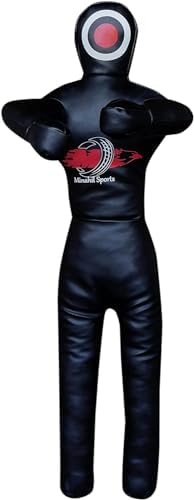
What Is a Dummy Drag — and Why Does It Matter?
A dummy drag is a loaded carry in reverse: you establish a secure grip on a heavy, human-shaped (or human-weight) object and walk backward, pulling the load across the ground behind you. Unlike a clean, gym-barbell movement, the dummy drag forces you to manage awkward, shifting weight while staying low and moving steadily. That is precisely why first-responder physical ability tests use it.
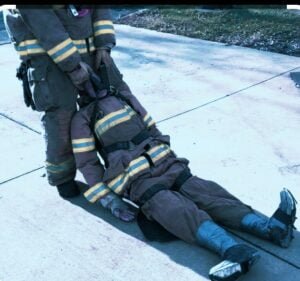
In real-world rescue work, the movement translates directly to victim extraction. A downed patient, unconscious casualty, or injured coworker is rarely lifted comfortably — they are dragged, scooted, or pulled across uneven ground to reach cover or medical care. Practicing the dummy drag builds the physical and mental resilience to perform that task when it counts, without hesitating at the initial “can I move this weight?” moment.
From a fitness standpoint, the dummy drag is a superior conditioning tool. Because the load sits low and shifts as you move, every backward step demands stabilization from the core and repeated force production from the quadriceps, hamstrings, glutes, and calves while your arms, shoulders, and hands fight to maintain the grip. This combination develops functional strength that carries over to lifting, carrying, grappling, and everyday life far better than isolated machine exercises.
Best of all, the dummy drag is easy to progress. You can increase the load, lengthen the distance, add turns, or push for faster completion times — all of which mirror the natural demands of an emergency scenario. Whether you are preparing for a fire academy or simply want a stronger, more resilient body, this movement deserves a permanent spot in your program.
Dummy Drag Technique: Master the Foundation First
Before you add more weight or speed, you need a repeatable, injury-resistant dummy drag technique. Every method in this guide — sandbag, partner, band, or dummy — follows the same mechanical blueprint. Nail this first, and every substitute becomes dramatically more effective.
The Setup and Stance
- Stand with your feet roughly shoulder-width apart, facing the load.
- Squat down by bending at the knees and hips, not the waist, until you can reach the load’s upper handles, straps, or armpit area.
- Keep your chest up, eyes forward, and spine neutral — a rounded lower back is the fastest route to injury.
- Brace your core as if you are about to take a light punch to the stomach.
Gripping the Load
Your grip is the transfer point for all your leg drive, so it must be secure before you move. Grip high on the load — around the “shoulders” or “torso” of a dummy, or the strongest handles of a sandbag or sled. Keep your arms long and engaged rather than bent and exhausted. If you are using a strap, harness, or rope, wrap it so the force runs through the palms rather than pinching your fingers. For longer drags, consider firefighter-style grip training to keep your hands from failing before your legs do.
The Lift and First Steps
- Drive through your heels and use your legs to raise the upper portion of the load off the ground.
- Lean slightly back so the load is pulled tight against your body — this proximity is what transforms a clumsy tug into an efficient drag.
- Take short, controlled steps backward. Long strides destabilize you and let the load swing.
- Keep a low center of gravity the entire time; do not stand up mid-drag and turn the movement into an all-arm pull.
Common Technique Mistakes to Avoid
- Rounding the back: this shifts the load onto spinal discs instead of leg muscles.
- Gripping too low: dragging from the ankles or a low strap makes the load swing and multiplies the effort.
- Giant backward steps: these break your balance and increase fall risk on uneven ground.
- Holding your breath: exhale on each pull, and breathe continuously through the drag.
- Jerking the load: sudden yanks spike injury risk; build tension, then accelerate smoothly.
How to Practice Dummy Drag Without a Dummy
Learning how to practice dummy drag without dummy equipment comes down to one principle: find or build a heavy, awkward load and drag it using the exact technique above. The following substitutes replicate the weight distribution, grip demand, and leg drive of a real mannequin — often for a fraction of the cost.
Sandbag Drags
Sandbags are the closest home substitute for a drag dummy because their weight is dense, low, and slightly unstable — just like a human body. Select a weight that matches your training goal; most people should start between 100 and 150 lb, with 150 lb being the classic benchmark for a 150 lb dummy drag test.
- Double-bag your sand in heavy-duty contractor bags, then place the inner bags inside a durable canvas or nylon duffel.
- Reinforce every closure with duct tape or zip ties so the load does not shift or leak mid-drag.
- Position the bag lengthwise on the ground, squat down, grip the top end, and drag it backward with short, powerful steps.
- Add a drag strap or two tow handles to simulate gripping a dummy under the arms.
Weighted Vest or Backpack Drags
For beginners or anyone short on space, a loaded vest or backpack delivers a scalable dummy exercise that travels anywhere. Beginners should start at 10–20% of body weight and advance toward 30–40% as strength and confidence build.
- Secure the vest snugly so it does not bounce or twist.
- If using a backpack, pack weight plates or sandbags evenly and cinch every strap tight.
- Wrap a tow strap or rope around the pack, lower into your drag stance, and pull it backward.
- Keep your back straight and drive with your legs rather than your arms.
Partner Drags
Check out our Wing Chun collection Amazon products
SHOP THE COLLECTIONA live partner is the most realistic substitute available — and it adds communication practice that no sandbag can replicate. Agree on verbal or tap signals for “go,” “slow down,” and “stop” before you start.
- The person being dragged must stay as limp and relaxed as possible to simulate dead weight.
- The dragger grips under the partner’s arms or uses a rescue strap and walks backward using leg drive.
- Wear gloves for grip and knee pads for protection, and practice on grass, mats, or padded flooring.
- Switch roles so both partners develop dragging and being-dragged awareness.
Resistance Band Drags
Resistance bands offer variable resistance that gets harder the farther you stretch — a close mimic of dragging a heavy load over a long distance. Anchor a heavy band or a pair of bands to a sturdy pole, door anchor, or immovable rack.

- Grip the handles or band ends and lower into your drag stance.
- Walk backward slowly against the band, keeping movements controlled.
- Advance to lateral side-steps to train the sideways weight shifts of real rescues.
- Add forward lunges while pulling to build single-leg stability.
DIY Sleds and Old Tires
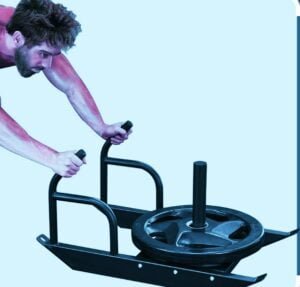
If you have a driveway or garage, a dead car tire or a homemade sled (a sheet of plywood plus weight plates) is a superb perennial dummy drag tool. Loop a rope or strap through the tire, load the sled with plates or sandbags, and drag on grass, turf, or smooth concrete for a brutal leg and core session.
Dummy Drag Exercises: A Substitute-Based Training Library
Once you understand the movement, you can build variety into your dummy drag exercises so training never goes stale. Rotate two or three of these in each session, and always prioritize clean technique over ego loading.
- Sandbag reverse drag: 3–5 sets of 15–30 meters with 60–90 seconds of rest.
- Band-resisted backward drag: 3 sets of 45–60 seconds of continuous tension.
- Partner drag intervals: 4–6 rounds of 20–30 meters, alternating roles each round.
- Farmer’s carry: 3–4 sets of 30 meters — builds the grip that keeps your hands alive during long drags.
- Tire or sled drag: 4 sets of 25–50 meters, adding a 180-degree turn to mimic obstacle navigation.
- Bodyweight squat + drag combo: 5 squats immediately followed by a 10-meter weighted drag for 4 rounds.
Recommended Insights From Our Guide Library:
- dummy drag exercise
- Mastering the Dummy Drag: Effective Training Without a Dummy
- Mastering the Drag: Home Wrestling Training Without Destroying Your Walls – Wing Chun Dummy
- Page 61 of 80 – Wing Chun For Easy Living
- Engineer Your Own Inertial Training Partner: High-Fidelity Grappling Build Guide – Wing Chun Dummy
Dummy Drag Training: Programming, Frequency, and Progression
Effective dummy drag training is about consistency and progressive overload, not daily punishment. Because the drag is a demanding full-body exercise, two to three sessions per week is the sweet spot. This frequency lets you recover fully while still building meaningful strength and work capacity week over week.
Start light and short. A beginner might drag a 100 lb sandbag for 10 meters per round; an advanced athlete might drag 180–200 lb for 50 meters with turns. Increase only one variable at a time — load, distance, speed, or rounds — so your technique never collapses under the added challenge. Keeping a training log makes this adjustment honest and measurable.
Here is a simple two-day weekly template to get started:
- Day 1 (Strength focus): heavier sandbag or sled drag, 3–5 sets of 15–20 meters, long rest.
- Day 2 (Conditioning focus): lighter load, partner or band drags, 5–8 rounds of 25–30 meters, short rest.
- Finisher (both days): farmer’s carries or plank holds to tax grip and core.
- Progression: add 5–10 lb or 5 meters every one to two weeks as form improves.
Dummy Drag Test: Standards, the 150 lb Dummy Drag, and Self-Assessment
If you are training toward a fire academy, a law-enforcement physical ability test, or simply a personal benchmark, understanding the dummy drag test standards matters. Many job-related assessments require candidates to drag a 150 lb dummy across a fixed distance — commonly 50 feet (15.24 meters) — as quickly as possible while maintaining control. Other programs, including firefighter CPAT-style evaluations, use heavier mannequins of roughly 165 lb dragged around a marked course.
Peer-reviewed research on body drag performance (NIH study on dummy mass and drag technique) highlights two key takeaways: the weight of the dummy and the technique you use both dramatically affect completion time and injury risk. In other words, technique is not optional — it is a tested variable.
You can run your own dummy drag test at home with a sandbag. Set up a 50-foot course, load 150 lb, and time yourself. Record your time, note where your grip or posture failed, and retest every four weeks. A strong benchmark: complete the 150 lb dummy drag in under 20–25 seconds with a stable, low posture and no loss of grip. When that becomes easy, add 10 lb or extend the course.
Dummy Drag Weight: How Heavy Should You Train?
The right dummy drag weight depends on your goal. Use a load light enough to preserve technique but heavy enough that the final few meters of each set feel challenging. As a starting rule, beginners should drag no more than 50–70% of what they can deadlift for five solid reps, then progress from there.
- General fitness: 75–120 lb is a productive starting range for most adults.
- Firefighter or first-responder prep: work toward the 150 lb standard, then build to 180 lb for a training buffer.
- Strength athletes: 200 lb or more is appropriate once form is flawless and recovery is dialed in.
- Beginners and injury recovery: start at 10–20% of body weight with a vest or light sandbag and increase gradually.
Quality always beats quantity here. A clean 100 lb drag with perfect posture builds more transferable strength than a sloppy 180 lb drag that puts your spine at risk.
Build the Core and Grip Strength Behind a Strong Dummy Drag
The dummy drag looks like a leg exercise, but it lives and dies on core and grip endurance. Your core keeps your torso rigid while the load pulls from behind, and your grip simply can not fail if you expect to finish a set or pass a test.
Add these exercises to your program two or three times a week:
- Planks: 3 sets of 45–60 second holds.
- Deadlifts: 3 sets of 8–12 reps — the king of posterior-chain and grip building.
- Farmer’s carries: 3 sets of 30-meter walks with heavy dumbbells or kettlebells.
- Hand grippers or pinch holds: 3 sets of 15 reps per hand to bulletproof the forearms.

Remember to train grip at the end of your session rather than before dragging. A fatigued grip during your main drag sets turns the drill into a hand-limitation test instead of a true full-body effort.
Safety First: Reducing Injury Risk While You Drag
Every dummy drag should respect the same safety rules as a heavy deadlift — plus a few extras for moving loads across the ground. Warm up for five to ten minutes with light cardio, hip hinges, and bodyweight squats before you touch a heavy load. Wear footwear with aggressive traction, and train on flat, non-slip surfaces whenever possible.
Protect your spine by refusing to round forward under load: if your lower back starts to sag, stop the set, reset your stance, and continue with a lighter load if needed. For partner drags, gloves prevent abrasions and knee pads protect both athletes, while clear communication prevents surprises. When you have access to a traditional training dummy, the same rules still apply — review this safety guide for dummy and no-dummy training before adding intensity.
Frequently Asked Questions About Dummy Drag Training
Can I really practice a dummy drag without a dummy?
Yes. Sandbags, weighted vests and backpacks, resistance bands, old tires, DIY sleds, and even a training partner all replicate the grip demand, load, and backward-pulling mechanics of a real dummy drag with excellent carryover.
How much weight should a drag dummy be?
Check out our Wing Chun collection Amazon products
SHOP THE COLLECTIONMost first-responder tests use a 150 lb dummy, and many CPAT-style assessments use mannequins around 165 lb. For general training, start lighter (75–120 lb) and gradually build toward the 150 lb standard before adding a training buffer up to 180 lb.
What muscles does a dummy drag work?
The dummy drag primarily targets the quadriceps, hamstrings, glutes, core, and lower back, with heavy secondary demand on the biceps, shoulders, forearms, and grip. It is one of the most complete functional conditioning movements you can perform.
How far is a standard dummy drag test?
A common job-task standard is a 150 lb dummy drag over 50 feet (15.24 meters). Other physical ability tests use a 165 lb mannequin dragged around a marked course of roughly 70–85 feet with turns. Always confirm the exact protocol for your specific academy or department.
How often should I train the dummy drag?
Two to three times per week is ideal for most athletes. Space sessions out with at least one recovery day between them, and progress by adding small amounts of weight, distance, or speed rather than training it daily.
Is a partner drag safe?
Yes, when done correctly. Agree on clear stop signals, have the person being dragged go completely limp, use proper lifting mechanics, and choose a padded or grassy surface with gloves and knee pads for extra protection.
Conclusion
The dummy drag is a elite functional exercise, and your lack of a mannequin should never keep you from training it. With the correct dummy drag technique, consistent substitute-based dummy drag exercises, structured dummy drag training, and periodic self-testing against the 150 lb dummy drag standard, you can build real-world rescue strength in a garage, driveway, or living room.
Community Reference & Authority Resources:
Start light, prioritize form, track your progress, and progressively add load and distance. Within a few months, the movement pattern that once felt awkward will become automatic — and you will be measurably stronger, more resilient, and better prepared for whatever you are training to face in 2026. Share your favorite dummy drag substitute below and let us know your best 50-foot time.
🔍 Explore More: See all guides for Honda Pioneer.