The Myth of Static Balance
In Wing Chun, balance is not about standing still. It is dynamic equilibrium. True balance is kinetic feedback management. When you strike a heavy bag, the target yields and moves away. Your brain registers zero resistance. You learn to push without anchoring. This creates a false sense of stability.
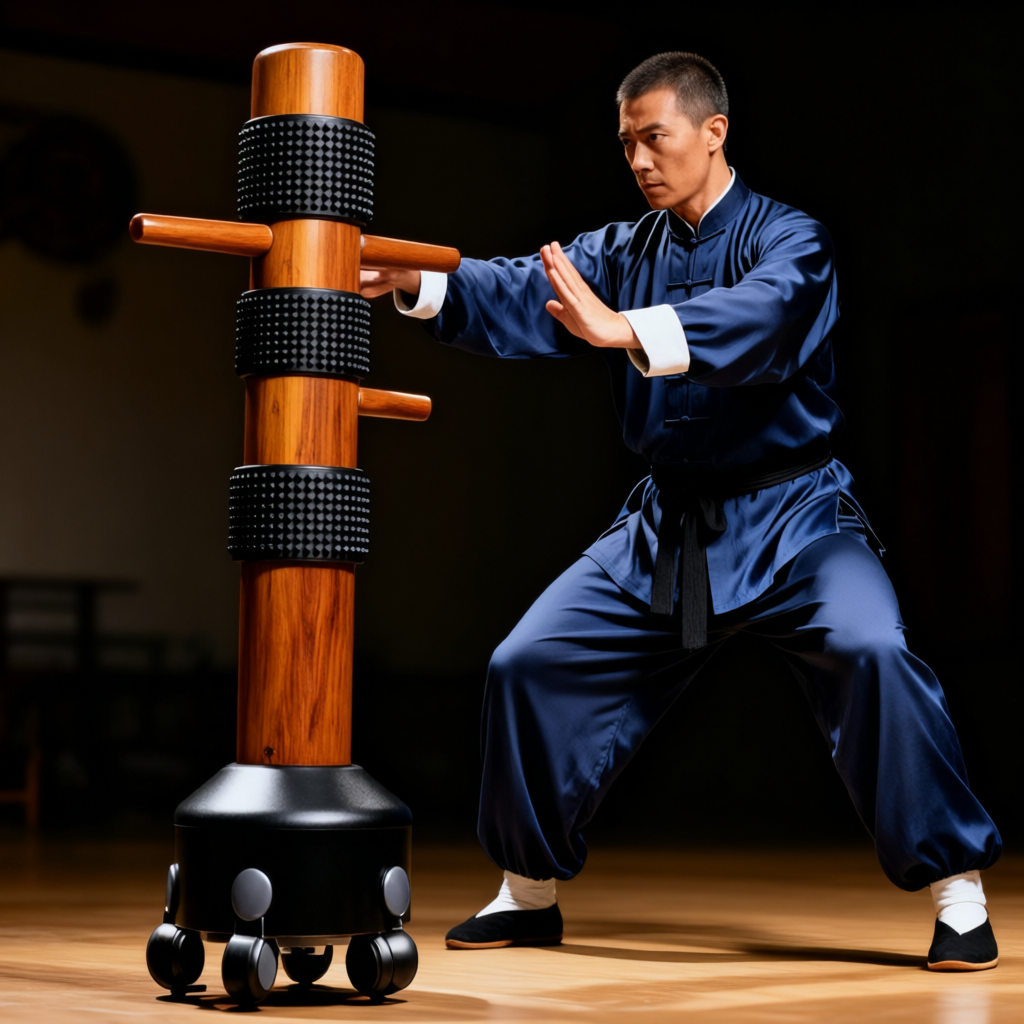
The wooden dummy, or Mook Yan Jong, operates on a completely different physical principle. It provides inertial resistance. Mass does not retreat. When you strike a properly constructed dummy, the structure meets your force with immediate, unyielding feedback. This forces your nervous system to coordinate weight transfer instantly. You learn to root before impact, not after.
Why Your Current Setup Fails Balance Training
Many practitioners train on dummies built from low-density materials like PVC, spruce, or pine. Pine has a density of roughly 35 lbs per cubic foot and a shear strength under 1,000 PSI. PVC hollow trunks lack internal mass entirely.
When you strike these materials, the trunk displaces more than six inches per hit. The arms wobble inside the channels. Your brain receives a signal to push harder to stabilize the target. You overextend. You lose your root.
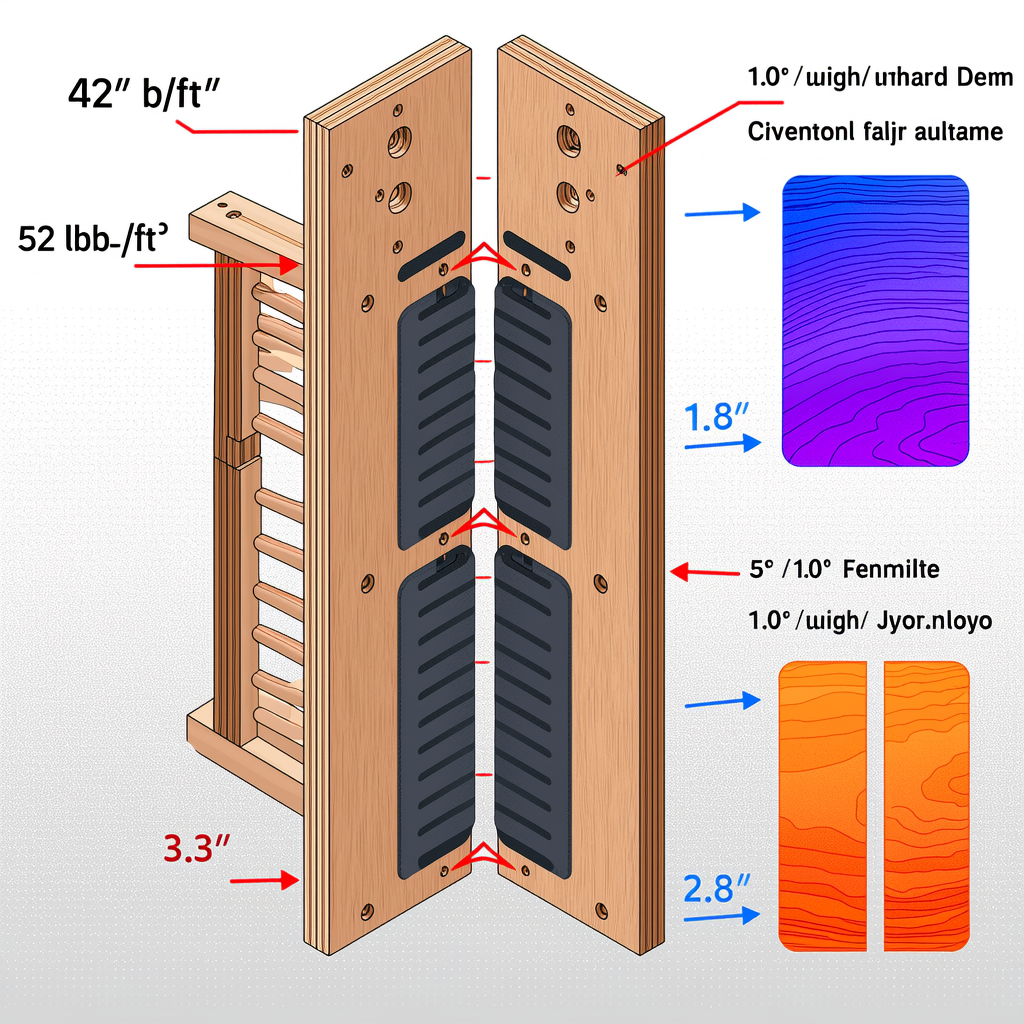
The geometry of the mortise channels dictates everything. If the arm channels are cut parallel instead of intersecting at offset planes, the dummy cannot absorb lateral strikes. The trunk twists under impact. This twisting motion pulls your centerline off-axis and destroys your stance.
Check out our top-rated Wing Chun training gear & equipment on Amazon
The Biomechanics of the Perfect Strike
A proper strike travels through a continuous kinetic chain. Foot to knee. Knee to hip. Hip to spine. Spine to arm. The dummy acts as the final anchor in this sequence.
A standard wooden dummy weighs between 130 and 200 pounds. This mass must be securely anchored. If the base shifts or the sandbags are too light, the entire unit slides. You cannot train balance on a moving platform.
When the structure is solid, you feel Sheng Ging, or live energy. This is the sensation of impact depth traveling back through your bones. The wood flexes slightly, then returns the force directly into your joints. You feel exactly where your weight lands.
The modulus of elasticity in the horizontal slats must be carefully calibrated. Too stiff creates rebound shock. Too soft creates no resistance. Proper slat flexibility allows the structure to absorb lateral force without vibrating. Soft materials create rebound shock. High-frequency vibration travels up the forearm. This triggers a whiplash effect at the wrist and elbow. Your shoulders shrug to compensate. The immovable elbow principle collapses. Hardwood eliminates this vibration. It teaches you to relax the upper body while maintaining lower body tension.
Recommended Insights From Our Wing Chun Guide Library:
Drill Protocols for Dynamic Balance
Static repetition does not build dynamic balance. You must introduce variables that force weight transfer and centerline recovery.
Drill One: The Slap and Step. Strike the left arm with a palm. Step forward with the right foot. Immediately strike the right arm. This forces synchronization between hand movement and hip rotation. Your weight must transfer completely before the second strike lands.
Drill Two: Centerline Recovery. Intentionally strike off-center. Let the dummy push you slightly off-axis. Use the inertial resistance as a pivot point. Reset your vertical alignment before the next technique. This trains your nervous system to correct balance under load.
Drill Three: Angle Variation. Attack the dummy from high, low, and diagonal positions. Maintain the 15-degree downward leg angle throughout. If the leg channels are cut too shallow, you will lean back. If they are too steep, you will fall forward. Proper geometry forces the hips to square up automatically. Your stance adapts to the angle, not the other way around.
Equipment Recommendations for Serious Balance Work
Check out our top-rated Wing Chun training gear & equipment on Amazon
Your training environment dictates your structural development. Choose equipment that matches your space and your biomechanical goals.
AugustaPro Iron Body Wooden Dummy
Compact Steel Wall-Mount System with Neoprene Isolators
Solid Bamboo Chi Sao Rings (Jook Wan Heun)
Martial Arts Reference & Authority Resources:
Heavy-Duty Sandbag Base Kits. Freestanding dummies require proper anchoring. These kits distribute weight evenly across the floor. They prevent unit shifting during aggressive drills. Stability starts at the base.
Balance is not a static pose. It is a continuous negotiation between mass, force, and alignment. Train with equipment that respects the physics of the strike. Your structure will follow.
🔍 Explore More: See all Wing Chun training guides for Training on the dummy for better balance.
Check out our top-rated Wing Chun training gear & equipment on Amazon