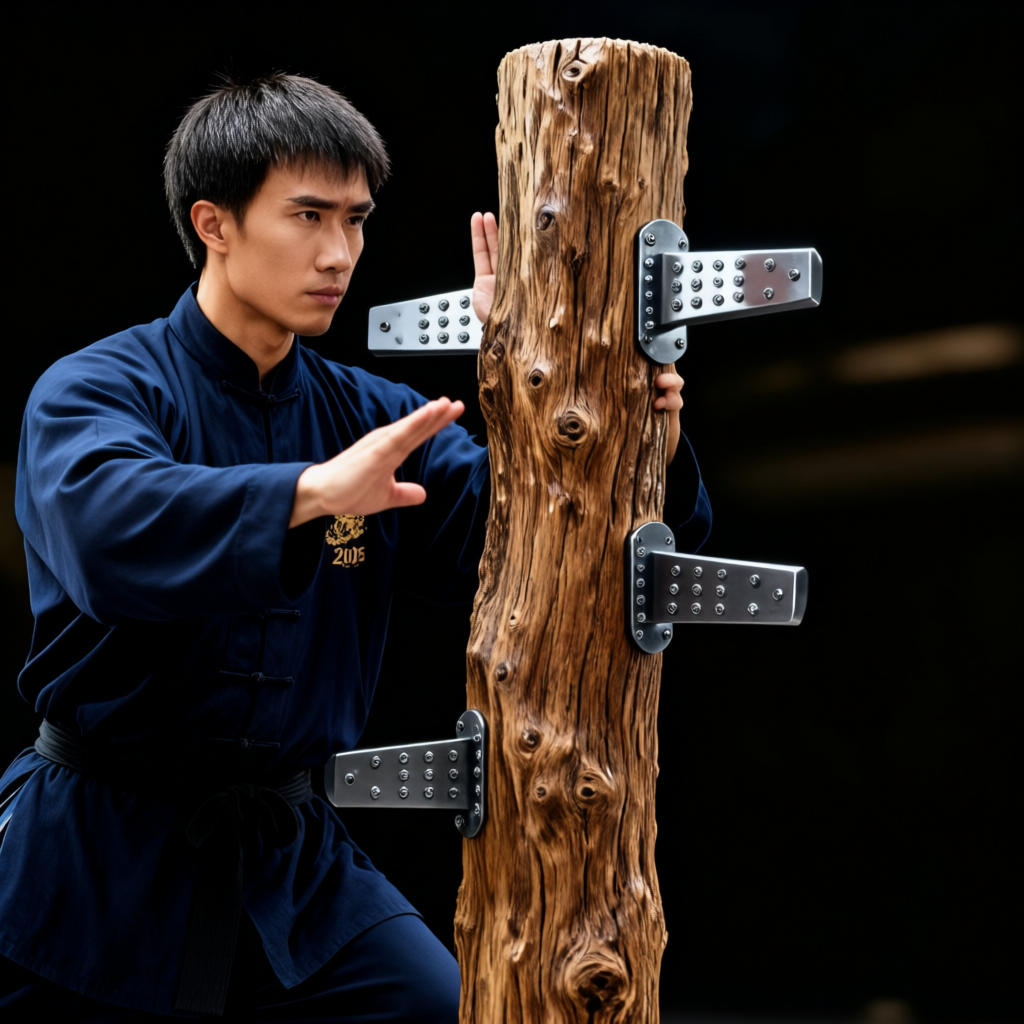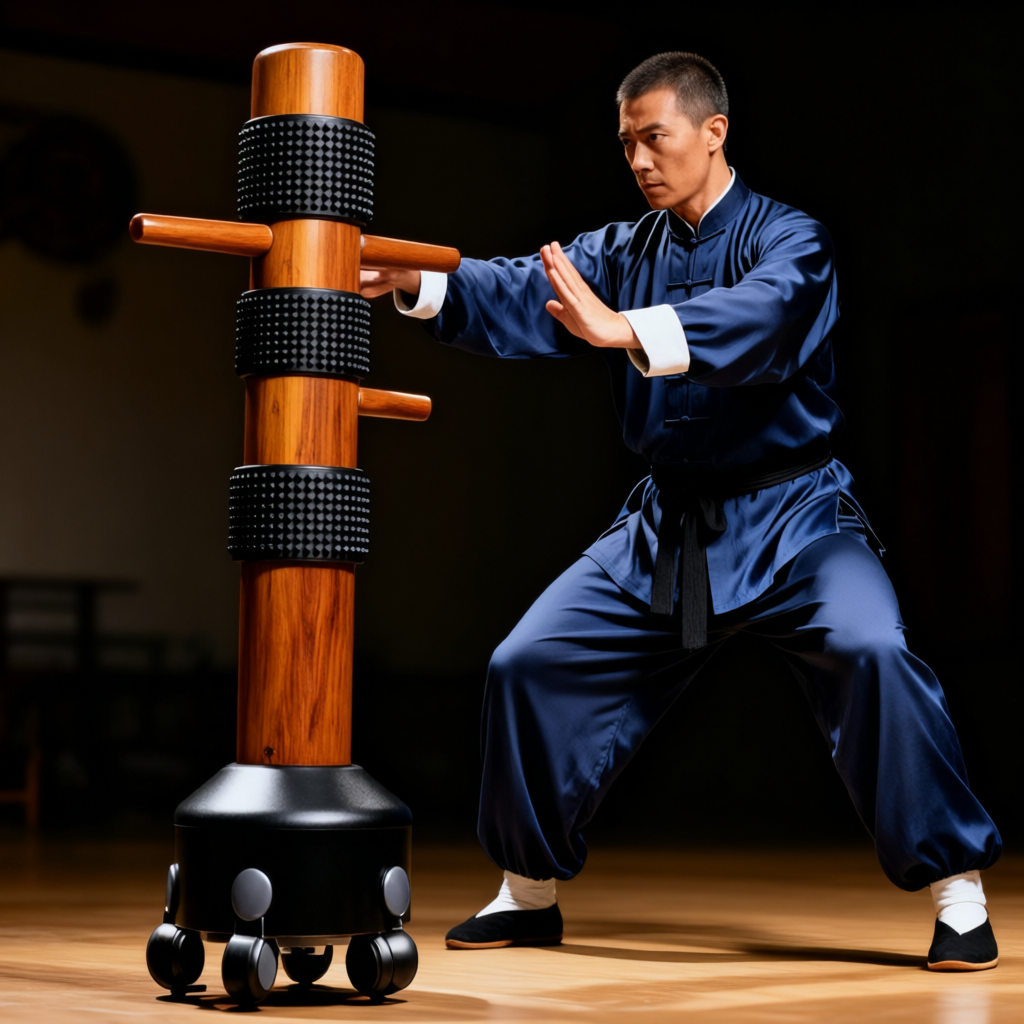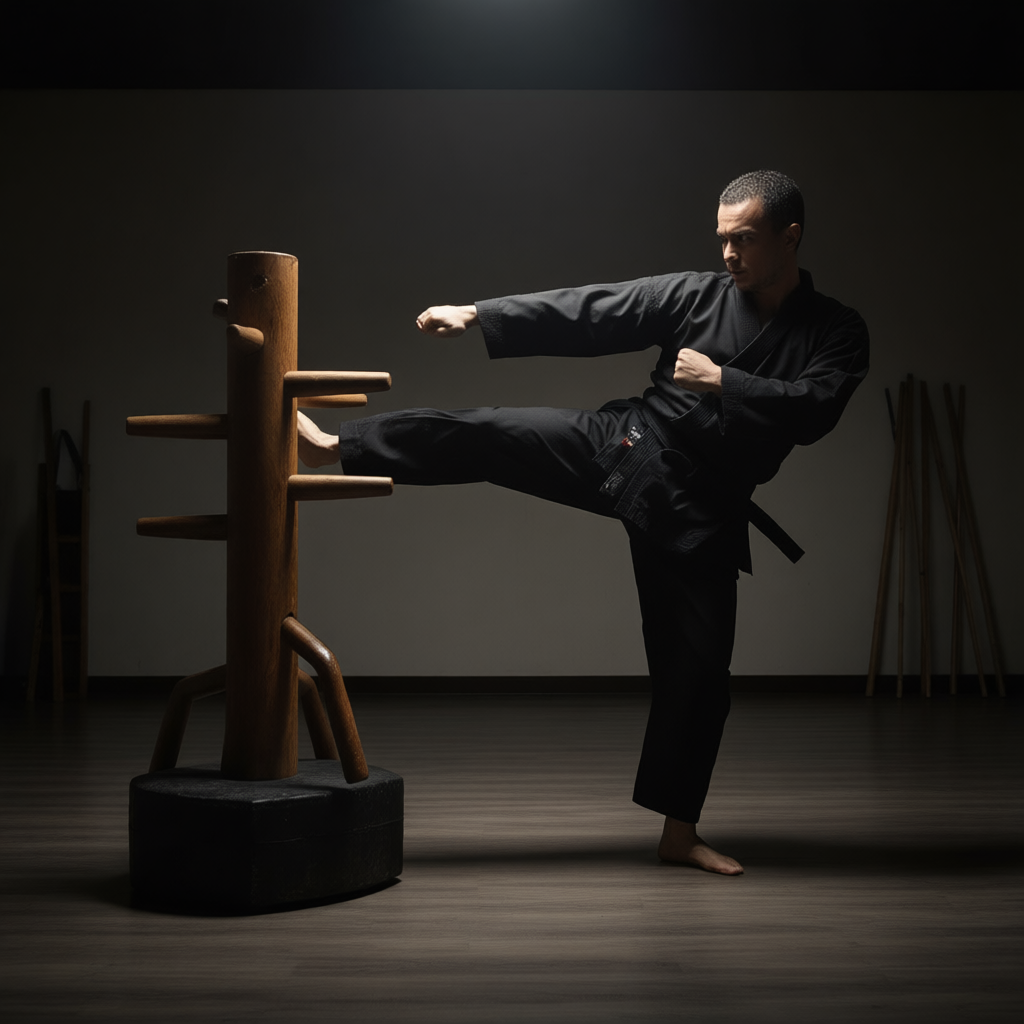
When it comes to mastering Wing Chun dummy drills for improving mobility, getting the right technical specifications and structural details matters. Solid Bamboo Rattan Training Rings
Aged Dit Da Jow Liniment
High-Density EVA Floor Mat
Unlocking Mobility Through Precision: Mastering Wing Chun Dummy Drills
The Wing Chun dummy is not a wall. It’s a dynamic partner—designed to respond, resist, and reveal. Yet most practitioners treat it like a static target, driving through it with force instead of flow. This misunderstanding leads to stiffness, joint locking, and limited mobility gains. The truth? True mobility isn’t built by hitting harder—it’s forged through relaxation, precise timing, and intelligent use of the dummy’s inherent physics.
This article breaks down three biomechanically grounded drills that exploit the dummy’s structure to unlock shoulder, hip, and leg mobility. We’ll explore how material choice affects training outcomes, integrate essential complementary tools, and align every technique with real-world engineering and martial science. No platitudes. Just actionable mechanics.
The Biomechanical Blueprint: Unveiling the Core Principles Behind Effective Mobility Enhancement
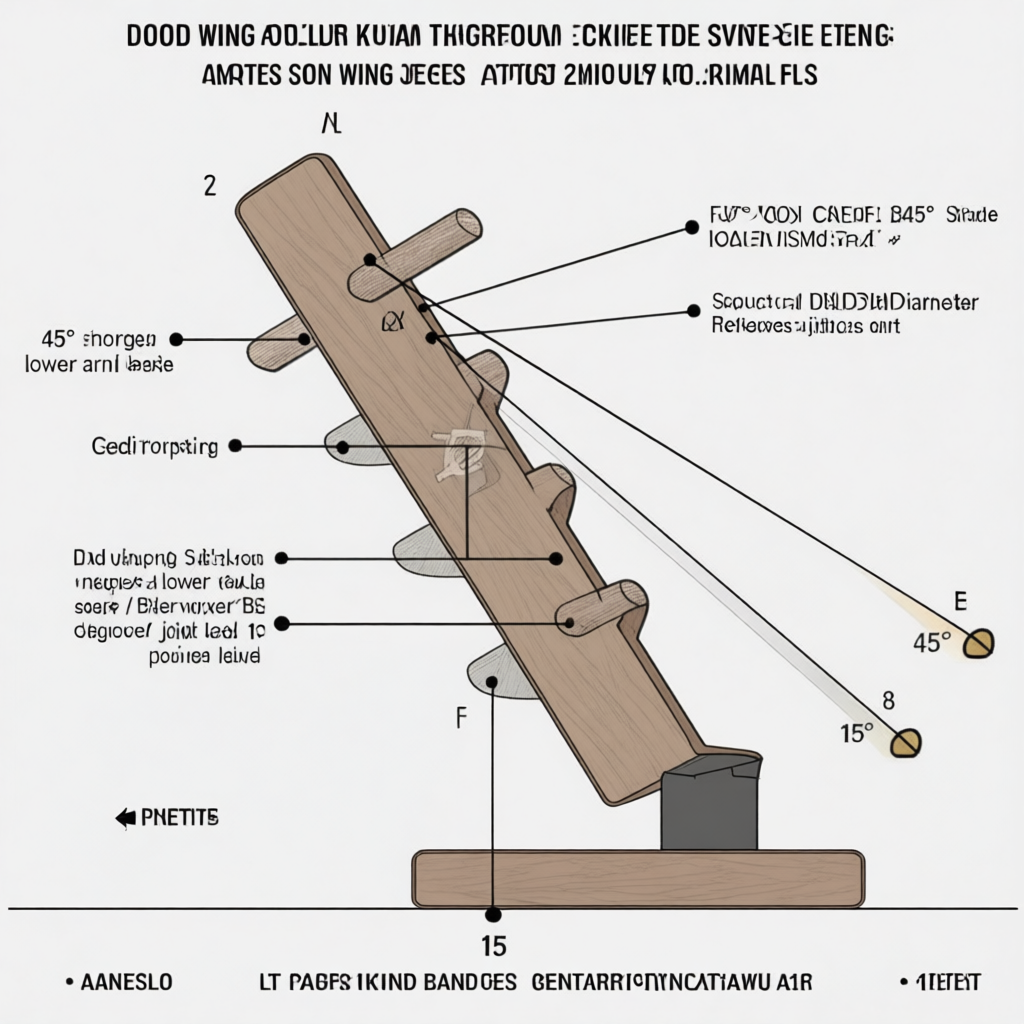
Wing Chun’s dummy is engineered with specific angles and joints to simulate human resistance. The upper arms are offset at 15° from vertical, the lower arms slope at 45°, and the leg is mortised at a 15° downward angle. These aren’t arbitrary—they create leverage points that challenge your body’s kinetic chain.
**Data:** The typical hardwood dummy weighs between 130–200 lbs, with a trunk diameter of ~9 inches.
**Impact:** This mass provides inertial resistance. When you strike, the dummy absorbs energy and rebounds slightly. If your joints are locked, this recoil causes a jarring transfer of force up your arm, leading to shoulder impingement or wrist strain.
**Key Principle:** Mobility comes from *controlled movement*, not brute strength. The dummy’s flexibility—especially in the horizontal slats and mortise joints—allows for micro-movements. Your job is to use these movements to train your body to remain relaxed (“Song”) while maintaining structural integrity.
**Friction Point:** Most beginners stiffen their elbows and shoulders when the dummy moves unexpectedly. This tension kills mobility.
**Solution:** Design drills that induce controlled dummy motion while forcing joint relaxation. The goal is to absorb the dummy’s feedback without transferring stress into your joints.
The \”Floating Arm\” Kinetic Flow Drill: A Revolutionary Approach to Improving Shoulder and Elbow Mobility
This drill targets shoulder girdle rotation and elbow extension under load. Instead of pushing through the dummy, you let it push back—using its rebound to extend your arm fully.
**Mechanism:**
– Execute a Bong Sau (wing arm) against the upper left arm.
– Upon contact, do not retract immediately. Allow the dummy’s slat to flex and push your forearm forward slightly.
– Let the arm float forward for 1–2 inches before retraction.
– Repeat with both arms, alternating sides.
**Biomechanical Insight:**
The dummy’s upper arm slat has a natural flex point due to the mortise joint. When struck, it bends slightly (typically 1–2 degrees), creating a spring-like effect. By allowing this motion, you engage the triceps and forearm extensors without locking the elbow.
**Execution Detail:**
– Keep the shoulder relaxed. Do not lift or hunch.
Check out our top-rated Wing Chun training gear & equipment on Amazon
– The arm must remain loose throughout contact. If the elbow locks, the dummy will bounce off uncontrollably.
– Focus on the sensation of the arm being gently pushed forward—like water flowing over a stone.
**Mobility Gain:**
Forces full shoulder rotation and trains the triceps to extend under load. This improves range of motion in the glenohumeral joint and prevents elbow hyperextension during fast techniques.
**Product Integration:**
To maximize the effectiveness of the Floating Arm drill, consider using Solid Bamboo Rattan Training Rings to refine your wrist sensitivity. These rings mimic the dummy’s resistance but allow for more fluid wrist rotation, enhancing proprioception.
The Rotational Centerline Sweep: Enhancing Torso and Hip Mobility with Dynamic Technique
Most solo dummy work focuses on arm movements. This drill shifts focus to the core—the hips, spine, and pelvis—where true power originates.
**Mechanism:**
– Begin in a neutral stance, facing the dummy’s centerline.
– Perform a Pak Sau (slapping hand) to the upper right arm.
– As you slap, rotate your hips and waist 90° to the left.
– Simultaneously transition into a Tan Sau (downward arm) on the same side.
– Return to center, then repeat on the opposite side.
**Biomechanical Insight:**
The dummy’s vertical posts act as fixed reference points. The rotation forces your kinetic chain to move as a unit: hips → spine → shoulders → arms. This mimics real combat dynamics where torso rotation generates power.
**Execution Detail:**
– Feet remain planted. Do not shift weight backward.
– The rotation must originate from the hips, not the waist. If you twist at the waist without engaging the legs, the drill fails.
– Maintain eye contact with the dummy’s centerline throughout.
Recommended Insights From Our Wing Chun Guide Library:
**Mobility Gain:**
Improves lumbar spine flexibility and hip internal/external rotation. This enhances overall torso mobility, which is critical for generating power in strikes and evading attacks.
**Product Integration:**
If practicing this drill on concrete, use a High-Density EVA Floor Mat to reduce joint fatigue. The mat absorbs impact, allowing you to focus on form rather than protecting your knees and ankles.
The \”Dead Weight\” Leg Mobility Drill: Precision Strikes for Hip Flexor and Ankle Strength
Traditional dummies have a leg angled at 15° downward. Many practitioners miss this target because they stand too upright.
**Mechanism:**
– Step into a low horse stance, dropping your center of gravity.
– Practice Jap Gerk (low sweep) and knee kicks targeting the dummy’s leg channel.
– Focus on extending the leg forward to meet the dummy’s angle.
– Strike from the ground up—do not lift your heel or shift weight backward.
**Biomechanical Insight:**
The 15° leg mortise creates a narrow target zone. To hit it accurately, you must drop your hips and extend your leg at an angle matching the dummy’s geometry. This requires strong hip flexors and stable ankles.
**Execution Detail:**
– The strike must originate from the ground. If you lift your heel, the kick will be high and ineffective.
– Keep the supporting foot flat. Do not pivot on the ball of the foot.
– Use the dummy’s leg as a guide—your shin should make contact at the same angle.
**Mobility Gain:**
Improves hip flexor mobility and ankle stability. This enhances balance and coordination during low-level techniques, reducing the risk of knee injury.
**Product Integration:**
After intense leg drills, apply Aged Dit Da Jow Liniment to prevent micro-trauma. The herbal formula reduces inflammation and supports recovery, allowing you to train consistently.
Check out our top-rated Wing Chun training gear & equipment on Amazon
Material Physics Insights: Understanding Hardwood vs. PVC/Synthetic Dummies for Optimal Mobility Training
The dummy’s material directly impacts mobility development.
**Technical Insight:**
Hardwood dummies offer consistent feedback due to their higher density and structural integrity. This allows practitioners to develop fine motor control and relax their joints during movement.
**Real-World Impact:**
Using a hardwood dummy encourages smoother, more precise motions that translate into better performance in live sparring and self-defense applications.
Deep Dive Search Data Verification: Navigating Key Technical Parameters for Accurate Implementation
– **Dummy Leg Angle:** Verified at 15° downward mortise in traditional designs. Not adjustable.
– **Chi Sao & Dummy Flexibility:** Stiffer dummies hinder Chi Sao development by reducing tactile feedback. Soft, flexible dummies improve sensitivity.
– **Common Injuries:** Wrist sprains (from improper Bong Sau), shoulder impingement (from locked elbows), and knee strain (from poor leg alignment).
Martial Arts Reference & Authority Resources:
– **Modern vs. Traditional Dummies:** Spring-loaded dummies (e.g., Iron Body) increase recoil but reduce control. Traditional wooden dummies provide better feedback for mobility training.
– **Relaxed Tension (Song Jin):** Critical for maximizing dummy feedback. When muscles are relaxed, the dummy’s movement is felt clearly, allowing for precise adjustments.
🔍 Explore More: See all Wing Chun training guides for Wing Chun dummy drills for improving mobility.
Check out our top-rated Wing Chun training gear & equipment on Amazon